
Your 2027 Short-Term Rental Bonus Depreciation Playbook: Buy Now While Others Wait
With about two months left in the year, most investors can no longer buy, launch, and qualify before December 31. The smarter play: use today's buyer leverage, open for bookings as peak season starts in January, and claim bonus depreciation on your 2027 return with a full year to qualify.
Phoenix & Scottsdale STR Investors · Tax StrategyYour 2027 Short-Term Rental Bonus Depreciation Playbook: Buy Now While Others Wait.

· 21 min read
Key Takeaways
- For most buyers, the 2026 window has closed. Claiming the deduction on a 2026 return now means closing, furnishing, licensing, listing, and logging 100+ hours in roughly eight weeks. Unless you're already in escrow on a fully furnished, licensed STR, don't force it.
- 100% bonus depreciation isn't going anywhere. It was made permanent in 2025. A property placed in service in 2027 gets the full benefit on your 2027 return.
- The buying edge is right now. Rates that crossed 7% in late September have thinned the field, price cuts hit a yearly high in September, and the few active buyers are fighting over turnkey STRs to beat December 31. That leaves everything else sitting with motivated sellers.
- Time your go-live for January, not December. A property that's ready and available for guests in late December is likely placed in service in 2026, which puts the deduction in a year you can't qualify for. Finish setup in December and open the calendar in January.
- Then you have all of 2027 to qualify. Twelve months to log your hours and hold a 7-day average stay, starting with the January–April peak season.
Every year around Halloween, the short-term rental conversation flips. Investors who spent all year "thinking about it" realize the calendar is out of room, and a handful scramble to buy anything turnkey before December 31. So here's the honest answer: if you're not already under contract, the window to use the STR tax loophole for 2026 has effectively closed. But that's not the end of the story. It's the start of the best buying window of the year, and the investors who use it well will be booked for peak season and set up for a full year of tax benefits in 2027.
Before real estate, I spent years as a Director of Wealth Management advising physicians, executives, and business owners on tax planning. Today I help investors use short-term rentals as both a cash-flow business and a tax strategy, and I've watched this exact strategy produce six-figure first-year deductions for clients in Phoenix, Scottsdale, and Mesa over the past year. If you're newer to the idea of property as a wealth tool, start with my piece on real estate as an asset class. In this guide, I'll explain why 2026 has closed for most buyers, walk through the bonus depreciation strategy step by step, and show why buying now for the 2027 tax year is the smartest play on the board.
Why the 2026 window has closed for most buyers
First, the good news. For a few years, bonus depreciation was on a scheduled phase-down: dropping 20 points a year and on track to hit 20% in 2026 and zero in 2027. That's no longer the law.
The One Big Beautiful Bill Act (OBBBA), signed on July 4, 2025, permanently restored 100% bonus depreciation under IRC §168(k) for qualified property acquired after January 19, 2025, and the IRS followed with interim guidance in January 2026 (Notice 2026-11).[1][2] There's no expiration date under current law. I walk through the full history and mechanics in my 2026 bonus depreciation guide.
So the benefit isn't expiring. What's running out is the 2026 tax year. To put the deduction on your 2026 return, all of this would have to happen before December 31:
- Find the property, get under contract, and clear inspection and financing
- Close, which at today's pace means late November or December for anyone starting now
- Furnish it, get your Arizona TPT license and any city STR license, and list it so it's ready and available for guests
- Materially participate during 2026, typically 100+ hours and more than anyone else, including your cleaner, in the few weeks that remain
For a buyer already in escrow on a fully furnished, licensed property, that's tight but doable. For nearly everyone else, it's a recipe for overpaying, rushing due diligence, and ending up with a loss the IRS treats as passive anyway.
Depreciation, including bonus depreciation, begins in the year a property is placed in service. Buy now, place it in service in January, and the same 100% bonus depreciation lands on your 2027 return, with all twelve months of 2027 to meet the participation tests.
If 2026 is an unusually high-income year for you, talk to your CPA about other year-end moves. Just don't force an STR purchase to chase a deduction you may not be able to qualify for.
How the short-term rental tax strategy works
Most rental real estate is treated as a passive activity under IRC §469. Passive losses generally can only offset passive income, so for a high-earning W-2 professional, the depreciation from a traditional long-term rental usually sits suspended until the property is sold.
Short-term rentals are different. Under Treasury Regulation §1.469-1T(e)(3)(ii)(A), an activity where the average period of customer use is seven days or less is not considered a "rental activity" for passive loss purposes. If you also materially participate, the losses become non-passive, and they can offset ordinary income like wages and business profits. This is what most people call the short-term rental tax loophole, and it's why it has become the go-to tax break for high-earning W-2 professionals.
On its own, that's useful. Paired with a cost segregation study and 100% bonus depreciation, it becomes one of the most powerful legal tax strategies available to high-income earners who don't qualify as Real Estate Professionals.
"The STR strategy doesn't create a tax loss out of thin air. It accelerates depreciation you'd eventually take anyway, and moves it into the year you need it most."
The STR bonus depreciation strategy: step by step
Here's the exact sequence I walk clients through. Each step has to be done right for the next one to work.
-
Map your income year first Before you shop
Sit down with a CPA who works with STR investors and model 2026 and 2027. Which year has the higher marginal tax rate? If you're not already in escrow, the answer is now 2027, so model your expected 2027 income to see what the deduction will be worth. My 2026 tax strategy scenarios show how the math shifts across income levels, and I build this into the complimentary financial plan I offer every client.
Also check whether very large losses could be capped by the excess business loss limitation, and whether your state conforms to federal bonus depreciation. Several don't. California is the big one for out-of-state buyers in Arizona: the federal deduction is real, but it isn't mirrored on a California return.
-
Buy a property that will actually average 7 days or less Acquisition
The strategy depends on the average guest stay being seven days or fewer for the tax year. Underwrite markets and property types where that's natural: leisure destinations, event-driven demand, weekend travel. Be cautious with properties that skew toward 30-day stays (traveling nurses, insurance housing). Those can push your average over the line. If you're weighing structures, see my short-term vs. mid-term rental comparison and the Phoenix LTR vs. MTR vs. STR guide.
Confirm local STR permitting and licensing before you write an offer. In Arizona, that typically means a city STR permit where required and a state Transaction Privilege Tax (TPT) license. HOA rules are separate from city rules and can restrict STRs even where the city allows them. My Arizona short-term rental guide covers permitting and setup in detail.
-
Place the property in service, in the right year The timing step
The depreciation clock starts when the property is ready and available for rent (see IRS Publication 946): furnished, safety-compliant, photographed, listed, and showing open dates. A turnkey property with furniture and a booking history can do this in days. A property you're converting can take four to eight weeks. For a 2027 deduction, that go-live date needs to fall in 2027, so finish setup in December and open your calendar in January.
Document the date with screenshots of the live listing and your calendar. Your CPA will want it.
-
Materially participate, and prove it Most audited step
There are seven tests in Treas. Reg. §1.469-5T(a). STR owners almost always rely on one of three:
- 100 hours and more than anyone else (including your cleaner, handyman, or co-host)
- Substantially all of the participation in the activity
- 500+ hours in the activity during the year
Hours are counted within the tax year, which is the biggest reason a January go-live wins: you start logging on January 1 with the whole year ahead of you. Keep a contemporaneous log: guest messaging, pricing, restocking, vendor coordination, maintenance, listing optimization. Reconstructed logs built at tax time are where these positions fall apart.
-
Order a cost segregation study Unlock the deduction
Without one, the building is depreciated straight-line over 27.5 years and land isn't depreciable at all. A cost segregation study, ideally engineering-based, reclassifies components into shorter-life buckets:
- 5-year: furniture, appliances, certain flooring, cabinetry, specialty electrical, decor
- 7-year: certain fixtures and equipment
- 15-year: land improvements like pools, hardscape, landscaping, fencing, outdoor lighting
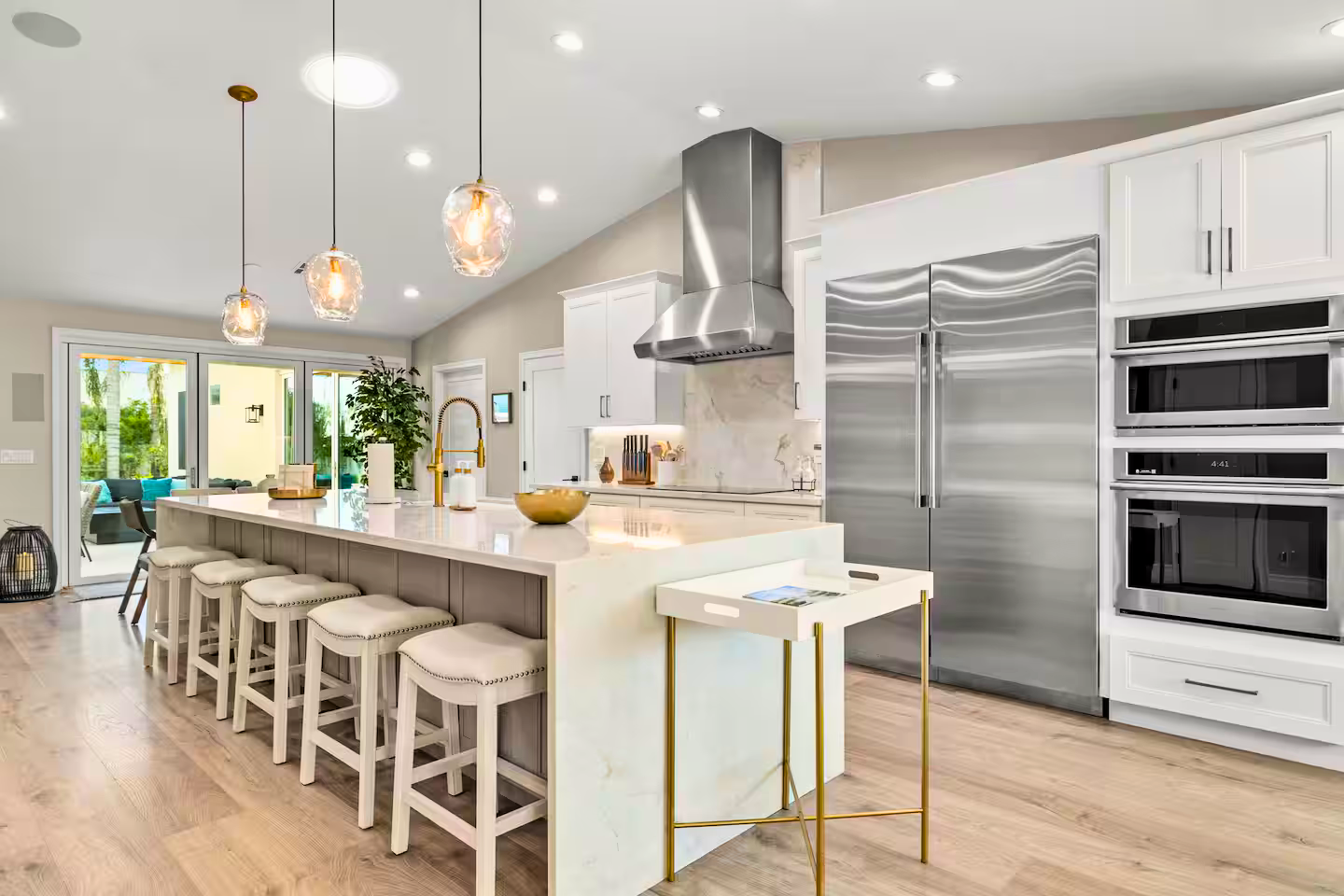
Cabinetry, appliances, and finishes like these are often reclassified as 5-year property. From my Phoenix case study. On a typical STR, studies often reclassify roughly 20–30% of the depreciable basis, and STRs with pools and premium furnishings can run higher.[3] Insist on an engineering-based study with a site visit, which follows the IRS's own Cost Segregation Audit Techniques Guide. More on cost seg in my 2026 real estate tax savings guide.
-
Apply 100% bonus depreciation to the short-life assets The multiplier
Every component with a recovery period of 20 years or less is eligible for bonus depreciation. With 100% bonus, the full reclassified amount is deductible in the year the property is placed in service, instead of over 5, 7, or 15 years. The remaining structure continues on its 27.5-year schedule.
-
Report it correctly Filing
Most STRs without hotel-style services are reported on Schedule E with depreciation detailed on Form 4562. If you provide substantial services, Schedule C may apply. If you're catching up on a property placed in service in a prior year without a study, ask your CPA about a change in accounting method (Form 3115).
-
Plan the exit on day one Long game
Accelerated depreciation reduces your basis. When you sell, the personal-property portion is generally subject to recapture at ordinary income rates. Know your strategy before you buy: hold long-term, exchange into another property under §1031, or plan the sale for a lower-income year. If the property is held until death, heirs generally receive a step-up in basis. I break down how these fit together in depreciation, 1031 exchanges, and step-up in basis.
A worked example: what the numbers can look like
Here's a simplified illustration of a $600,000 STR purchase. Your numbers will differ based on land value, property features, the study results, and your tax bracket.
| Line item | Without cost seg | With cost seg + 100% bonus |
|---|---|---|
| Purchase price | $600,000 | $600,000 |
| Less: land (not depreciable, ~20%) | ($120,000) | ($120,000) |
| Depreciable basis | $480,000 | $480,000 |
| Reclassified to 5/7/15-year property (~25%) | — | $120,000 |
| Bonus depreciation (year one) | — | $120,000 |
| Straight-line on remaining structure (full-year approximation) | ~$17,455 | ~$13,091 |
| Approximate first-year depreciation | ~$17,455 | ~$133,091 |
| Potential federal tax reduction at a 35% bracket* | ~$6,100 | ~$46,600 |
That gap, roughly $40,000 in this example, is why the year your property goes into service matters as much as the property itself. Land it in a year you can fully qualify, and you keep the whole benefit. Want to run your own numbers? Use my investor calculators or request a property income analysis.
Real client results: what this looks like in practice
The illustration above is deliberately conservative. Here's what the same strategy produced on three acquisitions I handled for clients in 2025–2026. Each one also shows a different way buyer leverage turned into value.
 Phoenix · Turnkey
A fully furnished STR that other buyers walked away from after inspection. We negotiated $65,000 off the ask plus a $13,000 credit, closed in nine weeks, and the clients took over the existing listing, reviews, and bookings.
Read the case study →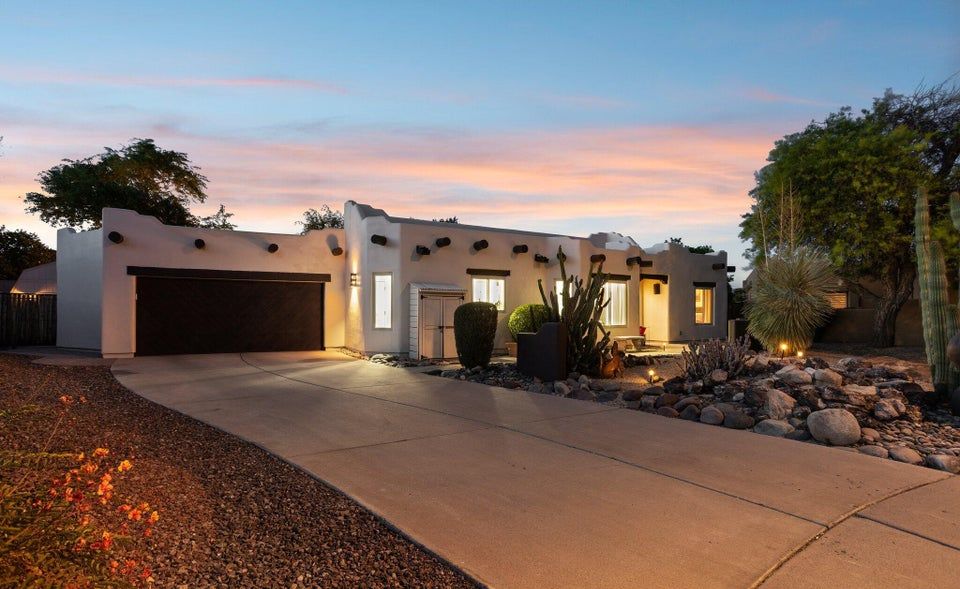 North Scottsdale · Conversion
A primary residence that wasn't marketed as an STR. The motivated seller had already replaced the roof, pool, HVAC, and water heater, included the furniture, and gave a credit toward a fifth bedroom and spa.
Read the case study → Mesa · Full Build-Out
A vacant home on an oversized lot, transformed into a 16-guest resort-style STR with $207,936 in bonus depreciation and $146,728 in projected annual revenue.
Read the case study →Notice the pattern. In two of the three deals, the edge came from a motivated seller and a property other buyers overlooked, not from paying up for a polished listing. That's exactly the kind of opportunity today's market is producing. See more on my client wins page, including another Scottsdale STR built on an overlooked lot.
We were introduced to Eric about two months ago. He was highly recommended and we now know why. In those two months, Eric educated us about the opportunities with short term rentals, rental revenue analysis, connections with mortgage brokers, insurance brokers, title and escrow companies, advice, recommendations, etc. Since we were in California, we relied on Eric for every detail that we needed and he delivered!! We were able to make an offer and close on a beautiful home that was fully furnished and ready to rent out immediately. The whole process was very efficient and quick.
What I'll always appreciate most is that he truly cared about finding the right property for us, not just helping us buy a house. We fell in love with a home in Scottsdale and were ready to move forward, but Eric encouraged us to keep looking because he didn't believe it was the right investment. At the time, it was disappointing, but he was absolutely right. A short time later, we found the perfect property, one that checked every box.
Case study figures come from each client's pre-purchase underwriting and are projections, not guaranteed results. Your outcome depends on your property, your participation, and your tax situation.
The 2027 playbook: buy now, open in January, qualify all year
At this point in the year, there's really only one exception to the 2027 plan, and it's narrow. If it doesn't describe you, the playbook on the right is the stronger move.
Still chasing 2026?
- You're already under contract on a fully furnished, licensed STR
- You'll close in November and can be live well before December 31
- You can personally run it through December and outwork everyone on it
- 2026 is an unusually high-income year
If that isn't you, don't force it. A rushed purchase usually costs more than the deduction is worth.
The 2027 play
- Nov–Dec: shop while competition is thin, including properties that aren't turnkey
- Negotiate price, credits, and furniture with no deadline forcing your hand
- December: close, furnish, license, and photograph
- January: open the calendar as peak season starts. Placed in service in 2027.
- All of 2027: log your hours and claim 100% bonus depreciation on your 2027 return
Best for: investors who want a better price, peak-season revenue, and a full year behind the deduction.
If your property becomes ready and available for guests on, say, December 20, it's likely placed in service in 2026. The bonus depreciation then lands on your 2026 return, where you have about ten days to materially participate. Fail that test and the loss is passive and suspended: not lost, but unable to offset your W-2 income. Worse, it's no longer available for 2027. The fix is simple. Finish setup in December, but open the property for guests in January. Ask your CPA how listing early or accepting advance reservations could affect your placed-in-service date, and screenshot your listing on the day it goes live.
Want help running the 2027 play? I'll help you find the right property, negotiate it, and time your launch with your CPA.
Book a strategy callWhy late fall is the best time of year to buy an STR
Higher rates are usually framed as bad news for buyers. For investors with financing lined up, they've created the best negotiating environment we've seen in a while, and the calendar adds a second edge on top.
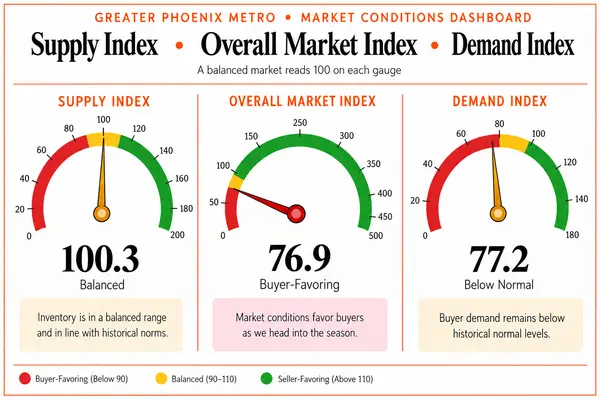
Realtor.com's September 2026 report showed price reductions climbing to their highest share of the year, with inventory approaching pre-pandemic levels while fewer buyers move forward.[5] In plain terms: supply is there, demand has pulled back, and sellers know it. Locally, my September Phoenix housing market update shows the same shift: buyers have gained the upper hand across much of the Valley.
The competition is chasing turnkey. You don't have to.
The few buyers still active right now are mostly racing the 2026 deadline, which means they're fighting over the same small pool of fully furnished, licensed STRs they can launch in a few weeks. That props up turnkey prices. Meanwhile, homes that need furniture, a light refresh, or a conversion sit with sellers who want to be done before the holidays.
Without a deadline, those are exactly the properties you can buy well. My North Scottsdale clients bought a primary residence that was never marketed as an STR. The seller had already replaced the roof, pool, HVAC, and water heater, included the furniture, and gave a credit toward upgrades. And on the other side of January, most investors will start looking just as peak season is underway. Buying now puts you a full season ahead of them.
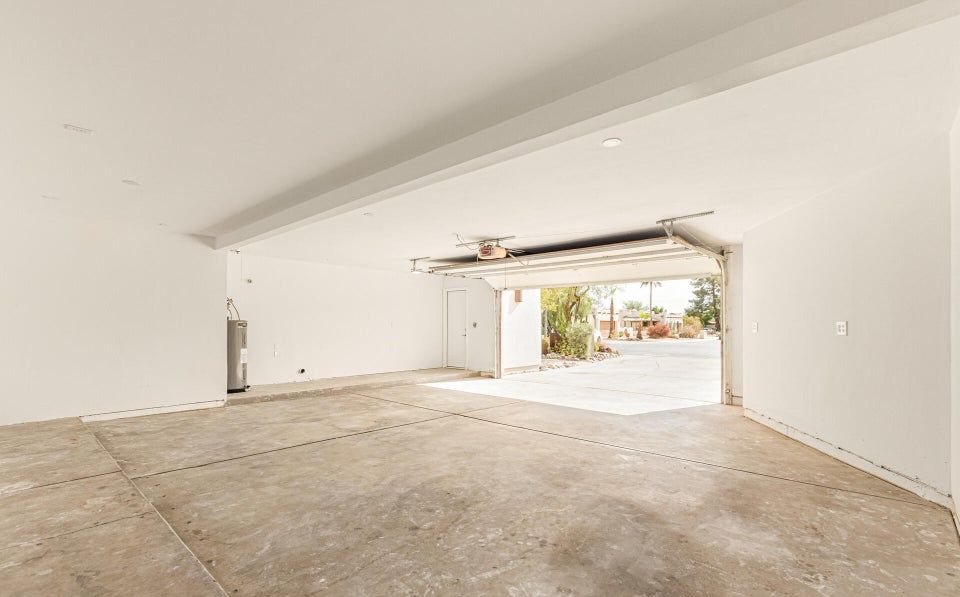

A home other buyers scrolled past, turned into a stronger STR. From my North Scottsdale case study.
How to turn that leverage into a better deal
- Negotiate the furniture package. On turnkey STRs, ask for furnishings, linens, and supplies to convey. That's usable inventory on day one, and furnishings are typically 5-year property. My Scottsdale clients got the furniture included and a seller credit toward upgrades.
- Ask for a rate buydown credit. A seller concession toward buying down your rate often beats a straight price cut on monthly cash flow.
- Request booking history and forward reservations. Existing reservations through peak season reduce launch risk and support your underwriting.
- Use the inspection, don't fear it. A punch list that scares off other buyers can become a credit or a price reduction. That's how my Phoenix clients bought $65,000 under ask.
- Lean on days-on-market. Properties that sat through the summer belong to sellers who are watching holiday carrying costs approach.
- Plan to refinance later, not overpay now. You can change your rate down the road. You can't change your purchase price.
The peak-season advantage: close in December, open in January
Timing matters for revenue as much as for taxes. In Sun Belt markets like Phoenix and Scottsdale, peak STR season runs roughly January through April, driven by snowbirds, golf, MLB Spring Training, and major events like the WM Phoenix Open and Barrett-Jackson.[7] In Phoenix, average STR revenue in March has run roughly four times the June low.[8]

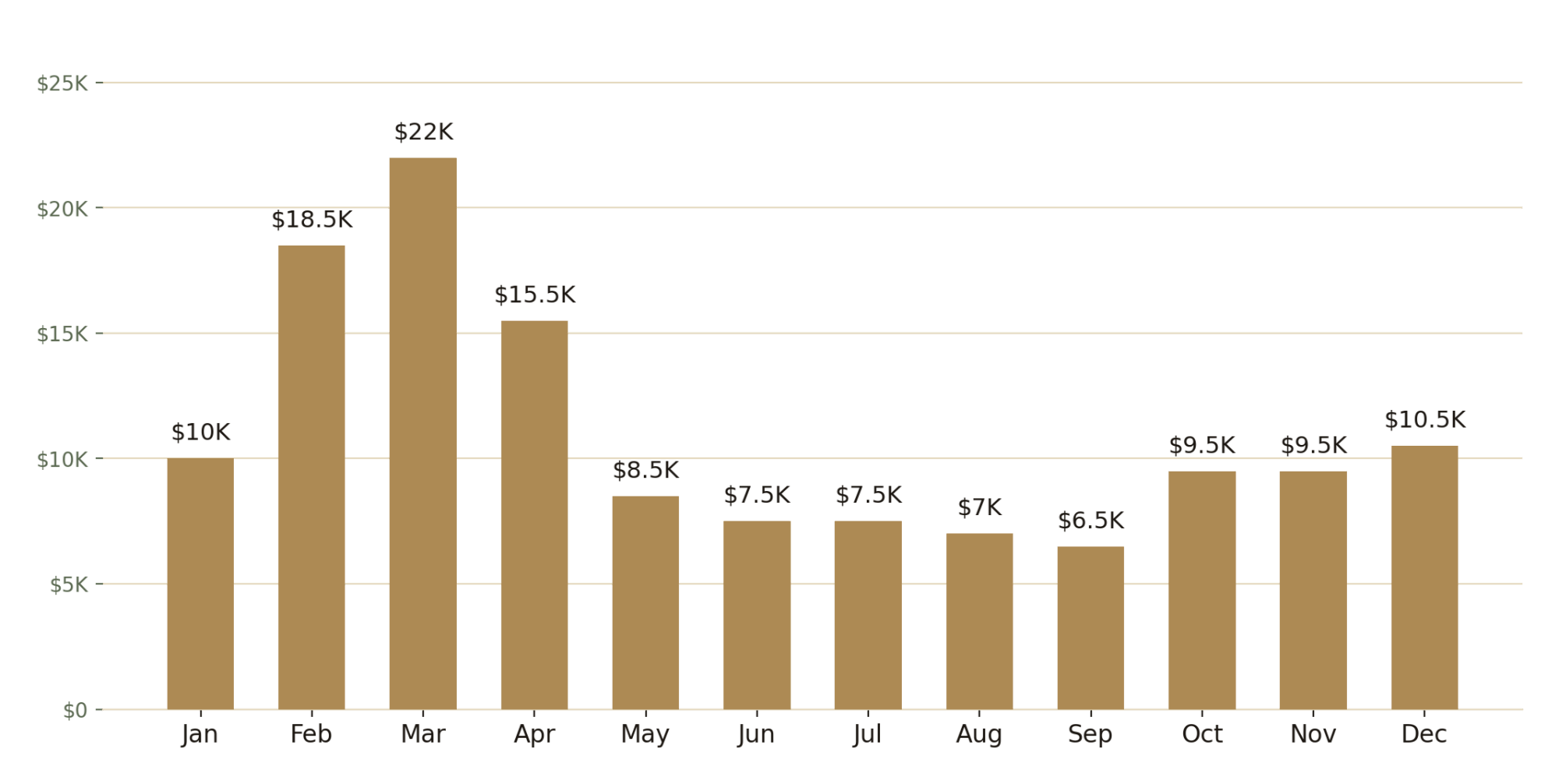
Buy in the spring and you launch into the summer heat, the slowest stretch of the year in the desert. Close in December and open in January, and your first months of operation line up with your highest-earning months. That shortens the time to positive cash flow, builds your review count fast, and starts your first tax year on January 1 with all twelve months to qualify.
Weeks 1–2 after closing: TPT and city licensing, smart lock, and safety items. Weeks 2–3: furnish, stage, and professional photos. Early January: open the calendar with dynamic pricing set for peak events. The trade-off is that some January guests book weeks ahead, so a January go-live captures a bit less of January than a December launch would. For most buyers, that's a small price for keeping the deduction in a year they can fully qualify, and in Phoenix, March is typically the strongest month anyway.[8]
Seasonality differs by market. Mountain towns peak with ski season, beach markets with summer. Match your launch window to your market's calendar. If you're comparing Valley submarkets, my Arizona investment property page breaks down where the numbers work today, and out-of-state buyers can get oriented with my Phoenix area resource guide.
Costly mistakes I see at year-end
- Forcing a 2026 purchase. Rushing a turnkey buy in November to chase a deduction you may not qualify for usually means overpaying for a property you didn't fully vet.
- Going live a week too early. Opening your calendar on December 28 can make it a 2026 property and put the deduction in a year you can't qualify for. Closing doesn't start depreciation; being ready and available for guests does.
- Letting a property manager outwork you. If a full-service manager logs more hours than you, the "100 hours and more than anyone else" test fails.
- Forgetting the 7-day average. A few long stays can push your average over seven days for the year.
- Overusing it personally. Heavy personal use can change how the property is treated under §280A. Track every personal night.
- Waiting until January to start looking. By then, peak season is underway, the deadline buyers are gone, and you've lost the quietest negotiating window of the year.
- Trusting a "turnkey" label. Turnkey is a marketing word, not a due-diligence substitute. My Scottsdale clients walked from a turnkey STR with a leaking shower, roof, HVAC, and foundation issues, and found a better deal weeks later.
- Using a generalist CPA. Work with a tax professional who regularly prepares and defends STR positions.
Frequently asked questions
Is it too late to use the STR tax strategy for 2026?
Is 100% bonus depreciation going away after 2026?
If I buy in November or December, how do I make sure the deduction lands in 2027?
What does "placed in service" mean for a short-term rental?
Do I need Real Estate Professional Status (REPS) for the STR strategy?
Does my state follow federal bonus depreciation?
Why buy an STR now instead of waiting until 2027?
Ready to get ahead of 2027?
Most investors will start their search in January, after peak season is already underway. I'll help you buy in the quiet window, negotiate from strength, and open for guests right as demand peaks.
Eric Ravenscroft, CRS
Eric Ravenscroft founded The Ravenscroft Group at Real Broker to close a gap he saw from the other side of the desk. After 15 years in financial planning, including serving as a Director of Wealth Management advising physicians, executives, and business owners, he realized most agents can tell you about a neighborhood but very few can tell you what a property will do to your tax return. His practice is built around answering both. Read how he went from finance to real estate.
Eric specializes in short-term rental acquisitions across Phoenix, Scottsdale, and Mesa, coordinating property selection, negotiation, cost segregation, and material participation planning with each client's CPA before they go under contract. He has closed more than $100 million in residential sales, has helped clients build over $150 million in long-term wealth, has earned more than 175 five-star Google reviews, and is ranked in the top 1% of agents across North America and the top 100 in the Greater Phoenix Metro, and is independently verified by RealTrends as the #1 agent in his city by both volume and transaction sides on 2025 data. His commentary on real estate and investment tax strategy has appeared in The Wall Street Journal, Morningstar, MarketWatch, MSN Money, and The Residential Specialist, and he hosts The House of Ravenscroft podcast.
Full bio & credentials · LinkedIn · Book a call · eric@theravenscroftgroup.com · AZ License SA691304000
Keep reading: more from Eric on STR tax strategy
Sources & further reading
- IRS: Treasury, IRS issue guidance on the additional first-year depreciation deduction (Notice 2026-11, IR-2026-06, Jan. 14, 2026)
- 26 U.S.C. §168(k): Special allowance for certain property (Cornell LII)
- 26 U.S.C. §469: Passive activity losses (Cornell LII)
- 26 CFR §1.469-1T: Definition of rental activity, including the 7-day rule
- Beancount: STR Tax Loophole, Cost Segregation and the 7-Day Rule
- Trading Economics: U.S. 30-Year Mortgage Rate (Freddie Mac PMMS data)
- Realtor.com September 2026 Monthly Housing Trends Report
- Market Briefs: September 2026 inventory analysis (Realtor.com data)
- Rabbu: Scottsdale, AZ Airbnb Market Data
- Rabbu: Phoenix, AZ Airbnb Market Data
- RealTrends: Eric Ravenscroft Verified Agent Profile
- IRS Publication 5653: Cost Segregation Audit Techniques Guide
- 26 CFR §1.469-5T: Material participation tests
- IRS Publication 946: How to Depreciate Property
- IRS Publication 527: Residential Rental Property
Disclaimer: This article is for educational purposes only and is not tax, legal, or financial advice. Eric Ravenscroft and The Ravenscroft Group are real estate professionals, not CPAs, tax attorneys, or financial advisors, and do not prepare tax returns or provide tax opinions. Tax outcomes depend on your specific facts, and rules can change. Consult a qualified tax professional before making investment or tax decisions. Market data cited reflects conditions as of the publication date. Client case study figures reflect projections from pre-purchase underwriting and are not typical or guaranteed results. Eric Ravenscroft, Arizona License SA691304000. The Ravenscroft Group at Real Broker.
Categories
- All Blogs (325)
- Active Adult & 55 Plus Communities (17)
- Arizona Relocation Guides (31)
- Buyers (215)
- Financial Planning (62)
- General Real Estate (142)
- Income From Real Estate (61)
- Market Update (26)
- New Construction (29)
- News, Updates and Coming Soon (57)
- Real Estate Agent Financial Planning (22)
- Real Estate Investing (97)
- Sellers (107)
- Vacation and Short Term Rentals (46)
Recent Posts








About the Author
Eric Ravenscroft is a Top 1% REALTOR® across North America and one of Arizona’s most trusted real estate strategists. With 15 years of experience spanning real estate, wealth management, and investment planning, he helps clients make smarter, financially grounded decisions, from new construction and relocations to STR investments, 1031 exchanges, and long-term portfolio strategy.
Eric’s expertise has earned him industry recognition, Elite status with Real Broker, and features in major publications including the Wall Street Journal, MarketWatch, MSN, and Morningstar. Clients across the Greater Phoenix Metro rely on his clarity, strategic insight, and results-driven guidance.
Ready to make a confident real estate move? Call or text Eric today.