The Ravenscroft Group · Eric Ravenscroft, CRS · Former Wealth Management Executive
Last updated: June 2026 · Always verify bonus depreciation % with your CPA
Real Estate Tax Strategy
for Phoenix Investors
Bonus depreciation, cost segregation, Real Estate Professional Status, the short-term rental loophole, and 1031 exchanges — explained by an advisor who has worked both sides of the table.






Trusted By
Phoenix's Preferred Agent for
Leading Financial Institutions
Eric is a preferred real estate partner for USAA, Chase, SoFi, PennyMac, Citibank, Citizens, Huntington, Fifth Third, and other major institutions — reinforcing his standing among the industry's most trusted advisory professionals.








01 — Featured Strategies
Tax Strategies Built Into
How I Help You Buy
Most agents can tell you about a neighborhood. Very few can tell you what a property will do to your tax return. Before real estate, I spent years in wealth management advising high-income clients on exactly that — and these strategies are part of how I evaluate every property I bring to a client. Each one gets its own deep dive further down this page.
Sell appreciated investment property and roll the gain into your next purchase, deferring capital gains tax and depreciation recapture indefinitely — with replacement properties pre-identified before your 45-day clock starts.
A cost segregation study turns flooring, appliances, and landscaping into a large year-one deduction. Because the rental period is 7 days or less, that deduction can offset your W-2 income directly — no REPS or 750-hour test required.
Depreciation and 1031 exchanges defer your tax bill. Holding real estate until death can eliminate it entirely. Under IRC §1014, your heirs inherit at current market value — erasing decades of deferred gain and depreciation recapture in a single step.
Real Estate Professional Status (REPS) and passive activity loss rules sit underneath all three of these — they determine whether a deduction can actually offset your income, not just whether it exists. See the decision matrix below →
02 — The Part Most Articles Skip
Can You Actually Deduct
Your Rental Losses?
A big depreciation deduction is useless if the IRS won't let you use it against the income you actually want to reduce. The IRS generally treats rental real estate as a passive activity — regardless of how much work you put into it — unless you meet specific exceptions.
This is exactly why cost segregation and bonus depreciation should never be evaluated in isolation from REPS and material participation status. They're a package deal.
| Your Situation | Income Cap | W-2 Offset? |
|---|---|---|
| No active/material participation | N/A — passive only | No — suspended |
| Active participation ($25K allowance) | Phases out $100K–$150K MAGI | Limited |
| Real Estate Professional Status | No MAGI limit | Yes |
| STR + material participation (avg. stay ≤7 days) | No MAGI limit, no REPS required | Yes |
03 — Strategy Deep Dive
1031 Exchange:
Defer the Tax, Keep the Capital
A 1031 exchange lets you sell an appreciated investment property and reinvest the proceeds into a replacement property — deferring capital gains tax and depreciation recapture entirely. Done right and repeated over time, this is one of the most powerful legal wealth-compounding tools in the tax code.
For a property held 10+ years with significant appreciation and depreciation taken, the real combined tax liability — federal capital gains, depreciation recapture at 25%, and state tax — can easily exceed $100,000. That same $100,000 reinvested at 5% annually for 10 years becomes approximately $163,000 inside the portfolio instead of paid to the IRS.
 Relinquished Property
 Replacement · Vistancia, AZ
$2M California Portfolio Repositioned Into Vistancia & Verrado — Capital Gains Fully Deferred
A California investor redeployed capital from a long-held portfolio into two Arizona rentals — in Vistancia (Peoria) and Verrado (Buckeye) — using a 1031 exchange. Same capital. Fundamentally better risk-return profile: lower operating costs, reduced regulatory exposure, and stronger cash flow than the California assets they replaced.
Every capital gain from the California sale was deferred. Replacement candidates in Vistancia and Verrado were identified before the California properties went under contract — the 45-day clock never became a pressure point. Exit flexibility was structured in from day one: hold for income, 1031 upgrade, or step-up at death.
"The replacement properties were already under contract before the California assets sold. That's how you take the 45-day deadline off the table entirely."
Eric Ravenscroft · 1031 Exchange · Vistancia & Verrado
04 — Strategy Deep Dive
Short-Term Rentals:
Bonus Depreciation & the W-2 Tax Loophole
These are really one strategy, not two. A cost segregation study on the right STR creates a large first-year deduction. The 7-day rental rule is what makes that deduction usable against your W-2 income instead of getting stuck as a suspended passive loss. Buy the property correctly, and both pieces work together automatically.
Step 1 — The Deduction
Cost Segregation Creates the Write-Off

When you buy a short-term rental, you're buying a bundle of assets that depreciate at different rates. A cost segregation study separates that bundle, reclassifying flooring, appliances, furnishings, cabinetry, landscaping, and outdoor improvements into 5- and 15-year buckets instead of the standard 27.5-year schedule.
With 100% bonus depreciation restored (for property placed in service after Jan 19, 2025), those short-life components become fully deductible in year one. On a $600,000 furnished STR with significant outdoor living space, that commonly means $80,000–$140,000 in first-year paper losses — before a single mortgage payment is counted.

| Asset Class | % of Building | Life |
|---|---|---|
| Structural components | 70–80% | 27.5 yrs |
| Land improvements (pool, landscape, drive) | 8–15% | 15 yrs* |
| Personal property (appliances, carpet, furniture) | 8–18% | 5 yrs* |
| Equipment | 0–3% | 7 yrs* |
*Eligible for 100% bonus depreciation in year one (post Jan 19, 2025). Verify with your CPA — Arizona state conformity may differ.
Step 2 — The Unlock
The 7-Day Rule Makes It Usable Against W-2 Income
The IRS generally treats rental real estate as passive — meaning losses can only offset other passive income, not your W-2 or business income. The "STR loophole" is a specific exception in Section 469: if your average guest stay is 7 days or less, the rental isn't classified as a "rental activity" at all. It's evaluated under standard material participation rules instead — no 750-hour REPS test, no 50%-of-time test.
You spend more than 500 hours on the activity during the year
Your participation constitutes substantially all of the participation by anyone, including contractors
You spend more than 100 hours, and no one else spends more time than you — most commonly used by self-managing STR investors

Scottsdale 85254 — Turn-Key STR, Bonus Depreciation at Close
Existing STR performance eliminated stabilization risk. Cost segregation identified accelerated components — flooring, appliances, cabinetry, landscaping, outdoor living — eligible for 100% bonus depreciation in year one, applied immediately at close.
Exit flexibility was structured into the acquisition: hold for income, 1031 exchange into a larger STR asset, or resale to a primary buyer in a premium zip code. The tax strategy enhanced a strong property. It did not create one.
"Seller paid all closing costs. The buyer stepped into a performing asset with day-one tax advantages and three clear exit paths."
Eric Ravenscroft · Scottsdale STR Acquisition

Mesa, AZ — Vacant Home to $146K/Year Top 1% Airbnb. $276K in Year-One Deductions.
Out-of-state investors. Vacant Mesa home. A motivated seller and the right STR specialist. Using my STR property evaluation framework, we identified the property's potential, executed on price, and had bonus depreciation captured at close. Solterra Haus launched in 2026 and is on pace for Top 1% Airbnb status.
"Eric demonstrated an exceptional ability to quickly understand our investment criteria and long-term objectives, and to filter opportunities accordingly. His insights were consistently thoughtful, data-driven, and candid."
Solterra Haus Investors · Google Review ★★★★★
05 — Strategy Deep Dive
Step-Up in Basis:
The Strategy That Erases the Tax Bill Entirely
Every other strategy on this page defers tax. This one eliminates it. Under IRC §1014, when an investor passes property to their heirs at death, the cost basis resets to the property's fair market value on the date of death — not the original purchase price. Decades of appreciation and depreciation recapture simply disappear for tax purposes.

Three Paths for an Appreciated Property
Sell, Defer, or Eliminate
Capital gains, depreciation recapture (up to 25%), and state tax all come due in the year of sale — often 25–35% of the total gain.
No tax due today, but the deferred gain carries into the replacement property's basis — it's still owed eventually, by you or your estate.
Heirs receive a stepped-up basis at fair market value. Decades of gain and depreciation recapture are never taxed — by anyone, ever.
This is why the most sophisticated investors don't think of 1031 exchanges as an end point — they're a bridge. Defer, defer, defer through 1031 exchanges during your lifetime, then let §1014 erase the entire deferred balance at death. Combined with bonus depreciation along the way, this is how real estate builds tax-free, multigenerational wealth.
Real Client Win · 1031 + §1014 Estate Strategy
California Investor Deferred $139,272 — Then Eliminated $461,545 for Her Grandsons

Held a rental for 17 years. Sold at $550,000 against a ~$175,000 original purchase. A 1031 exchange deferred ~$139,272 in combined federal, recapture, and California state tax by rolling the full proceeds into a Glendale, AZ replacement property.
But the 1031 was never the end goal — it was the bridge. The Arizona property was titled and structured with inheritance in mind from day one. When it passes to her grandsons, §1014 resets the basis to fair market value. The entire $461,545 in deferred gain is permanently erased — not deferred again, gone.
"The 1031 exchange wasn't the strategy. It was the first move in a strategy that ends with her grandsons inheriting an asset with no embedded tax liability at all."
Eric Ravenscroft · 1031 + §1014 Estate Strategy
06 — Real Client Wins
Not Composites. Actual Outcomes.
These are documented transactions completed by real clients. Results reflect specific facts and circumstances — individual outcomes vary.

Palm Valley STR — $100K+ Annual Revenue, Top 5% Airbnb, Guest Favorite
A fully remodeled 5-bedroom in Palm Valley Golf Course community, Goodyear. Proximity to the Wigwam Resort and Phoenix Sky Harbor. Structured around durable demand, experience differentiation, and a tax-aligned acquisition. Cost segregation captured year-one bonus depreciation at close.

Palm Valley, Goodyear — Rare Basement + Casita STR, $100K+ Revenue, Top 5% Airbnb
A rare basement + detached casita layout in Palm Valley Golf Course community — extreme supply scarcity and built-in STR demand from golf groups, families, and corporate retreats. Cost segregation identified accelerated components for year-one bonus depreciation. Launched to Top 5% Airbnb ranking and $100K+ annual revenue.
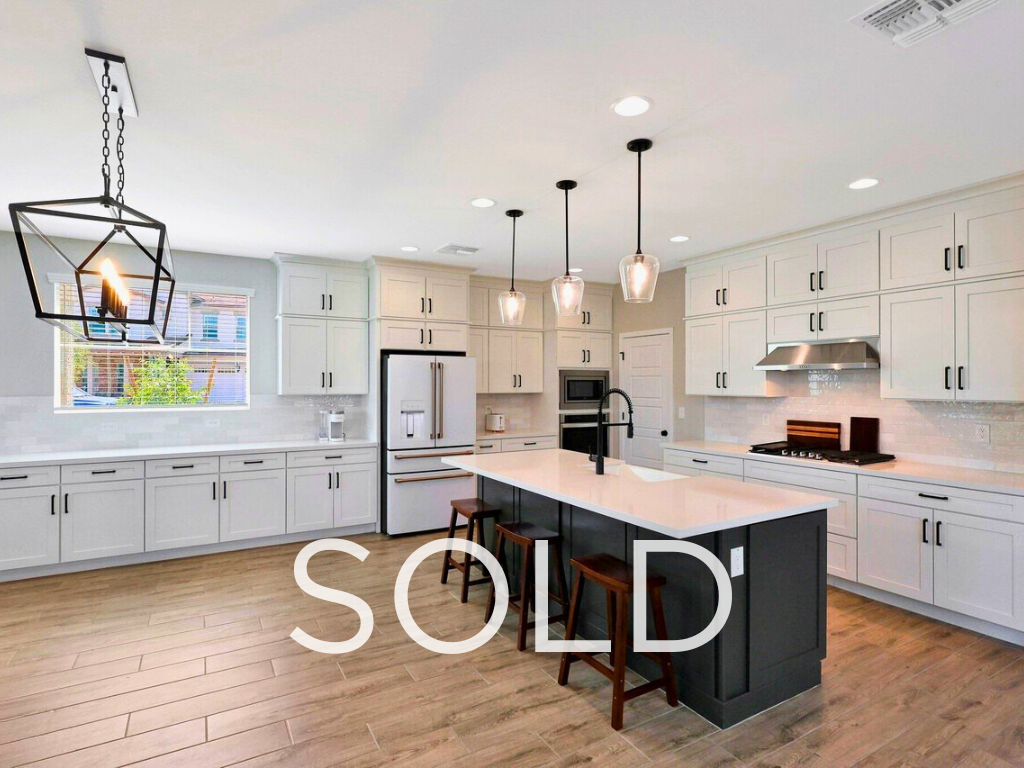
Reverse 1031 Into the TSMC Corridor — $110K Below List, Capital Gains Fully Deferred
A reverse exchange structure secured a 3-bed, 2.5-bath home in Union Park at Norterra — 15 minutes from TSMC Fab 1 — at $110,000 below original list price. All capital gains deferred. Projected rents $3,100–$3,500/month. The thesis: buy in front of a structural workforce migration driven by a $165 billion semiconductor campus, not after it.

One CA Rental Into Two AZ Properties — $890K Exchanged, +79% Monthly Cash Flow
A Southern California landlord sold a single-family rental in Norwalk for $890,000 and exchanged into two master-planned community homes in Estrella (Goodyear) and Verrado (Litchfield Park). Combined projected rents of up to $6,250/month — up from $3,500. Negotiated $14,000 in seller credits and a 4.75% 30-year investor rate on the new-construction property.
07 — Building Your Team
Who You Need
Around the Table
None of these strategies work in isolation — or with just one advisor. Here's the team I help every serious investor assemble.
08 — Where to Buy
Matching Phoenix-Area
Submarkets to Strategy
Property selection and tax strategy are the same decision — here's how I think about it.
| Submarket | Best Fit | Why It Works |
|---|---|---|
| Sedona / Village of Oak Creek | STR + Cost Seg | Strong year-round demand, high ADRs, furnished-friendly inventory. Confirm STR permitting before purchase. |
| North Scottsdale / Carefree | STR + Cost Seg | Luxury furnished rentals and significant land improvements (pools, landscaping) that boost cost segregation results. |
| Mesa / Gilbert / Chandler | REPS / Long-Term | Stable long-term rental demand — a strong fit for portfolios supporting a REPS time-tracking strategy. |
| Tempe (near ASU) | REPS / Long-Term | Reliable demand and common duplex–eightplex inventory, well-suited to 1031 portfolio growth. |
| Paradise Valley & Flagstaff | Extra Diligence | Exceptional cost segregation potential, but strict local STR ordinances — confirm zoning and permitting first. |

09 — The Advisor Behind the Strategy
Real Estate Built on a
Wealth Management Foundation
I'm the founder of The Ravenscroft Group at Real Broker and a Top 1% REALTOR® across North America, recognized as a Platinum Producer (2022–2025) and President's Club recipient (2021–2025). I hold the CRS designation — the highest credential in residential real estate — alongside GRI, ABR, MRP, SRES®, and RSPS designations.
Before real estate, I served as a Director of Wealth Management, advising physicians, executives, and business owners on tax planning, investment strategy, and long-term wealth building. That career gave me a front-row seat to how most high-income earners systematically overpay the IRS — and how real estate, structured correctly, is one of the most powerful legal remedies available.
I've closed more than $100 million in residential sales, helped clients create over $152 million in long-term wealth, and carry more than 150 five-star Google reviews. My insights on Phoenix real estate and investment tax strategy have been featured in The Wall Street Journal, Morningstar, MarketWatch, MSN Money, and The Residential Specialist. I'm also the host of the House of Ravenscroft Podcast, available on Spotify, Apple Podcasts, YouTube, Amazon Music, and iHeartRadio.
I'm the preferred real estate partner for USAA, Chase, SoFi, PennyMac, Citibank, Huntington, and Fifth Third — institutions that refer their clients to me because they trust me to deliver both the right property and the right strategy.
"Most agents can tell you about a neighborhood. Very few can tell you what a property will do to your 1040. I built my practice around closing that gap."
— Eric Ravenscroft, CRS · Director of Wealth Management (Former) · Top 1% REALTOR®10 — Tax Strategy in Print
Publications & Commentary
on Real Estate Tax Strategy
Articles, case studies, and expert commentary published on Eric's platform and syndicated across major financial media.
11 — Client Testimonials
150+ Five-Star Reviews.
A Few That Say It Best.
"Eric truly cares about serving others, not selling. He is our agent for life."
"It is one thing to be a realtor; it is another to be a true real estate advisor. Eric and his team are truly in a league of their own."
"His knowledge of the market, financing, current trends, and future real estate developments is truly impressive."
"What the industry has been missing — this is the future of real estate."
"Eric acted as if he was buying the home for himself. What an amazing service."
"They make relocating and buying out of state a breeze. Eric loves what he does and it shows."
12 — Frequently Asked Questions
Common Questions From
Investors Like You
Yes. If your spouse doesn't work full-time, they may qualify for Real Estate Professional Status while you keep your W-2 career. Alternatively, the short-term rental loophole doesn't require REPS at all — just material participation, often 100+ hours, in a property with average guest stays of 7 days or less.
Cost segregation studies tend to pay for themselves once a property's building value, excluding land, reaches roughly $300,000. REPS and STR strategies depend more on your tax bracket and ability to materially participate than on property value alone.
Often, yes. A "look-back" cost segregation study can be performed on a property you've owned for years, with catch-up depreciation applied in the current tax year via Form 3115, without amending prior returns.
As of mid-2026, 100% bonus depreciation has been restored for qualifying property acquired after January 19, 2025. These percentages have changed several times over the past decade, so always confirm the current rate with your CPA before planning a purchase.
A properly performed, engineering-based study from a reputable firm, implemented correctly by your CPA, is a well-established strategy — not a red flag. Poor documentation or unsupported allocations are what increase risk.
Depreciation taken — including bonus depreciation — is subject to recapture when you sell, generally taxed at a maximum rate of 25% for real property, separate from capital gains on appreciation. Many investors plan to hold long-term or use a 1031 exchange to defer this.
It depends on the full picture — the 50% test requires more than half of their total work hours be in real property activities, and they must also exceed 750 hours total. This needs to be modeled with a CPA using actual numbers.
Yes — it's a legitimate application of existing regulations defining "rental activity" under Section 469. It requires genuine average stays of 7 days or less, real material participation, and proper documentation.
Yes. Mesa, Scottsdale, Sedona, Paradise Valley, Flagstaff, and unincorporated Maricopa County each have different STR permit, occupancy, and HOA rules — this must be verified before the tax analysis, not after.
No — 1031 exchanges apply only to property held for investment or business use. Primary residences have their own benefit, the Section 121 capital gains exclusion.
If you don't identify a qualifying replacement property within 45 days, the exchange fails and the sale becomes fully taxable. I recommend identifying candidates before you even close on the sale of the relinquished property.
Under IRC §1014, when you pass appreciated property to your heirs at death, their cost basis resets to the property's fair market value on the date of death — not what you originally paid. Decades of appreciation, plus any depreciation recapture you would have owed, are never taxed.
Yes. This is one of the most powerful combinations in real estate tax planning: defer gains through repeated 1031 exchanges during your lifetime, then let step-up in basis eliminate the entire deferred balance when the property passes to your heirs.
13 — Free Download
The REPS Hour
Tracker Template
A ready-to-use spreadsheet for documenting time toward the 750-hour and 50% Real Estate Professional Status tests — the exact format I recommend to clients before tax season.
Pair it with a free strategy call and we'll talk through which of these five levers actually applies to your situation.
Educational only — not tax, legal, or financial advice. Eric will connect you with a qualified CPA as part of the process.
14 — Go Deeper
Related Tax
Strategy Guides
15 — Listen & Learn
The House of
Ravenscroft Podcast
Where real estate meets financial strategy. Tax planning, bonus depreciation, 1031 exchanges, STR investing, and long-term wealth building — in an easy-to-digest format for homeowners, investors, and real estate professionals.
Hosted by Eric Ravenscroft — advisor, strategist, and the rare REALTOR® who started his career in wealth management.
Discover All Episodes →Ready to Begin
Let's Look at What Your
Numbers Could Do
Bring your current income situation and, if you have one, your existing portfolio. In one call, we'll talk through which of these strategies actually applies to you — and what kind of property would make it work.