
Scottsdale 85254 Turn-Key Short Term Rental (STR) Case Study (2026): $170K Below List and Bonus Depreciation
A Turn-Key Short-Term Rental Acquired $170K Below List — With a Bonus Depreciation Strategy Built In From Day One
Fully furnished. Already earning. A brand-new roof and seller-paid closing costs. A tax framework mapped out before the first property tour.

Eric Ravenscroft represented the buyer on the acquisition of a fully furnished 5-bedroom short-term rental at 5701 E Charter Oak Rd, Scottsdale AZ 85254 — negotiated $170,000 below list price with seller-paid closing costs, a brand-new roof, and all furniture included. The property had an existing 4.98-star guest rating and approximately 87% occupancy. The acquisition was structured to support a bonus depreciation strategyBonus depreciation (IRC §168(k)) allows investors to deduct a large percentage of a qualifying asset's cost in the year it is placed in service, rather than over 27.5 years. under IRC §168(k), with a cost segregation studyAn engineering analysis that reclassifies building components to shorter 5–15 year depreciation schedules, front-loading tax deductions. commissioned post-close.
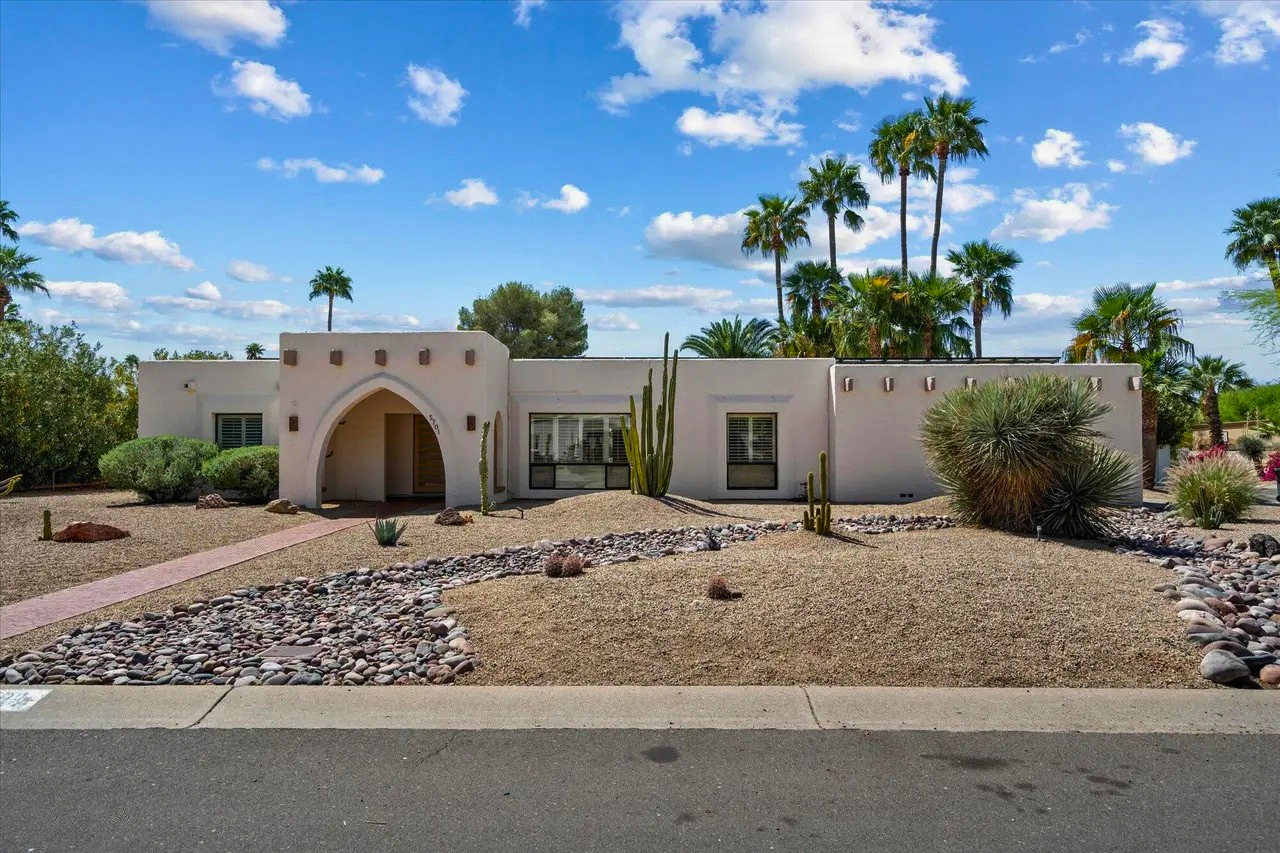
5701 E Charter Oak Road, Scottsdale AZ 85254 — acquired turn-key with furniture, reviews, and bookings already in place.
Built Around Execution, Not Speculation
This wasn't a "let's see what pops up" purchase. The criteria were mapped out before a single property was toured — built around execution and tax efficiency working together from the start. The buyer was a high-income professional with a year-end window and a clear objective: an income-producing asset that could also support a bonus depreciation strategy.
- A fully furnished, turn-key short-term rental — not a renovation project
- Proven STR performance already in place, not projections
- A year-end timeline that supported bonus depreciation planning
- Minimized upfront risk — major expenses shifted to the seller
- An income-producing asset from day one
The strategy shaped the property search — not the other way around
Most buyers find a property, then ask their CPA what to do with it. This buyer reversed that sequence. The tax objective was defined first, which meant every property evaluated was filtered through an operational and timing lens before any offer was made.
Seller Motivation Meets Strategic Timing
The seller was ready to step away from operating a vacation rental that had become more work than expected. The property was strong. The operations were the burden.
Moving early — before the year-end rush — meant we could negotiate from a position of genuine strength. The seller needed certainty and speed. We delivered both and used that leverage to restructure the deal entirely in the buyer's favor.
"Seller motivation + clear strategy + decisive timing = leverage. And leverage is what drives outcomes like this."
Tax objective defined with CPA
Bonus depreciation goal established before any property search began.
Property identified & vetted
Located before year-end competition intensified. Existing performance data reviewed.
Five-point deal structured
Price, furniture, closing costs, roof, and slider all negotiated as a single package.
Operational from day one
Buyer took over existing listings, reviews, and calendar. No setup lag.
Cost segregation study commissioned
CPA-coordinated engineering study to identify accelerated depreciation components under IRC §168(k).
Five Wins in One Transaction
This wasn't only a price win. Each element reduced a different risk — acquisition cost, setup friction, and near-term capital exposure.
- $170,000 below list price — a material improvement to the entry basis
- All furniture and contents included — a true operational takeover
- Seller covered all closing costs — preserved buyer liquidity
- Brand-new roof paid for by seller — eliminated a major near-term capital exposure
- New multi-panel slider added — enhanced indoor/outdoor flow at no cost to buyer
5701 E Charter Oak Rd, Scottsdale AZ 85254
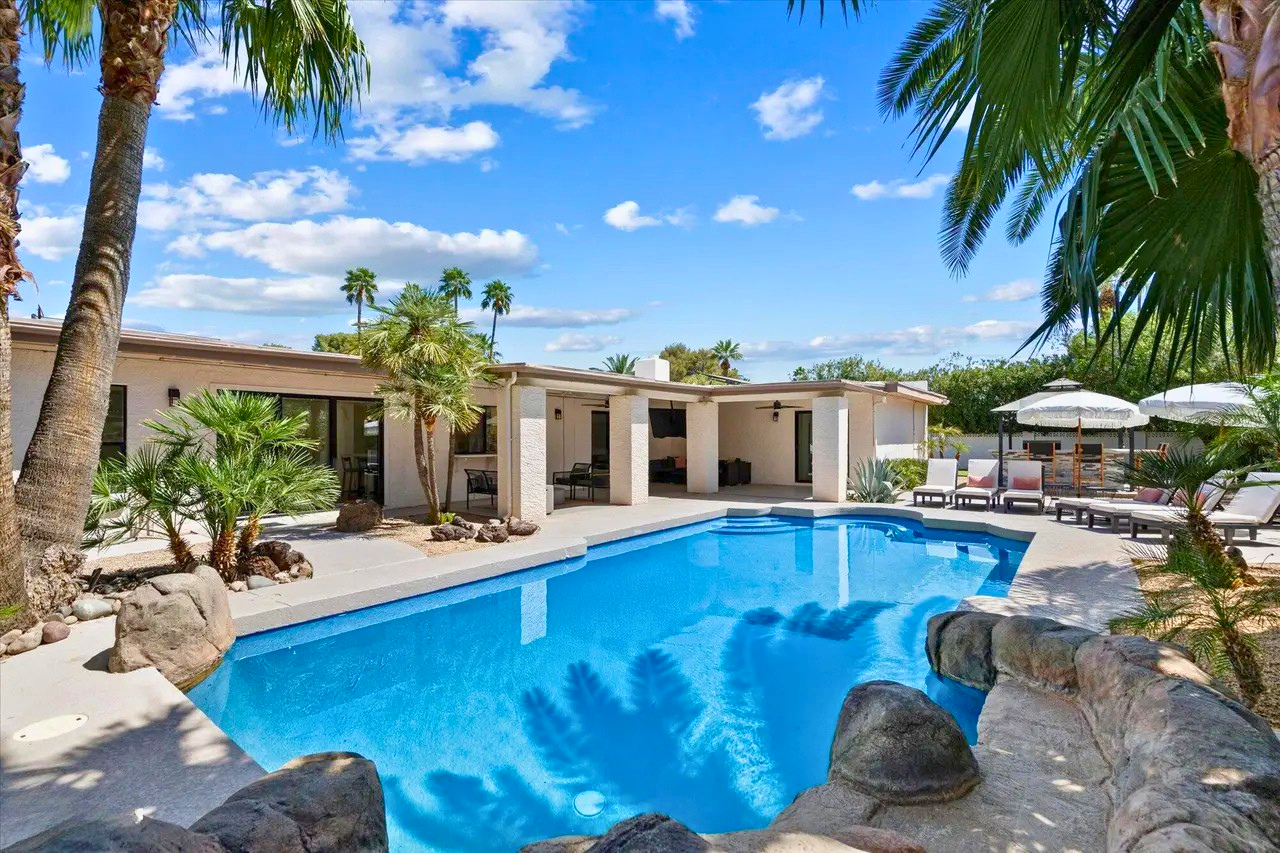
Heated PebbleTec pool, jacuzzi, putting green, and outdoor kitchen — amenities that directly drive booking velocity and nightly rate premiums.
A Santa Fe-character home on a resort-style corner lot designed around guest experience. Five bedrooms and 2.5 baths support group travel and extended stays. The backyard — heated PebbleTec pool, jacuzzi, outdoor kitchen, BBQ, and putting green — directly influences booking velocity, nightly rates, and review quality in this market.
According to AirDNA's Scottsdale market data, 5-bedroom properties with pool amenities in 85254 command a 35–45% nightly rate premium over comparable listings without resort outdoor features.
Eric walks through the full negotiation, property, and bonus depreciation structure for this 85254 acquisition.
The "Magic Zip Code" Isn't Marketing — It's Geography

85254's demand drivers are structural, not seasonal hype. Guests aren't just booking a house — they're booking access to Kierland Commons, Scottsdale Quarter, TPC Scottsdale, and easy reach of Paradise Valley and North Scottsdale. Golf-driven group stays fill the calendar year-round and command the highest nightly rates in the metro.
Scottsdale has maintained an active short-term rental permit framework that provides regulatory clarity — a meaningful advantage over markets where restrictions are unpredictable or tightening rapidly.
Where the Market Stands Right Now
Understanding current 85254 benchmarks is essential context for evaluating this acquisition. The ~87% occupancy achieved by this property sits well above the market average.
| Metric | 85254 Market Avg | This Property |
|---|---|---|
| Annual occupancy (5BR pool) | 72–78% | ~87% |
| Avg. daily rate (5BR pool, peak) | $380–$420 | Premium tier |
| Revenue per available night | $290–$340 | Above average |
| Peak season | October – May | |
| STR permit status | Active framework in place | |
| Occupancy vs. market avg. | +9–15 pts above average | |
Real History, Not a Pro Forma Projection
Acquiring an STR with existing momentum removes much of the uncertainty that derails new operators. The buyer stepped into a fully functioning operation — not a launch project.
| Item | Conservative | At ~87% Occ. |
|---|---|---|
| Gross rental revenue (est.) | $95,000 | $118,000 |
| Property management (20%) | ($19,000) | ($23,600) |
| Operating expenses | ($14,000) | ($14,000) |
| Reserves (5%) | ($4,750) | ($5,900) |
| Estimated net operating income | ~$57,250 | ~$74,500 |
Illustrative figures only, based on ~$380 avg. daily rate. Actual results depend on management, seasonality, and market conditions. Not a guarantee of performance. Model your scenario →
The Setup Gap Is Real — Especially at Year-End
For investors where bonus depreciation timing matters, the distinction between turn-key and setup-heavy isn't just operational — it's financial. A missed "placed in service" dateThe date a property is ready and available for its intended use. For bonus depreciation, the asset must be placed in service within the tax year to qualify. can defer the entire tax benefit by 12 months.
Turn-Key STR
- Faster path to operation at close
- No furnishing or setup drag
- Better fit for time-sensitive tax planning
- Existing reviews and booking momentum
- Lower operational uncertainty upfront
Setup-Heavy STR
- Renovation timelines routinely slip
- Furnishing becomes its own project
- Contractor delays break tax timing
- No occupancy history at acquisition
- Setup costs erode reserves quickly
Most Investors Hear About It. Few Execute It Correctly.
Under IRC Section 168(k), qualifying property placed in service may be eligible for accelerated first-year depreciation deductions. For short-term rentals specifically, the average rental period ruleIf the average rental period is 7 days or fewer, the property may not be subject to passive activity loss limitations — potentially allowing losses to offset active income. can affect whether passive activity limitations apply. See our full 2026 Bonus Depreciation Guide.
Define the tax objective early
The strategy started before touring properties. The buyer confirmed STR eligibility under the short-term rental exception to passive activity rules — before any offer was made.
Select a property that can be placed in service quickly
Under IRC §168(k), property must be placed in service within the tax year to qualify. A turn-key STR closes that gap immediately — no waiting on renovations or contractor schedules.
Negotiate to preserve liquidity
Even the best tax strategy breaks down if the buyer is cash-constrained. Seller-paid costs preserved capital for reserves and operations — both of which support the business characterization required.
Operate it like a business
Real systems, documentation, and operating records are not optional — they're part of the evidentiary foundation. Every STR client receives a Vacation Rental Ownership & Operations Guide.
Commission a cost segregation study
A cost segregation study identifies components that can be reclassified from 27.5-year to 5- or 15-year depreciation schedules, dramatically front-loading the deduction. Commissioned immediately post-close.
Coordinate with a qualified CPA before filing
The CPA drives the tax strategy. The real estate decision makes it executable. The two need to be aligned well before the tax year closes — not at filing time.
8 Questions to Bring Before Pursuing This Strategy
Most content tells you to "talk to your CPA" without giving you the questions. Here are the eight that matter most before pursuing a bonus depreciation strategy with a short-term rental acquisition.
- 01Am I eligible for the short-term rental exception to passive activity loss limitations under IRC §469?
- 02What is the current bonus depreciation percentage under IRC §168(k) for the year I'm planning to close?
- 03Should we commission a cost segregation study, and which firm do you recommend?
- 04What documentation do I need to maintain throughout the year to support the business use characterization?
- 05Will this create a paper loss, and if so, how does it interact with my W-2 or business income?
- 06Are there any state-level depreciation differences I need to be aware of in Arizona?
- 07What is the recapture risk if I sell the property, and how should I plan for it?
- 08Does the timing of this acquisition support a placed-in-service date before December 31st?
This checklist is a starting point, not a substitute for professional tax advice
These questions are designed to facilitate a more productive first conversation with your CPA — not to replace it. Every investor's tax situation is different and requires qualified professional review.
Risk Control, Operational Clarity, and Tax Timing — Not Headline Returns
This approach prioritizes certainty and coordination over chasing the highest projected gross revenue. It tends to be a strong fit for a specific type of buyer.
- High-income W-2 professionals — doctors, attorneys, engineers, executives seeking tax efficiency on earned income
- Business owners with elevated or uneven income years where accelerated depreciation can make a material difference
- Out-of-state investors targeting Scottsdale's proven demand without a long local ramp-up
- STR owners considering an exit — well-run short-term rentals are highly marketable assets when properly positioned
- Certainty-focused buyers who value proven performance data over projected pro forma assumptions
Positioning your rental for sale is its own strategy
Well-run short-term rentals are highly marketable assets. For owners ready to step back from operations or capitalize on strong performance history, timing and documentation matter just as much on the sell side as on the buy side.
What Made This Deal Work
Five replicable lessons from this acquisition that apply to any STR buyer pursuing a tax-aligned strategy.
- 01The tax objective was defined before any property was toured — most buyers do it backwards, and it costs them the timing advantage entirely.
- 02Seller motivation is leverage — but only if you move early, before competition arrives and the seller's urgency fades.
- 03Turn-key isn't just convenient — for bonus depreciation strategies, it's the difference between qualifying this year or waiting 12 more months.
- 04Negotiating seller-paid items isn't about being aggressive — it's about preserving liquidity for operations and reserves, which the tax strategy depends on.
- 05Existing reviews and occupancy history aren't just nice to have — they're verifiable proof of demand that reduces the single biggest risk in STR investing: the ramp-up period.
Common Questions About Scottsdale STRs & Bonus Depreciation
Considering a Scottsdale STR — or Ready to Exit One?
Whether you're evaluating your first acquisition, looking to add STR income with a tax strategy built in, or thinking about positioning a well-run rental for sale — the conversation starts with strategy, not listings.
Categories
- All Blogs (324)
- Active Adult & 55 Plus Communities (17)
- Arizona Relocation Guides (31)
- Buyers (214)
- Financial Planning (61)
- General Real Estate (141)
- Income From Real Estate (60)
- Market Update (26)
- New Construction (29)
- News, Updates and Coming Soon (57)
- Real Estate Agent Financial Planning (22)
- Real Estate Investing (96)
- Sellers (107)
- Vacation and Short Term Rentals (45)
Recent Posts









About the Author
Eric Ravenscroft is a Top 1% REALTOR® across North America and one of Arizona’s most trusted real estate strategists. With 15 years of experience spanning real estate, wealth management, and investment planning, he helps clients make smarter, financially grounded decisions, from new construction and relocations to STR investments, 1031 exchanges, and long-term portfolio strategy.
Eric’s expertise has earned him industry recognition, Elite status with Real Broker, and features in major publications including the Wall Street Journal, MarketWatch, MSN, and Morningstar. Clients across the Greater Phoenix Metro rely on his clarity, strategic insight, and results-driven guidance.
Ready to make a confident real estate move? Call or text Eric today.