
How a Strategic 1031 Exchange Near TSMC Positioned an Investor for Long-Term Growth in North Phoenix
Client Win · Real Estate Investing
How a Strategic 1031 Exchange Near TSMC Positioned an Investor for Long-Term Growth in North Phoenix

Updated July 6, 2026 · 9 min read
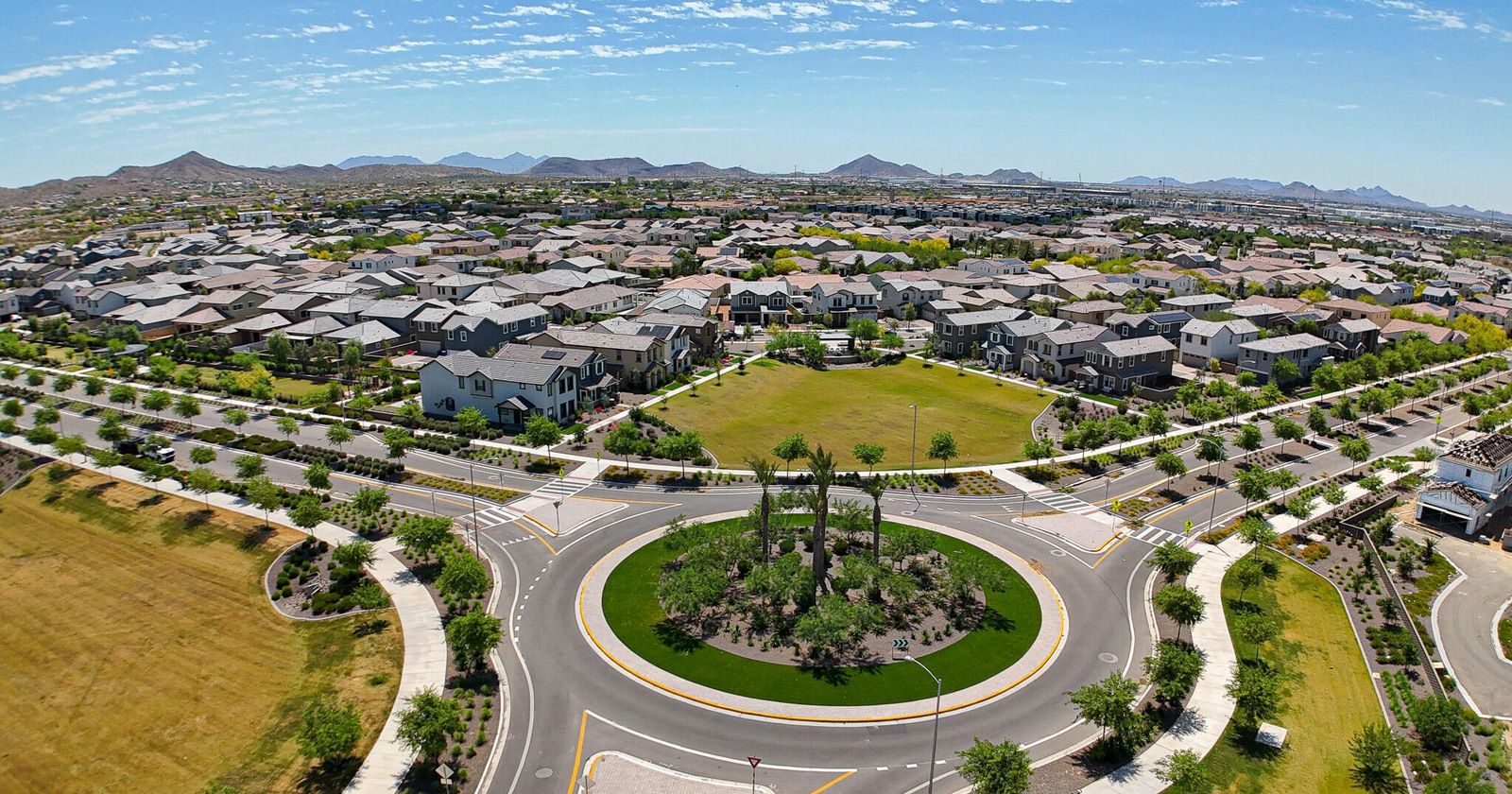
Most 1031 exchanges are run against the clock. This one was run against a plan.
That distinction is the whole story. A 1031 exchange, executed well, does far more than defer capital gains tax. It resets where your capital lives, upgrades the quality of the asset working for you, and positions equity in front of demand instead of behind it. Done under deadline pressure, it can do the opposite — swapping one tired property for another simply to satisfy the IRS calendar.
In this case, the objective was defined before a single property was toured: redeploy equity out of a legacy rental and into a high-demand, high-growth market while preserving capital and improving forward performance. That mandate pointed in one direction — North Phoenix, today one of the most closely watched investment corridors in the United States, and the reason has a name attached to it: TSMC.
Why North Phoenix Is a Strategic 1031 Exchange Market
North Phoenix is in the middle of a structural transformation, and it is being driven by the single largest economic investment in Arizona history: the advanced semiconductor build-out anchored by Taiwan Semiconductor Manufacturing Company (TSMC).
The scale is difficult to overstate. What began in 2020 as a $12 billion commitment has expanded into a planned $165 billion total U.S. investment — the largest foreign direct investment in a greenfield project in American history, according to TSMC. Roughly $65 billion of that is committed to the first three fabrication plants on the company's North Phoenix campus near Loop 303 and Interstate 17. The footprint already spans more than 1,100 acres, with as many as six fabs, two advanced packaging facilities, and a research-and-development center planned for the site.
This is not a future promise still waiting on a groundbreaking. The first fab has been in volume production since late 2024, manufacturing 4-nanometer chips for customers that reportedly include Apple and NVIDIA. The second fab finished construction ahead of schedule, with 3nm production now targeted for the second half of 2027 — pulled forward a full year on the strength of AI-chip demand. The third fab broke ground in April 2025 and will run TSMC's most advanced 2nm and A16 technologies.
The employment picture follows the concrete. TSMC's Arizona operation is expected to create roughly 6,000 direct high-tech manufacturing jobs, supported by more than 20,000 construction jobs and tens of thousands of indirect roles across suppliers, contractors, and the broader technology ecosystem this decade. The Greater Phoenix Economic Council already counts more than 140,000 jobs in semiconductor-relevant occupations across the metro — and growing. Its analysis of just the first three fabs projects $9.3 billion in total personal income and $32.9 billion in economic output for the region over a 13-year horizon.
That ripple extends well beyond TSMC itself. Suppliers and partners are building out alongside the campus, and the corridor sits within a wider Arizona semiconductor ecosystem that includes Intel, NXP, ON Semiconductor, and Amkor's advanced packaging operation in nearby Peoria.
For an investor running a 1031 exchange, this is the kind of setup the strategy is built for. The conditions that drive long-term rental performance are stacking in the same geography at the same time:
- Sustained, high-wage job creation anchored to multi-decade infrastructure
- Rising demand for quality rental housing from relocating professionals
- Long-term upward pressure on rents and home values
- A durable tenant base tied to stable, high-paying employment
Real estate follows employment. When you can position capital in front of one of the largest job-creation engines in the country, you are giving the asset a tailwind that does not depend on timing the market. North Phoenix sits squarely in that corridor.
The TSMC Effect on North Phoenix Housing Demand
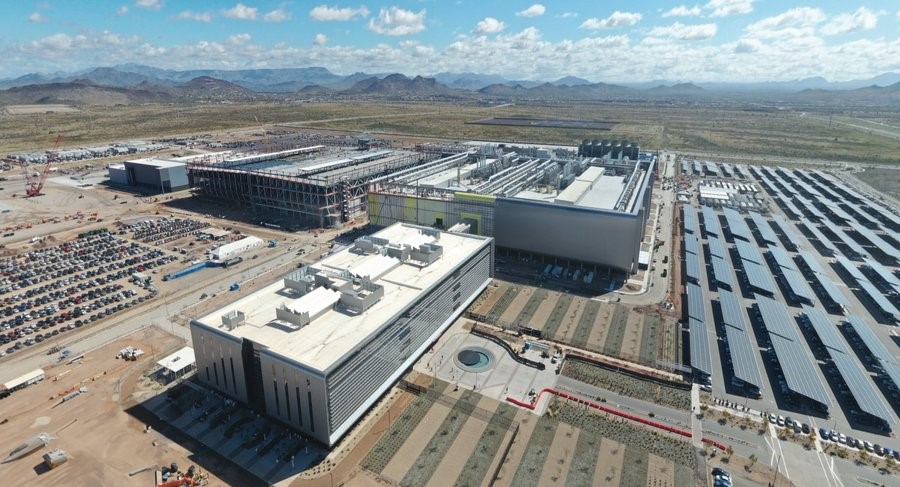
A project of this size does not just add jobs — it reorganizes where people want to live.
As the fabs ramp and the supplier network expands, thousands of engineers, technicians, and support staff are relocating to the area on a rolling basis. Most of them begin their housing search the same way: by drawing a commute radius around the campus. In practice, that means heavy interest in communities within a 15–20 minute drive, which has put neighborhoods like Norterra directly in the path of demand.
The thesis for investors is simple but powerful. When job growth, infrastructure investment, and population expansion converge in one place, housing demand tends to stay elevated for years rather than quarters. The relocating-professional renter is also a desirable tenant profile — well-compensated, employment-stable, and drawn to newer homes near work.
Why Investors Nationwide Are Watching North Phoenix
This is no longer a local secret. Institutional capital and private investors across the country have been steadily turning their attention to North Phoenix, because very few U.S. markets currently combine all four of the following at once:
- Large-scale advanced-manufacturing investment
- Strong, sustained population growth
- Available housing inventory at a workable basis
- A relatively landlord-friendly, business-friendly operating environment
The TSMC build-out has effectively elevated Phoenix into one of the most strategically important manufacturing regions in North America, and the spillover lands directly in surrounding housing markets. For a 1031 investor specifically, the appeal is the alignment: a place where employment growth and housing demand are positioned to move in the same direction for the better part of a decade. That is a rare thing to underwrite with confidence.
1031 Exchange Basics: More Than Just Tax Deferral
A 1031 exchange lets a real estate investor defer capital gains taxes by reinvesting the proceeds from the sale of an investment property into a "like-kind" replacement property.
The deferral gets the headlines. The real leverage is repositioning. When structured deliberately, a 1031 exchange can:
- Upgrade the location and demand fundamentals underneath your equity
- Improve asset quality and reduce deferred-maintenance risk
- Increase rental-income potential
- Reset the depreciation schedule on a newer, higher-basis asset
- Lower long-term operating and capital-expenditure exposure
Instead of handing a slice of buying power to the IRS and re-entering the market smaller, the investor keeps the full position intact — and often moves out of an older asset in a flat market into a newer one in a growing market. That is the difference between treating the exchange as a tax event and treating it as a portfolio decision.
As with any 1031 exchange, work with your CPA and a qualified intermediary to confirm timelines and compliance requirements before acting.
The 1031 Exchange Timeline Investors Must Follow
Every exchange runs on two fixed IRS deadlines, and neither bends:
45 Days — Identification Period
Within 45 days of closing the sale of the relinquished property, you must formally identify your potential replacement properties in writing.
180 Days — Closing Deadline
The replacement property must close within 180 days of that original sale.
Because the clock is rigid, plenty of investors end up rushing the back half of the window and reaching for whatever fits the calendar. A disciplined exchange flips the sequence: the market and the target submarket are chosen before the relinquished property sells, so the 45- and 180-day windows become execution steps in a plan rather than a scramble. Deadlines should govern the paperwork — not the investment thesis.
Why Norterra Stood Out
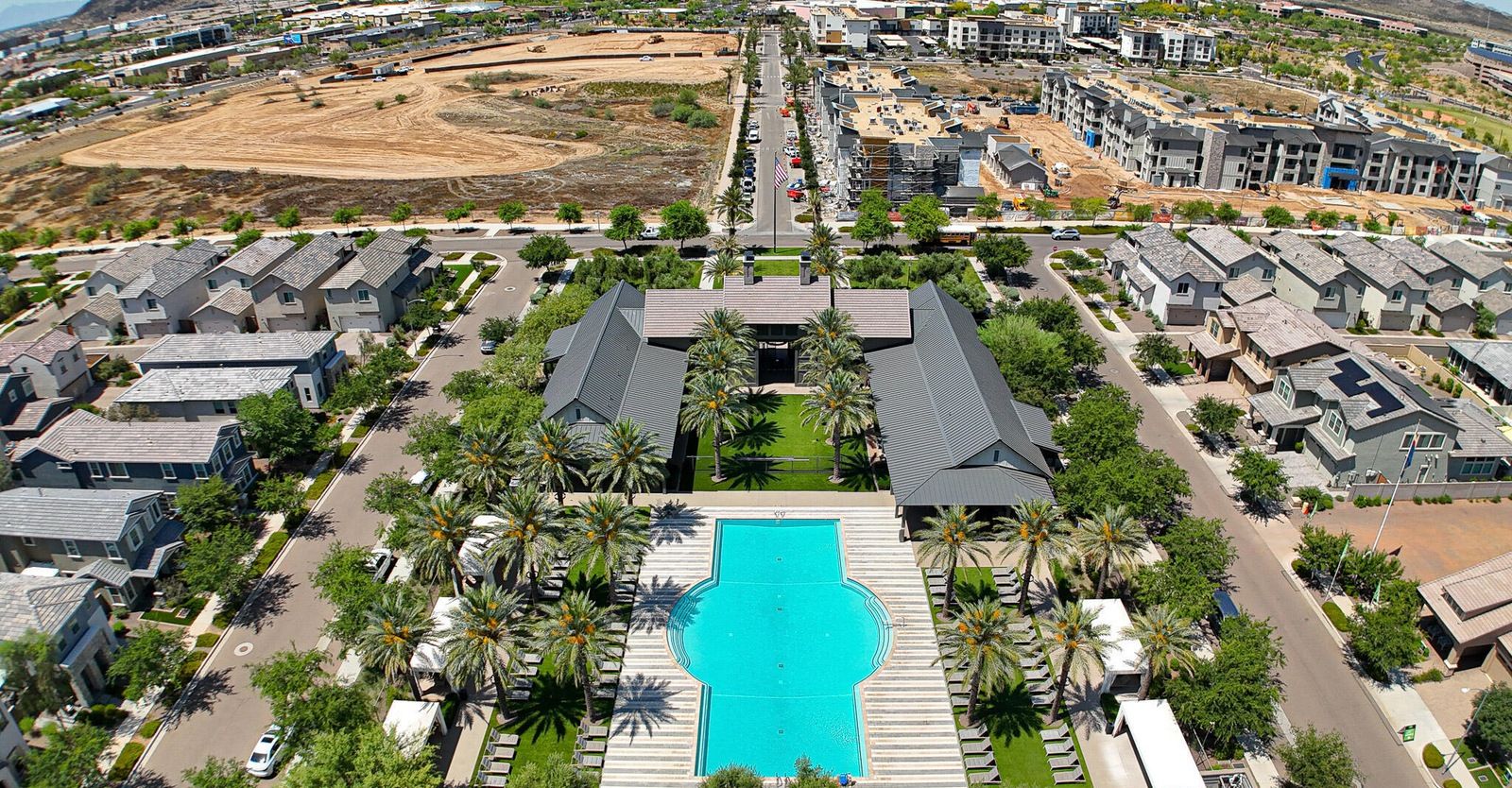
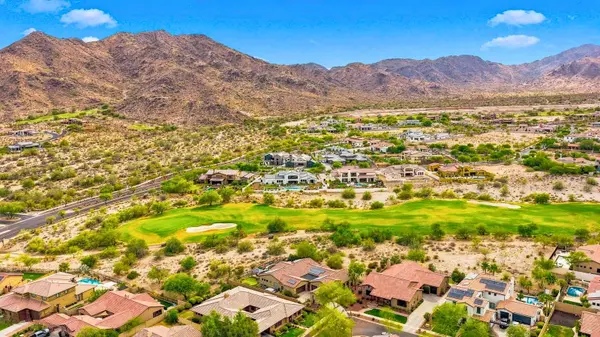
After screening multiple submarkets across the Phoenix metro, the data kept pointing to the same place: Norterra — and specifically Union Park at Norterra.
In this transaction I worked directly with the investor to weigh several North Phoenix submarkets before identifying Norterra as the strongest long-term replacement candidate, based on three factors that mattered most for a durable hold: employment proximity, depth of housing demand, and community fundamentals.
Norterra offers a combination that is genuinely hard to find together elsewhere:
- Proximity to major employment centers, with TSMC at the front of the list
- A strong owner-occupant base that supports values and stabilizes the neighborhood
- Limited oversupply relative to several faster-building submarkets
- High tenant demand driven by lifestyle, convenience, and job access
Union Park sharpens that appeal with resort-style amenities — a 5,500-square-foot recreation center, community pool, parks, and sports courts. Amenities like these are not just nice-to-haves; they raise tenant demand, shorten vacancy, and support value stability over a long hold.
Distance to Key Employment Hubs
Location was underwritten in drive times, not just zip codes. Union Park at Norterra sits within easy reach of several major employment nodes:
- ~15 minutes from the TSMC semiconductor campus
- ~10 minutes from the I-17 / Loop 101 employment corridor
- ~20 minutes from Deer Valley's expanding logistics and industrial sector
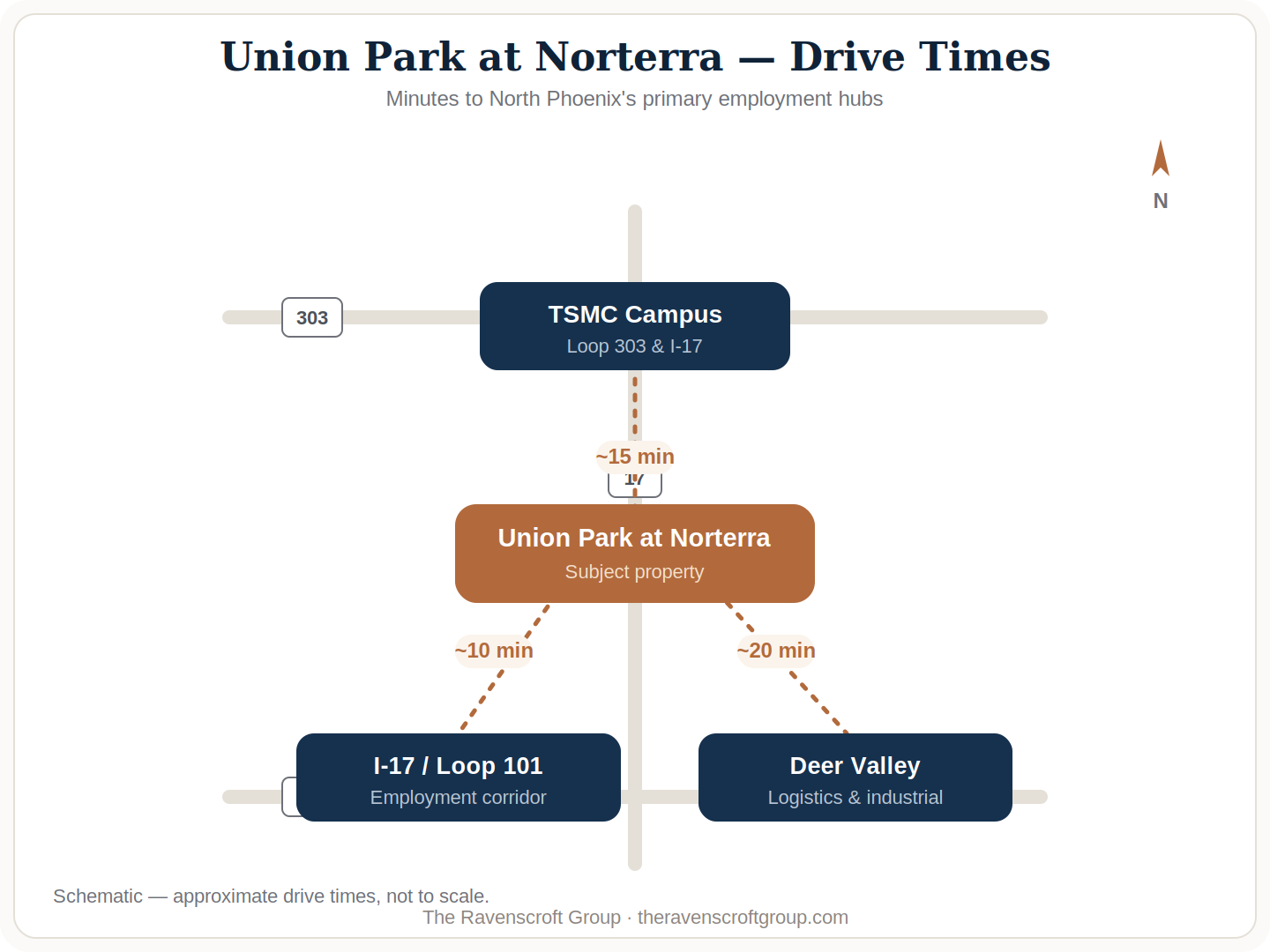
For professionals relocating into semiconductor, engineering, and advanced-manufacturing roles, that commute math is exactly what drives rental demand toward a community — and what keeps it there.
The Norterra Lifestyle Advantage
Commute is the hook; lifestyle is what keeps tenants renewing. Beyond job proximity, Norterra offers the kind of day-to-day quality of life that appeals to homeowners and renters alike — convenient shopping and dining, hiking and desert trails nearby, and quick freeway access via Interstate 17 and Loop 101.
Communities like Union Park pair modern, low-maintenance housing with walkable amenities and recreation, which lands particularly well with the engineers and technology professionals moving to the Valley for the semiconductor expansion. That demand profile — high-income, relocation-driven, amenity-conscious — is precisely the tenant base an investor wants underwriting a long-term rental.
The Property & the Deal
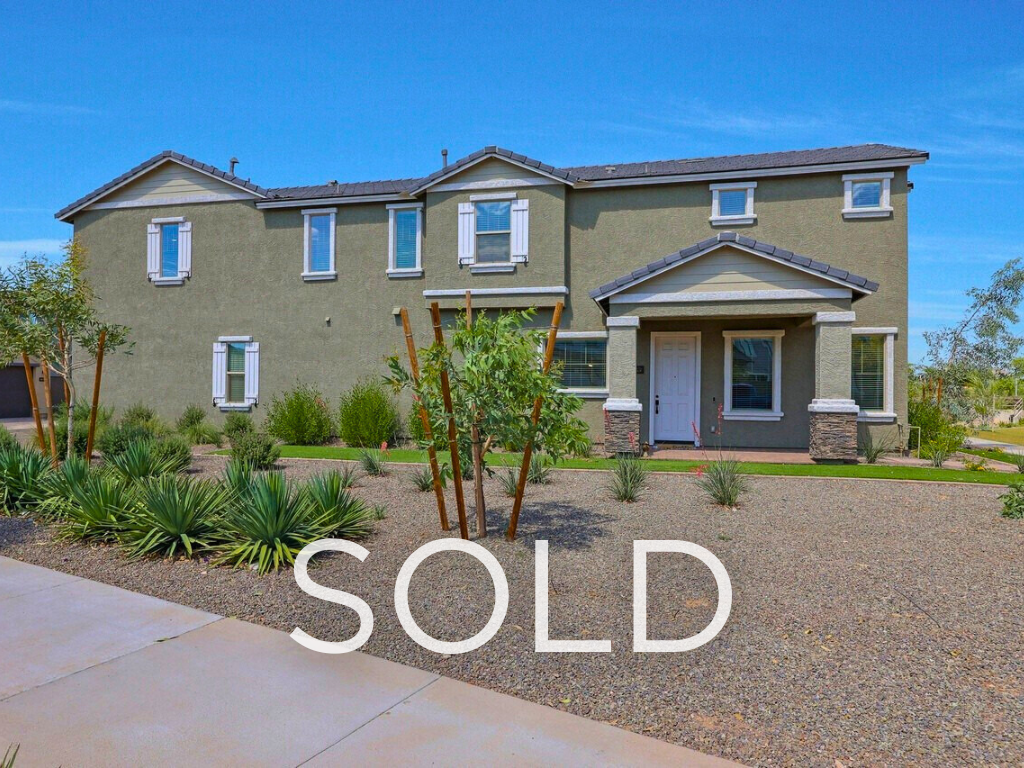
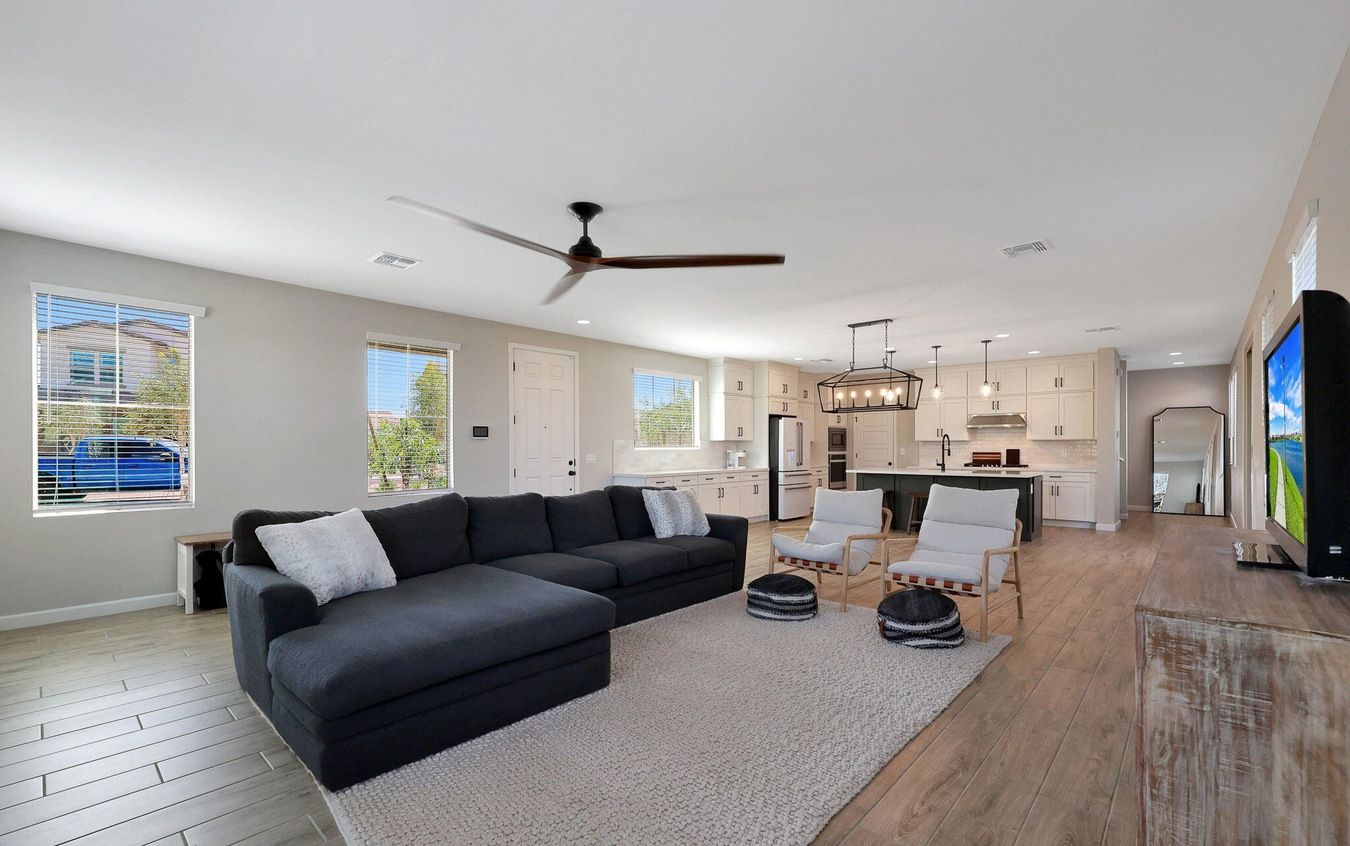
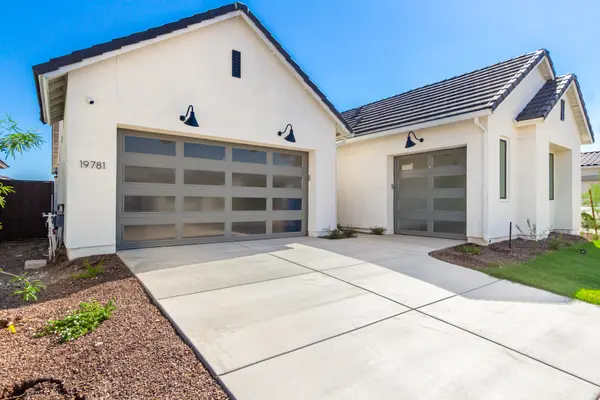
The replacement property secured through the exchange was a modern 3-bedroom, 2.5-bath home with 2,567 square feet of low-maintenance living space — newer construction, in the right community, on the right side of the commute map.
The entry point is where the strategy earned its keep. Through timing, an all-cash offer, and disciplined negotiation, the home was acquired for $640,000 — roughly $110,000 below list price, building immediate equity inside the exchange structure. A cash close also removed financing contingencies, which strengthened the offer and shortened the path to the table.
For a 1031 investor, basis is everything. A lower entry price is not just a one-time win; it widens the margin of safety, improves cash-flow math, and lifts long-term risk-adjusted returns for the entire hold. You cannot control where the market goes — but you can control what you pay to get in.
Investment Snapshot
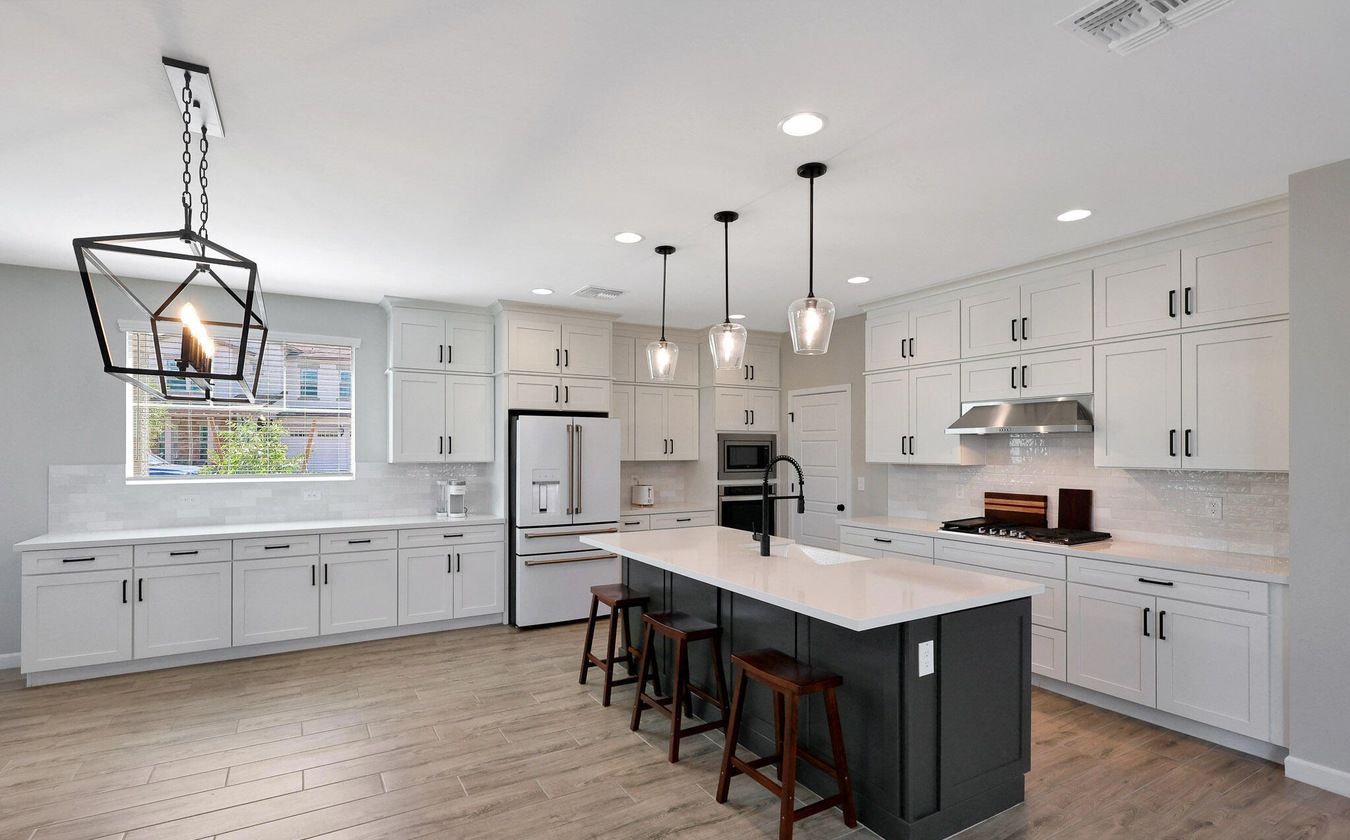
| Purchase price | $640,000 — negotiated $110,000 below list |
|---|---|
| Financing | All-cash purchase (no financing contingency) |
| Property size | 2,567 sq ft |
| Beds / baths | 3 bed / 2.5 bath |
| Projected rent range | $3,100 – $3,500 / month |
| Construction | Newer build, low-maintenance |
What the numbers add up to:
- Modern construction with reduced maintenance and capital-expenditure exposure
- Strong tenant demand from semiconductor and technology employees
- Proximity to a multi-decade employment engine
- Master-planned amenities that support occupancy and value
Investors weighing the region typically pair a deal like this against the broader Phoenix fundamentals — rental-demand trends, in-migration, and long-term population growth — to confirm the micro-decision fits the macro story.
How the Numbers Pencil Out
This was an all-cash purchase, so there's no mortgage to service — the property is cash-flow positive from year one. Here's the full first-year return picture, combining net rental income with appreciation, the way a capital-reset exchange is actually underwritten.
Illustrative figures for this all-cash transaction based on the assumptions shown (closing costs estimated at 2% of price); not a guarantee of performance or tax advice. Buying without financing makes the property cash-flow positive from year one, with total return combining net rental income and appreciation — before additional depreciation and tax benefits. For financed scenarios, see builder buydowns & investor rates, explore more real estate calculators, or run the numbers on 2026 tax-strategy scenarios, and confirm all numbers with your CPA.
Why Newer Construction Appeals to 1031 Exchange Investors
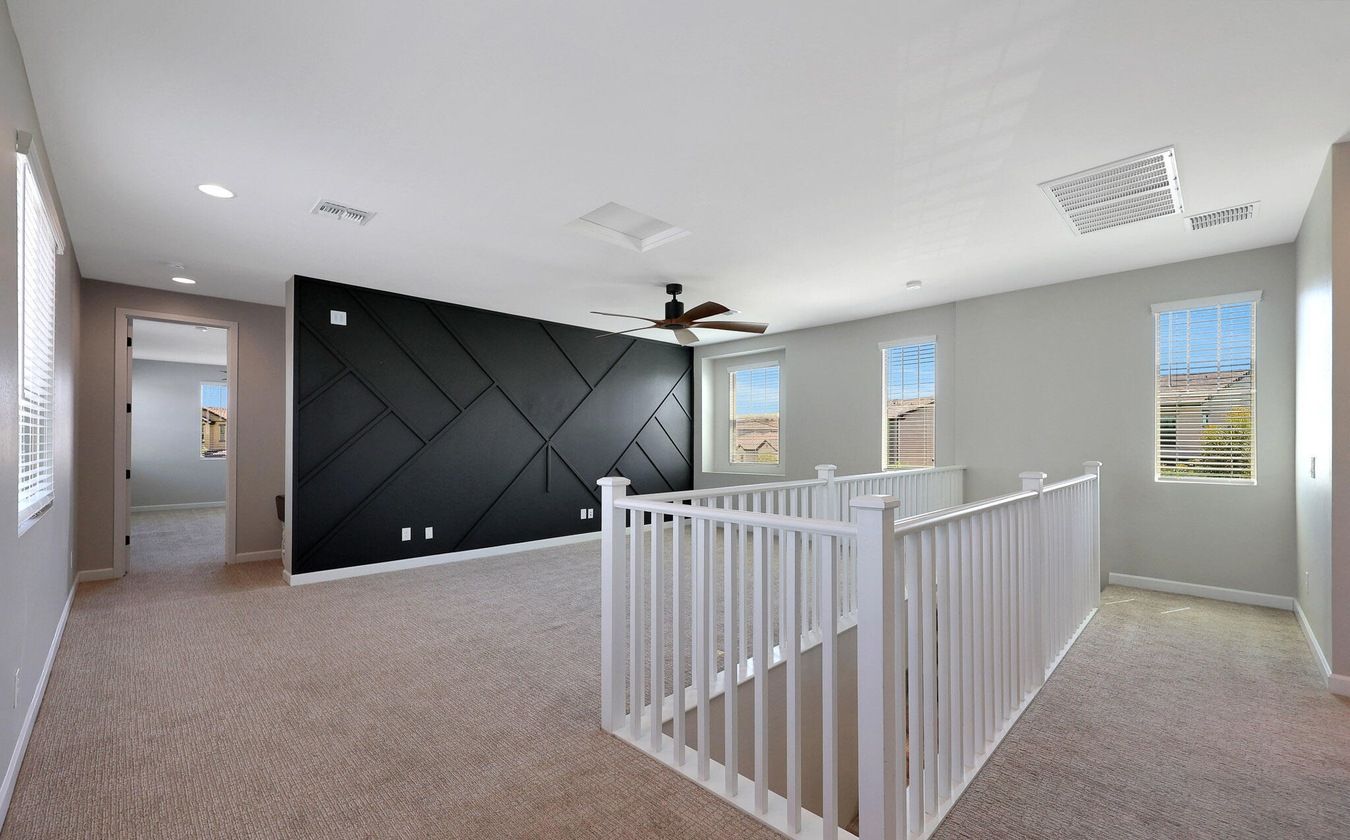
A common move inside a 1031 exchange is to trade out of an older rental and into newer construction — and for good operational reasons. Newer homes generally deliver:
- Lower maintenance and repair costs in the early hold years
- Higher tenant demand, especially from relocating professionals
- Modern layouts that lease faster and command stronger rents
- Better energy efficiency, which matters in the desert climate
For an investor repositioning capital, moving into newer assets reduces operational risk while keeping full exposure to appreciation in a growing market. It is a way to lower the floor without lowering the ceiling.
Why Phoenix Continues to Attract 1031 Exchange Capital
Investors routinely stack Phoenix against the other usual 1031 destinations — Dallas, Tampa, Nashville, Las Vegas. Phoenix keeps winning the comparison on structural grounds:
- One of the fastest population-growth rates in the country — the metro added roughly 80,000 new residents in 2024 and ranks among the top large metros for net domestic in-migration
- Steady migration from higher-cost coastal states, particularly California
- Expanding technology and advanced-manufacturing sectors, led by the TSMC build-out plus growth at Mayo Clinic and Banner Health
- Strong job creation tied to long-horizon infrastructure investment
- A relatively landlord-friendly environment versus many coastal markets
Layer the semiconductor expansion on top of those demographics and you get a market that offers both cash-flow potential and long-term appreciation exposure — the two things a 1031 investor is usually trying to balance.
A Clear-Eyed Look at the 2026 Phoenix Rental Market
Strong long-term fundamentals do not mean a straight line, and an honest case study should say so.
The Phoenix housing market has been working through a supply cycle. A wave of new apartment construction — the Valley has been absorbing well over 10,000 new units a year — pushed multifamily vacancy higher and softened apartment rents through 2025, with metro median apartment rent now sitting in the ~$1,725 range and roughly flat to modestly down year over year. That is a real headwind for certain asset types, and it is why blanket "Phoenix always goes up" claims deserve skepticism.
But the softening has not been uniform, and the distinction matters for this strategy:
- Single-family rentals in family-oriented, master-planned communities — exactly the Union Park profile — have stayed far more insulated than large apartment complexes.
- East Valley and well-located submarkets have held sub-4% vacancy even as apartment-heavy submarkets loosened.
- New apartment starts fell sharply in late 2025, removing the very oversupply that drove rents down — setting up a tighter market ahead.
- Forward-looking models project Phoenix rent growth re-accelerating toward roughly 5% by 2027, and JLL's 2026 multifamily outlook flags metro Phoenix among the Sun Belt's most resilient rent-growth markets into the back half of the decade.
In other words, the investor in this case wasn't buying into a frothy top. They were entering a stabilizing single-family niche, at a discounted basis, in front of a demand catalyst that doesn't switch off — while the broader supply glut that pressured apartment rents was already ebbing.
The Rise of Arizona's Semiconductor Corridor

What's happening in North Phoenix isn't an isolated project — it's the visible edge of a regional shift. Over the past several years, Arizona has emerged as a national hub for advanced semiconductor manufacturing, and economists increasingly describe the cluster as the Arizona semiconductor corridor.
That corridor includes advanced chip-fabrication facilities, the supply-chain partners that feed them, a steady relocation of engineering and technology jobs into the region, and the public and private infrastructure being built to support all of it. Together those forces are reshaping the economic base of the entire metro.
For housing, the implication is direct: high-skilled employment growth tends to create sustained housing demand, concentrated in communities within a reasonable commute of the job centers. North Phoenix neighborhoods like Norterra sit inside that radius — which is exactly why investors keep returning to the area as part of long-term strategies rather than short-term plays.
Where TSMC Employees Are Renting and Buying Homes
The people relocating for these roles — engineers, technicians, and supplier staff — tend to start their search inside a 15–25 minute commute of the campus. That radius has turned a handful of North Valley communities into reliable demand magnets for professionals moving into semiconductor and advanced-manufacturing jobs. Among the most-searched areas:
- Norterra
- Union Park
- Desert Ridge
- North Scottsdale
- Peoria's northern communities
Each pairs job-center access with the lifestyle and amenities that highly compensated, relocating professionals look for — which is precisely the overlap that makes them work as rental markets.
Understanding the Risks Investors Should Consider
No market is risk-free, and a strategic exchange weighs the downside as carefully as the upside. In North Phoenix, the factors worth underwriting include:
- Interest-rate sensitivity, which affects buyer demand, financing costs, and exit timing
- Supply risk, if construction re-accelerates faster than absorption (the 2024–2025 apartment glut is the cautionary example)
- Tenant turnover tied to corporate relocation and project cycles
- Climate and water diligence, now a real underwriting question for long-hold investors in the desert
The counterweight: markets anchored by long-term employment expansion and infrastructure investment have historically shown more resilience through cycles than markets riding sentiment alone. Understanding both sides — opportunity and risk — is the entire point of choosing a replacement property deliberately.
Why This Worked as a Capital Reset Strategy
Most 1031 exchanges are executed under pressure. This one was built, from the start, as a capital reset. Rather than simply swapping one property for another to beat the clock, the exchange did four things at once:
- Improved asset quality by moving into newer construction
- Reduced long-term maintenance and operating exposure
- Increased appreciation potential by repositioning into a growth corridor
- Planted capital in front of one of the country's largest employment build-outs
That is the line between a reactive exchange and a strategic repositioning of capital — and it's the difference that compounds over the life of the hold.
Frequently Asked Questions
What is a 1031 exchange and how does it defer taxes?
How close is Norterra to the TSMC campus in North Phoenix?
Is North Phoenix a good market for rental property investment in 2026?
What are the 1031 exchange deadlines investors must meet?
How much is TSMC investing in Phoenix and how many jobs will it create?
About the Author — Eric Ravenscroft, CRS
Eric Ravenscroft is a Top 1% REALTOR® across North America and one of Arizona's most trusted real estate strategists. With 15 years of experience spanning real estate, wealth management, and investment planning — including years overseeing billions in client assets as a financial planner — he helps investors make financially grounded decisions across new construction, relocations, short-term-rental investments, 1031 exchanges, and long-term portfolio strategy. His work has earned Elite status with Real Broker and features in the Wall Street Journal, MarketWatch, MSN, and Morningstar.
Considering a 1031 Exchange or Investment in Phoenix?
Most investors start the same way — figuring out how a potential Arizona investment property fits inside their broader strategy before they commit. A short, no-pressure conversation can help clarify:
- Which Phoenix submarkets currently show the strongest fundamentals
- How employment growth and infrastructure projects are shaping housing demand
- Whether a specific opportunity aligns with your long-term financial goals
Sources
- TSMC — Intends to Expand U.S. Investment to $165 Billion (March 2025)
- TSMC — TSMC Arizona: campus, fab timeline & production milestones
- Greater Phoenix Economic Council — TSMC Arizona investment, jobs & economic-impact figures
- Phoenix rental and migration data — JLL 2026 Multifamily Outlook; U.S. Census Bureau 2025 estimates; metro market reporting (2026).
This article is provided for educational purposes and reflects market conditions as of July 2026. It is not tax, legal, or investment advice. Property performance figures are specific to this transaction and are not a guarantee of future results. Consult your CPA and a qualified intermediary before initiating a 1031 exchange. Eric Ravenscroft, Arizona Real Estate License ID SA691304000 · The Ravenscroft Group at Real Broker.
Recent Posts




About the Author
Eric Ravenscroft is a Top 1% REALTOR® across North America and one of Arizona’s most trusted real estate strategists. With 15 years of experience spanning real estate, wealth management, and investment planning, he helps clients make smarter, financially grounded decisions, from new construction and relocations to STR investments, 1031 exchanges, and long-term portfolio strategy.
Eric’s expertise has earned him industry recognition, Elite status with Real Broker, and features in major publications including the Wall Street Journal, MarketWatch, MSN, and Morningstar. Clients across the Greater Phoenix Metro rely on his clarity, strategic insight, and results-driven guidance.
Ready to make a confident real estate move? Call or text Eric today.