
From a 1,000 Sq. Ft. California Condo to a 3,800 Sq. Ft. Arizona Legacy
Moving from California to Arizona · A Real Client Story
From a 1,000 Sq. Ft. California Condo to a 3,800 Sq. Ft. Arizona Legacy
Their Southern California condo sold for almost exactly what they paid for a brand-new 5-bedroom home in Arizona — here's how the numbers, and the negotiation, made it possible.





The Referral
It started the way the best relocations do — with trust already in place
A trusted agent at a Southern California brokerage referred a family to me as the agent their office relied on here in the Phoenix Metro. The family had one condition that would shape every offer we wrote: their current home in Southern California needed to sell, which meant every purchase contract would carry a contingency for that sale — a term many sellers in a competitive market are reluctant to accept.
One detail made this referral feel personal from the start: the family's roots trace back to Ventura County — the same place I made this exact move from myself, over a decade ago. I understood the pull of that decision, and what it takes to actually pull it off, before we ever spoke.
That single constraint set the strategy for everything that followed.
The Strategy
Three decisions that turned a contingency into leverage
Run the numbers first
Before touring a single home, we compared resale against new construction — long-term carrying costs, the opportunity cost of cash tied up in a contingent sale, and which path actually gave us room to negotiate. Resale meant competing with cash buyers who wouldn't accept a sale contingency. New construction, especially on homes that had sat on a builder's books longer than expected, meant a motivated seller with far more flexibility.
Search with the next ten years in mind
The search widened past what the family first had in mind. We looked for a plan that could flex: a downstairs guest suite for family who might need to move in, a bonus room that could become a playroom today and a media room later, and a 4-car garage built for a household where teenagers would eventually be driving.
Negotiate the contingency, then the price
We found the option: a Soleo home built by TriPointe Homes in San Tan Valley. It had sat unsold for months, still priced at its original, considerably higher list price. That gap between list and reality gave us room to negotiate a sale-contingent offer the builder accepted, a conventional rate buydown in the 4% range, builder-covered closing costs, and 6% off that original price — all in the same contract.
The Comparison
Same price range. Two very different homes.
Here's the number that made the decision easy: the family's Southern California condo and their new San Tan Valley home landed in nearly the same price range — and that was after we negotiated 6% off an original list price that had been set considerably higher. What that price bought them looked nothing alike.
| SOUTHERN CALIFORNIA | SAN TAN VALLEY, AZ |
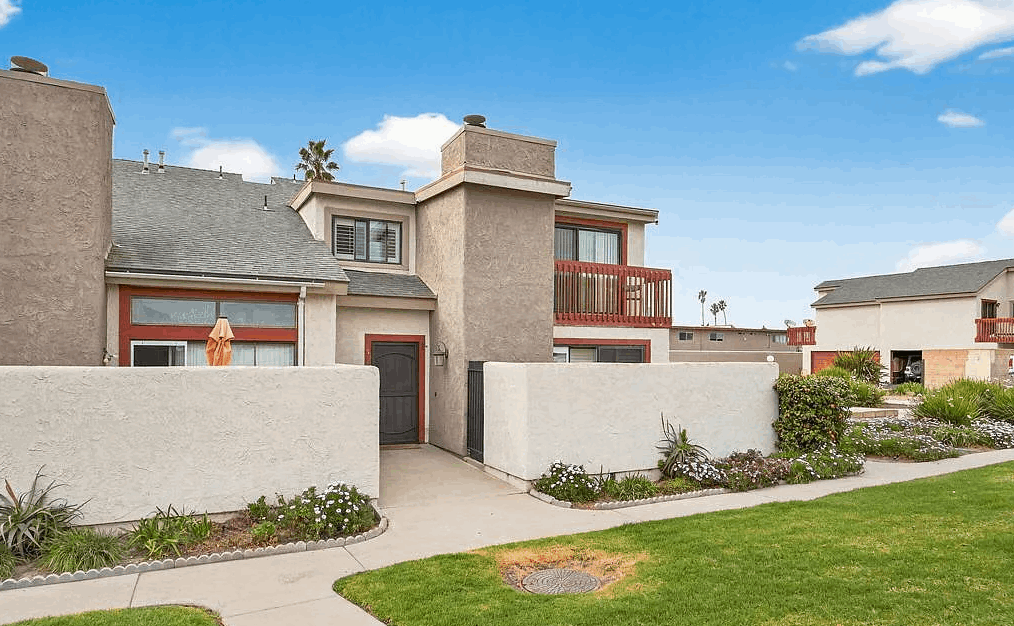
Nearly 40-year-old condo
- 2 bedrooms
- Limited bathrooms
- Just over 1,000 sq. ft.
- HOA-governed, shared walls
- Approaching 4 decades old
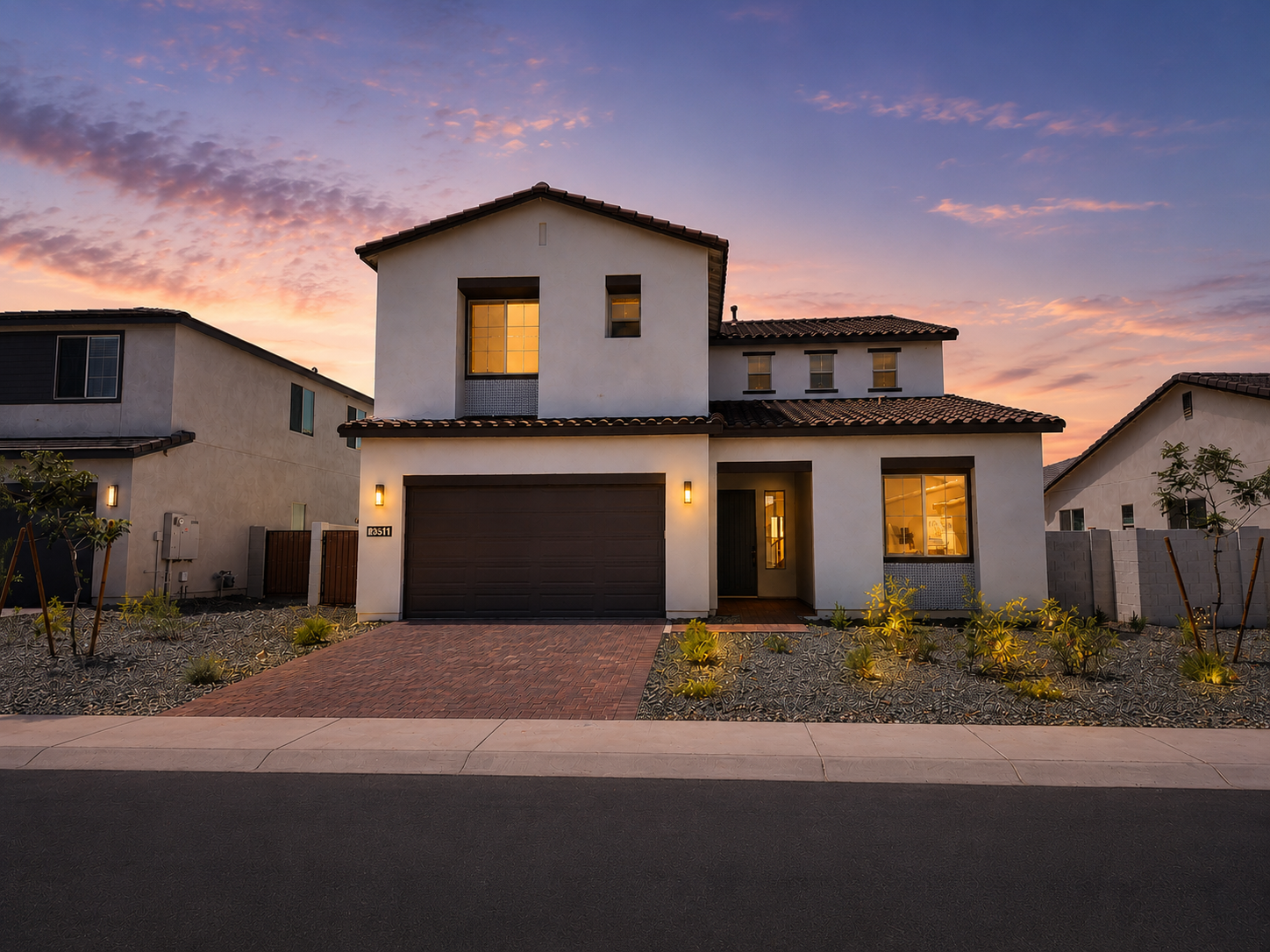
Brand-new construction
- 5 bedrooms
- 4 bathrooms
- 3,800 sq. ft.
- Downstairs guest suite + bonus room
- 4-car garage
| Square footage | 1,000 | |
| 3,800 | ||
| Bedrooms | 2 | |
| 5 |
For Any Californian Considering This
Is the move worth it? Here's what the numbers actually say
This family's case wasn't a fluke of one lucky listing — it reflects a gap in the market that shows up almost anywhere you compare Southern California to the Phoenix Metro. Here's the broader picture.
This isn't a small trend: over 80,000 Californians moved to Arizona in 2023 alone, and the Bureau of Economic Analysis puts Arizona's overall cost of living at roughly 32% below California's. The job market has broadened too — Maricopa County's unemployment rate consistently runs below California's, and TSMC's $40 billion semiconductor campus in north Phoenix has pulled in thousands of engineering jobs and a wave of supplier companies alongside it, adding real long-term economic depth to the same growth corridor Soleo sits in.
What your equity could buy in San Tan Valley
Using each county's current median sale price against San Tan Valley's average price per square foot, here's roughly how far that same budget goes:
| If you sold in… | Median sale price | ≈ Sq. ft. that budget buys in San Tan Valley* |
|---|---|---|
| Orange County, CA | $1,490,000 | ~6,960 sq. ft. |
| San Diego County, CA | $1,085,000 | ~5,070 sq. ft. |
| Ventura County, CA | $937,500 | ~4,380 sq. ft. |
| Los Angeles County, CA | $900,000 | ~4,200 sq. ft. |
| Inland Empire (San Bernardino Co.), CA | $508,080 | ~2,375 sq. ft. |
*Illustrative math based on San Tan Valley's ~$214 average price per square foot (Redfin, May 2026) against each county's June 2026 median sale price (California Association of Realtors, via FOX 11 Los Angeles). Actual available floor plans vary by lot, community, and finish level — this shows scale, not a specific home.
Migration and cost-of-living figures above: Bureau of Economic Analysis Regional Price Parities; Bureau of Labor Statistics LAUS program (unemployment); TSMC Arizona investment figures per company and state economic development announcements.
Coming specifically from the LA area? I've put together a deeper breakdown in my LA to Phoenix Relocation Guide, covering costs, taxes, and neighborhood-level comparisons.
The bigger financial picture
Purchase price is only one part of the comparison. Ongoing costs of ownership diverge just as much.
| Category | California | Arizona |
|---|---|---|
| Top state income tax rate | 13.3% | 2.5% flat |
| Effective property tax rate | ~0.74–0.76% | ~0.62–0.63% |
| Cost of living index (nat'l avg = 100) | 142.2 | 102.2 |
| Homeowners insurance | Many carriers have pulled back from wildfire-exposed areas, pushing more homeowners onto the state's FAIR Plan | ~$2,468/yr avg. |
Sources: StateCalc.com (income tax, property tax, cost-of-living index, 2026); The Motley Fool property tax analysis (2026); Insure.com & MoneyGeek Arizona homeowners insurance data (2026); Insurance.com state insurer analysis (2026). Tax outcomes vary by individual situation — this isn't tax advice.
Want to run your own numbers? My mortgage, rent-vs-buy, and appreciation calculators let you model your specific scenario, and my Moving to Arizona guide covers the full cost-of-living picture in more depth.
See your own comparison
Most relocating buyers save 15–35% on overall monthly expenses — even after buying a larger home. Enter your current California expenses below and see the comparison instantly.
California → Arizona: The most common relocation we see. Buyers regularly save $2,500–$5,000/month — lower housing, 60–75% lower property taxes, and Arizona's 2.5% flat income tax vs. California's up to 13.3%. No state tax on Social Security. Read the full CA → AZ guide →
| Category | CA | Arizona | Difference |
|---|---|---|---|
| Housing / Mortgage | $3,200 | $2,200 | Save $1,000 |
| Property Taxes | $700 | $280 | Save $420 |
| State Income Tax | $900 | $200 | Save $700 |
| Home Insurance | $180 | $140 | Save $40 |
| Utilities (Electric/Gas) | $200 | $220 | +$20 |
| Groceries | $800 | $680 | Save $120 |
| Car Insurance | $220 | $170 | Save $50 |
| Childcare / School | $1,500 | $1,100 | Save $400 |
| Healthcare | $600 | $520 | Save $80 |
| Entertainment / Other | $500 | $420 | Save $80 |
| Monthly Total | $8,800 | $5,930 est. | Save $2,870/mo |
Arizona figures reflect Phoenix Metro averages and are estimates, not guarantees.
Want a full personalized comparison? I build a detailed cost analysis for every relocating client — taxes, vehicle registration, HOA, and more. Request yours →
How It Actually Works
A contingent relocation, step by step
This is the general roadmap for a California-to-Arizona move where your current home needs to sell — the same process behind the case study above.
Get Pre-Approved
Meet your AZ agent, run the resale-vs-new-construction numbers before touring anything.
Week 1List the CA Home
Your CA home goes on the market while we identify target AZ communities and builders.
Weeks 1–2Tour & Shortlist
Walk quick move-in homes, especially ones that have sat — that's where the leverage lives.
Weeks 2–4Write a Contingent Offer
Negotiate price, incentives, and financing alongside the sale contingency the builder needs to accept.
Week 4–5Parallel Escrow
Your CA sale and AZ purchase move through underwriting at the same time.
Weeks 5–7Close & Move In
Both transactions close, keys in hand, moving truck pointed east.
Week 8+Timeline is a general guide, not a guarantee — actual timing depends on your CA home's market, the specific builder's construction stage, and lender underwriting.
After you close: don't forget these
Update your license & registration
Arizona generally expects a new driver's license within 10 days of establishing residency, and vehicle registration within 15 days.
Notify the California Franchise Tax Board
California has a history of asserting continued tax jurisdiction after a move. Keep a clean paper trail documenting your change of residency.
Loop in a CPA if you have CA income
Rental property or business income still tied to California deserves a CPA familiar with both states before you move, not after.
For the complete playbook — school district data, commute realities, HOA laws, new-vs-resale, and remote closing — see my Out-of-State Buyers Guide to the Phoenix Metro.
Why New Construction Won
Aged inventory gave us three separate wins in one contract
Price flexibility
This particular Soleo home by TriPointe Homes had sat unsold for months at its original, higher list price. That gave us the opening to negotiate 6% off — a discount rarely available on comparable resale listings in a competitive market.
Builder-covered closing costs
On top of the price reduction, TriPointe covered closing costs — money that would otherwise have come out of pocket during a stretch when the family was still carrying two properties.
A conventional rate buydown
The same motivation that opened the door on price also opened the door to a conventional rate buydown in the 4% range through the builder's preferred lender — improving the household's overall cost of ownership from day one.
Nothing to fix for years
A brand-new home meant no deferred maintenance, no inspection repair list, and a builder warranty behind the big-ticket systems — a real difference compared to a resale home nearing 40 years old. See how Arizona builder warranties typically break down.
Built for What's Next
A floor plan sized for the family's next decade, not just this year
The family started their search with a smaller home in mind. We pushed the size conversation because of what the extra square footage actually solved for:
Downstairs Guest Suite
A private space if extended family ever needs to move in — no stairs required.
4-Car Garage
Room for today's vehicles and the extra cars that come once the kids start driving.
Bonus Room
A playroom now, a media room later — a flex space that grows with the family.
3,800 Sq. Ft.
Nearly 4x the space they were leaving, at a comparable purchase price.
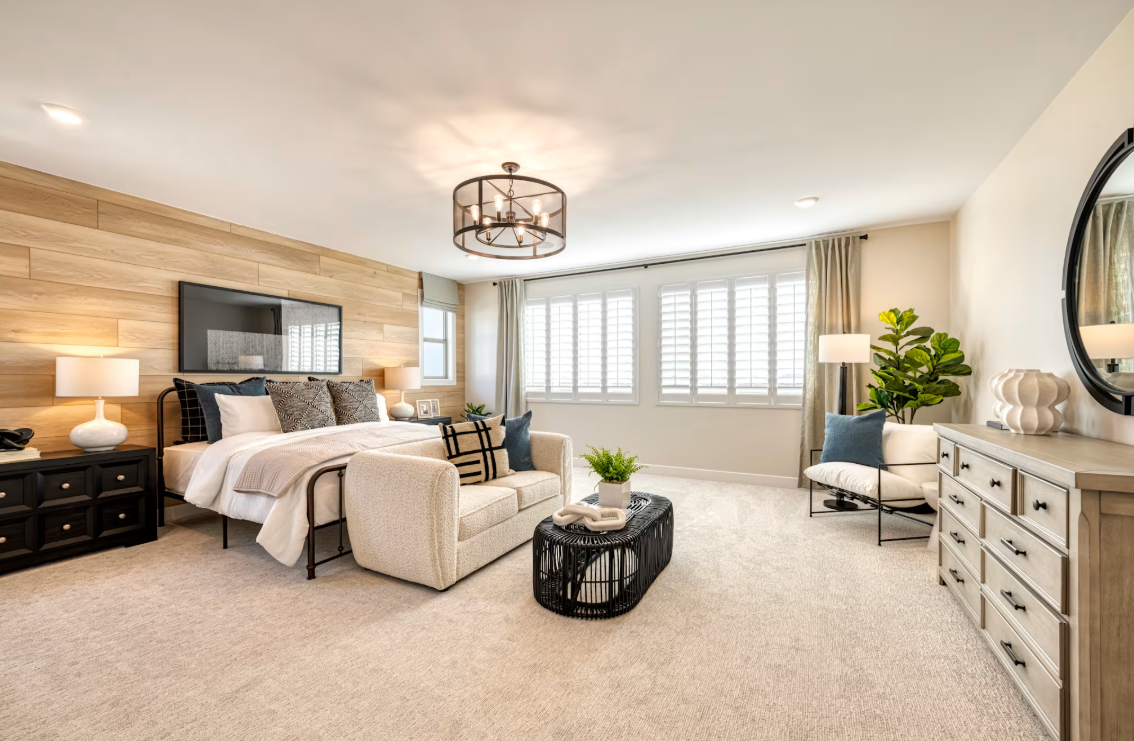
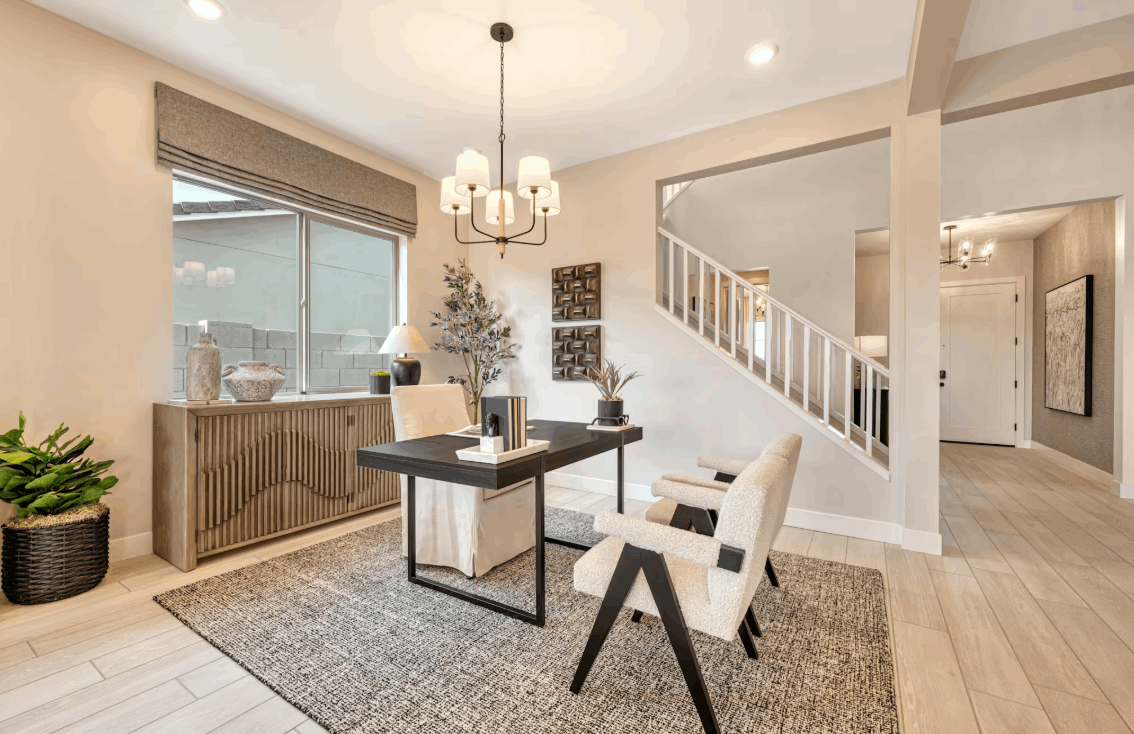
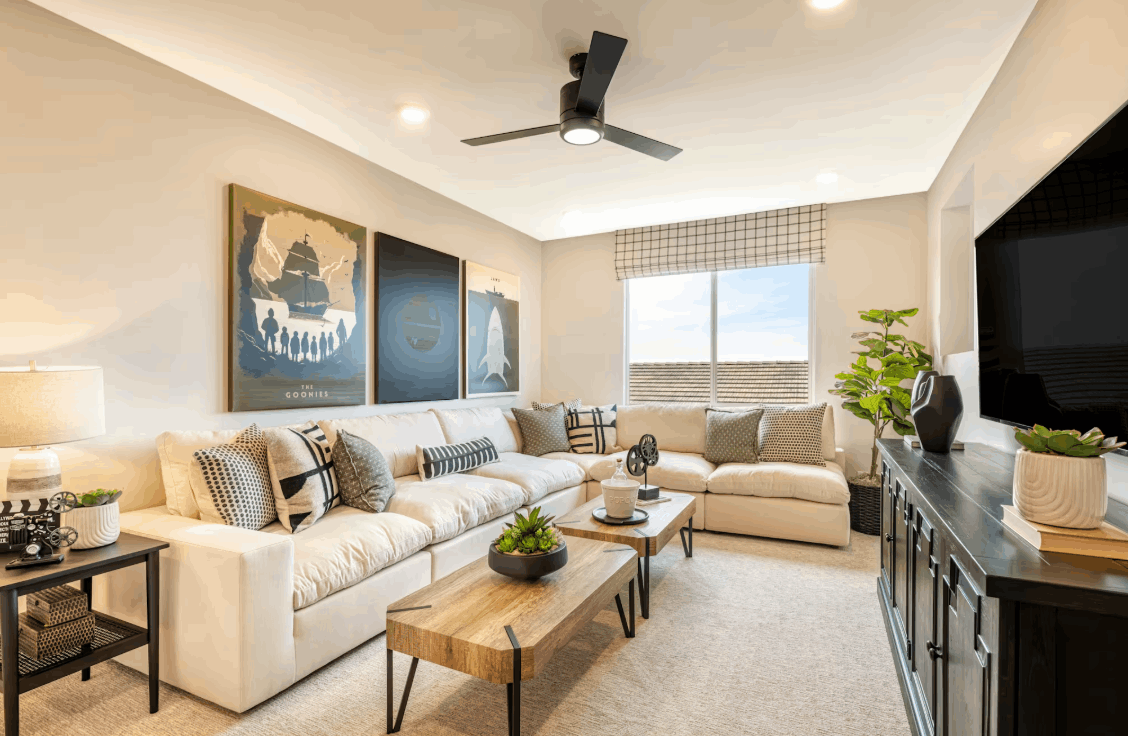
A Look Inside
The Soleo home that made the numbers work
A brand-new home with nothing to worry about or fix for years — here's what that actually looks like.

Life in Soleo
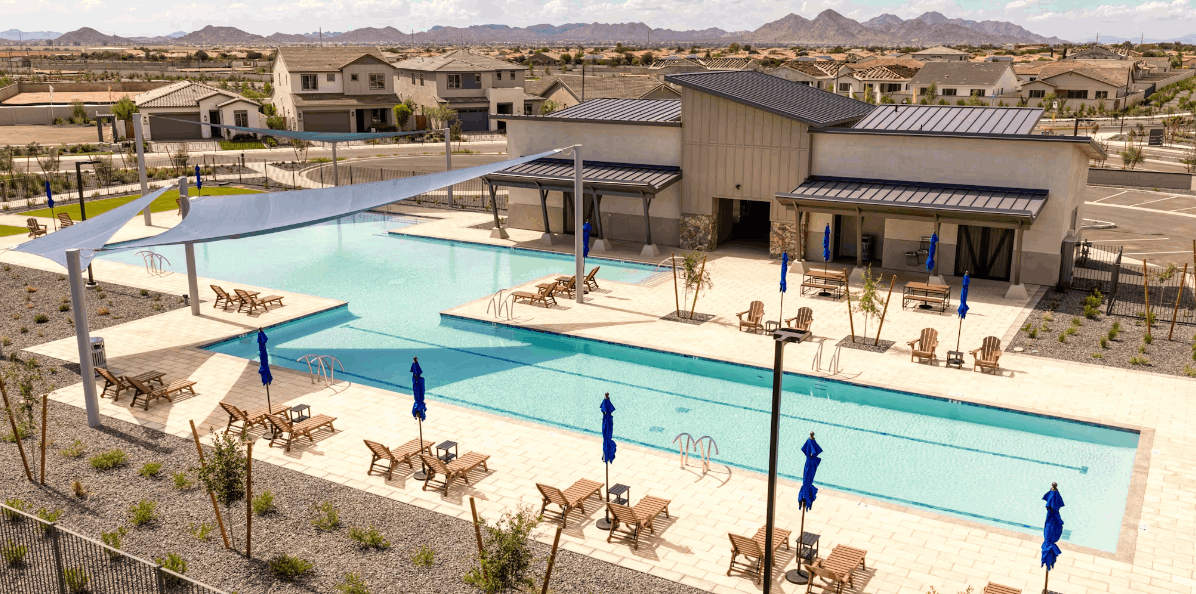
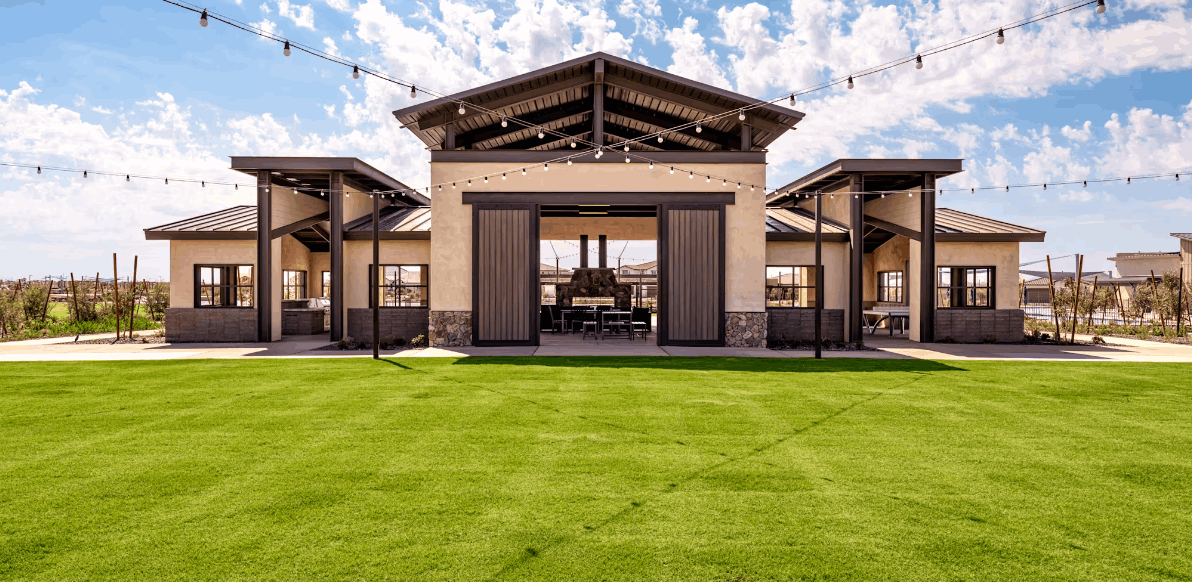
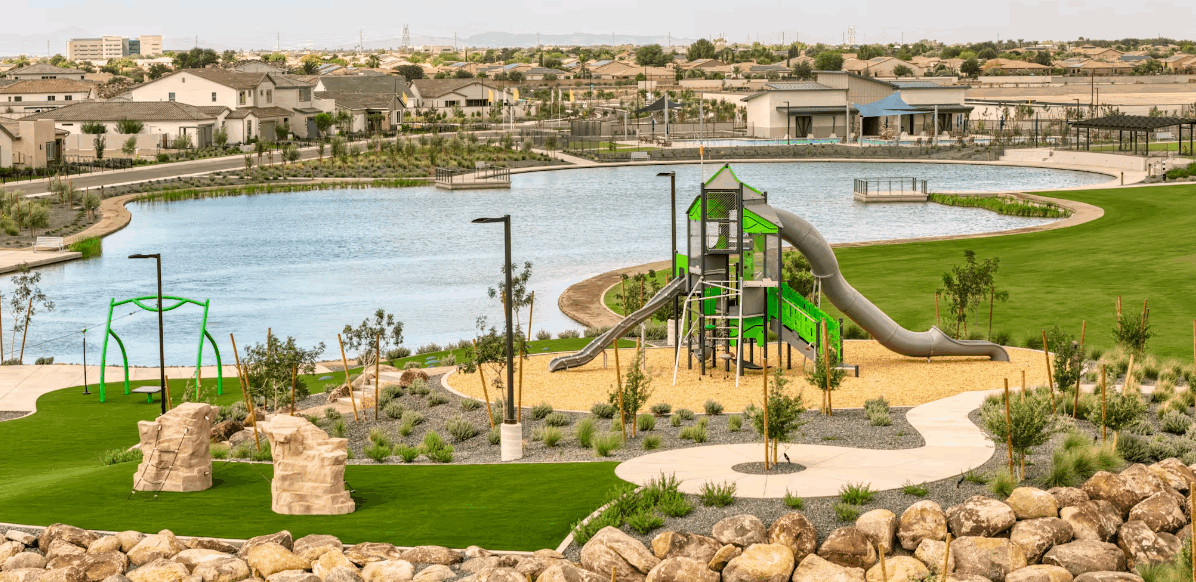
The community that comes with it
Part of what makes a community worth relocating to isn't just the floor plan — it's what's within walking distance. Soleo backs its homes with resort-style amenities built for exactly the kind of family growth this case study is about.
San Tan Valley also just became one of the newest towns in America: Pinal County voters approved incorporation in 2025, and official town status took effect July 1, 2026 — a sign of exactly how much momentum this corridor has right now.

The Playbook
Why this works for more than one family
This case study isn't a one-off. It reflects a repeatable approach I run for every new-construction buyer in the Phoenix Metro — especially relocating families juggling a contingent sale. Here's the market context and the representation that made it possible.
A fiduciary, not just a tour guide
A builder's on-site agent represents the builder. On every new-construction purchase, I represent the buyer exclusively — reviewing the contract, flagging clauses that favor the builder, and negotiating on the buyer's behalf before anything is signed.
Knowing which spec homes to target
Not every builder listing carries the same leverage. Homes that have sat as completed inventory for a stretch — like the one in this case study — are where builders are most motivated to move price, financing, and closing costs.
Reading the upgrade sheet critically
Design-center upgrades can add 20–30% to a base price, and some selections carry far less resale value than their price tag suggests. Knowing which upgrades to select — and which to skip and handle after closing — is part of protecting the deal on the back end.
Vetting the builder, not just the floor plan
Before recommending any builder, I look at construction quality, warranty responsiveness, HOA management history, and real appreciation data from comparable communities — so a great price doesn't come attached to a builder with a poor track record.
For a deeper look at current builder incentives, price ranges by community, and the full new-construction buying process, see my complete 2026 Phoenix Metro new construction guide. And if you're still weighing the move itself, my Phoenix Relocation Resource covers the bigger picture beyond new construction.
The Outcome
One contract, five wins
In Their Words
He negotiated an incredible deal on a quick move-in home that had been sitting for a while, helping us secure a home that exceeded our expectations.
— John G., relocated from Ventura County, CA to San Tan Valley, AZ
We recently relocated from California to Arizona, and working with Eric made the entire process so much easier than we expected. We were also selling our home in Ventura County at the same time, so there were a lot of moving pieces to coordinate.
Eric was incredibly patient as he helped us tour what felt like countless new home communities throughout the San Tan Valley area. He never pressured us and took the time to explain the pros and cons of each builder, community, and floor plan so we could make the right decision for our family.
Throughout the entire process, Eric was responsive, professional, and always looking out for our best interests. If you're relocating to Arizona, buying a new construction home, or looking for a REALTOR® who truly acts as an advisor, we highly recommend Eric Ravenscroft and The Ravenscroft Group.
★★★★★ Google Review
John's story isn't an outlier — the same pattern shows up across other California families I've helped make this move.
Eric was an outstanding individual from the moment we shook hands — he made us feel at ease that we would find the home of our dreams.
— Edson, San Diego, CA ★★★★★Eric is a class act — he made the process smooth, and I couldn't have asked for anyone better during our new build process.
— Kenneth, Ventura County, CA ★★★★★Eric's talents were noticed from the very beginning, showing great interest in identifying our specific home requirements. Truly a 5-star business.
— Rick, San Diego, CA ★★★★★About the Agent

Eric RavenscroftREALTOR® CRS, GRI, ABR · Owner, The Ravenscroft Group at Real Broker
I work with families relocating to the Phoenix Metro — many of them, like this one, coming from Southern California with a home to sell before they can buy. I made that same move myself, from Ventura County, over a decade ago, so this isn't just a transaction type I understand professionally; it's one I've lived. A former Director of Wealth Management, I bring a financial-planning lens to every transaction: structuring contingent offers builders will actually accept, comparing resale against new construction on the real numbers, and negotiating the incentives that are often on the table but rarely offered up front.
- ★★★★★ 5.0 · 150+ Google Reviews
- Made the CA → AZ move myself, 10+ years ago
- Top 1% REALTOR®, North America
- $100M+ in career sales · $133M+ in client wealth created
- 15+ years, real estate & financial planning
- Featured in the Wall Street Journal
- CRS · GRI · ABR · RSPS designations
- Licensed in Arizona: SA691304000
- Referral partner network, CA ↔ AZ
Preferred Agent Program
Trusted by leading financial institutions
These partnerships aren't paid placements — I've been independently vetted and approved by each institution based on performance, ethics, and client outcomes.
Recognized by nine separate financial institutions — each one a rigorous, independent approval.









Relocating From California?
Let's run your numbers before you write an offer
Every relocation is different, but the questions are the same: resale or new construction, how a sale contingency gets structured, and what a builder will actually negotiate on a home that's been sitting. I'll walk you through all three before you sign anything.
Frequently Asked Questions
What California families ask before making the move
Can I buy a new-construction home in Arizona while my California home is still for sale?+
Yes, in many cases. Builders and their preferred lenders evaluate contingent offers case by case, weighing how long the home has been listed, current demand, and the strength of your pending sale. It requires a sale contingency written into the purchase contract and an agent experienced in negotiating those terms directly with builders.
Why do builders sometimes offer better deals than resale sellers?+
Builders carry holding costs on unsold inventory, so a home that's been listed longer than expected often comes with more room to negotiate — price reductions, covered closing costs, or below-market financing through their preferred lender. Resale sellers are usually less flexible since they're relying on the full sale price to fund their own next purchase.
Is new construction a good option for a California-to-Arizona relocation?+
It's worth comparing directly against resale for most relocating families. A new build can mean more predictable long-term costs, a builder warranty, current floor plans, and — depending on inventory levels — real negotiating leverage that isn't always available in a competitive resale market.
How long does a contingent new-construction purchase typically take?+
It varies by builder, lender, and how close your California home is to selling, but a completed or nearly complete inventory home can move faster than a to-be-built home, since there's no construction schedule to coordinate around the contingency.
What should I ask a builder before making a contingent offer?+
Ask how long that specific home has been listed, whether incentives require using the builder's preferred lender, whether price or incentives are negotiable, and how the sales office has handled sale contingencies in the past.
Does bringing my own agent to a builder's model home cost me anything extra?+
No. In the vast majority of new-construction transactions, the builder pays the buyer's agent commission out of its own marketing budget — the same way it would pay a commission whether you showed up alone or with representation. Buying through the builder's on-site agent directly doesn't lower your price; it just means no one at the table is working exclusively for you.
What's the difference between a builder's on-site agent and my own buyer's agent?+
The on-site agent at a model home is a licensed representative of the builder, with a duty to get the builder the best terms. A buyer's agent is under contract to you, with a duty to negotiate price, financing, and contract terms in your favor, and to flag builder-favorable clauses before you sign.
Should I use the builder's preferred lender?+
Sometimes — builder incentives like rate buydowns or closing cost credits are often tied to using their preferred lender, and that can be worth real money. It's still worth having an independent lender quote the loan side by side, so you can compare the full cost of the incentive against a truly competitive rate before deciding.
Which design-center upgrades are worth paying for, and which should wait?+
Structural upgrades that are difficult or impossible to add later — like a bedroom suite, garage configuration, or extended patio — are usually worth doing through the builder. Cosmetic finishes such as certain flooring, lighting, or fixtures can often be added after closing for less than the design center markup, which can run well above retail pricing on some categories.
What's the difference between a quick move-in (spec) home and a to-be-built home?+
A quick move-in home is already complete or nearing completion, with a fixed floor plan and finishes already selected — which is where builders tend to have the most room to negotiate on price, financing, and closing costs, especially if it's been sitting. A to-be-built home lets you choose the lot, floor plan, and every finish, but locks in today's pricing on a home that may not close for many months.
What is Soleo by TriPointe Homes in San Tan Valley?+
Soleo is a new-construction community built by TriPointe Homes in San Tan Valley, part of the broader Queen Creek / San Tan Valley growth corridor in the Phoenix Metro. It's one of several new-construction communities in the area where builder incentives and negotiating leverage vary significantly depending on how quickly homes are selling.
How hot does it actually get compared to coastal California?+
It gets genuinely hot. Phoenix averages roughly 110°F highs across June through September, compared to much milder coastal Southern California summers. In exchange, the region sees around 299 sunny days a year versus about 284 in Los Angeles, and only about 9 inches of annual rainfall versus roughly 15.5 inches in LA, with a long, mild stretch from October through May. Most relocating families weigh the summer heat against those seven to eight milder months and the overall lower cost of living.
Is water supply a real concern for new construction here?+
It's a real, actively managed issue rather than an immediate crisis for homeowners. Roughly 40% of Phoenix's water supply comes from the Colorado River, which is facing long-term shortage pressure. In response, Arizona cities have built underground water banking since the 1990s, and in 2026 Phoenix and Tucson launched the Secure Water Arizona Program to share water during shortages, alongside continued investment in water recycling infrastructure. Early Colorado River cutbacks have primarily affected agricultural users rather than municipal households, though it's still worth asking your builder or city about the water provider and supply plan for any community you're considering.
Is the commute here better than Southern California?+
Average commute times are actually fairly similar on paper — around 31 to 36 minutes in Queen Creek and San Tan Valley, compared to a median of about 30 minutes in Los Angeles County. The bigger difference is congestion reliability: the Los Angeles-Orange County region ranks first in the nation for hours lost to traffic delays, at roughly 137 hours per commuter per year, according to the 2026 Urban Mobility Report. The Phoenix Metro doesn't carry that same level of chronic gridlock, so a similar number of minutes tends to feel more predictable day to day.
What are the schools like in San Tan Valley?+
School quality varies significantly by specific school and district, as it does anywhere. Some strong current anchors in the area include Skyline Ranch Elementary, Poston Butte High School, and Combs High School, each rated an "A" by the Arizona Department of Education for the most recent school year on record. As with any relocation, it's worth checking the specific assigned school for any home you're considering rather than relying on area-wide averages.
What if I'm relocating an investment property rather than my primary residence?+
That's a different transaction with a different tax strategy. Investors selling California rental property often use a 1031 exchange to defer capital gains taxes into an Arizona replacement property, rather than a standard contingent-sale purchase. The rules, timelines, and California-specific clawback provisions are involved enough that they deserve their own breakdown — see my California-to-Arizona 1031 Exchange guide for a real client case study with real numbers.
How exactly are property taxes calculated on a new-construction home, and are they really lower?+
Arizona property taxes are based on a home's Limited Property Value, not full market value — for residential property the assessment ratio is 10% of that value, multiplied by the local tax rate, typically landing around 0.62% of market value overall. That Limited Property Value can only rise a maximum of 5% per year regardless of how fast the market moves, so long-term ownership costs stay predictable. On new construction specifically, the first year's tax bill is often based on land value only, with the full home assessment arriving in year two — it's worth budgeting for that jump rather than being surprised by it. Homeowners 65 and older who have lived in Arizona at least two years may also qualify for a valuation freeze that caps their property tax exposure going forward.
What should I expect to pay in HOA fees in a community like Soleo?+
It varies by community type. Standard master-planned communities typically run $80–$150 per month covering common areas, pools, parks, and landscaping. Gated or luxury communities with golf access run $180–$350. Active-adult communities with full resort amenities run $200–$400. Some larger master-planned communities also have both a master HOA and a neighborhood sub-association, meaning two separate fees — though the combined total is still typically less than what California buyers were paying. It's worth reviewing the HOA's reserve study and financials before closing on any specific home.
What's healthcare like here compared to California?+
The Phoenix Metro has a mature, well-resourced hospital system. Banner Health is the dominant regional system, Mayo Clinic has a major campus in north Scottsdale, and HonorHealth and Dignity Health round out the major systems. For most common needs — cardiology, orthopedics, cancer care, primary care — residents don't need to leave Arizona. For highly specialized subspecialties, Los Angeles and San Diego academic medical centers remain a day's drive away. Arizona also tends to have lower ACA marketplace premiums than California's market.
What do Californians end up missing most after they move?+
Almost universally, it's the ocean. Arizona doesn't have a coastline, and for people whose identity is tied to beach life, that's a real adjustment — Rocky Point in Mexico is about a 3-hour drive but isn't a substitute for Pacific Coast Highway. For others who realize they only made it to the beach a few times a year anyway, it turns out to be less of a loss than expected. It's worth being honest with yourself about which category you're in before you move, not after. For a deeper, more complete look at this whole decision, see my Moving from California to Arizona guide.
Context & Sources
The relocation pattern behind this case study is part of a broader, well-documented trend. These sources informed the market context referenced above:
- Nelson Westerberg, "Moving From California To Arizona (2026): The Migration Map" — on the scale of the California-to-Arizona relocation corridor and comparative housing costs.
- moveBuddha, "Californian Invasion: The 10 States California Residents Want to Move to Most in 2026" — on Arizona's ranking among top relocation destinations for Californians.
- ConsumerAffairs, "Migration Trends: Where Are People Moving to in 2026?" — on Arizona's year-over-year rise in nationwide relocation interest.
This article reflects a real client transaction handled by Eric Ravenscroft and The Ravenscroft Group. Specific figures such as purchase price and closing costs have been described in relative and percentage terms to protect client privacy. The client testimonial below is a placeholder — swap in a reviewed, on-the-record quote from the family before publishing.
Categories
- All Blogs (324)
- Active Adult & 55 Plus Communities (17)
- Arizona Relocation Guides (31)
- Buyers (214)
- Financial Planning (61)
- General Real Estate (141)
- Income From Real Estate (60)
- Market Update (26)
- New Construction (29)
- News, Updates and Coming Soon (57)
- Real Estate Agent Financial Planning (22)
- Real Estate Investing (96)
- Sellers (107)
- Vacation and Short Term Rentals (45)
Recent Posts





About the Author
Eric Ravenscroft is a Top 1% REALTOR® across North America and one of Arizona’s most trusted real estate strategists. With 15 years of experience spanning real estate, wealth management, and investment planning, he helps clients make smarter, financially grounded decisions, from new construction and relocations to STR investments, 1031 exchanges, and long-term portfolio strategy.
Eric’s expertise has earned him industry recognition, Elite status with Real Broker, and features in major publications including the Wall Street Journal, MarketWatch, MSN, and Morningstar. Clients across the Greater Phoenix Metro rely on his clarity, strategic insight, and results-driven guidance.
Ready to make a confident real estate move? Call or text Eric today.