
California-to-Arizona 1031 Exchange: How a San Diego (La Jolla) Condo Sale Deferred 100% of Capital Gains Tax in Scottsdale

California-to-Arizona 1031 Exchange: How a San Diego (La Jolla) Condo Sale Deferred 100% of Capital Gains Tax in Scottsdale
A fast-moving La Jolla Cove (San Diego) sale, a 1031 exchange executed against the clock into a North Scottsdale estate with more than triple the living space, a rent-back transition into a turnkey rental, and a long-term plan to convert the property into a retirement home their heirs will one day inherit completely tax-free.






Trusted By
La Jolla & Scottsdale's Preferred Agent for
Leading Financial Institutions
I'm a preferred real estate partner for USAA, Chase, SoFi, PennyMac, Citibank, Citizens, Huntington, and Fifth Third — institutions that refer clients to me because they trust the strategy behind the property, not just the sale.








Key Takeaways
- The exchange: a 1031 exchange moved $2.7 million of equity from a La Jolla (San Diego), CA oceanfront condo into a North Scottsdale, AZ home, deferring capital gains tax on the sale.
- The property: the Scottsdale home cost $68,750 less than the condo sold for, with 3,472 square feet versus 1,113, a 212% increase in living area.
- The carrying costs: fixed costs fell from $44,323 to $14,070 a year, and about $21,753–$24,753 a year remains after adding the larger home's extra expenses.
- The rental plan: the Windgate Ranch HOA allows rentals as short as 30 days, so the home can be a furnished mid-term rental. The $10,000–$14,000 a month range is an estimate.
- The deadlines: a 1031 exchange requires identifying replacement property within 45 days and closing within 180 days of the sale.
- The legacy plan: the clients plan to convert the home to their primary residence, and their heirs can then receive a step-up in basis, which can eliminate the deferred gain.
A Coastal Condo, a Fast Clock, and a Bigger Vision
My clients owned an oceanfront condominium directly on La Jolla Cove in San Diego — one of the most desirable and expensive micro-markets in the country. When the opportunity came to sell, it came quickly, and we didn't have the luxury of a slow, deliberate search on the back end. The moment the La Jolla property went under contract, the 1031 exchange clock effectively started, and every subsequent decision had to move at the same pace as the sale.
Rather than simply reinvesting the sale proceeds into another coastal property at a similarly compressed cap rate and sky-high tax basis, my clients wanted a strategy that would accomplish three things at once: defer 100% of their capital gains tax, meaningfully reduce their fixed cost of ownership, and set up a long-term plan that would eventually become their retirement home and, ultimately, a tax-advantaged inheritance for their children.
Below is the full financial comparison I built for these clients, followed by an in-depth breakdown of the tax strategy behind the exchange — including how a 1031 exchange can eventually convert into a primary residence, and how that residence can ultimately pass to heirs with a full step-up in basis and no capital gains tax owed at all.
What $2.7 Million Bought in Each Market
The replacement property cost $68,750 less than the sale price of the relinquished property, yet delivered more than three times the living space.

La Jolla Cove Condominium
- Property Type Oceanfront Condo
- Living Area 1,113 SF
- Bedrooms / Baths 2 / 2
- Garage 1-Car
- Lot Condominium
- Pool / Spa None
- Year Built 1964

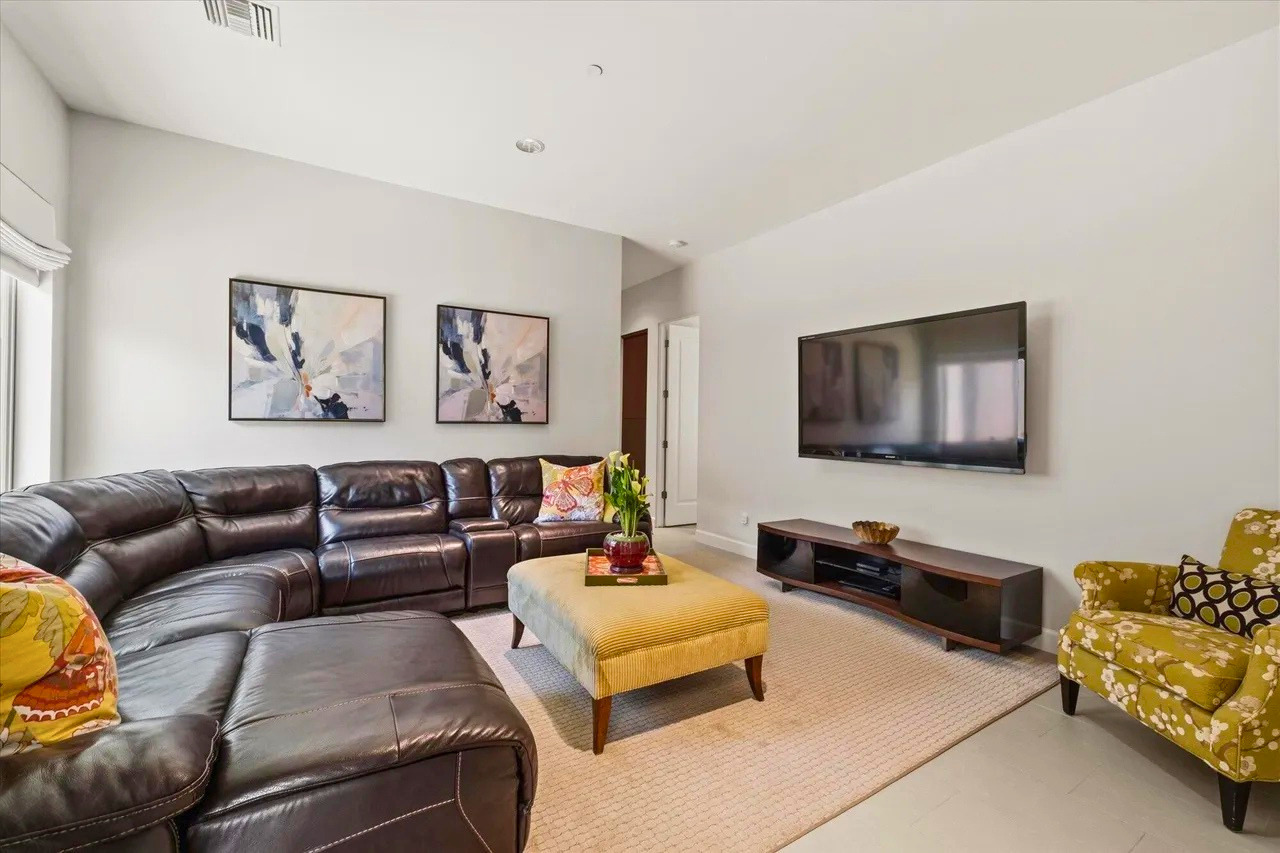
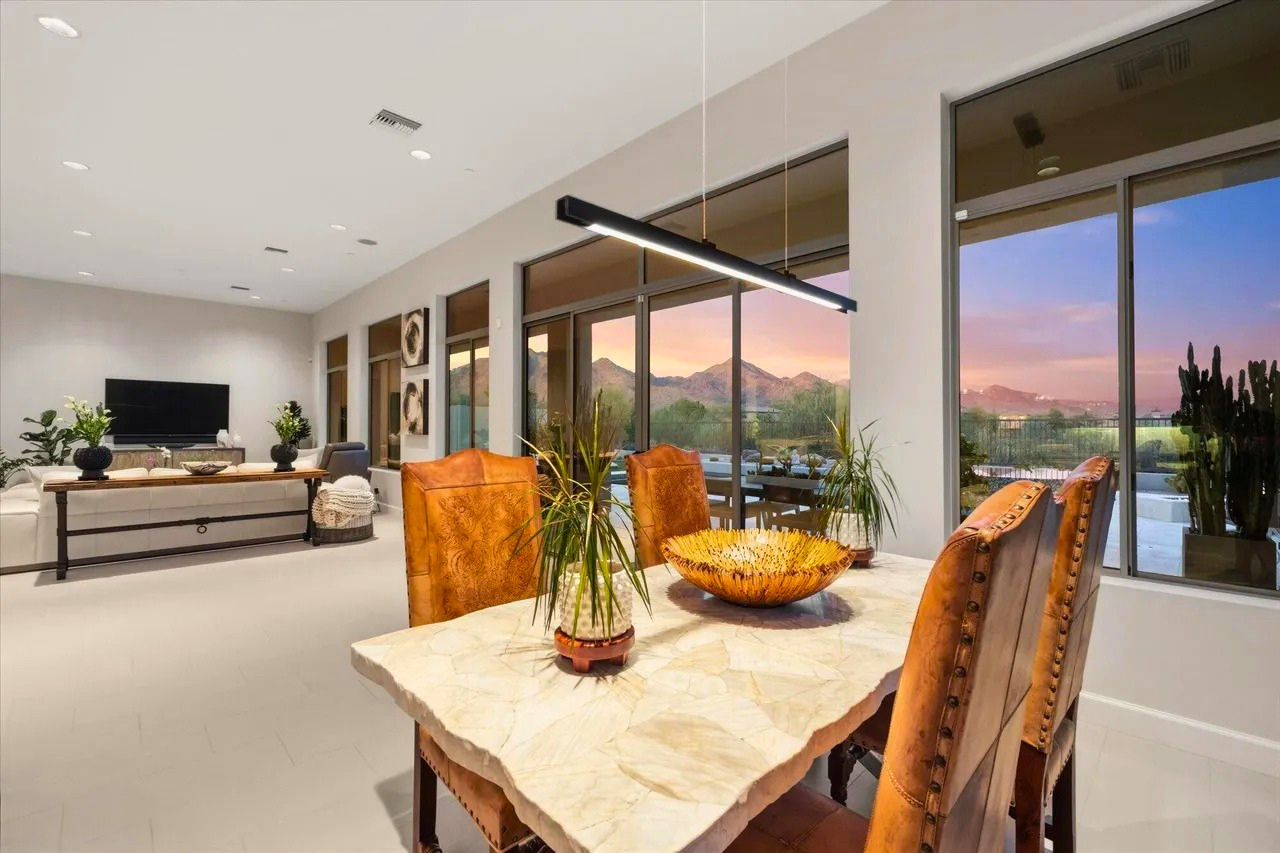
Windgate Ranch Estate
- Property Type Single-Family Home
- Living Area 3,472 SF
- Bedrooms / Baths 4 + Den + Bonus / 3.5
- Garage 3-Car
- Lot 0.28 Acre
- Pool / Spa Private, Heated
- Year Built 2012



Annual Ownership Cost: Before vs. After
This is where the exchange delivers the most dramatic and durable benefit. Arizona's property tax structure, combined with a lower HOA and a comparable insurance premium, produced over $30,000 per year in fixed-cost savings before accounting for the larger home's additional expenses.
| Annual Expense | La Jolla | Scottsdale | Annual Savings |
|---|---|---|---|
| Property Taxes | $32,673 | $5,950 | $26,723 |
| HOA | $8,400 | $5,220 | $3,180 |
| Insurance | $3,250 est. | $2,900 actual | $350 |
| Total Fixed Costs | $44,323 | $14,070 | $30,253 |
Accounting for the Larger Home's Additional Expenses
It would overstate the benefit to call the full $30,253 in fixed-cost savings "pure profit." The La Jolla HOA covered water, hot water, trash, exterior landscaping/building maintenance, and limited association insurance — expenses that aren't all eliminated in Scottsdale; some become direct homeowner responsibilities on a larger single-family lot. For planning purposes, I built in a realistic range for these added costs:
| Additional Scottsdale Expense | Estimated Annual Cost |
|---|---|
| Pool Service | $1,800 – $2,400 |
| Landscaping | $1,800 – $3,000 |
| Water / Sewer | $1,500 – $2,500 |
| Trash | $400 – $600 |
| Estimated Additional Costs | $5,500 – $8,500 |
Why We Targeted Rental-Flexible Communities

Because the plan called for a rent-back transition followed by an eventual owner-occupied conversion, the property search wasn't just about price and square footage — it also had to account for how the HOA treats rentals. Many master-planned North Scottsdale communities impose lease-term minimums of six months to a full year, which would have boxed my clients into long-term, unfurnished tenancies and made the transition to a primary residence far less flexible. Windgate Ranch was specifically attractive because its governing documents allow rentals with a minimum lease term as short as 30 days, opening the door to a furnished, mid-term rental strategy rather than a traditional long-term lease. That single detail, easy to miss without specifically checking the CC&Rs before writing an offer, materially changes the property's income potential.
Rental Comparison: What Each Property Can Command
The La Jolla property had real, demonstrated rental value tied directly to its Cove location — rental history shows it actually rented at $12,000 per month in March 2025. That's an executed lease, not merely an asking price, but I would never present a theoretical annualized figure (which would equal $144,000/year at full occupancy) as historical revenue without the clients' actual operating statements. The honest framing: the La Jolla property had demonstrated rental history at $12,000/month, with actual annual income depending on occupancy and seasonality.
Because Windgate Ranch permits 30-day minimum rentals, the Scottsdale property is positioned as a furnished, mid-term rental — a structure increasingly common in North Scottsdale for relocating executives, seasonal residents, and corporate housing. On that basis, this 4-bedroom-plus-den, 3.5-bath home with a private pool is realistically positioned in the $10,000–$14,000 per month range, reflecting the premium furnished mid-term tenants are willing to pay for a turnkey, move-in-ready home in a guard-gated community.

| Rental Scenario | Estimated / Demonstrated Monthly Rent |
|---|---|
| La Jolla condo — demonstrated executed lease (March 2025) | $12,000 |
| Scottsdale home — furnished, mid-term lease (30-day minimum) | $10,000 – $14,000 |
The Owner's Net Cash Flow: What's Actually Left Over Each Month
Gross rent alone doesn't tell the ownership story — what matters is what's left after carrying costs. For La Jolla, that means the full $3,694/month in taxes, HOA, and insurance shown above (the HOA there already absorbs water, trash, and exterior maintenance). For Scottsdale, that means the $1,173/month in taxes, HOA, and insurance plus the average of the additional homeowner expenses estimated earlier — pool service, landscaping, water/sewer, and trash — which average $583/month ($7,000/year), for an all-in carrying cost of approximately $1,756/month ($21,070/year).
| Scenario | Monthly Rent | Monthly Carrying Cost | Net Monthly | Net Annual |
|---|---|---|---|---|
| La Jolla — demonstrated lease rate | $12,000 | $3,694 | $8,306 | $99,677 |
| Scottsdale — furnished, mid-term (range) | $10,000 – $14,000 | $1,756 | $8,244 – $12,244 | $98,930 – $146,930 |
This is exactly why identifying an HOA that permits short-term, furnished rentals mattered as much as the price and square footage during the property search — it's what unlocks the mid-term rental income that makes these net numbers possible, rather than settling for the lower yield of a traditional long-term, unfurnished lease.
What a 1031 Exchange Actually Does
Section 1031 of the Internal Revenue Code allows an investor to sell business-use or investment real estate and reinvest the proceeds into another like-kind property while deferring — not eliminating — federal capital gains tax and depreciation recapture. Deferral is the operative word, and understanding the mechanics matters as much as understanding the benefit.
The 45-Day Identification Window
From the day the relinquished property closes, the exchanger has 45 calendar days to formally identify potential replacement properties in writing to their Qualified Intermediary. This window doesn't pause for weekends or holidays, which is exactly why our clients' fast-moving sale required an equally fast, focused search.
The 180-Day Closing Window
The exchanger then has 180 calendar days total (not 180 days after identification) from the original closing to complete the purchase of the replacement property. Missing either deadline disqualifies the exchange and triggers the full deferred tax liability.
The Qualified Intermediary
Exchange proceeds can never touch the exchanger's hands. A Qualified Intermediary holds the funds from the sale and uses them to acquire the replacement property, satisfying the IRS requirement that the exchanger never have constructive receipt of the money.
Like-Kind Property
Since 2018, like-kind treatment applies only to real property, but the definition is broad: virtually any real estate held for investment or business use can be exchanged for any other, whether that's a condo for a single-family rental, raw land for a commercial building, or a coastal property for a desert one.
Avoiding "Boot"
To defer 100% of the gain, the exchanger must reinvest all net proceeds and acquire a replacement property of equal or greater value, while also carrying over or replacing the same amount of debt. Any cash or debt reduction pulled out of the exchange is called "boot" and becomes immediately taxable.
Depreciation Recapture
Beyond capital gains, a sold investment property also triggers depreciation recapture, taxed at up to 25% federally. A properly structured 1031 exchange defers this recapture along with the capital gain, which is often the single largest tax exposure investors overlook.
Other 1031 Strategies Worth Knowing
Reverse Exchanges
When the right replacement property appears before the relinquished property has sold, a reverse exchange allows an Exchange Accommodation Titleholder to acquire and hold the new property first, giving the investor up to 180 days to sell the original.
Improvement (Construction) Exchanges
Exchange funds can also be used to make capital improvements to the replacement property within the 180-day window, allowing an investor to exchange into a smaller property and use remaining proceeds to renovate or build out value before the exchange closes.
Delaware Statutory Trusts (DSTs)
For investors who want to exit active property management without triggering a taxable sale, a DST allows 1031 proceeds to be invested into a professionally managed, institutional-grade real estate portfolio while still satisfying like-kind exchange requirements.
Partial Exchanges
An investor isn't required to reinvest 100% of proceeds. A partial exchange allows some cash to be taken out (as taxable boot) while the remaining balance is still exchanged tax-deferred — useful when an investor needs liquidity alongside continued deferral.
The Identification Rules: How Many Properties You Can Name
The Three-Property Rule
Most exchangers identify up to three potential replacement properties within the 45-day window, regardless of their combined value. This is the most commonly used identification rule and the one we used in this exchange.
The 200% Rule
An exchanger can identify more than three properties as long as their combined fair market value doesn't exceed 200% of the value of the relinquished property — useful when casting a wider net in a competitive, fast-moving market.
The 95% Rule
If an exchanger identifies properties worth more than 200% of the relinquished property's value, they must actually acquire at least 95% of the total value identified. Because this rule is unforgiving, most investors and their intermediaries default to the safer three-property or 200% rules.
Related-Party Exchanges
Exchanging with a related party (family members, or entities you control) is permitted, but Section 1031(f) requires both parties to hold their respective properties for at least two years afterward, or the deferred gain is retroactively triggered. Related-party exchanges deserve extra scrutiny from a CPA before moving forward.
Reporting the Exchange: IRS Form 8824
Every 1031 exchange must be reported to the IRS on Form 8824, filed with the tax return for the year the exchange took place. This form documents the relinquished and replacement property details, the realized gain, and the amount deferred — and it's the document your CPA will use to track your carried-over basis for every future sale or exchange.
How a 1031 Exchange Differs From the Section 121 Home-Sale Exclusion
Section 121 lets a homeowner exclude up to $250,000 ($500,000 for married couples filing jointly) of gain on the sale of a primary residence they've owned and lived in for at least two of the last five years. A 1031 exchange, by contrast, applies only to investment or business-use property. Combining the two — exchanging into a property, holding it as a rental, and eventually converting it to a primary residence — is exactly the strategy behind this case study, and it's precisely why the interaction between Sections 1031, 121(d)(10), and 1014 matters so much.
The California-to-Arizona 1031 Trend, Explained
This exchange is part of a much larger, well-documented pattern. California real estate investors and second-home owners, from San Diego to the rest of Southern California, have been using 1031 exchanges to move equity into Arizona, Texas, Nevada, and other lower-tax, homeowner-friendlier states for years — and the reasons go well beyond price per square foot. Four factors drive most of the decision: property taxes, insurance, landlord-tenant law, and overall cost of living.
| Factor | California | Arizona |
|---|---|---|
| Property Taxes | Assessed value can lag purchase price for long-term owners, but any new purchase is reassessed at full market value, and coastal/high-value homes like the La Jolla condo still carry large bills — $32,673/year in this case. | Limited Property Value (LPV) caps annual assessment growth statewide, producing a lower and far more predictable bill — $5,950/year on the comparably priced Scottsdale home. |
| Insurance | A hardening market: wildfire and coastal-risk exposure has pushed several major carriers to pause new policies or issue non-renewals statewide, pushing many homeowners onto the state's FAIR Plan backstop at a higher cost for less coverage. | A comparatively stable, more competitive homeowners insurance market, with lower wildfire/catastrophe risk in the Phoenix metro — reflected in this case study's actual $2,900/year premium on a larger home. |
| Landlord-Tenant Law | Statewide rent caps and just-cause eviction protections under AB 1482, layered with stricter local rent control ordinances in many cities, are built around tenant protection and limit an owner's control over rent increases and lease decisions. | No statewide rent control and no cap on rental rate increases; lease terms, rent-setting, and the eviction process are generally more predictable and favorable for the property owner. |
| Overall Cost of Living | Consistently ranks among the highest-cost states in the country once housing, state income tax, insurance, and everyday expenses are combined. | Meaningfully lower cost of living than coastal California across housing, taxes, insurance, and day-to-day expenses, even in premium submarkets like North Scottsdale. |
- High, compounding property tax exposureEven under Proposition 13's assessed-value cap, coastal properties like this La Jolla condominium had appreciated for decades, producing a $32,673 annual tax bill on a $2.7M sale price — and any new California purchase is reassessed at full current market value going forward.
- The nation's highest state income taxCalifornia's top marginal state income tax rate reaches 13.3%, which applies on top of federal capital gains tax to any portion of a sale that isn't deferred through a 1031 exchange.
- The California "clawback" on out-of-state exchangesWhen a California resident exchanges into an out-of-state property, California's Franchise Tax Board still tracks the deferred, California-sourced gain using Form FTB 3840, filed annually until the gain is eventually recognized. Exchanging out of California defers the tax — it doesn't erase California's claim on that original gain.
- A tenant-protection-first legal frameworkStatewide rent caps and just-cause eviction rules under AB 1482, layered with additional local rent control ordinances in cities like Los Angeles, San Francisco, and San Diego, are designed primarily to protect tenants — limits on rent increases, mandatory relocation payments in some cases, and a slower eviction process.
- A hardening, higher-cost insurance marketWildfire and coastal risk exposure has led several major carriers to pause new policies or issue non-renewals across large parts of California, pushing a growing number of homeowners onto the state-run FAIR Plan — more expensive, less comprehensive coverage of last resort.
- Compressed cap rates on coastal propertyPremium coastal micro-markets like La Jolla Cove often trade at valuations that make ongoing cash-on-cash returns thin relative to the equity tied up in the property.
- A consistently high overall cost of livingOnce property taxes, the nation's highest state income tax bracket, rising insurance premiums, and everyday costs like groceries, gas, and utilities are stacked together, California consistently ranks among the most expensive states to own property and live in.
- A capped, predictable property tax systemArizona's Limited Property Value (LPV) system caps how much a property's assessed value can increase each year, which is a major reason this Scottsdale home carries a $5,950 annual tax bill — a fraction of the La Jolla figure on a comparable purchase price.
- A more stable, competitive insurance marketWithout the same wildfire and coastal-catastrophe exposure driving California non-renewals, Arizona homeowners have generally retained easier access to private coverage at lower premiums — reflected directly in this case study's $2,900/year actual quote on a larger, pool-equipped home.
- A homeowner-friendly, market-rate legal frameworkArizona has no statewide rent control and does not cap how much or how often rent can be raised. Lease enforcement and the eviction process are generally more straightforward and predictable for the property owner.
- A flat, low state income taxArizona has moved to a flat 2.5% state income tax rate, dramatically lower than California's top bracket, which matters both for ongoing rental income and for any gain that is eventually recognized.
- No comparable statewide clawback regimeArizona does not impose a mirror-image clawback on gains exchanged into the state, simplifying long-term tax reporting once the original California-sourced gain is eventually recognized under California's own rules.
- A meaningfully lower overall cost of livingHousing, taxes, insurance, and everyday expenses combine to make even premium North Scottsdale living substantially more affordable than coastal California, as this case study's $21,753–$24,753 annual carrying-cost advantage demonstrates directly.
- Substantially more real estate per dollarAs this case study shows directly, the same $2.7M of equity purchased 2,359 additional square feet, a third garage bay, and a private pool — while costing $68,750 less.
- Sustained population and job growthMetro Phoenix and North Scottsdale have been among the fastest-growing metro areas in the country for over a decade, supported by major employers, corporate relocations, and continued infrastructure investment.
Thinking about your own California-to-Arizona exchange? Let's run your numbers before you list.
Schedule a Strategy Call →Exchange Today, Retirement Home Tomorrow, Tax-Free Inheritance Someday: The Step-Up in Basis Legacy Play
The most sophisticated part of this strategy isn't the exchange itself — it's what happens over the next 10, 20, and 30 years. This is often referred to among tax and estate planning professionals as "swap till you drop," and it's the plan my clients are building toward: defer capital gains tax for life through 1031 exchanges, convert the final property into a primary residence at retirement, and let a full step-up in basis under Section 1014 erase the deferred gain entirely when it passes to their children.
Hold as a Genuine Rental
Because this is a 1031 exchange, the IRS requires the Scottsdale property to first be held with genuine investment intent. The negotiated rent-back with the sellers accomplishes exactly that — it's producing rental income and being managed as an investment property, which is the foundation the entire strategy is built on.
Convert to Primary Residence at Retirement
In a few years, once my clients retire, they plan to move in and convert the property from a rental into their primary residence. This is permitted, but it isn't instantaneous or automatic — the property must first satisfy a legitimate holding period as a rental, and IRS guidance (including the safe harbor outlined in Rev. Proc. 2008-16) generally looks for at least two years of qualifying rental use and limited personal use before a conversion is respected.
Pass to Heirs With a Full Step-Up in Basis
This is the step that makes the strategy so powerful. Under Section 1014 of the Internal Revenue Code, when a property owner passes away, their heirs generally inherit the property at its fair market value on the date of death — not the original, far lower cost basis. Every dollar of capital gain deferred through this exchange (and any prior exchanges) is effectively erased.
In plain terms: the capital gains tax bill from selling the La Jolla condo was never eliminated — it was deferred. Deferred into the Scottsdale property today, deferred again through the eventual conversion to a primary residence, and ultimately erased entirely when the property transfers to the next generation with a fully stepped-up cost basis. It's one of the most powerful, and most underused, wealth transfer strategies available to real estate investors, and it requires coordinated planning between a REALTOR® who understands the exchange mechanics, a CPA who models the tax exposure, and, when the estate is large enough, an estate planning attorney.
What Is Step-Up in Basis? A Complete Explanation for Real Estate Investors
"Cost basis" is what the IRS considers your investment in a property for tax purposes — generally your purchase price, plus capital improvements, minus any depreciation you've claimed. When you sell a property, your taxable capital gain is the sale price minus your adjusted basis. This is exactly what a 1031 exchange is built around: instead of resetting your basis to the new purchase price, the tax code requires you to carry your old, lower basis (adjusted for any additional cash invested) forward into the replacement property. That's what "deferred" means — the gain doesn't disappear, it moves forward embedded in the new property's basis, and it keeps compounding every time you exchange again.
Step-up in basis works in the opposite direction. Under Section 1014 of the Internal Revenue Code, when the owner of an appreciated asset passes away, the person who inherits it receives a brand-new cost basis equal to the property's fair market value on the date of death (or, in limited cases, an alternate valuation date the estate elects) — regardless of how low the original, exchanged-forward basis had become. If the heir sells the property shortly after inheriting it at close to that fair market value, there is little to no taxable gain to report at all, even though the original owner may have deferred hundreds of thousands of dollars in gain across one or more 1031 exchanges during their lifetime.
How Step-Up in Basis Eliminates a Lifetime of Deferred Gain: An Illustrative Example
The figures below are a simplified, hypothetical illustration of how basis carries forward through an exchange and resets at death — they are not this specific client's actual cost basis or tax figures, which are confidential and would be calculated by their CPA.
| Stage | Illustrative Basis / Value |
|---|---|
| Original purchase price of first investment property (years ago) | $900,000 |
| Less: depreciation claimed over years of ownership | −$180,000 |
| Adjusted basis carried into the La Jolla condo via a prior 1031 exchange | $720,000 |
| La Jolla condo sale price (relinquished property in this case study) | $2,700,000 |
| Deferred gain carried forward into the Scottsdale replacement property | $1,980,000 |
| Scottsdale property's fair market value at a future date of death (illustrative) | $3,200,000 |
| Heirs' new stepped-up basis under Section 1014 | $3,200,000 |
| Taxable gain eliminated for heirs | $2,480,000 |
The Double Step-Up in Basis for Community Property States
There's an additional layer that makes this strategy even more powerful for a married couple, and it applies directly to this case study: both California and Arizona are community property states. Under Section 1014(b)(6) of the Internal Revenue Code, when one spouse in a community property state passes away, the entire community property asset — not just the deceased spouse's half — typically receives a full step-up in basis, even though the surviving spouse retains ownership of their half the whole time. This is often called the "double step-up."
In separate-property (common law) states, only the deceased spouse's 50% ownership interest gets stepped up at the first death; the surviving spouse's half keeps its original, lower basis until the second death. Because this couple sold a community property asset in California and exchanged into a community property asset in Arizona, they preserve the ability to get a full step-up on 100% of the property's value at the first spouse's passing — not half of it — assuming the property is properly titled and treated as community property under state law at that time. This is a significant, often-overlooked advantage of exchanging between two community property states, and it's a detail worth confirming with a CPA or estate attorney as the couple's estate plan is finalized.
Titling the Property: Should It Go Into a Trust?
Most investors pursuing a hold-until-death strategy eventually place the property into a revocable living trust. A properly structured revocable trust does not change who is treated as the owner for tax purposes during the grantor's lifetime, so it does not interfere with the 1031 exchange, the eventual primary residence conversion, or the Section 1014 step-up at death — but it does let the property pass directly to heirs without going through probate, which can be slow and costly in both California and Arizona. This is a conversation to have with an estate planning attorney well before the property changes from a rental to a primary residence.
1031 Exchange & Estate Planning FAQ
What is a 1031 exchange, in plain English?
It's a provision in the tax code that lets you sell an investment property and roll the proceeds into another investment property without paying capital gains tax right away, as long as you follow specific timing rules and use a Qualified Intermediary to hold the funds.
How much time do I have to complete a 1031 exchange?
You have 45 calendar days from the close of your sale to identify replacement properties in writing, and 180 calendar days total from that same closing date to complete the purchase.
Can I move into a property I bought through a 1031 exchange?
Eventually, yes — but not immediately. The property must first be held for genuine investment purposes for a meaningful period (generally viewed as at least one to two years under IRS guidance), and if you later sell it, Section 121(d)(10) requires at least five years of total ownership before any home-sale exclusion could apply.
What happens to the deferred capital gains tax if I never sell?
If you continue exchanging property throughout your lifetime and never sell outright, the deferred gain and depreciation recapture can ultimately be eliminated entirely for your heirs through step-up in basis under Section 1014 when the property passes through your estate.
What is depreciation recapture, and does a 1031 exchange defer that too?
Depreciation recapture is a separate tax, up to 25% federally, on the depreciation you claimed while owning the investment property. A properly structured 1031 exchange defers both the capital gains tax and the depreciation recapture together.
What is a Delaware Statutory Trust (DST) and when does it make sense?
A DST allows a 1031 exchange investor to move proceeds into a professionally managed, institutional-grade real estate portfolio rather than another actively managed property. It's a common solution for investors who want to keep deferring tax but are ready to step away from hands-on property management.
Does Arizona have lower property taxes than California?
Generally, yes. Arizona's assessment methodology and tax rates typically produce a meaningfully lower annual property tax bill than California on a comparably valued home, which was one of the largest drivers of savings in this case study.
Should I consult a CPA before doing a 1031 exchange?
Yes, always. A Qualified Intermediary handles the exchange mechanics, but only a CPA or tax attorney can model your specific gain, depreciation recapture exposure, state tax considerations, and how a future primary residence conversion or estate plan would apply to your individual situation.
What is the California FTB 3840 "clawback" and does it undo my 1031 exchange?
No, it doesn't undo the exchange. When a California resident exchanges a California property into an out-of-state replacement property, the Franchise Tax Board requires an annual Form FTB 3840 filing to track that deferred, California-sourced gain until it's eventually recognized in a fully taxable sale. Your federal 1031 deferral still stands; California is simply keeping a record of what it will eventually tax if you ever sell outright rather than exchange or hold until death.
How many replacement properties can I identify during my 45-day window?
Under the Three-Property Rule, you can identify up to three properties regardless of value. Under the 200% Rule, you can identify more than three as long as their combined value doesn't exceed 200% of your relinquished property's value. If you exceed that threshold, the 95% Rule requires you to actually acquire at least 95% of the total value identified.
Why are so many California investors exchanging into Arizona right now?
It comes down to a widening gap in ownership economics. California pairs high property tax exposure on appreciated assets with the nation's highest state income tax, stricter statewide rent regulations under AB 1482, and an increasingly difficult property insurance market. Arizona offers a capped, more predictable property tax system, a flat 2.5% state income tax, no statewide rent control, and continued population and job growth in the Phoenix metro — all of which showed up directly in this case study's numbers.
Can I exchange into a property in a different state than the one I'm selling in?
Yes. A 1031 exchange has no geographic restriction within the United States — you can exchange a California property for one in Arizona, Texas, or any other state. California residents should be aware of the FTB 3840 reporting requirement described above when exchanging out of state.
Is California or Arizona more landlord-friendly?
Arizona is generally the more homeowner- and landlord-friendly of the two. It has no statewide rent control and doesn't cap how much or how often rent can be raised, and eviction and lease enforcement are generally more straightforward for the property owner. California's legal framework, by contrast, is built primarily around tenant protection — statewide rent caps and just-cause eviction rules under AB 1482, plus additional local rent control ordinances in many cities, give owners less control over rent-setting and the eviction process.
Why is homeowners insurance such a big factor in the California-to-Arizona decision?
Because it's become one of the least predictable costs of owning in California. Wildfire and coastal catastrophe exposure has pushed several major carriers to pause writing new policies or issue non-renewals in large parts of the state, and a growing share of homeowners have been pushed onto the state's FAIR Plan, which typically costs more for less coverage than a standard private policy. Arizona, without that same catastrophe exposure, has kept a comparatively stable and competitive private insurance market, which is exactly why the Scottsdale home in this case study carries a lower actual premium than the smaller La Jolla condo despite being more than three times the size.
Is Arizona actually cheaper to live in than California overall?
In most comparisons, yes. Once you stack property taxes, state income tax, insurance premiums, and everyday costs like groceries, gas, and utilities together, Arizona comes out meaningfully lower than coastal California — even when comparing a premium Arizona submarket like North Scottsdale to a mid-range California property. This case study's $21,753–$24,753 annual carrying-cost advantage is a direct, real-dollar illustration of that gap.
What exactly is step-up in basis, and why does it matter so much for real estate investors?
Step-up in basis is the Section 1014 rule that resets an inherited property's cost basis to its fair market value on the date the owner passes away. For a real estate investor who has deferred capital gains for years or decades through one or more 1031 exchanges, this is the moment that deferred tax liability can be erased entirely — the heirs' basis becomes the current market value, not the original, far lower exchanged-forward basis, and the built-up depreciation recapture goes away with it.
Does step-up in basis apply to a property I acquired through a 1031 exchange?
Yes. It doesn't matter that the property's low cost basis came from a prior 1031 exchange rather than the original purchase — Section 1014 applies to whatever the owner's adjusted basis is at the time of death. That's exactly what makes the "swap till you drop" strategy work: keep exchanging and deferring during your lifetime, then let the step-up erase the accumulated gain when the property passes to your heirs.
What is a "double step-up in basis," and does it apply to this case?
In community property states — and both California and Arizona are community property states — Section 1014(b)(6) generally allows the entire property to receive a full step-up in basis when the first spouse passes away, not just that spouse's 50% share. In a separate-property state, only half of the property would step up at the first death, with the other half stepping up later at the second spouse's death. Because this exchange moved from one community property state to another, the couple preserves the ability to get a full, 100% step-up at the first death, which is a meaningful advantage worth confirming with a CPA or estate attorney.
Does getting a step-up in basis mean my heirs will owe estate tax?
No — these are two separate rules. Step-up in basis affects capital gains and depreciation recapture exposure and applies no matter the size of the estate. Federal estate tax is a different tax entirely, and it only applies to estates above the federal exemption amount. Most investors using this hold-until-death strategy benefit from the step-up without ever coming close to owing federal estate tax, though very large estates should still plan with an attorney who tracks the current exemption level.
Should a 1031 exchange property be held in a trust as part of an estate plan?
Many investors ultimately place the property into a revocable living trust. Done correctly, this doesn't interfere with the 1031 exchange, a later primary residence conversion, or the Section 1014 step-up at death, and it allows the property to pass to heirs without going through probate in either California or Arizona. This is a decision to make with an estate planning attorney.
Is there a limit to how many times I can do a 1031 exchange before I die?
No. There's no cap on the number of 1031 exchanges an investor can complete over a lifetime, as long as each one meets the IRS timing and structural requirements. Investors who keep exchanging instead of ever selling outright can defer capital gains tax indefinitely, and when the final property passes to their heirs, the deferred gain from every prior exchange is eliminated through step-up in basis — the foundation of the swap-till-you-drop strategy.
Eric Ravenscroft, CRS, GRI, ABR
My path into real estate didn't start in a model home — it started in 2008, in the middle of the Great Recession, when I began my career in financial planning. While most people were running from financial complexity, I was learning to read it, understand it, and use it to help others find stability. Over the following years I moved into wealth management, eventually serving as a Director of Wealth Management overseeing $8.5 billion in client assets, working directly with clients on portfolio construction, tax strategy, and retirement planning.
That background is exactly why cases like this one — where the real win isn't just finding a great house, but engineering a multi-decade tax and estate strategy around it — are where I do my best work. I don't just help clients buy and sell real estate; I help them think through the full financial and tax lifecycle of that decision, and I work alongside their CPA and estate planning attorney to make sure every piece fits together.
Today I'm ranked Top 1% among REALTORS® across North America, have personally closed more than $100 million in residential sales, and have helped clients build more than $150 million in long-term wealth through strategic real estate decisions like this one. My work and market commentary have been featured in the Wall Street Journal, MarketWatch, MSN, and Morningstar, and I publish the Financial Planning Digest to share the tax and investment strategies most real estate agents never discuss.
What Other California Clients Say About Their 1031 Exchange Into Arizona
This case study covers one exchange, but it isn't the only time I've guided Californians through a 1031 exchange into Arizona. Here's what another couple said about their own California-to-Arizona exchange.
From buyers and sellers across the Phoenix metro. See them all on Google →
What immediately stood out was Eric's background. His experience isn't limited to real estate — his background in financial planning, tax planning, and real estate investing gave us confidence that he understood the bigger picture.
Eric took the time to understand our goals, explain different investment strategies, review potential cash flow, discuss long-term appreciation, and coordinate with our CPA throughout the 1031 exchange process. Having someone who could bridge the gap between real estate, investment planning, and tax strategy made the entire experience far less stressful.
His knowledge of the Arizona market was exceptional, and he never pressured us into making a decision. Instead, he provided the data, answered every question, and helped us evaluate each property based on both today's numbers and our long-term goals.
If you're looking to complete a 1031 exchange from California to Arizona, purchase an investment property, or simply want an Arizona Realtor who understands how real estate fits into your overall financial plan, we can't recommend Eric Ravenscroft enough. His professionalism, communication, and depth of knowledge truly set him apart.”
Considering a 1031 Exchange of Your Own?
Whether you're relocating out of California, repositioning investment property, or building a swap-till-you-drop estate plan for your family, I'll walk you through the numbers exactly like I did here — before you make a move.
More on 1031 Exchanges, Arizona Real Estate & Tax Strategy
Primary Sources for the Tax Rules in This Case Study
The tax concepts above come from the Internal Revenue Code and IRS guidance. Rules change, so confirm current requirements with your CPA or tax attorney.
- IRS: Like-Kind Exchanges Under IRC Section 1031 — the IRS overview of 45-day and 180-day deadlines and qualifying property.
- 26 U.S. Code § 1031 — the statute governing like-kind exchanges, including the related-party rules.
- IRS Form 8824 and Instructions — how a 1031 exchange is reported on your tax return.
- 26 U.S. Code § 1014 — basis of property acquired from a decedent, including the step-up in basis and the community property rule.
- 26 U.S. Code § 121 — the primary residence exclusion and its holding-period limits for property acquired in a 1031 exchange.
- IRS Rev. Proc. 2008-16 — the safe harbor for converting a 1031 exchange property to a primary residence.
- California Franchise Tax Board — search for Form 3840, the reporting requirement for California residents who exchange into out-of-state property.
Categories
- All Blogs (324)
- Active Adult & 55 Plus Communities (17)
- Arizona Relocation Guides (31)
- Buyers (214)
- Financial Planning (61)
- General Real Estate (141)
- Income From Real Estate (60)
- Market Update (26)
- New Construction (29)
- News, Updates and Coming Soon (57)
- Real Estate Agent Financial Planning (22)
- Real Estate Investing (96)
- Sellers (107)
- Vacation and Short Term Rentals (45)
Recent Posts








About the Author
Eric Ravenscroft is a Top 1% REALTOR® across North America and one of Arizona’s most trusted real estate strategists. With 15 years of experience spanning real estate, wealth management, and investment planning, he helps clients make smarter, financially grounded decisions, from new construction and relocations to STR investments, 1031 exchanges, and long-term portfolio strategy.
Eric’s expertise has earned him industry recognition, Elite status with Real Broker, and features in major publications including the Wall Street Journal, MarketWatch, MSN, and Morningstar. Clients across the Greater Phoenix Metro rely on his clarity, strategic insight, and results-driven guidance.
Ready to make a confident real estate move? Call or text Eric today.