
1031 Exchange vs. Delaware Statutory Trust: Should You Buy Arizona Rental Property Instead?
A Private Client Briefing · 1031 Exchange
1031 Exchange vs. Delaware Statutory Trust: Should You Buy Arizona Rental Property Instead?
A side-by-side look at passive DST ownership and direct ownership of Greater Phoenix rentals: what each structure really gives you, what it costs, and a $1 million example that keeps the math honest.

The Short Answer
Both a qualifying DST interest and a directly owned Arizona rental can serve as 1031 replacement property. Neither is better in general. A DST trades control and liquidity for passivity; direct ownership trades passivity for control.
The decision usually comes down to four questions:
In This Briefing
The Decision
Two Different Ways to Reinvest Your Real Estate Equity
Here is a conversation I have several times a week. An investor has just sold a California rental they bought decades ago. After paying off the loan and closing costs, roughly $1 million is sitting with their qualified intermediary. The 45-day identification clock is running.
Their CPA, a friend, or an advertisement has introduced them to Delaware Statutory Trusts. The pitch is appealing: no tenants, no toilets, monthly distributions, done. At the same time, they have been reading about Phoenix: lower purchase prices, no local rent control, a growing job base. They could buy two homes outright and finally own something they pick themselves.
Both paths can work. When properly structured, a qualifying DST interest and a directly owned Arizona rental can each be valid replacement property in a 1031 exchange. What differs is nearly everything else: who makes decisions, what you pay, how you get out, what your heirs receive, and whether you could ever move in.
I am going to lay out both paths as fairly as I can. I help investors buy Arizona real estate, so you should know where I sit.
- Help investors identify, evaluate and buy Arizona real estate
- Earn a real estate commission when a client buys or sells property, my only compensation, which means I benefit when a client chooses direct ownership
- Offer, sell or recommend DST securities
- Receive any compensation on DSTs, including referral fees
Weigh my perspective with that in mind. A DST can be the right answer for some investors. My goal is that you make the decision with clear eyes, whichever way it goes.
I work alongside, and am trusted by, CPAs, tax advisors and financial advisors across the country. This article pulls together what I have learned from them and from my conversations with clients. It is not a substitute for their advice on your situation.
If you need a refresher on exchange mechanics first, start with my complete 1031 exchange investor guide. This article assumes you know the basics and focuses on the replacement-property decision itself.
Already mid-exchange, or planning one? Let’s review your timeline and income goals before the 45-day clock makes the decision for you.
Schedule a strategy reviewThe Passive Path
What Is a Delaware Statutory Trust in a 1031 Exchange?
A Delaware Statutory Trust is a legal entity formed under Delaware's Statutory Trust Act to hold title to property. In the 1031 world, a sponsor company forms a DST, acquires one or more institutional-scale properties (an apartment community, a portfolio of net-leased stores, an industrial building), and then sells fractional beneficial interests in the trust to investors.
Why a DST interest can count as real estate
Section 1031 excludes "certificates of trust or beneficial interests" from like-kind treatment. So how does a DST interest qualify? The answer is IRS Revenue Ruling 2004-86.
In that ruling, the IRS concluded that a DST with very limited trustee powers is an "investment trust" classified as a trust for federal tax purposes, and that each investor is treated as a grantor who owns an undivided fractional interest in the underlying real estate. Because the investor is treated as owning a slice of the property itself, exchanging real property for that interest can qualify under Section 1031, provided the other exchange requirements are met.
Revenue Ruling 2004-86 says the DST would instead be treated as a business entity (generally a partnership, which does not qualify) if the trustee had the power to:
- Dispose of the property and acquire new property
- Renegotiate the lease or enter into leases with new tenants
- Renegotiate or refinance the trust's debt, or borrow new funds
- Reinvest sale proceeds or invest cash to profit from market fluctuations
- Make more than minor non-structural modifications not required by law
- Accept new capital contributions after the offering closes
- Hold cash beyond necessary reserves instead of distributing it currently (reserves may be held only in short-term debt obligations)
The first five are prohibited powers; the last two are operating limits drawn from the ruling's facts. Together, practitioners call them the "seven deadly sins." They are why DSTs are deliberately rigid, and why many sponsors use a master-lease structure for day-to-day operations. That rigidity is the price of tax qualification.
How DSTs work in practice
A qualifying DST is not just "any trust"
Not every trust holding real estate gets this treatment. A living trust, an Illinois-style land trust where you keep full control, a tenancy-in-common, and an LLC or partnership interest are each analyzed under different rules. Revenue Ruling 2004-86 itself distinguishes earlier rulings where trustees had broad business powers. Whether a specific DST offering qualifies depends on its trust agreement and structure, which is why sponsors typically obtain a tax opinion and why your own CPA should review it.
How sponsors, distributions and control work
The sponsor sources, underwrites, finances and manages the property, usually through affiliates and a master tenant or third-party property manager. Investors receive periodic cash distributions from net operating cash flow after the property's expenses, debt service, reserves and fees.
Those distributions are projections, not promises. Recent offerings typically project year-one distributions in the low-to-mid single digits as a percentage of invested equity, varying by property type and leverage. If rents soften, a major tenant leaves, expenses rise, or the loan comes due at a bad time, distributions can be reduced or suspended and principal can be lost.
As an investor, you generally have no vote on leasing, renovation, refinancing or sale timing. That passivity is exactly what many investors want, and exactly what others find uncomfortable.
DST interests are typically securities
Most DST interests are offered as private placements, commonly under SEC Regulation D, sold through registered broker-dealers or investment advisers, and generally limited to accredited investors. They come with a private placement memorandum (PPM) that discloses fees, risks and the sponsor's projections. Because they are securities, evaluating a specific DST is a job for an appropriately licensed securities or financial professional. It is outside what I do as a real estate advisor, and I won't recommend or discourage any particular offering.
How a DST interest differs from owning a rental home
With a DST, you own a fractional, passive interest in property chosen and run by someone else, typically larger and often outside Arizona. With a directly owned rental, you hold title to a specific house on a specific street, and every meaningful decision is yours. Those are fundamentally different ownership experiences, even though both can carry the same tax deferral.
The Direct Path
Buying Arizona Rental Property Through a 1031 Exchange
U.S. real property held for investment is generally like-kind to other U.S. real property held for investment, regardless of state. A California fourplex can be exchanged into Arizona single-family rentals, a condo into a new-construction home, or one property into several. The IRS's like-kind exchange guidance covers the core rules.
Replacement property options in Greater Phoenix
Long-term rentals
The simplest operating model: 12-month leases, unfurnished, tenant pays utilities. Lowest management intensity and the most predictable income of the direct options.
Furnished mid-term rentals
Stays of 30 days to several months for traveling healthcare workers, corporate relocations and seasonal residents. Higher potential rent, plus furnishing, utilities and more turnover. Many HOAs restrict these, so the CC&Rs matter.
Short-term rentals
Possible, but exchange property must be held for investment, and personal use, local registration and HOA rules all come into play. Talk to your CPA before you identify one. My Arizona short-term rental guide covers the operating side.
Single-family homes
The most common choice for exchange buyers I work with: deep resale liquidity, financeable, easy to understand.
Multiple replacement properties
One relinquished property can be exchanged into two or more, spreading risk across submarkets. The identification rules (Part 11) set how many you can name.
New construction
Builder inventory homes can close inside an exchange window and often bring lower near-term maintenance. Check builder incentives and community rental rules. See my Arizona new construction guide.
Professional property management
Most out-of-state owners hire a licensed Arizona manager. Many Phoenix long-term rental managers charge a flat monthly fee rather than a percentage of rent. The manager I use charges $79 to $145 a month depending on the services selected, regardless of the rent. Percentage-based managers commonly charge about 8–10% of collected rent. A tenant-placement fee is typically charged on top, depending on the package. Ask any manager about leasing and renewal fees.
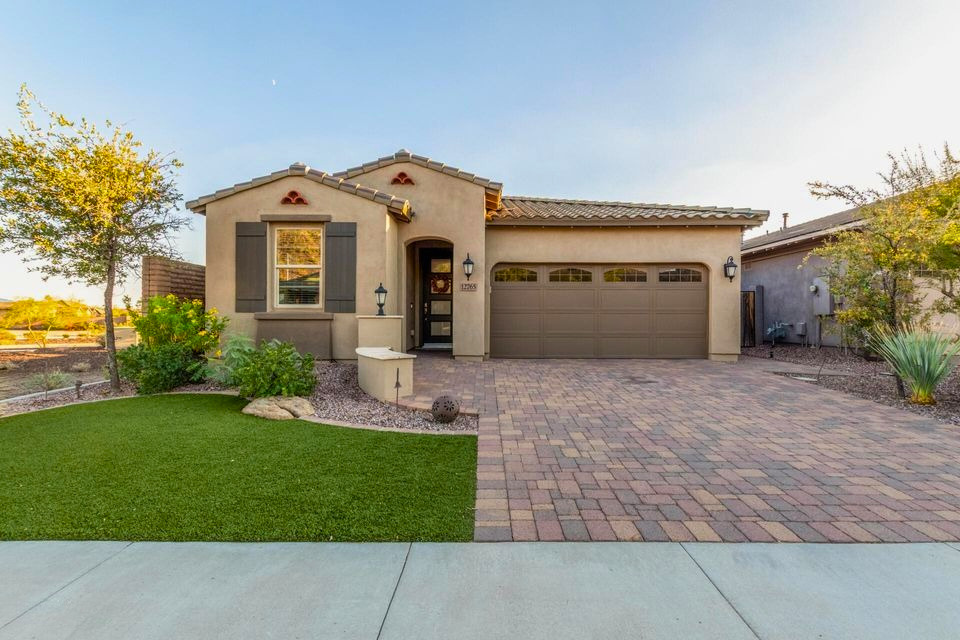
A typical Greater Phoenix single-family rental in the price range used in this article’s example.
What direct ownership actually gives you
Control. You decide the neighborhood, the floor plan, the rent, the manager, whether to replace the HVAC now or next year, whether to add a pool or a casita, and when to sell or exchange again. All of that is subject to Arizona landlord-tenant law, HOA covenants, lender terms and local ordinances, but the decisions are yours.
Control also means responsibility. Vacancy, a bad tenant, a failed water heater in July, and a property manager who underperforms are your problems to solve.
Why Greater Phoenix, and the honest caveats
Phoenix draws exchange capital for real reasons: a metro of more than five million people that keeps adding residents, a semiconductor build-out anchored by TSMC, a flat 2.5% state income tax, a state ban on local rent control, and steady relocation and seasonal demand. I covered that data in detail in Why Phoenix for Your 1031 Exchange and the TSMC North Phoenix investor guide.
The rental market today is not a straight line up, and you should underwrite it as it is. Rental Beast's Q3 2026 Phoenix report put the median single-family rent at $1,999, down 4.3% year over year, with concessions still offered on more than 60% of listings. That is a buyer's window for acquisitions and a reason to use conservative rent and vacancy assumptions, which is exactly what the example in Part 5 does.
Rent figures: Rental Beast Q3 2026 Phoenix report. Population and tax: see Why Phoenix for Your 1031 Exchange.
The Comparison
DST vs. Arizona Rental Property, Side by Side
Seventeen dimensions, described as typically as possible. Individual DST offerings and individual properties vary, so treat each line as a general tendency, not a rule.
01Ownership structure
02Day-to-day management
03Investor control
04Income potential
05Income predictability
06Liquidity
07Financing
08Upfront costs
09Ongoing fees
10Maintenance responsibilities
11Appreciation exposure
12Ability to improve the property
13Exit flexibility
14Diversification
151031 exchange considerations
16Estate planning considerations
17Potential future personal use
Not sure which column describes you? Talk it through with me. We’ll look at your goals, your timeline and what each path would mean for your income.
Book a conversationThe Underwriting
A $1 Million 1031 Exchange Example
Hypothetical figures from this example. Different measures; none guaranteed.
Reading Scenario A
A DST distribution rate is usually quoted on the total amount you invest, including the load. In this illustration, roughly $100,000 of the $1 million goes to commissions, acquisition fees and offering costs rather than real estate, and the 5.0% is still paid on the full $1 million. Sponsors underwrite to that. What you don't control is whether the property delivers it.
The risks are real: distributions can be reduced or suspended; a large tenant can leave; the trust's loan can mature in a weak market; the sponsor can stumble; and you may wait years longer than projected, or sell for less than you paid. Principal is at risk. The upside is a genuinely passive position with no 2 a.m. phone calls.
Scenario B in detail: two homes, all cash
Two West Valley or Southeast Valley single-family homes, each about $492,500, chosen so price plus buyer closing costs uses the full $1 million. Long-term leases, professionally managed.
| Line item (annual) | Per home | Two homes |
|---|---|---|
| Purchase price | $492,500 | $985,000 |
| Buyer acquisition costs (est.) | $7,500 | $15,000 |
| Total equity deployed | $500,000 | $1,000,000 |
| Income | ||
| Gross scheduled rent ($2,350/mo) | $28,200 | $56,400 |
| Vacancy & credit loss (6%) | −$1,692 | −$3,384 |
| Effective gross income | $26,508 | $53,016 |
| Operating expenses | ||
| Property taxes (rental classification) | −$3,000 | −$6,000 |
| Landlord insurance (local quote) | −$650 | −$1,300 |
| HOA ($100/mo) | −$1,200 | −$2,400 |
| Property management (flat fee, $145/mo) | −$1,740 | −$3,480 |
| Leasing fee (varies by package; half-month rent ~every 2 yrs) | −$588 | −$1,176 |
| Maintenance & repairs (5% of gross) | −$1,410 | −$2,820 |
| Accounting, admin, misc. | −$300 | −$600 |
| Net operating income (NOI) | $17,620 | $35,240 |
| Capital reserve (roof, HVAC, water heater) | −$1,800 | −$3,600 |
| Debt service | $0 | $0 |
| Cash flow after reserves | $15,820 | $31,640 |
Assumption notes: Rent of $2,350 sits between RentHop’s July 2026 three-bedroom medians in Goodyear ($2,195) and Gilbert ($2,395), and below their four-bedroom medians ($2,595 and $2,950). It is above the metro-wide single-family median of $1,999 (Rental Beast, Q3 2026), which includes older and smaller homes than a ~$490,000 suburban rental. Arizona rentals are taxed as class 4 property and do not receive the owner-occupant (class 3) homeowner rebate (Maricopa County Assessor); community facilities district levies can add more. Insurance reflects a November 2026 landlord-policy quote from a Peoria-based independent insurance broker for this example home (4 bed/2.5 bath, ~2,000 sq ft, built ~2015, tile roof, no pool, $340,000 replacement-cost dwelling coverage, $500,000 liability, 12 months loss of rent, $2,500 deductible). Published Arizona averages run higher, about $1,715, and your quote will depend on the property, carrier and claims history. Management uses the top of the $79–$145 monthly flat-fee range charged by the property manager I use; a percentage-based manager at 8–10% would cost about $2,100–$2,650 per home per year. Every figure varies by property.
Reading the two scenarios correctly
On the surface, Scenario A pays $50,000 and Scenario B pays $31,640. That comparison is misleading if you stop there, and it would be just as misleading to wave it away. Here is what each number actually is:
NOI
Income minus operating expenses, before reserves, debt and taxes. The two homes produce about $35,240, a roughly 3.6% yield on purchase price at today's soft rents.
Cash flow
What's left for the owner after reserves (and debt service, if any). Here, about $31,640, or roughly 3.2% on equity.
A DST distribution
The sponsor's payout after the property's expenses, the trust's debt service, reserves and fees. It is a different measure built on a different property, often with leverage the investor never sees directly.
Total return
Cash flow, appreciation, loan paydown (if financed), tax effects and the cost of exit. Neither scenario's cash number is its total return.
At current Phoenix rents, an all-cash single-family rental is not a high-cash-yield investment. People buy it for control, location and the option to use it later.
A DST often offers higher current cash yield in exchange for fees, illiquidity and no control. Which tradeoff fits is a values question as much as a math question.
Suppose the same $1 million buys four similar homes instead of two, with a $250,000 loan on each at an illustrative 7.25% 30-year investor rate. Annual debt service runs about $81,861 against roughly $63,280 of combined cash flow after reserves, leaving a shortfall of about −$18,600 per year (about −$1,550 a month).
That is negative leverage: when a property's yield is below the loan's cost, borrowing reduces cash flow. Roughly $9,700 of first-year payments go to principal, and appreciation on $2 million of property could outweigh the shortfall, or not. Leverage magnifies outcomes in both directions.
Leverage matters for a different reason too: if your California property had a mortgage, you generally need to replace that debt (or add cash) to avoid taxable boot. DSTs with trust-level financing are one way investors handle that; buying financed Arizona property is another. Your QI and CPA should confirm the math.
What can break either scenario
Exchange costs paid from exchange funds, the treatment of certain closing costs, any debt on the relinquished property, lender timelines, appraisal gaps, and whether two suitable homes can actually be found, negotiated and closed inside 180 days all determine whether Scenario B is achievable as drawn. DST offerings can fill up or close before your funds are ready. Run your real numbers with your CPA and QI, and use my investment calculators or a property income analysis for specific homes.
Want this analysis run on your own numbers? I’ll model real Arizona properties against your exchange equity, using the same line items as this example.
Schedule an income reviewFit Test: DST
When a DST May Be Worth Considering
For some investors, a DST evaluated with their financial advisor is a sensible fit. Several of my own clients plan to evaluate a DST with their financial advisors in the next few years. The common threads:
The disadvantages deserve equal weight: layered fees that reduce net returns, dependence on one sponsor's competence and integrity, no say in major decisions, illiquidity, distributions that can fall, and exit timing you don't control. A DST is not a bond and not guaranteed income. Read the PPM's risk section in full, and have a licensed professional who is independent of the sale walk you through it.
Fit Test: Direct Ownership
When Direct Arizona Rental Ownership May Be Worth Considering
Direct ownership tends to fit investors who:
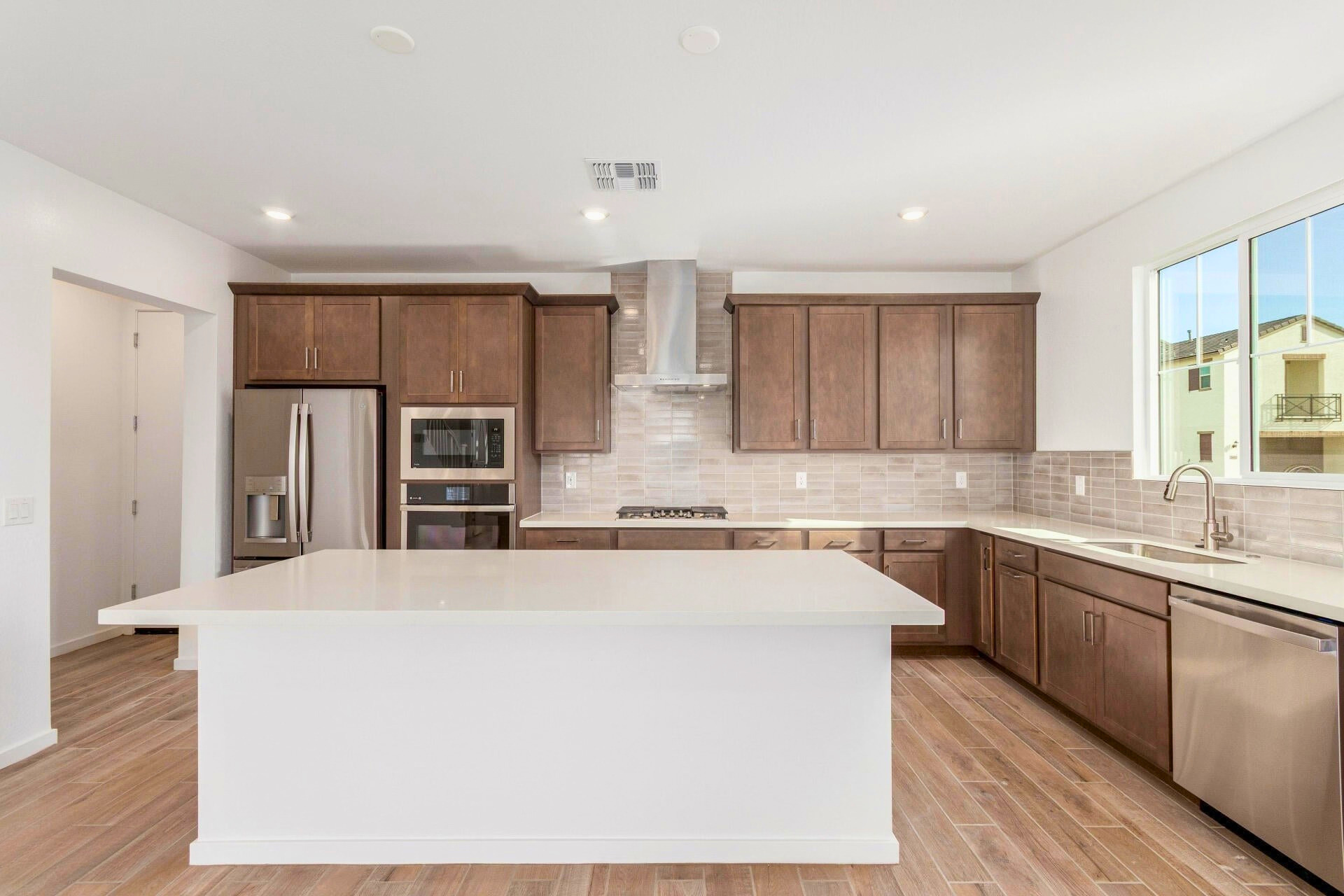
With direct ownership, decisions like upgrades and system replacements are yours to make.
The tradeoffs are concentration, management oversight, uneven cash flow and the full weight of decisions you get wrong. A bad acquisition is harder to escape than a bad month. Direct ownership does not automatically produce higher returns; it produces your returns, good or bad. It is not the right choice for every investor, and I tell clients that when it's true.
Case File
A Real Client Decision: DST or Scottsdale?
Washington physician → Scottsdale rental
One recent client, a physician in Washington, was preparing to sell his medical practice and complete a 1031 exchange of investment real estate. He came in leaning toward a DST, for understandable reasons: it was hands-off, simpler, and offered the prospect of consistent income.
After reviewing the fees, the risks and the lack of control, he decided against it. Three things weighed on him: layered fees reducing what actually reached him, distributions that could change with no say in the outcome, and no control over when or how the property would eventually be sold.
What tipped the decision was the future. There was a real chance he would move to the Phoenix area within a few years, and he liked the idea of already owning something he might one day move into. That option comes with conditions, covered in Part 9: the property has to be bought and held as a genuine rental, and any later move-in has its own tax rules.
He also saw the home as potential legacy property for his children. Under current federal law, heirs who inherit property generally receive a basis stepped up to its value at death, which can eliminate income tax on the gain deferred through his exchanges. Estate tax and state rules can still apply, and tax law can change, so that piece of his plan belongs with his estate attorney and CPA. For a related example, see how another client built an exchange around estate planning.
He exchanged into a Scottsdale rental home. His choice fit his goals. Another investor with no plans to move here and no interest in being involved could reasonably land on a DST.


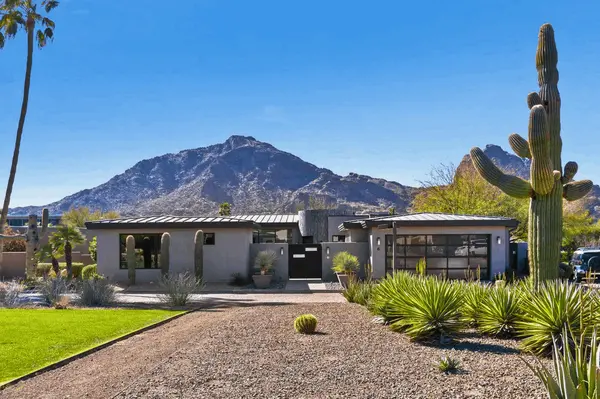
The client’s Scottsdale replacement property, front and backyard. Client details withheld for privacy.
Weighing the same decision this client faced? Let’s talk through what a Phoenix or Scottsdale replacement property could look like for you.
Start the conversationThe Future Move
What If You Plan to Retire or Move to Arizona?
This is the question that separates the two paths most sharply. A DST can't become your home. An Arizona house might, eventually. That optionality is real, but it is surrounded by rules that punish shortcuts.
I hear it most from California clients: they are exchanging now, but they can picture themselves in Scottsdale or Verrado in eight years.
Buy it as a genuine investment
Section 1031 requires that replacement property be held for productive use in a trade or business or for investment. Buying a house you intend to move into soon, and labeling it a rental, risks disqualifying the whole exchange. Intent is judged by facts: whether you rented it at fair market rent, to whom, for how long, and how much you used it yourself.
The IRS safe harbor for dwelling units
In Revenue Procedure 2008-16, the IRS created a safe harbor: it will not challenge investment status for a replacement dwelling if, for the 24 months after the exchange, you own it, rent it at fair rent to others for at least 14 days in each 12-month period, and keep personal use to no more than the greater of 14 days or 10% of the days rented at fair rent in each period.
Two cautions. A safe harbor is not a requirement or a guarantee of the reverse; falling outside it doesn't automatically fail an exchange, and meeting it doesn't mean converting at month 25 is wise. And it says nothing about when you can move in. That is a facts-and-circumstances question for your CPA.
Section 121 after a conversion: three rules stack
Put plainly: there is no fixed date after which a 1031 replacement property automatically becomes a tax-free home. Converting can still make sense, but the timing and the tax bill need modeling with a CPA before you move in, not after.
Two practical points for California exchangers
The FTB keeps watching
California's interest in your deferred California-source gain doesn't end when you move. The annual Form FTB 3840 filing continues until that gain is recognized, so a future taxable sale of the Arizona home can still trigger California tax on the original gain.
Property tax class changes
Locally, switching from rental (class 4) to primary residence (class 3) with the Maricopa County Assessor changes the property's tax treatment.
Thinking about retiring in Arizona someday? We can look for a rental that works today and could fit your life later.
Plan both chaptersThe Hybrid
Can You Combine a DST and Direct Rental Property in One 1031 Exchange?
Generally, yes. A single exchange can acquire multiple replacement properties, and a DST interest and an Arizona house can each be one of them. Some investors use this to balance a hands-on property with a passive one, or to place leftover exchange funds after buying a house.
What has to line up when you combine them
Whether a particular combination works depends on your exchange structure, and must be confirmed with your QI and tax professionals. My part is making sure the Arizona side is identified, negotiated and closed on time.
The Rules
Important Tax and Legal Considerations
A concise reference. None of it is a substitute for advice on your own facts. For more, see my real estate tax strategy resources.
| 45-day identification | Replacement property must be identified in writing within 45 calendar days of transferring the relinquished property. |
| 180-day completion & tax-return timing | You must receive the replacement property by the earlier of 180 days after the transfer or the due date, including extensions, of your tax return for the year of the transfer (Form 8824 instructions). Sales late in the year may need an extension to preserve the full 180 days. |
| Like-kind real property | Since 2018, only real property qualifies. U.S. real property is generally like-kind to other U.S. real property. |
| Investment use | Both properties must be held for business or investment use, not primarily for personal use or resale. |
| Debt replacement & boot | Cash you receive and net debt relief can be taxable boot. Full deferral generally means reinvesting all net proceeds and replacing debt, or adding cash to offset it. |
| DST qualification | Depends on the trust meeting the limits described in Revenue Ruling 2004-86; review the sponsor's tax opinion with your CPA. |
| Securities considerations | DST interests are generally securities sold by private placement, typically to accredited investors through licensed firms, with disclosure in a PPM. |
| Depreciation & basis | Your deferred gain carries into the replacement property's basis, which affects future depreciation and the gain on an eventual taxable sale. How basis is allocated across multiple replacements, and between land and building, is a CPA question. |
| Future disposition | A later exchange can continue deferral; a taxable sale recognizes deferred gain. Some DSTs offer an exit into REIT operating-partnership units, which generally ends the ability to do further 1031 exchanges with that capital; understand any such option before investing. |
| State tax & the California clawback | State treatment depends on where you live and where the relinquished property sits. California requires taxpayers who exchange California real property for out-of-state property to file Form FTB 3840 in the year of the exchange and annually after, and it can tax the deferred California-source gain when it is eventually recognized, even if you've moved. Arizona rental income is generally Arizona-source income; your home state may also tax it, often with a credit. |
Your Advisory Team
Questions to Discuss With Your CPA, Qualified Intermediary and Financial Advisor
Bring these to the meetings that matter. My role is identifying and evaluating Arizona real estate; I don't recommend or sell DST securities, so questions about specific offerings belong with a licensed securities or financial professional.
- Does my sale qualify, and what is my deferred gain and recapture?
- What replacement value and debt avoid boot?
- How will basis and depreciation work across multiple replacements?
- If I may move in someday, how should timing and Section 121 be planned?
- What are my California (FTB 3840) and Arizona filing obligations?
- Which identification rule fits my plan?
- How do we identify both a DST and a house correctly?
- What are my exact 45- and 180-day dates, and does my tax-return date shorten them?
- How are funds released to multiple closings?
- How much illiquidity can my plan absorb?
- What is a DST's total load and fee drag, and how does it compare?
- What are the sponsor, debt and concentration risks?
- How does this fit my income needs and estate plan?
Our Role
How The Ravenscroft Group Helps Arizona 1031 Exchange Buyers
If you decide direct ownership is worth evaluating, all or in part, this is where I spend my time:
What I don't do: guarantee an exchange's success or determine whether a transaction qualifies for tax deferral. Those calls belong to your tax and legal advisors.
Related client wins and guides
Weighing a DST against Arizona rentals? Bring your exchange timeline and target numbers, and we'll look at what your equity could realistically buy here.
Schedule a strategy reviewQuestions
Frequently Asked Questions
1Is a DST eligible for a 1031 exchange?
It can be. Under IRS Revenue Ruling 2004-86, an interest in a properly structured Delaware Statutory Trust is treated as an interest in the underlying real estate and can qualify as replacement property if all other Section 1031 requirements are met. Qualification depends on the specific trust's structure.
2Is a DST safer than owning rental property?
Not inherently. A DST removes management burden and may spread risk across more tenants, but it adds fees, sponsor risk, trust-level debt risk and illiquidity. A rental home concentrates risk in one property but gives you control. They carry different risks rather than more or less risk.
3Can I buy two Arizona rentals instead of investing in a DST?
Yes. One relinquished property can be exchanged into multiple replacement properties, provided they are identified within 45 days, closed within the exchange period, and together meet your value and debt targets for full deferral.
4Can I use a property manager for my Arizona 1031 rental?
Yes. Most out-of-state owners hire a licensed Arizona property manager. Many Phoenix long-term rental managers charge a flat monthly fee (the manager I use charges $79–$145 a month depending on services), while percentage-based managers commonly charge about 8–10% of collected rent. Using a manager does not affect investment-use status.
5Can I eventually live in my Arizona replacement property?
Possibly, but only after holding it as a genuine investment. There is no automatic conversion date. If you later sell it as your home, Section 121 requires at least five years of ownership after the exchange, and gain tied to rental periods and depreciation generally isn't excludable. Plan the timing with your CPA.
6Are DST distributions guaranteed?
No. Distributions are sponsor projections that depend on property performance, expenses, debt and reserves. They can be reduced or suspended, and investors can lose principal.
7What happens when a DST sponsor sells the property?
The sponsor decides when to sell. After debt payoff and fees, investors receive their share of proceeds and generally choose individually between a new 1031 exchange (with their own QI) or a taxable sale. Some offerings provide other exit structures, which carry their own tax consequences.
8Can I combine a DST with direct real estate ownership?
Generally yes. A DST interest and an Arizona property can both be replacement properties in one exchange if they are properly identified, closed on time and meet your value and debt targets. Confirm the structure with your QI and CPA.
See what your exchange equity could buy in Greater Phoenix
Bring your exchange timeline and target numbers. We'll look at realistic Arizona replacement options, and whether direct ownership fits your goals at all.
Schedule an income strategy review(480) 269-5858
About the Author
Eric Ravenscroft, CRS
Founder & Team Lead, The Ravenscroft Group at Real Broker AZ, LLC
“Every purchase is one part of a client’s broader financial plan, not a standalone transaction.”
How Eric helps 1031 investors
Credentials & Recognition
Designations
CRS · MRP · SRES®
Certified Residential Specialist, Military Relocation Professional, Seniors Real Estate Specialist®
Real Broker Ranking
#2 Arizona · #22 U.S.
Agent rankings, Q3 2026
Experience
15 Years
Combined real estate and financial planning, including as a Director of Wealth Management
Sources
- IRS Revenue Ruling 2004-86 (Delaware Statutory Trusts)
- IRS: Like-Kind Exchanges, Real Estate Tax Tips
- IRS: Instructions for Form 8824
- The Tax Adviser (AICPA): Rev. Proc. 2008-16 dwelling-unit safe harbor
- 26 U.S.C. §121 (GovInfo)
- California FTB: Reporting like-kind exchanges and Form FTB 3840
- Maricopa County Assessor: Class 3 vs. Class 4 residential property
- Rental Beast: Phoenix Rental Market Report, Q3 2026
- RentHop: Average Rent in Goodyear, AZ (July 2026)
- RentHop: Average Rent in Gilbert, AZ (July 2026)
- Home365: Property Management Fees 2026
- RentalRealEstate.com: Landlord Insurance in Arizona
Important Disclosure: This article is provided for general educational purposes and does not constitute tax, legal, securities, or individualized investment advice. Eric Ravenscroft and The Ravenscroft Group provide real estate brokerage services and do not offer, sell, or recommend Delaware Statutory Trust securities. Tax treatment, investment eligibility, exchange requirements, and financial outcomes depend on individual circumstances. Hypothetical examples do not represent guaranteed results. Investors should consult qualified tax, legal, financial, and securities professionals before making investment decisions.
Eric Ravenscroft and The Ravenscroft Group may receive real estate commissions when clients buy or sell property, including Arizona replacement property discussed in this article. Eric Ravenscroft’s only compensation is real estate commissions; he receives no compensation, including referral fees, on DST investments. Market figures reflect data available as of Q3 2026 and will change. The client example is shared with identifying details removed; individual results vary.
Reviewed for compliance by Real Broker AZ, LLC, November 16, 2026.
Categories
- All Blogs (334)
- Active Adult & 55 Plus Communities (17)
- Arizona Relocation Guides (34)
- Buyers (223)
- Financial Planning (66)
- General Real Estate (150)
- Income From Real Estate (65)
- Market Update (26)
- New Construction (30)
- News, Updates and Coming Soon (57)
- Real Estate Agent Financial Planning (23)
- Real Estate Investing (104)
- Sellers (107)
- Vacation and Short Term Rentals (47)
Recent Posts






About the Author
Eric Ravenscroft is a Top 1% REALTOR® across North America and one of Arizona’s most trusted real estate strategists. With 15 years of experience spanning real estate, wealth management, and investment planning, he helps clients make smarter, financially grounded decisions, from new construction and relocations to STR investments, 1031 exchanges, and long-term portfolio strategy.
Eric’s expertise has earned him industry recognition, Elite status with Real Broker, and features in major publications including the Wall Street Journal, MarketWatch, MSN, and Morningstar. Clients across the Greater Phoenix Metro rely on his clarity, strategic insight, and results-driven guidance.
Ready to make a confident real estate move? Call or text Eric today.