
Which Airbnb Amenities Actually Pay Off in Phoenix & Scottsdale?
Amenity ROI ReportPool vs. hot tub vs. pickleball vs. game room
Which Airbnb Amenities Actually Pay Off in Phoenix & Scottsdale?
A buyer's framework for deciding which amenities are worth paying for in a Phoenix or Scottsdale short-term rental, and why the most profitable amenity decision usually happens before you make an offer.
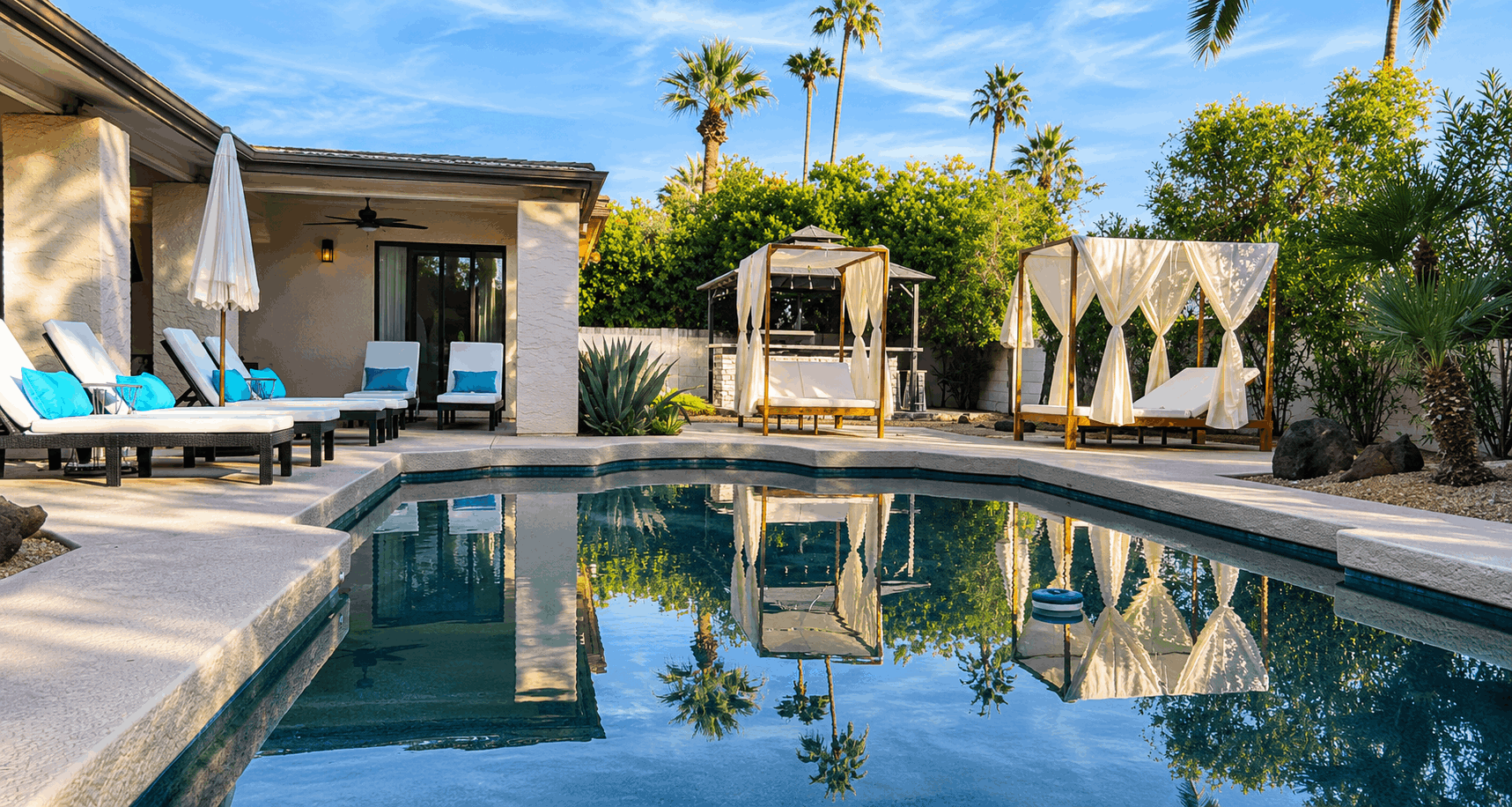

By Eric Ravenscroft, CRS · Owner & Team Lead, The Ravenscroft Group | Real Broker Arizona
Published · 22 min read
The amenity scorecard
Base-case ROI from the hypothetical 4BR Scottsdale model in Section 10. Your property's numbers will differ.
01 · Heated pool
Table stakes
Buy it, don't build it12.2%
ROI on a $90K new build
Decides whether a family or group home can compete Nov–Apr. Most dollars, slowest payback.
02 · Hot tub
Best value
If no spa exists25.7%
ROI on a $14K install
Strong winter draw. Adds little to a home that already has a heated pool and spa.
03 · Game room
Summer hedge
Use existing space17.2%
ROI on a $25K garage conversion
Earns its keep in July. Convert a garage, loft or bonus room, not a bedroom.
04 · Pickleball court
Large lots only
5+ BR group homes9.3%
ROI on a $40K court
Widest range of outcomes. Noise, HOA and lot size decide it before guests do.
In Phoenix and Scottsdale, a heated pool decides whether a family or group rental can compete at all. A hot tub is often the best return per dollar when the home has no spa. A game room built from existing space is a strong year-round play. A pickleball court can set a large luxury home apart but rarely pays on a small one.
- Revenue-generating amenities are not necessarily profit-generating amenities. Judge every upgrade on the added net operating income, not the added bookings.
- Amenity effects overlap. A hot tub added to a home that already has a heated pool and spa earns far less than the same tub added to a home with neither.
- The cheapest amenity is the one the seller already paid for. Buying the right backyard at the right price usually beats building it after closing.
The most expensive Airbnb amenity isn't always the most profitable
Two Scottsdale short-term rentals can share a bedroom count, a square-footage band and a ZIP code and still produce very different financial results. The difference usually isn't the house. It's what the property gives guests to do, which guest it was positioned for, what the owner paid for it, and what it costs to run.
That spread is measurable in our own published work. When we underwrote 14241 N 54th St in Scottsdale, comparable four-bedroom short-term rentals within about a mile showed annual revenue from roughly $26,000 to $243,000, nearly a tenfold spread on similar bedroom counts and guest capacity. Case study
It's tempting to read that spread and conclude that more amenities always mean more money. That's where investors lose money. A $90,000 pool, a $40,000 court and a fully kitted arcade can all raise gross revenue while lowering the return on the capital it took to build them, especially when the property was already priced for a different guest.
Revenue-generating amenities are not necessarily profit-generating amenities. An upgrade is only worth making if the additional net operating income it produces, after its own operating costs, justifies the capital and risk required to add it. In Phoenix and Scottsdale, that test usually favors buying a property that already has the right amenities at the right price over building them later.
The most impressive property on a street is not automatically the best investment on that street. The best investment is the one where purchase price, location, guest demand, amenity package and operating costs line up, and that alignment is decided mostly during the search and negotiation, not after closing.
How Airbnb amenities actually influence revenue
Amenities move revenue through a handful of specific levers. Knowing which lever an amenity pulls tells you how much to expect from it.
- Average daily rate (ADR). Most measurable amenity effects show up here. National AirDNA research finds amenity premiums concentrated in nightly rate rather than occupancy. Verified
- Occupancy. Amenities help most in shoulder and off-peak periods, when guests have more choice and filter harder.
- Revenue per available night (RevPAR). ADR multiplied by occupancy, and the cleanest single test of whether an amenity is earning its keep.
- Booking conversion. Amenities drive search filters and the first photos guests see. A listing that doesn't appear in a "pool" or "hot tub" filter never gets the chance to convert.
- Reviews. A broken heater or a cold spa in January generates reviews that suppress future bookings. Amenities carry review risk as well as review upside.
- Competitive positioning. If every comparable listing has a heated pool, a heated pool isn't a premium. It's the price of entry.
- Seasonality. Pool heat matters most from roughly November through April. A game room earns its keep in July. Shade earns its keep almost all year.
- Repeat bookings. Groups who find a property that works for everyone tend to rebook. That value is real but hard to model, so it belongs in your upside case.
- Operating expenses. Every amenity adds recurring cost: energy, service, repairs, insurance and replacement reserves.
Why gross revenue alone is insufficient
A hot tub that adds $8,000 in bookings but $4,400 in operating cost has produced $3,600 of value, not $8,000. A pool that adds $20,000 in bookings on a $90,000 build has produced a modest return, not a windfall. The metric that matters is incremental net operating income relative to the capital invested.
How to calculate incremental net operating income
- Estimate incremental gross revenue by comparing similar listings with and without the amenity in the same submarket and bedroom count, not by applying a national average.
- Subtract variable costs on that revenue. If your manager takes 20% of revenue, 20% of the amenity's added revenue goes to management.
- Subtract the amenity's own fixed costs: energy, service, chemicals, water, insurance increments and an annual replacement reserve.
- The result is incremental NOI. Divide it by the all-in installed cost, including permits, electrical work and booking nights lost during construction.
The metrics are related, but they aren't the same
| Metric | What it measures | How it can mislead |
|---|---|---|
| Gross revenue increase | Additional booking revenue attributed to the amenity | Ignores the amenity's operating costs and management share |
| Incremental operating income | Added revenue minus added operating costs | Only as good as the revenue estimate and comp quality |
| Simple amenity ROI | Incremental NOI ÷ amenity investment | Ignores financing, timing and taxes |
| Cash-on-cash return | Annual pre-tax cash flow ÷ total cash invested in the property | Moves with financing even if the amenity performs the same |
| Payback period | Years for incremental NOI to repay the investment | Ignores equipment life; a 7-year payback on a 10-year heater is thin |
| Long-term property value | Effect on resale price and buyer pool | Helps only with buyers who value the amenity; some shrink the owner-occupant pool |
Why amenity effects overlap rather than add up
The most common modeling mistake I see is stacking premiums: assuming a pool adds X%, a hot tub adds Y% and a game room adds Z%, so the home with all three earns X + Y + Z. Guests are paying for an experience, and several amenities serve the same need. A heated pool with an attached spa already delivers most of what a separate hot tub would. A sport court and a putting green both answer "something to do outside for the group." Each additional amenity in the same category usually earns less than the one before it. Judgment
Airbnb amenity ROI comparison for Phoenix and Scottsdale
The table compares ten common amenities. Cost ranges are planning estimates drawn from published contractor and industry pricing guides (sources at the end) and must be verified with licensed local contractors; Arizona pricing, site conditions and HOA rules can move them materially. Revenue effects are deliberately qualitative. Reliable Phoenix- or Scottsdale-specific premiums for most of these amenities haven't been published, and I won't invent them.
| Amenity | Est. upfront cost | Est. annual operating cost | Guest appeal | ADR impact | Occupancy impact | Seasonality | Complexity | Best suited to | Relative ROI potential |
|---|---|---|---|---|---|---|---|---|---|
| Heated pool (new build) | $60K–$120K+ incl. heater | $3K–$7K+ | Very high | High | High (family/group) | Year-round; heat critical Nov–Apr | High | 3–6BR family and group homes | Moderate if built; high if acquired |
| Pool heater (existing pool) | $3K–$8.5K | Heat pump ~$50–$150/mo in cool months | High in winter | Moderate–high | Moderate | Nov–Apr | Low–moderate | Any pool home without heat | High |
| Hot tub (standalone) | $5K–$15K incl. 240V circuit | $2K–$3.5K | High | Moderate–high | Low–moderate | Strongest Oct–Apr | Moderate | Homes without a spa | High if no spa; low if spa exists |
| Pickleball / sport court | $20K–$50K+ | $800–$2K | High for groups | Low–moderate | Low–moderate | Unusable midday in summer | Moderate (noise) | Large lots, 5+BR group homes | Variable; low on small lots |
| Game room | $5K–$35K | $800–$2K | High for families | Moderate | Moderate, esp. summer | Counter-seasonal | Low–moderate | Homes with garage, loft or bonus room | High when space exists |
| Putting green | $5K–$20K | $300–$1K | High for golf groups | Low–moderate | Low | Golf season | Low | Golf-oriented Scottsdale homes | Moderate |
| Fire pit | $1K–$6K | $200–$700 | Moderate–high | Low | Low | Oct–Apr evenings | Low | Nearly all properties | High per dollar |
| Outdoor kitchen / BBQ | $3K–$25K+ | $200–$800 | Moderate–high | Low–moderate | Low | Most of the year | Low–moderate | Group and family homes | Moderate |
| Covered patio / shade | $5K–$30K+ | Minimal | High in Arizona | Low (supports others) | Moderate in summer | Year-round | Low | Any exposed backyard | Moderate–high |
| Premium outdoor seating | $2K–$10K | Replacement reserve | Moderate | Low (photo/review value) | Low | Year-round | Low | All properties | High per dollar |
| EV charger (Level 2) | $1K–$3K | Electricity (can be priced in) | Niche, growing | Low | Low | Year-round | Low | Higher-end homes, longer stays | Moderate |
Estimates Ranges are planning figures compiled from published pricing guides; don't underwrite without local bids. "Relative ROI potential" is professional judgment for a typical Phoenix/Scottsdale STR and will differ property by property.
What national data does show: AirDNA's amenity research reports listings with hot tubs carrying an average ADR roughly 14% higher than comparable listings without one, with pools, saunas, EV chargers and fire pits showing smaller single-digit premiums nationally; its luxury-segment analysis reports larger RevPAR differences for pools and hot tubs. Verified These are correlations across listings, not proof that adding the amenity causes the premium, and they're national figures. In a desert market where pools are common, the pool premium tends to be priced into the comp set rather than standing out.
Heated pools: one of the most important Scottsdale Airbnb amenities
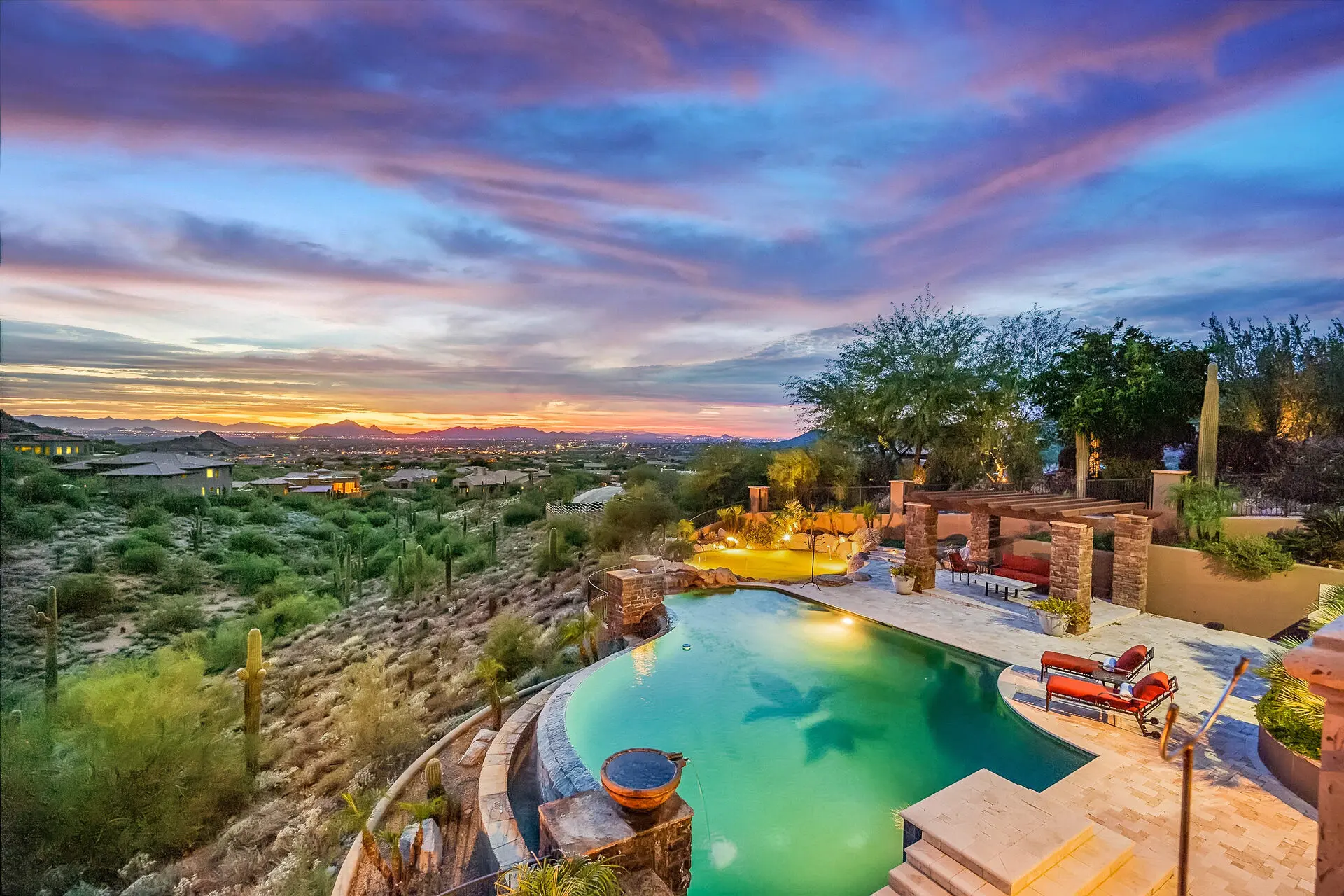
For family and group properties, a heated pool works less like a premium and more like a requirement to compete. Its biggest financial impact lands from roughly November through April, the highest-demand months, when an unheated Valley pool is too cold for most guests.
Why pools matter so much here
The Phoenix and Scottsdale guest calendar is built around the cooler months. Scottsdale reports that more than 11 million visitors generated an estimated $3.7 billion economic impact in 2024, and Scottsdale Stadium drew nearly 140,000 fans during the 2025 Spring Training season. Verified Spring Training, golf season, winter visitors and family spring breaks all land between January and April, exactly when pool water needs heat to be usable.
That's why "heated" matters more than "pool." An unheated pool photographs beautifully in a February listing and disappoints in a February review. I cover the guest segments behind this calendar in my short-term versus mid-term rental guide for Phoenix and the Arizona Spring Training guide.
Summer is different, not dead
From roughly June through September, Valley pool water is warm without a heater and the pool shifts from a premium to a survival amenity. Family and value-oriented summer travelers often won't consider a property without one. Expect lower rates, but the pool is often what keeps the calendar from going empty.
Heating options and what they cost to run
Phoenix pool service companies generally recommend electric heat pumps for regular use because the Valley's mild winter air keeps them efficient. Published local estimates put heat-pump operation at roughly $50–$150 per month in cooler months and installed heaters around $3,000–$7,000; gas heaters warm faster but are commonly cited at $300+ per month if run continuously. Verified estimates Actual cost depends on pool size, target temperature, cover use, rate plan and how many nights you heat.
How to handle pool heating fees
Many Valley hosts charge a separate nightly or per-stay heating fee; others build heat into the rate. A separate fee protects margin but adds checkout friction and can trigger disputes if the water disappoints. Building heat into the rate is cleaner for guests but requires an accurate winter energy model. Either works if it's priced against real energy cost and disclosed clearly. Judgment
Maintenance, repairs and liability
- Service: weekly professional service is standard; STR turnover means more debris, more chemical demand and more scrutiny.
- Equipment: pumps, filters, heaters and automation have finite lives. Budget a reserve, not just a repair line.
- Safety and liability: Scottsdale applies pool barrier requirements to short-term rentals with a pool, hot tub or spa, and both Scottsdale and Phoenix require at least $500,000 in liability coverage for STRs. Verified Confirm your insurer explicitly covers short-term rental use.
Why an existing pool is a different financial opportunity
A new in-ground pool in the Valley commonly runs into the high five or six figures once heating, decking, fencing and permits are included, and it can take a property offline for months. Buying a home where the seller already built the pool shifts that cost and timeline off your balance sheet. What you're really evaluating at acquisition is the pool's condition and capability:
- Surface age (plaster or pebble finish), tile and coping condition
- Heater type, size and age, and whether it can hold guest-friendly temperatures in January
- Pump, filter and automation age and efficiency
- Size and layout: a large group needs swimming space, not just a plunge pool
- Attached spa, which changes the hot tub math entirely (Section 05)
- Backyard design: shade, sightlines, seating and how the pool area photographs
What our pool-home acquisitions show
At The Cabana House (5701 E Charter Oak Rd, 85254), our clients bought a fully furnished, operating STR with the backyard already built: heated PebbleTec pool, hot tub, barrel sauna, cabanas, fire pit and putting green. We negotiated $170,000 below list, with the seller also paying closing costs, a new roof and new full-panel sliders. Since relaunch, the listing has earned Airbnb Guest Favorite status in the top 5% of eligible listings, at 4.95 stars across 41 reviews.
At 14621 N 63rd Pl (85254), the seller had already replaced the roof, rebuilt the pool with a new surface and heater, and replaced the HVAC and water heater before our clients bought it for $980,000 against a $999,000 list price. Those were exactly the cost categories that killed a prior escrow for the same buyers. At 4435 E Kings Avenue in Phoenix, the backyard came with a refurbished pool, outdoor kitchen, pergola and misting system as part of more than $622,000 in documented renovations, and the home was bought $65,000 under its $1.3 million ask.
These examples show how pool condition was negotiated into the purchase. They don't isolate the revenue the pools themselves generate, because each projection reflects the whole package, location and positioning.
Illustration: adding heat to an existing unheated pool
Hypothetical A four-bedroom Scottsdale home has an unheated pool. A heat-pump upgrade costs $7,500 installed. Added fixed costs (heating-season electricity plus a maintenance reserve) are $1,300 a year, and 20% of any added revenue goes to management and platform fees.
NOI = added gross − (20% variable cost + $1,300 fixed). The conservative case shows heat only pays when the comp set rewards it; the base case shows why it's often one of the highest-return upgrades on an existing pool home.
Hot tubs: potentially attractive ROI with a smaller investment
Often yes when the property has no spa: the investment is modest next to pools or courts, and hot tubs show one of the most consistent rate premiums in national data. It's frequently not worth it when the home already has a heated pool with an attached spa, because the guest need is already met.
Who pays for a hot tub
Hot tubs appeal to couples, smaller groups, winter visitors, golf groups recovering after a round, luxury travelers and wellness-oriented guests. In the Valley they do their heaviest lifting on cool winter evenings, the same months when demand and rates already peak.
Standalone hot tub vs. integrated spa
- Integrated spa (built into the pool): attractive and shares equipment with the pool, but heats more slowly and depends on the pool heater.
- Standalone hot tub: lower cost, independent heating, faster to install and can be placed for privacy or views, but needs its own pad, electrical and water care.
Installation and operating realities
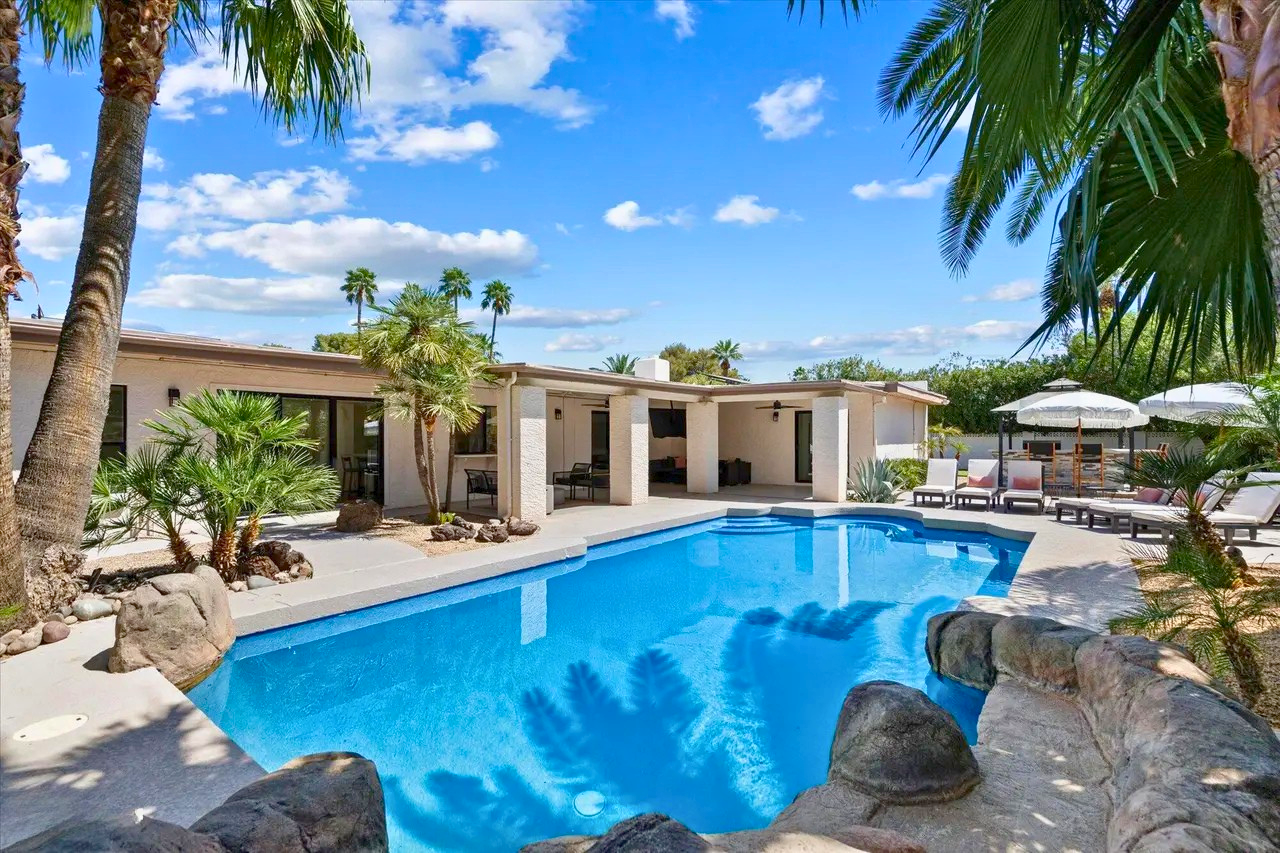
Most full-size hot tubs need a dedicated 240-volt circuit, commonly 50 amps, with GFCI protection, and electrical permits are typically required. Industry pricing guides place total installed cost for above-ground units roughly in the $3,000–$12,000 range, with panel upgrades, long conduit runs or new pads pushing it higher. Verified estimates
The bigger difference in an STR is water care. A home hot tub might be drained a few times a year; an STR hot tub sees new bathers every few days. Plan for chemistry checks at every turn, more frequent drains and refills, cover replacement and occasional heater or pump repairs. A cold or cloudy hot tub is one of the fastest routes to a disappointing review.
Does a hot tub add value if the home already has a heated pool?
This is where overlap matters most. National hot tub premiums are measured against listings that lack one, and in mountain or rural markets that's most listings. In Scottsdale, many competing listings already have a heated pool and spa. AirROI's amenity analysis, for example, reports a smaller hot tub premium in Scottsdale than in mountain markets and attributes it to pools being the dominant outdoor amenity. Third-party analysis
| Scenario | No spa: added gross | NOI | ROI | Has heated pool + spa: added gross | NOI | ROI |
|---|---|---|---|---|---|---|
| Conservative | $4,000 | $400 | 2.9% | $1,500 | −$1,600 | Negative |
| Base case | $8,000 | $3,600 | 25.7% | $3,500 | $0 | 0% |
| Optimistic | $12,000 | $6,800 | 48.6% | $6,500 | $2,400 | 17.1% |
Hypothetical Same equipment, same cost, very different answer. The deciding variable is what the home and the comp set already offer.
Our own case studies reflect that judgment. At 14241 N 54th St, a hot tub was one of two additions identified before the offer was written and was funded largely by a negotiated $33,000 seller credit. At 4435 E Kings Avenue, a hot tub was flagged as future upside the owners hadn't needed to spend on yet. Case studies
Pickleball courts: premium differentiator or expensive mistake?
They can, for the right property: a large-lot, high-capacity home marketed to groups and families who want a full activity package. They aren't a universal revenue driver, and on a small lot in a dense neighborhood they can become a noise problem, an HOA problem and a capital drag.
Where a private court can make sense
Courts fit luxury group homes, family reunions, multi-generational trips, retreats (where permitted) and recreational travelers who want the property itself to be the destination. In those segments a court contributes to "something for everyone in the group," a different value proposition than a couple's getaway.
What a court really costs
- Construction: industry pricing guides place backyard courts commonly in the $20,000–$40,000 range, with fenced, lit and landscaped builds running higher. Verified estimates
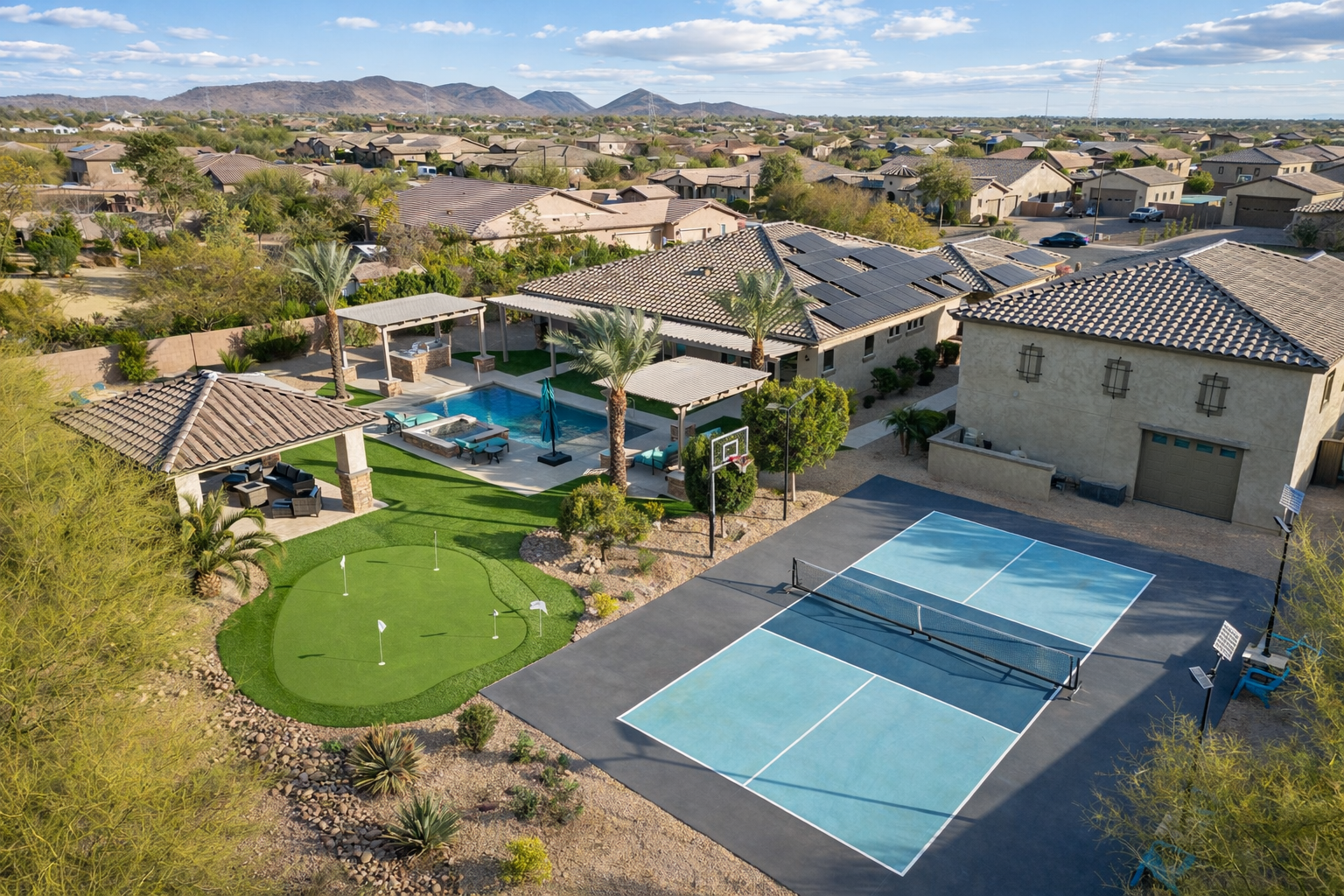
- Lot size: USA Pickleball construction guidance cited by builders calls for a minimum footprint of about 30 × 60 feet, with 34 × 64 preferred: roughly 1,800–2,200 square feet of flat, buildable yard before setbacks, pool and patio.
- Surface and drainage: post-tension concrete or asphalt with an acrylic surface; monsoon drainage and Valley soils must be addressed or the surface cracks and ponds.
- Lighting: useful in summer, when midday play is unrealistic, but outdoor lighting can trigger HOA and neighbor objections.
- Noise: the repetitive paddle impact is the issue neighbors raise most. Mitigation adds cost and may not end complaints.
- HOA, permits and insurance: many communities require architectural approval or prohibit courts outright; grading, walls and lighting can need city permits; insurers may treat courts as added liability.
- Maintenance: periodic resurfacing, net and equipment replacement and cleaning.
The same amenity, two different investments
| Factor | 6BR luxury Scottsdale home | 3BR Phoenix home |
|---|---|---|
| Typical guest | Groups of 10–16, families, golf trips | Families and small groups of 4–6 |
| Nightly rate base | High, so a small % lift is real dollars | Moderate, so a % lift is small dollars |
| Lot | More likely to fit a court with buffers | Court may consume most of the yard |
| Neighbor proximity | Often more separation | Often closer; higher noise risk |
| Cost vs. property value | Small share of a seven-figure asset | Large share of the total investment |
| Better alternatives | Few at this tier; court can differentiate | Heated pool, shade, game room usually win |
Buying a court vs. building one
Acquiring a home with an existing court means the seller absorbed construction cost, permitting and the construction-period vacancy. You still need to inspect the slab for cracking and drainage, confirm the court was permitted and HOA-approved, and confirm whether lighting is allowed. Building later means you control the design but carry the full cost, timeline and approval risk yourself.
What our court properties show, and what they don't
At 14241 N 54th St, the deciding asset was a 15,682-square-foot lot, more than a third larger than nearby comparables. A pickleball-lined multi-sport court went into an unused corner as part of a broader package with the pool, hot tub, putting green, golf net, playground and garage game room. The underwriting projects about $182,800 in annual revenue, and the highest-earning comp in that set also offered pickleball. At Solterra Haus in Mesa, an oversized lot supported a pickleball and basketball court alongside a pool, spa, putting green, fire pit and two game rooms.
In both cases the court is one part of an amenity stack on an unusually large lot. Neither isolates the court's revenue contribution, and neither should be read as evidence that a court alone would lift revenue on a typical lot.
Game rooms: the overlooked year-round amenity
Usually, when they're built from space that isn't producing revenue today: a garage, loft or bonus room. In Arizona they're counter-seasonal. An air-conditioned game room is most valuable in July, exactly when outdoor amenities are hardest to use during the day.
What belongs in a good STR game room
Pool tables, shuffleboard, ping-pong, foosball, air hockey, arcade cabinets, gaming consoles and board games all have a place. The right mix depends on the guest. Families with kids lean toward consoles, air hockey and arcades; adult groups gravitate to pool, shuffleboard and darts; multi-generational groups need something grandparents and kids can play together. Commercial-grade equipment holds up to turnover far better than consumer models.
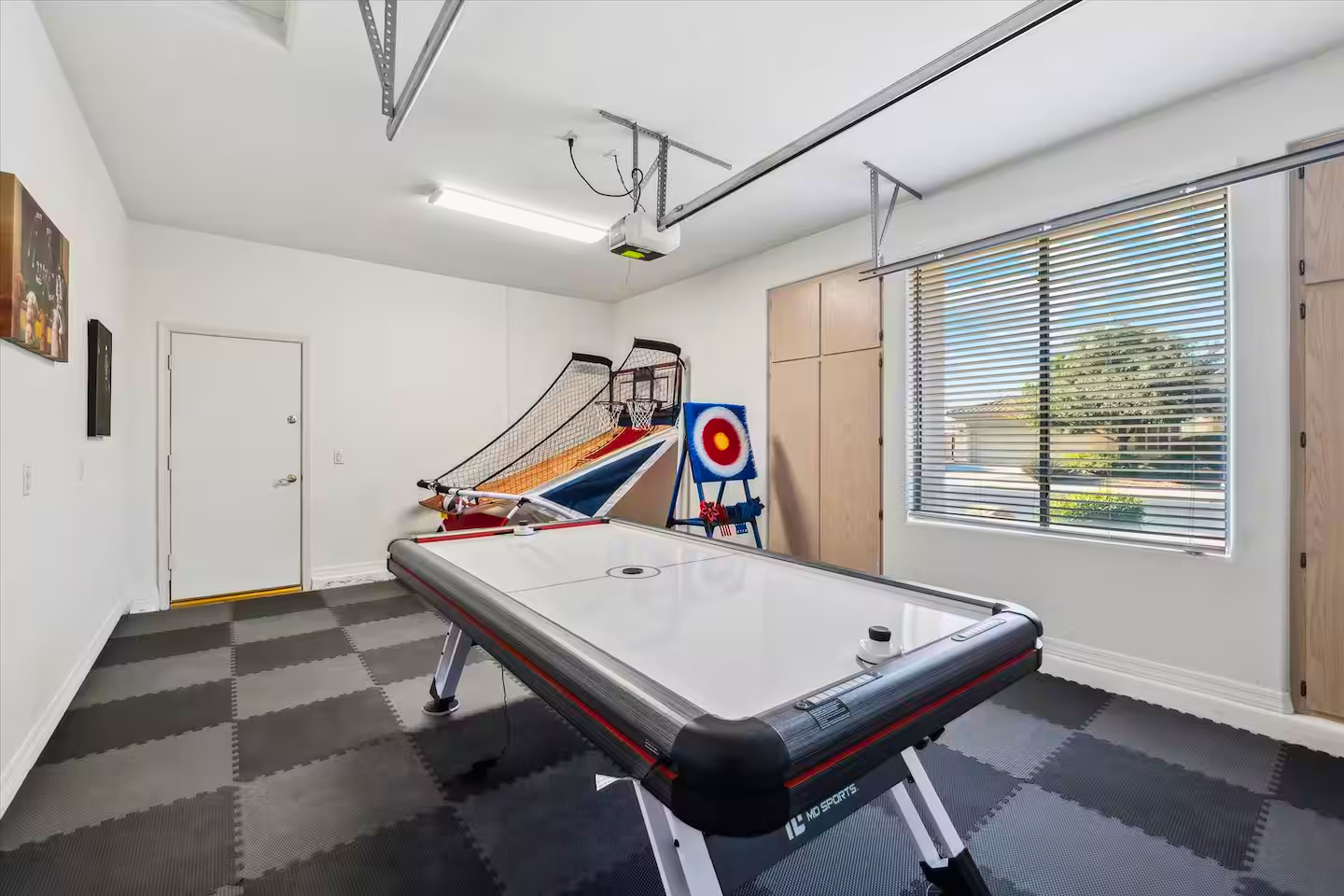

Which space to convert
| Space | Pros | Watch-outs |
|---|---|---|
| Garage | Large footprint; often unused by guests | Cooling and insulation; permits; lost covered parking; HOA rules on garage use |
| Unused bedroom | Already conditioned and finished | Losing a bedroom usually lowers capacity and the rate tier |
| Loft | Low cost; keeps bedroom count | Noise travels; limited space for large tables |
| Bonus room | Often ideal: finished, separate, no bedroom loss | Confirm comps don't already count it as sleeping space |
| Existing rec space | Lowest cost: equipment and styling only | Dated finishes may need a refresh to photograph well |
The bedroom-count tradeoff
Bedroom count and sleeping capacity usually set the rate tier more than any amenity. Converting a bedroom into a game room can lower the ceiling on group size and ADR, so I'd look for a garage, loft or bonus room before giving up a bedroom. Some investors go the other way, converting flex space into an extra bedroom, as our clients at 14621 N 63rd Pl are doing with a planned fifth bedroom alongside a garage-to-game-room conversion.
Garage and bonus-room game rooms appear across our STR work. 4435 E Kings Avenue came with the garage already converted and conditioned; 14241 N 54th St converted an unused two-car garage after closing using negotiated seller credits; Solterra Haus created two game rooms; Palm Valley in Goodyear has a converted garage arcade and a bonus-room game room; and the Gilbert STR paired a bonus-room game room with a second game area in the loft.
These cases document the strategy, not a standalone revenue figure for the game rooms.
Illustration: a lower-cost loft game room
Hypothetical $8,000 for equipment, durable furniture and styling in an existing loft. Added fixed cost of $600 a year for replacement and repairs; 20% variable cost.
Which amenities work best for different Airbnb property types?
The right package starts with the guest the property can realistically win. Four investment profiles: Judgment
3BR Phoenix Airbnb. Moderate budget, family-oriented, price-aware guests. Prioritize a heated pool if one exists, shade, comfortable outdoor seating, a grill, a fire pit and an inexpensive loft game setup. Avoid large capital projects.
4BR Scottsdale Airbnb. Families, golf groups, smaller groups. A heated pool is effectively required; a hot tub is high-value if there's no spa; outdoor entertaining serves everyone; a garage game room carries summer.
6BR luxury Scottsdale. Premium group travel expects a resort-style heated pool and spa, generous shade and at least one distinctive activity. A putting green or court can earn its place if lot, HOA and neighbors support it. Watch occupancy rules.
North Phoenix rental. Desert Ridge, North Scottsdale golf, family attractions and the growing TSMC corridor covered in my North Phoenix investor guide. Mixed leisure and work demand, so workspace, internet and parking matter as much as a court.
| Profile | Top priorities | Situational | Usually avoid | Typical upgrade budget | Main tradeoff |
|---|---|---|---|---|---|
| A: 3BR Phoenix | Heated pool (if present), shade, seating, grill, fire pit | Hot tub; loft game room | New pool build; sport court | $5K–$20K | Protecting thin margins |
| B: 4BR Scottsdale | Heated pool, hot tub or spa, outdoor living | Garage game room; putting green | Court on small lots | $15K–$45K | Winter heating and spa upkeep |
| C: 6BR luxury | Resort pool and spa, outdoor kitchen, shade, game room | Sport court, putting green | Low-grade equipment | $40K–$120K+ | Noise, occupancy rules, upkeep |
| D: North Phoenix | Heated pool, workspace, parking, outdoor living | Hot tub; game room | Over-amenitizing | $10K–$35K | Leisure vs. work-travel mix |
Estimates Budgets are planning ranges for upgrades beyond what the home already includes.
Phoenix vs. Scottsdale: location changes amenity ROI
Location decides which guest you can attract, and the guest decides which amenities pay. These are general patterns, not guarantees, and short-term rentals aren't permitted in every neighborhood: many HOAs restrict or prohibit them regardless of state law. Judgment
Old Town Scottsdale
Adult groups, events, walkability. Location carries the listing; pool and lounge help; courts rarely fit.
Small lots, condo/HOA limits, noise sensitivity
Central Scottsdale
Families, golf groups. Heated pool, spa, outdoor living, game room.
Heavy competition among similar pool homes
North Scottsdale
Luxury groups, golf, longer stays. Resort pool and spa, views, putting green, larger-lot activities.
High entry price; HOA and gated communities
Paradise Valley
High-end luxury travel. Estate-level outdoor living and privacy.
Separate town rules; very high entry price
Desert Ridge / North Phoenix
Resort-adjacent leisure, families, work travel. Heated pool, workspace, parking.
Master-planned HOA restrictions are common
Arcadia
Upscale families and groups with Scottsdale-adjacent demand. Pool, mature landscaping, game room.
High land values; established-neighbor scrutiny
North Central Phoenix
Families and central-Phoenix visitors. Pool, shade, value-driven upgrades.
Wide variation block to block
West Phoenix / West Valley
Spring Training, families, value travelers. Heated pool, game room, cost-efficient upgrades.
Lower ADR ceiling; sharper seasonal peaks
East Valley
Families and groups in Gilbert and Mesa. Resort backyards and game rooms on larger lots.
HOA rules vary community by community
One pattern from our own work: the Kings Avenue acquisition deliberately targeted a Phoenix corridor bordering Scottsdale, where the guest profile and comp set were similar but the entry price was lower. Case study That's an amenity decision in disguise: money not spent on acquisition is money available for the right upgrades, or a lower all-in basis. For a broader view of submarkets, see my Arizona short-term rental guide, and if you're still weighing STRs against other strategies, my Arizona investment property guide compares the options.
The West Valley shows the same principle at a different price point. Our Palm Valley case study in Goodyear pairs a five-bedroom home with a heated pool and spa, a garage arcade and a bonus game room, drawing on Spring Training, State Farm Stadium events, golf and Luke Air Force Base. A July 2026 revenue model projected about $104,400 in annual revenue at a $529 average daily rate and 54% occupancy, and the listing holds a 4.98 rating across 63 reviews. Case study · projection The amenity mix targets families and multi-family groups, not the luxury guest a North Scottsdale home chases.
Financial comparison: which amenity actually wins?
Hypothetical model To compare amenities on equal footing, assume one representative property: a four-bedroom Scottsdale single-family home in an STR-permissive location, currently without a pool, with a convertible two-car garage and a lot large enough for a court. Every revenue figure is hypothetical, and the same rules apply to every amenity:
- Variable costs (management and platform fees) equal 20% of incremental gross revenue.
- Each amenity carries its own fixed annual operating cost, including a replacement reserve.
- Incremental NOI = incremental gross − variable cost − fixed cost. ROI = NOI ÷ investment. Payback = investment ÷ NOI.
- Construction-period vacancy, financing and taxes are excluded for simplicity. Including them would lower every return, the pool's most.
| Case | Investment | Added gross | Added opex | Added NOI | Simple ROI | Payback |
|---|---|---|---|---|---|---|
| New heated pool · $5,000/yr fixed cost | ||||||
| Conservative | $90,000 | $10,000 | $7,000 | $3,000 | 3.3% | 30.0 yrs |
| Base | $90,000 | $20,000 | $9,000 | $11,000 | 12.2% | 8.2 yrs |
| Optimistic | $90,000 | $30,000 | $11,000 | $19,000 | 21.1% | 4.7 yrs |
| Hot tub · $2,800/yr fixed cost | ||||||
| Conservative | $14,000 | $4,000 | $3,600 | $400 | 2.9% | 35.0 yrs |
| Base | $14,000 | $8,000 | $4,400 | $3,600 | 25.7% | 3.9 yrs |
| Optimistic | $14,000 | $12,000 | $5,200 | $6,800 | 48.6% | 2.1 yrs |
| Pickleball court · $1,100/yr fixed cost | ||||||
| Conservative | $40,000 | $2,000 | $1,500 | $500 | 1.3% | 80.0 yrs |
| Base | $40,000 | $6,000 | $2,300 | $3,700 | 9.3% | 10.8 yrs |
| Optimistic | $40,000 | $12,000 | $3,500 | $8,500 | 21.3% | 4.7 yrs |
| Garage game room · $1,300/yr fixed cost | ||||||
| Conservative | $25,000 | $3,000 | $1,900 | $1,100 | 4.4% | 22.7 yrs |
| Base | $25,000 | $7,000 | $2,700 | $4,300 | 17.2% | 5.8 yrs |
| Optimistic | $25,000 | $11,000 | $3,500 | $7,500 | 30.0% | 3.3 yrs |
Added opex = fixed cost + 20% of added gross. All figures hypothetical and rounded.
Base case: added NOI in dollars
The pool produces the most dollars…
Base case: return on investment
…but not the best return on the capital.
Four lessons from the numbers
- The pool produces the most dollars, not the best percentage. In the base case it adds $11,000 of NOI, the most of any option, yet earns about 12% on $90,000 versus about 26% for the hot tub on $14,000.
- Cheaper amenities win on percentage return because a modest lift on a small investment compounds quickly. They also look worst in the conservative case, when fixed costs eat a larger share of a small gain.
- The court has the widest outcome range. It depends almost entirely on whether the guest profile values it, which is why it fits large group homes and rarely fits a typical four-bedroom.
- The pool's real story is avoided cost. A family home without a pool may lose bookings to competitors that have one, which is why buying a home that already has a pool usually beats building one.
Run your own numbers
Use the same formula to test an upgrade you're considering: payback = all-in cost ÷ added annual net income. The lookup grid below covers the common cost and income ranges.
Amenity payback lookup
Find your amenity's all-in cost (left) and the added annual net income you expect from it (top), meaning added gross revenue minus added operating costs such as heating, maintenance and management fees.
Swipe the table sideways to see every column →
| Cost ↓ Income → | $2,500 | $5,000 | $7,500 | $10,000 | $15,000 |
|---|---|---|---|---|---|
| $10K | 4.0 yrs25% ROI | 2.0 yrs50% ROI | 1.3 yrs75% ROI | 1.0 yrs100% ROI | 0.7 yrs150% ROI |
| $15K | 6.0 yrs17% ROI | 3.0 yrs33% ROI | 2.0 yrs50% ROI | 1.5 yrs67% ROI | 1.0 yrs100% ROI |
| $25K | 10.0 yrs10% ROI | 5.0 yrs20% ROI | 3.3 yrs30% ROI | 2.5 yrs40% ROI | 1.7 yrs60% ROI |
| $40K | 16.0 yrs6% ROI | 8.0 yrs12% ROI | 5.3 yrs19% ROI | 4.0 yrs25% ROI | 2.7 yrs38% ROI |
| $60K | 24.0 yrs4% ROI | 12.0 yrs8% ROI | 8.0 yrs12% ROI | 6.0 yrs17% ROI | 4.0 yrs25% ROI |
| $90K | 36.0 yrs3% ROI | 18.0 yrs6% ROI | 12.0 yrs8% ROI | 9.0 yrs11% ROI | 6.0 yrs17% ROI |
4 years or less4 to 8 yearsOver 8 years
Example: the model's hot tub costs $14,000 and adds $3,600 of net income, which falls between the $10K and $15K rows at the $2,500–$5,000 columns: roughly a 4-year payback. Educational estimate only. Excludes financing, taxes, construction downtime and equipment life.
Buying a home with amenities vs. installing them later
In most cases, buy it. Equal total project costs don't produce equal returns: the value-add path takes more cash, more time and more execution risk, and usually loses months of peak-season revenue. It wins mainly when the purchase discount is larger than the true all-in cost of the work.
Hypothetical comparison Two Scottsdale homes with identical locations and, once complete, identical amenity packages expected to gross $100,000 a year:
- Option A: a $750,000 turnkey home with an existing heated pool, hot tub and game room.
- Option B: a $675,000 home needing $75,000 of improvements paid in cash after closing, with a three-month build that falls partly in peak season.
Shared assumptions: 25% down, 3% closing costs, a 30-year loan at 7.25%, and operating expenses (management, utilities, insurance, property taxes, cleaning, maintenance, reserves) of 38% of gross. Option B loses $25,000 of year-one revenue and carries $6,000 of costs during construction.
| Line item | A: $750K turnkey | B: $675K + $75K work |
|---|---|---|
| Down payment (25%) | $187,500 | $168,750 |
| Closing costs (3%) | $22,500 | $20,250 |
| Improvements paid in cash | $0 | $75,000 |
| Total cash invested | $210,000 | $264,000 |
| Loan amount | $562,500 | $506,250 |
| Annual debt service | $46,047 | $41,442 |
| Stabilized NOI ($100K − 38%) | $62,000 | $62,000 |
| Year-one cash flow | $15,953 | −$942 |
| Stabilized annual cash flow | $15,953 | $20,558 |
| Stabilized cash-on-cash | 7.60% | 7.79% |
Rounded. Option B year one = ($75,000 × 62%) − $6,000 carry − $41,442 debt service. Excludes taxes, appreciation and depreciation. Rates and expenses are assumptions, not quotes.
What equal total cost hides
Once stabilized, Option B's cash-on-cash return is only about two-tenths of a point higher, and it took $54,000 more cash, a year of roughly break-even cash flow and real execution risk to get there. That edge disappears quickly if:
- Contractor bids come in high or change orders appear mid-project;
- Permits or HOA approval stretch the timeline into the next peak season;
- The new listing launches without reviews and ramps slower than a turnkey home with an established listing;
- The improvements don't match what guests in that submarket pay for.
Option B can win, usually when the discount is meaningfully larger than the improvement cost, the buyer controls costs well, or the work creates something the comp set doesn't have. The discount has to be negotiated, not assumed.

A turnkey purchase where the amenities came with the deal
The Cabana House is the clearest Option A in our own work. The buyers acquired a five-bedroom, sleeps-10 home with the heated pool, hot tub, sauna, putting green, game room and furnishings already in place, at $170,000 below list with seller-paid closing costs, a new roof and new sliders. The seller's listing carried a 4.98 rating at roughly 87% occupancy. Because the home never went offline for a build, the only pre-launch work was a cosmetic refresh. That doesn't make turnkey right every time; it shows how much value the negotiation, not the construction, can create.
The rest of the comparison
- Condition and inspection: "turnkey" is a marketing word. Existing pools, heaters, spas and courts need specific inspection; an aging heater or cracked court is a negotiation item, not a post-closing surprise.
- Negotiation: inspection findings, seller motivation and credits can fund amenity work without new cash, as at 14241 N 54th St ($33,000 credit) and 14621 N 63rd Pl ($12,000 credit plus a seller-paid roof, pool, HVAC and water heater).
- Financing: amenities in the purchase price are financed with the mortgage; amenities added later are usually paid in cash or with separate, often costlier, financing.
- Insurance and maintenance: equal once complete, though new equipment may carry warranties that offset early repair risk.
- Resale: a documented, permitted, operating STR appeals to the next investor, as our Gilbert full-price sale showed. Unpermitted work does the opposite.
- Capital reserves: Option B consumes reserves that would otherwise cushion a slow summer or a failed heater.
Hidden operating costs that reduce amenity profitability
Amenities don't just cost money to install; they cost money every month. These are the lines I see underestimated most often:
| Cost | Why it matters |
|---|---|
| Pool heating | Concentrated in peak months; gas can cost several times more than a heat pump to run |
| Electricity | Pumps, spa heaters, game-room cooling, court lighting and EV charging, often in high-rate summer hours |
| Natural gas | Gas heaters, fire pits and outdoor kitchens |
| Water | Evaporation, spa drain-and-refills, landscaping and any turf irrigation |
| Pool and spa service | Weekly service plus extra chemistry and water changes from bather turnover |
| Equipment replacement | Pumps, heaters, covers and game equipment have finite lives |
| Landscaping | Outdoor spaces need to photograph well year-round |
| Repairs and guest damage | Heavier use than owner-occupied homes; furniture and game gear wear fast |
| Insurance | STR-specific policies; pools, spas and courts can change premiums and requirements |
| Noise mitigation | Monitoring devices, court hours, barriers and management time |
| Amenity downtime | A broken heater in February can mean refunds, discounts and weaker reviews |
| Capital reserves | A fund for big replacements so a failure doesn't become a cash crisis |
| Management costs | Percentage-of-revenue fees grow as amenities raise revenue |
Practical underwriting considerations
- Model costs by month, not as an annual average; winter heating and summer cooling peak at different times.
- Compare expense assumptions across projections. Our own published case studies apply noticeably different expense loads from property to property, which is exactly why every projection should be stress-tested with your manager's and vendors' quotes.
- Price amenity fees honestly. If you charge a heating fee, base it on actual heating cost and disclose it clearly.
- Set a reserve per amenity, especially for heaters, pumps and spa equipment.
HOA restrictions, licensing and regulations
This summarizes requirements as published at the time of writing. Rules change and must be verified for each property with the city, the HOA and qualified professionals. This isn't legal advice. For a fuller walkthrough, see my Arizona short-term rental guide.
- State framework: A.R.S. § 9-500.39 limits how Arizona cities and towns may regulate short-term rentals while allowing licensing, insurance and certain operating requirements. It doesn't override private HOA covenants. Verified
- Scottsdale licensing: an annual city license per STR ($250), an Arizona TPT license first, neighbor notification within 30 days of licensing, at least $500,000 liability coverage, Maricopa County Assessor rental registration before occupancy and a required in-unit notice. See the City of Scottsdale owner and operator page. Verified
- Phoenix permitting: an STR permit through the SHAPE PHX portal ($250 initial and renewal), neighbor notice, the permit number on listings and minimum $500,000 liability insurance. See the City of Phoenix Short-Term Rental Registry. Verified
- Know which city you're in: some ZIP codes cross city limits. The 85254 ZIP includes addresses in both Scottsdale and Phoenix, so confirm which city licenses the property before relying on that city's rules.
- Arizona TPT: stays under 30 days are subject to transaction privilege tax. See the Arizona Department of Revenue rental guidelines. Verified
- HOA and CC&Rs: many Valley HOAs restrict or prohibit STRs, minimum stays, sport courts, lighting, structures or garage conversions. Read the full CC&Rs and architectural guidelines before an offer, not after.
- Pool and spa safety: Scottsdale applies pool barrier requirements to STRs with a pool, hot tub or spa. Budget for compliance when evaluating a pool home.
- Building permits: pools, hot tub electrical, garage conversions, walls and court lighting commonly require permits. Unpermitted work creates insurance, resale and enforcement risk.
- Courts and outdoor lighting: check HOA architectural approval, setbacks, city lighting rules and noise ordinances.
- Noise and gatherings: Scottsdale's nuisance party ordinance applies to all residences, including STRs; Phoenix has its own enforcement and penalties.
- Parking and guest occupancy: Scottsdale limits STR occupancy to the zoning definition of a single family: up to six adults plus their dependent children. Factor that cap in before underwriting a large-group strategy, because it directly limits the value of group-oriented amenities like courts and large game rooms.
How professional investors evaluate amenities before buying
The framework I use with clients puts amenity decisions inside the acquisition process, where they're cheapest to get right.
Identify the target guest. Golf group, family, multi-generational group, couple or work traveler. Everything follows from this.
Evaluate comparable rentals in the same submarket and bedroom count, and note the spread between top and bottom performers.
Compare amenity packages. Separate table stakes from what top performers offer that others don't.
Estimate conservative revenue from the lower part of the comp range, not the best listing.
Underwrite operating expenses monthly, including amenity-specific costs and reserves.
Price potential upgrades with real local bids, including permits and downtime.
Inspect existing equipment: pool surface, heater, pumps, spa, court slab, game-room HVAC.
Verify HOA and regulatory feasibility for STR use and every planned improvement.
Stress-test returns with lower occupancy, lower ADR, higher expenses and a delayed launch.
Compare alternative properties on the same basis. The right answer is often a different house.
This is where my wealth management background shapes the work. Before real estate I served as a Director of Wealth Management, and I approach an acquisition like any capital allocation: what's the realistic range of outcomes, what does it cost to get there, and what could go wrong. I'm not a CPA, tax advisor or attorney, so I coordinate with clients' tax and legal professionals on those questions. Read more about how I bring financial planning into real estate decisions, see how my team helps investors buy short-term rentals, browse results from past client acquisitions, or try the calculators I share with clients.
Airbnb amenities and tax considerations
Taxes are secondary to the investment analysis, but they shape after-tax returns on amenities. This is educational information, not tax advice; treatment depends on your circumstances and current law.
- Capital improvements vs. repairs: new amenities and major upgrades are generally capitalized and depreciated; routine repairs are generally expensed. The line is fact-specific.
- Depreciation and asset classes: components depreciate over different recovery periods. Some land improvements and personal property, which can include certain outdoor features and furnishings, may fall into shorter classes than the building.
- Cost segregation: an engineering-based study identifies those shorter-life components.
- Bonus depreciation: 100% bonus depreciation was restored for qualifying property under 2025 legislation, but not every amenity or component qualifies; eligibility depends on asset class, acquisition and placed-in-service timing and your overall tax position.
- Placed in service: an amenity installed after closing is generally placed in service when complete and available to guests, which can shift deductions into a different tax year.
- Recordkeeping: keep invoices, permits and completion dates for every amenity project.
For the full mechanics, see my 2026 bonus depreciation and cost segregation guide, the 2027 STR bonus depreciation playbook and the short-term rental tax rules explained. If you're a high-income W-2 earner, start with how the short-term rental tax break works for W-2 earners, since whether amenity depreciation can offset your wages depends on how the property is operated. Review any strategy with a qualified CPA before acting.
Eric Ravenscroft's perspective: what investors should prioritize
When investors ask me for "a house with a pool, a hot tub and a game room," I understand why. Those features show up in nearly every top listing they've seen. But the goal isn't a property with impressive amenities. The goal is a property where acquisition price, location, guest demand, amenities, operating costs and long-term ownership all work together.
The published deals I'm proudest of share that pattern, and in each one the amenity decision was really a purchase decision:
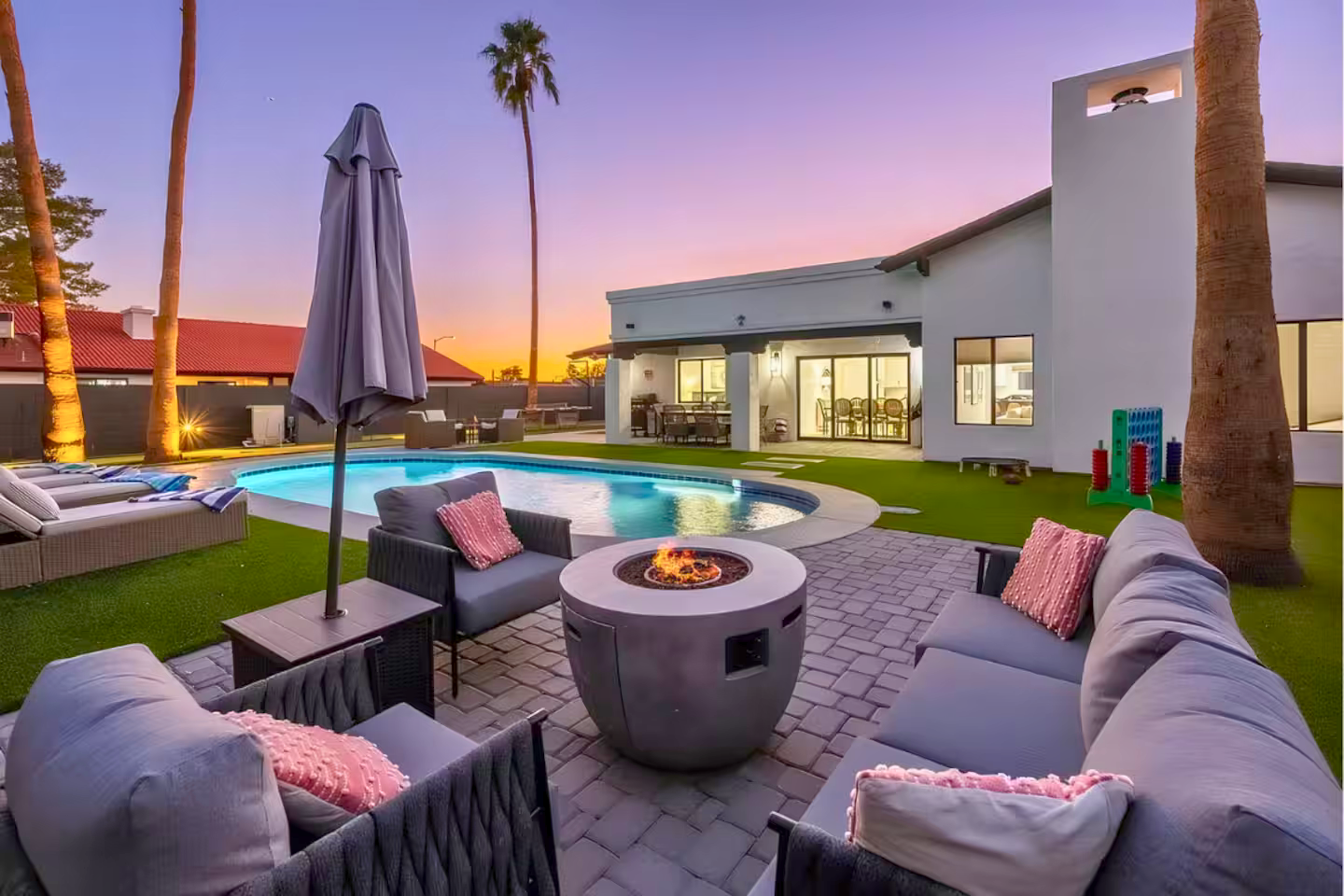
Scottsdale · Large lot
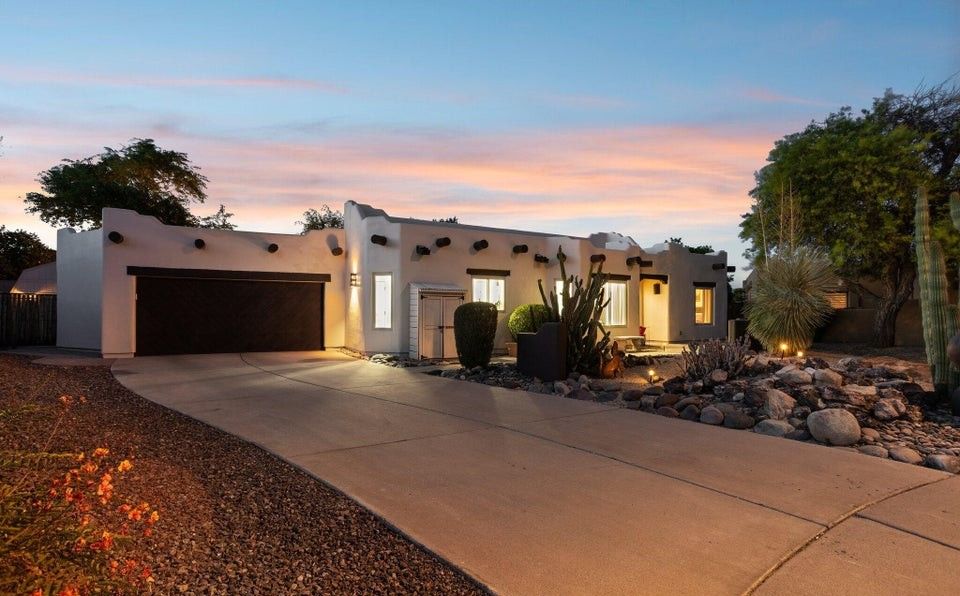
14241 N 54th St
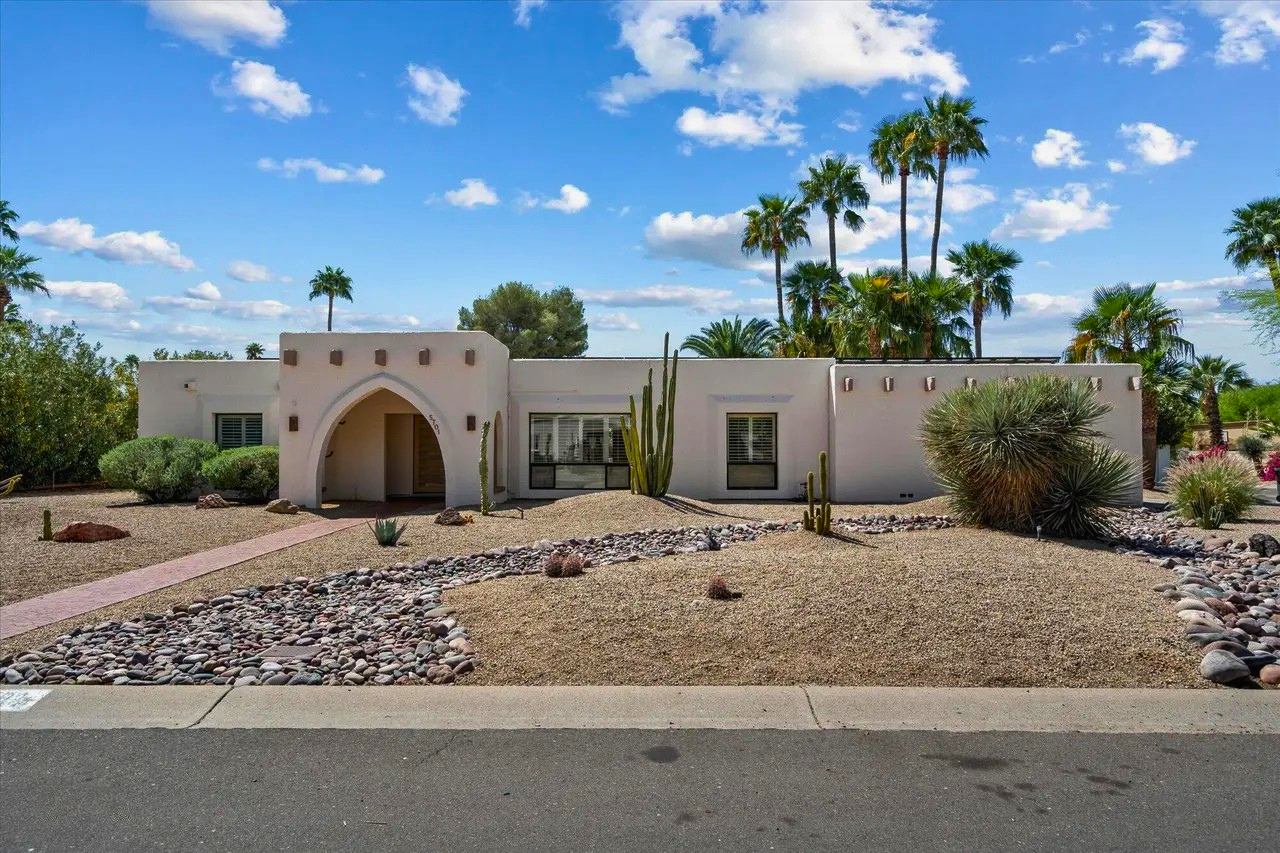
Scottsdale 85254 · Turnkey
The Cabana House
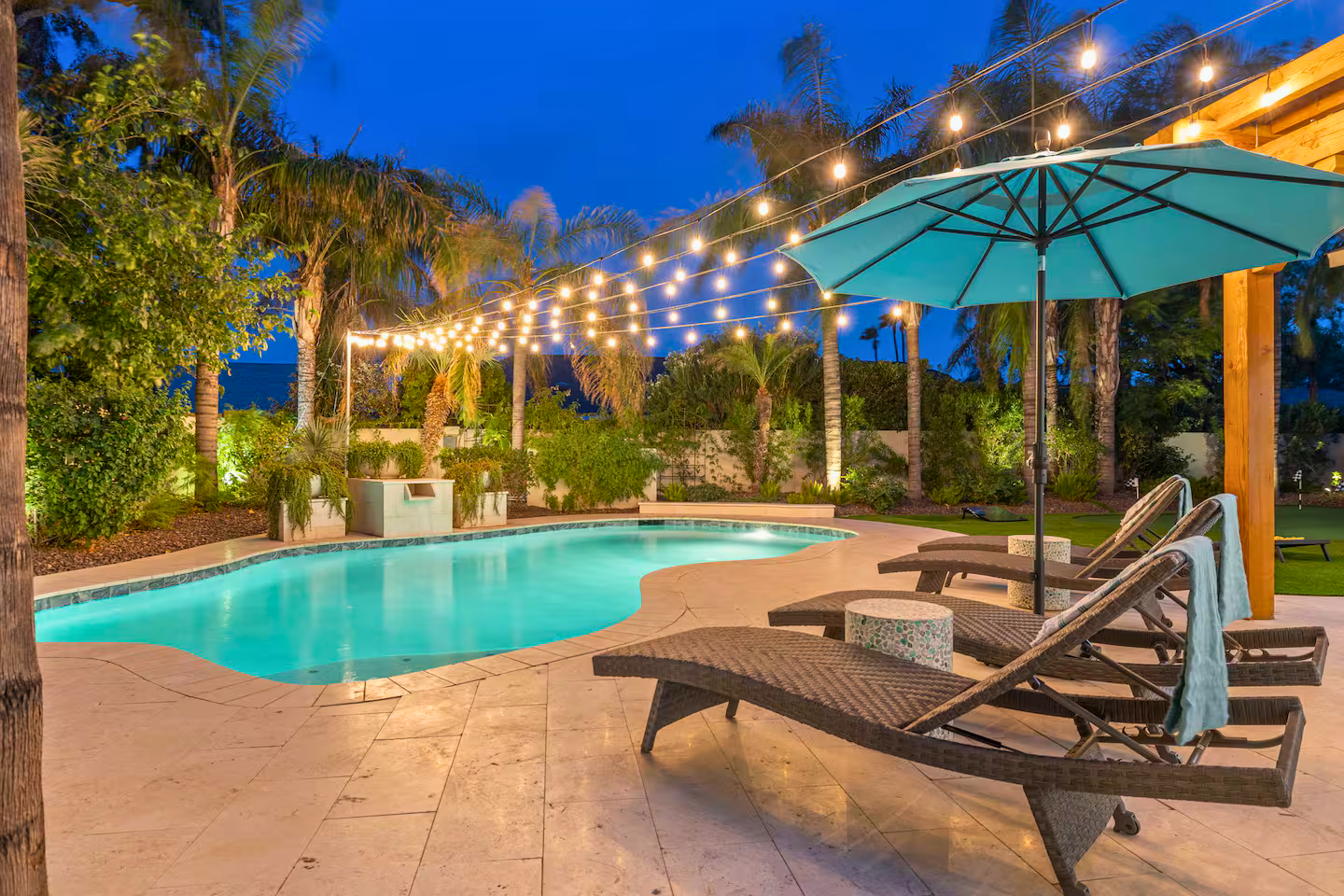
Phoenix · Scottsdale border
4435 E Kings Avenue

Mesa · Oversized lot
Solterra Haus
Scottsdale 85254 · Value-add
14621 N 63rd Pl
Goodyear · West Valley
Palm Valley
"A well-priced property with a thoughtfully chosen amenity package can outperform a more expensive property loaded with improvements its guests don't value. I'd rather help a client buy the right backyard than help them build an expensive one."
So my priorities, in order: buy where STR use is legally viable for the long term; buy for a clearly defined guest; buy amenities the seller already paid for, after inspecting them; add only upgrades that fill a specific gap in the comp set; and underwrite conservatively enough that the property still works if the optimistic case never shows up.
Frequently asked questions
What amenities increase Airbnb revenue the most?
National AirDNA research shows hot tubs and pools among the amenities most associated with higher nightly rates, with hot tubs carrying roughly a 14% average ADR premium. In Phoenix and Scottsdale, a heated pool is often the baseline for family and group homes, so the amenity that adds the most for a specific property is the one that fills a gap relative to its local competitors.
Is a heated pool worth it for a Scottsdale Airbnb?
For family and group properties, usually yes. Peak demand runs roughly November through April, when unheated pools are too cold for most guests. If the home already has a pool, adding heat is often one of the highest-return upgrades; building a new pool is a much larger investment with a longer payback.
How much does it cost to heat an Airbnb pool in Arizona?
Phoenix-area pool service estimates put electric heat-pump operation at roughly $50–$150 per month in cooler months, while gas heaters can exceed $300 per month if run continuously. Installed heaters commonly run about $3,000–$7,000. Costs vary with pool size, temperature, cover use and utility rates, so get local quotes.
Does a hot tub increase Airbnb bookings?
Hot tubs are associated with higher nightly rates in national data, with smaller effects on occupancy. In Scottsdale the added value is much higher for homes without a spa than for homes that already have a heated pool and attached spa, where a separate hot tub may add little.
Is a pickleball court worth adding to a vacation rental?
Sometimes. A court can set apart a large, high-capacity luxury home on a big lot. Backyard courts commonly cost $20,000–$40,000 or more and need roughly 1,800–2,200 square feet, plus HOA approval and a noise plan. On smaller properties, the same money usually earns more in a heated pool, shade or a game room.
Do game rooms increase Airbnb revenue?
They can, especially for family and group homes, and they're most valuable in Arizona's summer, when outdoor amenities are hard to use midday. Returns are strongest when the room comes from a garage, loft or bonus room rather than a bedroom.
Is a pool necessary for a successful Phoenix Airbnb?
Not for every property. Condos, urban units and work-travel homes can perform without one. For single-family homes targeting families and groups, a pool, ideally heated, is often what competing listings offer, and lacking one can limit both rate and occupancy.
What amenities do Scottsdale Airbnb guests look for?
Common priorities include a private heated pool, a hot tub or spa, shaded outdoor living, a grill or outdoor kitchen, fire features, golf features for golf groups and a game room for families. The right package depends on the guest the property targets.
Should I buy an Airbnb with a pool or install one later?
Usually buy one with a pool in good condition. Building later requires more cash, delays launch and adds permit and cost risk. Installing later makes sense mainly when the purchase discount clearly exceeds the true all-in cost of the work.
What is the best Airbnb amenity for a small budget?
Low-cost outdoor upgrades: shade, quality seating, a fire pit, lighting and a grill, plus a game area in existing space. If the home has an unheated pool, a heat pump is often the best mid-budget upgrade.
Do luxury Scottsdale vacation rentals need more amenities?
Luxury guests generally expect a resort-style heated pool and spa, generous outdoor living and at least one distinctive activity. More isn't automatically better: each additional amenity in the same category tends to add less, and occupancy limits can cap group-oriented value.
How do I calculate ROI on Airbnb amenities?
Incremental amenity ROI = additional annual net operating income ÷ total amenity investment × 100. Net operating income is added revenue minus variable costs (like management fees) minus the amenity's own operating costs and reserves.
Can Airbnb amenities qualify for depreciation deductions?
Amenities that are capital improvements are generally depreciable, and some components may qualify for shorter recovery periods or bonus depreciation. Not every amenity qualifies for 100% bonus depreciation, and timing and eligibility depend on your situation, so confirm with a CPA.
What should I look for when buying a Scottsdale Airbnb investment property?
Confirm STR use is permitted by the city and HOA, define the target guest, compare revenue across similar listings, inspect the pool, heater, spa and other amenities, underwrite expenses conservatively and look for underused space or lot area that can add value at low cost.
More on Arizona STR investing
How this report was built
- Author and accountability: written by Eric Ravenscroft, CRS, an Arizona-licensed real estate advisor (License #SA691304000) and former Director of Wealth Management, who represents investors buying short-term rentals in the Valley.
- First-hand evidence: property facts, negotiated prices, credits, amenity packages and revenue projections come only from The Ravenscroft Group's own published client case studies, each linked where it's used. Case studies are presented as examples of positioning and negotiation, not as proof that any single amenity caused a result.
- Third-party data: market and amenity statistics come from AirDNA, AirROI and Airbtics; regulations from the City of Scottsdale, City of Phoenix, Arizona Department of Revenue and Arizona Legislature; costs from published industry pricing guides. All sources were accessed in November 2026 and are listed below.
- Financial models: every scenario in Sections 04–11 is a hypothetical illustration with its assumptions stated next to it, and the arithmetic was recalculated for internal consistency. No amenity revenue premium was invented; where reliable local data doesn't exist, the article says so and uses qualitative ratings.
- Labels: claims are tagged as Verified Case study Hypothetical or Judgment so you can see what each one rests on.
- Review: facts were checked on November 13, 2026. This report is updated when Scottsdale or Phoenix STR rules, tax law or market data materially change, and the date at the top will reflect it.
Sources and further reading
All sources accessed November 2026.
- AirDNA, Best Airbnb amenities that boost revenue and Luxury vacation rental amenities
- AirROI, Airbnb amenities that boost revenue (2026) and Scottsdale market data
- Airbtics, Scottsdale Airbnb data 2026
- City of Scottsdale, STR owner and operator requirements and 2024 tourism impact
- City of Phoenix, Short-Term Rental Registry
- Arizona Department of Revenue, Residential rental guidelines; Arizona Legislature, A.R.S. § 9-500.39
- Shasta Pools, Do pools in Arizona need heaters?; ThePricer, Pickleball court cost (2026); Jacuzzi, Hot tub installation costs
Market trackers report different Scottsdale figures because they use different listing sets and methods; recent 12-month figures range from about a $268 median ADR at 65% occupancy (Airbtics) to about a $420 ADR at 47% occupancy (AirROI). Use trackers for direction and comps for underwriting.
Disclosure. This article is educational and is not investment, legal or tax advice. Revenue projections and financial scenarios are illustrative unless attributed to a source; published case-study figures are projections or reported results from specific properties and do not isolate the effect of individual amenities. Rental income, occupancy and investment returns are not guaranteed and depend on location, property characteristics, management, seasonality and market conditions. Installation and operating costs are estimates that require independent verification with licensed contractors. Buyers must independently verify HOA restrictions, licensing, zoning, permits, insurance and other applicable requirements. Tax information is educational and should be reviewed with a qualified tax professional. Real estate investing involves risk, including loss of capital. Eric Ravenscroft, The Ravenscroft Group at Real Broker, AZ License #SA691304000.
Categories
- All Blogs (333)
- Active Adult & 55 Plus Communities (17)
- Arizona Relocation Guides (34)
- Buyers (222)
- Financial Planning (65)
- General Real Estate (149)
- Income From Real Estate (64)
- Market Update (26)
- New Construction (30)
- News, Updates and Coming Soon (57)
- Real Estate Agent Financial Planning (23)
- Real Estate Investing (103)
- Sellers (107)
- Vacation and Short Term Rentals (47)
Recent Posts


About the Author
Eric Ravenscroft is a Top 1% REALTOR® across North America and one of Arizona’s most trusted real estate strategists. With 15 years of experience spanning real estate, wealth management, and investment planning, he helps clients make smarter, financially grounded decisions, from new construction and relocations to STR investments, 1031 exchanges, and long-term portfolio strategy.
Eric’s expertise has earned him industry recognition, Elite status with Real Broker, and features in major publications including the Wall Street Journal, MarketWatch, MSN, and Morningstar. Clients across the Greater Phoenix Metro rely on his clarity, strategic insight, and results-driven guidance.
Ready to make a confident real estate move? Call or text Eric today.