
Real Estate vs. Stocks: Why the Smartest Investors Own Both
Real Estate vs. Stocks: Why the Smartest Investors Own Both
Stocks give you liquidity and effortless diversification. The right investment property adds rental income, leverage and tax advantages a brokerage account can't. Here's how a former Director of Wealth Management makes them work together.
Book a portfolio strategy call →10 years to Aug 2026, S&P 500 with dividends reinvested. *Equity growth before rent and costs. See the data and sources →

Owner, The Ravenscroft Group at Real Broker · Former Director of Wealth Management · Formerly FINRA-licensed (Series 7, 9, 10, 63, 66)
Market data through Nov 2026 · 29 min read
Is real estate or the stock market the better investment? Neither is better for everyone. Stocks win on liquidity, diversification and low effort. Rental real estate wins on leverage, rental income and tax benefits. For most long-term investors, owning both builds more durable wealth than choosing one, with the mix set by your income, tax bracket, cash and time.
Key takeaways
- It isn't either/or. Stocks and rental real estate do different jobs. Owning both can smooth your income, diversify your risk and lower your tax bill.
- Leverage is real estate's superpower and its biggest risk. With the 30-year fixed average at 7.18% in early November 2026, the numbers must work on paper before you buy.
- Strategy changes the math. The same Phoenix house can be a long-term, mid-term or short-term rental, with very different income, workload and tax results.
- Each strategy is taxed differently. Long-term and mid-term rentals shelter their own income with depreciation, while a qualifying short-term rental can offset W-2 income. 100% bonus depreciation is now permanent.
- Underwriting beats optimism. I run cash flow, financing, expenses and all three rental strategies before I recommend any property.
- Real estate vs. stocks: side by side, pros & cons
- 10-year Phoenix vs. S&P 500 data
- REITs: the middle ground
- Should you invest in stocks or real estate? Often, both
- The Phoenix Metro market today
- LTR, MTR & STR: benefits and drawbacks
- Tax playbook: stocks vs. LTR, MTR & STR
- How I underwrite every property
- Case studies, IRA-to-STR strategy and client results
- What investor clients say
- FAQ
- About the author
Should you invest in stocks or real estate? For most people building long-term wealth, the better question is how much of each, and in what form. Stocks give you liquidity, instant diversification and decades of compounding. Real estate gives you rental income, leverage, appreciation and tax advantages that a brokerage account simply can't offer.
I spent 15 years in financial planning, including as a Director of Wealth Management, helping clients build stock and bond portfolios before I became a REALTOR®. That background shapes everything I do: I don't look at a rental as a standalone purchase. I look at it as one holding inside your whole financial picture, the idea behind my guide to real estate as an asset class. It's the same approach behind the complimentary financial plan I build for clients.
I also practice what I write about. I own a portfolio of rental properties here in Greater Phoenix alongside a stock portfolio, and the balance between the two shifts with the opportunities and value available at the time. When stocks look expensive and a well-priced property pencils out, I lean toward real estate, and the reverse holds too. My background is also why CPAs and tax advisors around the country trust me with their clients' Arizona real estate investments.
The principles apply wherever you invest. I use Greater Phoenix, where I live, work and own rentals, as the real-world example throughout, because local data beats generic averages. Whether you're considering Arizona investment property for the first time or adding to a portfolio, this guide covers how the two asset classes really compare, what the Phoenix and Scottsdale markets look like right now, how the three rental strategies differ, which tax rules matter in 2026, and exactly how I evaluate a property before recommending it.
Real estate vs. stocks: an honest side-by-side
Neither asset is "better." Each wins on different measures, and the right mix depends on your income, timeline, taxes and how hands-on you want to be.
| Factor | ● Stocks (index funds, ETFs) | ● Rental real estate |
|---|---|---|
| Liquidity | Sell in seconds, any business day | Months to sell; 6% to 10% in transaction costs |
| Minimum to start | $1 with fractional shares | Typically 20% to 25% down, plus closing costs and reserves |
| Leverage | Limited; margin is risky and costly | Standard: control a $450,000 asset with about $112,500 |
| Income | Dividends, often 1% to 2% on broad indexes | Monthly rent; depends on strategy and financing |
| Diversification | Thousands of companies in one fund | Concentrated in one property and one local market |
| Control | None over company decisions | Full control of price, improvements, tenants and strategy |
| Tax advantages | Long-term capital gains rates; tax-deferred accounts | Depreciation, cost segregation, bonus depreciation, 1031 exchanges, mortgage interest |
| Effort | Nearly passive | Active, unless you hire management |
| Inflation response | Indirect, through company earnings | Direct, through rents and replacement cost |
| Main risks | Market volatility, sequence-of-returns risk | Vacancy, repairs, interest rates, local market and regulation |
Where stocks shine
A broad U.S. stock index has historically returned roughly 10% a year before inflation over long periods, though with sharp drops along the way. You get that exposure with no tenants, no repairs and no phone calls at 2 a.m. Stocks are also easy to rebalance, borrow against or pass to heirs.
Where real estate shines
Real estate returns come from four engines at once, and leverage magnifies all of them.
Rent left after every expense and the mortgage.
Growth in value on the whole asset, not just your cash.
Your tenant pays down your mortgage each month.
Depreciation shelters income, often for years.
Here's leverage in one line: if a $450,000 home bought with $112,500 down rises 4% in a year, that $18,000 gain is about a 16% return on your cash, before income and expenses. Leverage cuts both ways, though. The same math magnifies losses, and a property that loses money every month can drain the stock portfolio it was meant to complement.
What the last 10 years actually showed in Phoenix
Theory is useful, but data settles arguments. Here's what $62,500 became over the 10 years from August 2016 to August 2026, invested three different ways.
- Phoenix figures follow the S&P Cotality Case-Shiller Phoenix Home Price Index, which rose from 162.8 to 324.9, about 7.2% a year (FRED).
- The S&P 500 figure uses its 13.44% annualized total return for the 10 years ending Sept. 16, 2026, per S&P Global (The Motley Fool).
- The leveraged example assumes a $250,000 home bought with $62,500 down and a 30-year fixed loan at 3.5%. It grows to about $499,000 with a loan balance near $145,200. It excludes rent, operating costs, and closing and selling costs of 6% to 10%.
- Appreciation applies to the whole $250,000 home, not just your $62,500. That's leverage: the home rose about 100%, but your equity rose about 466%.
- Loan paydown assumes a $187,500, 30-year fixed loan at 3.5% (about $842 a month in principal and interest), paid from rent.
- Before rent, operating costs and selling costs. Net rental income could add to this; negative cash flow would reduce it.
What the data says: Phoenix home prices alone trailed the stock market. With a mortgage, though, the same price growth turned into an equity return that outpaced it, before rent and costs, which can add to or subtract from that result. That's leverage at work, and it's why financing and cash flow deserve as much attention as appreciation.
Timing matters more in real estate
A 10-year window flatters anyone who bought in 2016. Here's the same Phoenix index from four different starting points, all measured through August 2026.
| Bought in | Index then | Price change | Per year |
|---|---|---|---|
| Aug 2006 (pre-crash peak) | 227.0 | +43% | ≈ 1.8% |
| Aug 2011 (post-crash low) | 100.4 | +224% | ≈ 8.1% |
| Aug 2016 | 162.8 | +100% | ≈ 7.2% |
| Jun 2022 (pandemic peak) | 343.5 | −5% | ≈ −1.3% |
Source: S&P Cotality Case-Shiller AZ-Phoenix Home Price Index, not seasonally adjusted, Jan 2000 = 100; latest value 324.9 for August 2026 (FRED). Price only; excludes rent, costs and leverage.
Buyers at the 2006 and 2022 peaks are the reason I underwrite every property on cash flow and a realistic price, not on the hope of appreciation. Stocks have timing risk too, but you can buy them a little at a time. A property is one large purchase at one price.
Benefits and drawbacks at a glance
Every asset has trade-offs. Here they are side by side, so you can weigh what matters most for your goals.
- Instant liquidity: sell any business day at a visible price.
- Effortless diversification: one index fund can hold hundreds or thousands of companies.
- Very low cost: broad index funds charge expense ratios as low as about 0.03% a year, and most brokers charge no commissions.
- Truly passive: no tenants, repairs or management.
- Any amount, any time: start small, add monthly, rebalance in minutes.
- Tax-advantaged accounts: 401(k), IRA and Roth accounts, plus 0% to 20% long-term rates.
- Simple estate planning: easy to gift, divide or pass to heirs with a stepped-up basis.
- Volatility: the S&P 500 fell about 34% in five weeks in early 2020 and about 25% in 2022.
- Behavioral risk: panic selling in a downturn often does more damage than the market itself.
- No control over the companies, their management or the price you pay.
- Little practical leverage: margin loans can force sales at the worst moment.
- No depreciation: dividends and realized gains are taxed every year in a taxable account.
- Sequence-of-returns risk: retirees drawing income in a down market lock in losses.
- Modest cash yield: broad-index dividends often run just 1% to 2%.
- Four return engines at once: cash flow, appreciation, loan paydown and tax savings.
- Stable leverage: a 30-year fixed mortgage can't be margin-called when values dip.
- Tax advantages: depreciation, cost segregation, bonus depreciation and 1031 exchanges.
- Direct control over price, improvements, financing and strategy.
- Inflation protection: rents and replacement costs tend to rise with inflation while a fixed payment doesn't.
- Tax-free access to equity: refinance proceeds are a loan, not taxable income.
- Tangible and insurable: value doesn't swing minute to minute.
- Illiquid: selling takes months and costs 6% to 10%.
- Concentrated: one property, one neighborhood, one local market.
- Large upfront cash: 20% to 25% down plus closing costs and reserves.
- Ongoing work, or management fees that cut into returns.
- Lumpy capital expenses: roofs, HVAC, water heaters and pools, which Phoenix heat wears out faster.
- Costs you don't control: insurance premiums, property taxes and HOA dues can rise.
- Leverage cuts both ways: negative cash flow drains the rest of your savings.
- Legal exposure: landlord-tenant law, licensing, HOA rules and liability.
What about REITs? The middle ground
Real estate investment trusts are companies that own income-producing property and trade like stocks. They're a popular bridge between the two worlds, and they're worth understanding before you buy a rental.
- Real estate exposure with stock-like liquidity: buy or sell any trading day.
- Diversified across hundreds of properties and property types, from apartments to data centers.
- Hands-off: no tenants, repairs, financing or management.
- Low minimums, and they fit inside an IRA or 401(k).
- Higher dividend yields than a broad stock index, since REITs must pay out at least 90% of taxable income.
- REIT dividends may qualify for the 20% Section 199A deduction, now permanent.
- They trade like stocks and often fall with the market in sell-offs.
- No personal leverage: you can't use a 30-year fixed mortgage to magnify returns.
- Depreciation stays inside the REIT; it doesn't shelter your income.
- Mostly ordinary income: most REIT dividends are taxed at ordinary rates in a taxable account.
- No control over properties, pricing or strategy.
- Interest-rate sensitive, with management fees and corporate overhead.
My view: REITs are a reasonable way to add real estate exposure inside retirement accounts, where liquidity and simplicity matter most. Owning property directly is how you get leverage, depreciation that shelters your own income, and control. Many of my clients hold both.
Should you invest in stocks or real estate? Often, both
In wealth management, the goal was never to pick one winning asset. It was to build a portfolio where each piece does a specific job. Investment real estate fits that framework well.
- It diversifies what drives your returns. Stock prices react to earnings, interest rates and sentiment, often within hours. Rents in a growing metro respond to jobs, population and housing supply, and they move slowly.
- It adds income you don't have to sell for. In retirement, selling stocks in a down year locks in losses. Rental income can cover expenses while your portfolio recovers.
- It shelters income from tax. Depreciation can make a rental's cash flow partly or fully tax-free on paper. In some cases, short-term rentals can offset W-2 or business income.
- It hedges inflation. Rents and replacement costs tend to rise with inflation, while a fixed-rate mortgage payment stays the same.
- It gives you control. You can add value with a renovation, change strategies or refinance. You can't do that with an index fund.
The math: one year, two portfolios
Stocks earn through dividends and price growth. A rental earns through cash flow, loan paydown and appreciation, plus tax benefits. Here's how a year breaks down when the same $240,500 goes into each.
- Stocks: about 1.5% in dividends plus 8.5% price growth, roughly the index's long-run average. Real years range from big gains to sharp losses.
- Rental: $2,160 of cash flow ($180 a month), about $1,800 of loan paydown and 3% appreciation on the $425,000 home. Depreciation also shelters the rental income from tax, which this chart doesn't count.
- With 50% down, leverage is low, so the rental trails stocks in a typical year. It trades some return for monthly income, lower volatility and tax benefits. With less money down, leverage pushes returns up, along with risk.
How much real estate is right for you?
There's no universal number, and my own mix isn't fixed either; it moves with where the value is. I look at four things with every client: how much cash you can invest without touching emergency reserves, your tax bracket and income type, how much time you want to spend, and your timeline.
A 35-year-old physician with high W-2 income and a 401(k) full of index funds may benefit from a short-term rental's tax profile. A 60-year-old couple nearing retirement may care more about steady, low-maintenance income from a long-term rental bought with a larger down payment.
The Phoenix Metro market today
Greater Phoenix has moved from the frenzy of 2021 and 2022 into a steadier, more balanced market. That's good news for disciplined investors: more inventory, more negotiating room and less pressure to overpay.
- Prices are steady, not surging. The metro Phoenix single-family median held flat at $480,000 for 2026 through October, according to Phoenix REALTORS® (AZ Big Media), after a June median of $515,000 with sales up 10% year over year (ASREB). Buyers have more room to negotiate than at any point in years.
- Borrowing costs are high. Freddie Mac's 30-year fixed average was 7.18% for the week of November 5, 2026, its third straight weekly decline and down from 7.40% in mid-October (RISMedia; FRED). Investment property loans usually price higher still. See my 2026 new construction investor rates.
- Rents have cooled. New apartment supply pushed multifamily vacancy to about 12.6% in late 2025 (Marketplace Homes). Well-located single-family rentals tend to hold up better, but rent assumptions need to be conservative.
- Landlord-friendly rules. Arizona law bars rent control, and cities stopped taxing long-term residential rent on January 1, 2025 (Arizona Department of Revenue).
Where Phoenix Metro investors are looking
| Area | Median price, 2026 YTD | vs. 2025 | Report | Best suited for |
|---|---|---|---|---|
| Scottsdale | $1,250,000 | +5.9% | Oct 2026 | Premium STRs, MTRs, appreciation-focused buyers |
| Gilbert | $600,000 | Flat | Sept 2026 | Long-term rentals in strong school areas |
| Tempe | $540,000 | −2.7% | Sept 2026 | Steady rental demand near ASU |
| Peoria | $530,000 | +0.2% | Oct 2026 | Long-term rentals in established family areas |
| Chandler | $513,000 | — | Nov 2026 | Long-term rentals near tech employers |
| Mesa | $486,250 | −0.8% | Oct 2026 | Balanced LTR and MTR opportunities |
| Phoenix (city) | $485,000 | Flat | Oct 2026 | MTRs near hospitals, LTRs, value-add |
| Goodyear | $480,000 | +1.1% | Sept 2026 | Newer-build LTRs, builder incentives |
| Surprise | $430,000 | Flat | Sept 2026 | Cash-flow-focused LTRs |
| Buckeye | $400,000 | −2.0% | Oct 2026 | Lowest entry prices, newer homes |
Single-family year-to-date medians from Phoenix REALTORS®, as reported by AZ Big Media in November 2026 and September 2026; Chandler from AZ Big Media's November 2026 market update, which gave no year-over-year change. Metro-wide, the 2026 median is $480,000. Prices vary widely by neighborhood, and I pull current comps for every property I analyze. For month-by-month detail, see my Phoenix housing market updates and best areas to buy in Phoenix in 2026.
Three strategies: LTR, MTR and STR
The property is only half the investment. The strategy you run it under decides your income, your workload and your taxes.
The steady foundation
One lease, one tenant, predictable expenses. The closest thing in real estate to set-it-and-forget-it.
The Phoenix sweet spot
Furnished monthly stays for medical staff, relocations and snowbirds, often well above unfurnished rents.
Highest upside, most effort
Scottsdale's resort, golf and event demand drives strong revenue, plus distinctive tax benefits.
| Long-term (LTR) | Mid-term (MTR) | Short-term (STR) | |
|---|---|---|---|
| Typical stay | 12-month lease | 30 days to 6 months, furnished | 1 to 29 nights |
| Typical guests | Families, local workers | Travel nurses, relocations, insurance housing, snowbirds | Vacationers, golf, spring training, events |
| Income potential | Lowest, most predictable | Moderate to high | Highest, most variable |
| Owner workload | Low with a manager | Medium | High, or 15% to 25% management fees |
| Upfront cost | Standard make-ready | Furnishing and setup | Full furnishing, amenities, photography |
| Scottsdale STR license | Not needed | Not needed (30+ days) | Required, $250 per year |
| City rental sales tax | None since Jan. 1, 2025 | None for stays of 30+ days | Applies (lodging taxes) |
| Key tax angle | Depreciation offsets rental income | Depreciation offsets rental income | Possible W-2 offset if strict rules are met |
Long-term rentals: the steady foundation
Arizona made LTRs simpler: since January 1, 2025, cities can no longer charge transaction privilege tax on residential rentals of 30 days or more. You still must register the rental with the county assessor. The trade-off in 2026 is thin cash flow at today's rates. Many Phoenix LTRs bought with 20% to 25% down break even or run slightly negative each month, so the return comes mainly from appreciation, loan paydown and tax benefits. That can still be a smart diversifier, but only if you go in knowing it.
- Most predictable income: one tenant, one lease, one monthly payment.
- Lowest workload, and full-service management is widely available.
- Lowest setup cost: no furniture, linens, supplies or photography.
- Tenants usually pay most utilities.
- Easiest to finance with conventional investment loans.
- No licensing or city rental tax on 30+ day leases in Arizona.
- Widest exit market: sell to an owner-occupant or another investor.
- Tax-sheltered cash flow through depreciation.
- Lowest income of the three; many 2026 purchases with 20% to 25% down break even or run negative.
- Rent is locked for 12 months, even when insurance or taxes rise.
- Tenant risk: late payments, property damage, and the cost and time of an eviction.
- New apartment supply brings concessions and slows rent growth.
- Turnover costs: make-ready work, vacancy and leasing fees between tenants.
- Passive losses are often suspended for households earning over $150,000.
Mid-term rentals: the Phoenix sweet spot
MTRs are furnished homes rented for a month or more. Greater Phoenix has steady demand from traveling medical staff at major hospital systems, corporate relocations, insurance claim housing and winter visitors. Furnished monthly rates often run well above unfurnished leases while staying outside short-term rental licensing and city lodging taxes. Expect higher costs for furniture, utilities and turnover, plus more vacancy between stays. My guide to short-term vs. mid-term rentals in Phoenix goes deeper.
- Higher rent than an unfurnished lease, often by a wide margin.
- Fewer turnovers and less wear than a short-term rental.
- No city STR license or lodging tax on stays of 30 days or more.
- Steady Phoenix demand from travel nurses, relocations, insurance housing and snowbirds.
- Furnishings boost first-year bonus depreciation.
- Flexibility: it can shift to a long-term lease if demand softens.
- Upfront furnishing and setup costs.
- The owner usually pays utilities, internet and streaming services.
- More vacancy between placements, and gaps can run for weeks.
- Smaller, niche tenant pool that relies on specialized listing sites.
- More management than an LTR: placements, cleanings and inventory.
- Tenant protections: occupants staying 30+ days may have tenant rights under Arizona law, so removing one can require a formal eviction.
- No W-2 tax strategy: MTRs don't qualify for the short-term rental loss rules.
Short-term rentals: highest upside, highest effort
Scottsdale is one of the country's strongest STR markets, driven by golf, spring training, resorts and major events. Arizona law limits how far cities can restrict STRs, but the rules are real: Scottsdale requires a city license for any property rented for less than 30 consecutive days, at $250 per property per year, along with neighbor notification, liability insurance and other safety requirements (City of Scottsdale). Repeated violations can bring fines and, under state law, a ban on using the property as an STR. HOA rules can also prohibit them, so I check CC&Rs before you ever make an offer.
- Highest gross revenue potential, with nightly dynamic pricing.
- Strong Scottsdale demand: golf, spring training, resorts and major events.
- Can offset W-2 income when the average stay is 7 days or less and you materially participate.
- Personal use: you can enjoy the home yourself, within IRS limits.
- No long-term tenant risk: guests leave on schedule.
- Guests pay the lodging tax of roughly 13% to 15%, and most platforms remit it.
- The most work: messaging, turnovers, restocking and maintenance, or 15% to 25% management fees.
- Seasonality: Valley demand peaks in winter and spring and drops sharply in the summer heat.
- Revenue volatility and rising competition from new listings.
- Highest operating costs: utilities, cleaning, supplies, STR-specific insurance, furnishings and amenities.
- Regulation: Scottsdale licensing, neighbor notification, fines for violations and HOA bans.
- Platform dependency: fee, policy and search-ranking changes are out of your control.
- Heavier wear and tear, and greater guest damage risk.
- Tax benefits demand records: strict hour logs, and very large losses are capped.
The tax playbook: stocks vs. long-term, mid-term and short-term rentals
Tax treatment is where real estate most clearly complements a stock portfolio, and where the three rental strategies differ most. (For a broader overview, see my real estate tax strategy page.) Below is how each one is taxed in 2026: what you get, how to qualify, and the traps that catch investors. Two habits from my wealth management years apply to all of it. Look at after-tax returns, not headline returns. And make tax decisions before you buy, not in April.
Buying before year-end? Depreciation, including bonus depreciation, starts when a rental is placed in service, meaning it's ready and available to rent. A property closed and listed for rent by December 31, 2026 can generate 2026 deductions. One closed in January waits a full year for the same benefit.
At a glance: how each strategy is taxed
| Tax feature | ● Stocks (taxable account) | ● Long-term rental | ● Mid-term rental | ● Short-term rental |
|---|---|---|---|---|
| How income is taxed | Qualified dividends and long-term gains at 0%, 15% or 20% | Net rent at ordinary rates, usually sheltered by depreciation | Same as long-term | Same, unless hotel-like services make it a business |
| Depreciation | None | 27.5-year building depreciation | 27.5 years, plus 5-year furnishings | 27.5 years, plus 5-year furnishings (or 39 years if hotel-like) |
| Cost seg + 100% bonus | Not applicable | Yes | Yes, with a larger first-year share | Yes, with a larger first-year share |
| Can losses offset W-2 income? | Up to $3,000 a year of net capital losses | Only with the $25K allowance (income under $150K) or Real Estate Professional status | Same as long-term | Yes, if the average stay is 7 days or less and you materially participate |
| Sales or lodging tax | None | None since Jan. 1, 2025 | None on stays of 30+ days | About 13% to 15% in Valley cities, collected from guests |
| Defer tax when you sell | Only inside retirement accounts | 1031 exchange | 1031 exchange | 1031 exchange |
| Biggest trap | Short-term gains taxed at ordinary rates | Suspended losses for high earners | Mixing in sub-30-day stays | Poor hour logs; excess business loss cap |
Summary only. Each row is explained below, with sources linked.
How stocks are taxed, and the tax tools they offer
Stocks have real tax advantages, and a good plan uses them fully before reaching for real estate.
- Preferential rates. Long-term capital gains (shares held over a year) and qualified dividends are taxed at 0%, 15% or 20%. Short-term gains are taxed as ordinary income.
- Net Investment Income Tax. An extra 3.8% applies to investment income once modified AGI passes $200,000 (single) or $250,000 (married filing jointly). It applies to taxable rental income too.
- Tax-advantaged accounts. For 2026 you can defer $24,500 into a 401(k), plus an $8,000 catch-up at 50 or $11,250 at ages 60 to 63. IRA limits are $7,500, plus a $1,100 catch-up (IRS). Roth accounts grow tax-free.
- Tax-loss harvesting. Selling losers offsets gains, plus up to $3,000 of ordinary income a year, with unused losses carried forward. Rebuying the same security within 30 days triggers the wash-sale rule.
- Charitable giving and step-up. Donating appreciated shares avoids the gain entirely, and heirs generally receive a stepped-up basis.
| 2026 long-term rate | Single (taxable income) | Married filing jointly |
|---|---|---|
| 0% | Up to $49,450 | Up to $98,900 |
| 15% | $49,451 to $545,500 | $98,901 to $613,700 |
| 20% | Over $545,500 | Over $613,700 |
Source: Kiplinger, IRS 2026 capital gains thresholds. The 3.8% NIIT can apply on top of these rates.
What stocks can't do: they generate no depreciation, so every dividend is taxable in the year you receive it. And outside the $3,000 loss rule, nothing in a brokerage account reduces the tax on your salary. That's the gap real estate fills.
The real estate foundations: benefits all three strategies share
- Depreciation. You deduct the building (not the land) over 27.5 years, even while it may be appreciating. A $400,000 home with $80,000 allocated to land has a $320,000 basis, which works out to about $11,636 of deductions a year.
- Cost segregation. An engineering-based study reclassifies parts of the property into 5-, 7- and 15-year property: flooring, cabinetry, appliances, fixtures, landscaping, fencing and pools. On a single-family home, it commonly moves a meaningful share of the building's cost into those shorter lives.
- 100% bonus depreciation. The One Big Beautiful Bill Act permanently restored 100% bonus depreciation for qualifying property acquired after January 19, 2025 (Wiss). That lets you deduct everything a cost segregation study reclassifies in year one, rather than over 5 to 15 years.
- Operating deductions. Mortgage interest, insurance, HOA dues, repairs, management, utilities, travel to the property and professional fees are deductible against rental income. Rental property taxes are deducted on Schedule E, so the itemized SALT cap ($40,000 for 2025 to 2029, phasing down above $500,000 of income) doesn't limit them (NAR).
- The 20% QBI deduction. When a rental operation rises to the level of a trade or business, net rental income may qualify for the Section 199A deduction, now made permanent. The IRS safe harbor generally requires 250 or more hours of rental services a year.
- Leverage-friendly tax math. Depreciation is based on the full purchase price, including the part you financed. On a 25%-down purchase, first-year deductions can exceed the cash you invested.
- Arizona advantages. A flat 2.5% state income tax, no rent control, and no city tax on long-term residential rent since January 1, 2025 (Arizona Department of Revenue).
The depreciation math, visualized
Two charts show why depreciation matters so much: how cost segregation front-loads deductions, and how depreciation changes what you keep from the same income.
- $375,000 home with 20% ($75,000) allocated to land, so a $300,000 building, plus $25,000 of furnishings.
- Standard: $300,000 ÷ 27.5 years ≈ $10,900 a year (full year).
- Cost segregation reclassifies about 25% of the building ($75,000) into 5- and 15-year property. With the $25,000 of furnishings, about $100,000 qualifies for 100% bonus depreciation in year one. The remaining $225,000 depreciates normally; about $4,100 in a mid-year first year.
- Dividends: qualified dividend rate of 15%, plus the 3.8% Net Investment Income Tax for higher earners.
- Rental: a $400,000 home with a $320,000 building generates $11,636 of depreciation a year, so only $364 of the $12,000 is taxable. At a 32% bracket, that's about $116 of tax.
- Depreciation lowers your basis, so some of this tax comes back as recapture when you sell, unless you use a 1031 exchange or hold the property for life (see Part 7).
Long-term rental tax benefits: tax-sheltered cash flow
A 12-month lease is a "rental activity" under the passive activity rules. That shapes everything.
- Sheltered income. Depreciation usually wipes out the taxable portion of your rent, so the cash flow you actually receive is often tax-free in the years you own it.
- The $25,000 allowance. If you actively participate (approving tenants, setting rent, approving repairs), you can deduct up to $25,000 of rental losses against other income. It phases out between $100,000 and $150,000 of modified AGI (Journal of Accountancy).
- Suspended losses aren't lost. Above $150,000 of income, unused losses carry forward. They offset future rental income and are fully released when you sell the property in a taxable sale.
- Real Estate Professional status. If you (or your spouse) spend more than 750 hours a year, and more than half your working time, in real estate trades or businesses and materially participate, rental losses become nonpassive and can offset any income. It's a common strategy for households where one spouse works in real estate full time.
Best fit: investors who want simple, tax-efficient income and long-term appreciation, and households under the $150,000 allowance phase-out or with a spouse who qualifies as a real estate professional.
Mid-term rental tax benefits: bigger first-year deductions, no lodging tax
With average stays over 30 days, an MTR is taxed as a rental activity, just like a long-term rental. The difference is in the details.
- Furnishings accelerate depreciation. Furniture, appliances, linens and electronics are 5-year property and qualify for 100% bonus depreciation. Combined with a cost segregation study, an MTR typically front-loads more deductions than an unfurnished rental.
- No transaction privilege or lodging tax on stays of 30 days or more. That's a real margin advantage over short-term rentals in cities charging 13% or more.
- No city STR license is required for stays of 30+ days, so there's less compliance overhead.
- Same passive rules as an LTR. Losses are passive, so the $25,000 allowance and Real Estate Professional rules apply. An MTR does not qualify for the short-term rental strategy described next.
Watch out: filling gaps with stays of under 30 days can trigger lodging taxes and licensing, and can change your average stay. Decide on the strategy up front and track it.
Short-term rental tax benefits: offsetting W-2 income
For high-income households, this is the most powerful real estate tax strategy available without becoming a real estate professional. It also has the most rules.
How it works
- The 7-day test. When the average guest stay for the year is 7 days or less, the IRS doesn't treat the property as a "rental activity" under the passive activity rules (The Short Term Shop; Journal of Accountancy). It's treated like a business instead.
- Material participation. You must also materially participate. The tests most STR owners use are 100+ hours and more than anyone else, including cleaners and managers; 500+ hours; or doing substantially all the work. Self-managing owners with a co-host often qualify; owners using full-service management usually don't.
- Cost segregation + bonus depreciation. Together they create a large first-year paper loss.
- The result. That nonpassive loss can offset W-2 wages and business income in the same year.
Limits and traps to know
- Excess business loss cap. For 2026, business losses can offset only $256,000 (single) or $512,000 (joint) of nonbusiness income such as wages. Any excess becomes a net operating loss carryforward (BiggerPockets).
- Hotel-like services change the rules. Offering daily cleaning, meals or concierge service can move income to Schedule C, add 15.3% self-employment tax and switch the building to 39-year depreciation. Standard STR turnover cleaning between guests is generally fine.
- Personal use. If your personal use exceeds the greater of 14 days or 10% of the days it's rented at fair rent, the vacation home rules limit your deductions (IRS).
- Records are everything. Keep a contemporaneous hour log, with dates, tasks and time, plus booking data proving your average stay. This is the most audited part of the strategy.
- Lodging taxes. Combined state, county and city rates are about 13.97% in Scottsdale, 13.07% in Phoenix, 14.27% in Mesa and 15.17% in Glendale (Northern Arizona University, July 2026). Guests pay them and most platforms remit them, but you need an Arizona TPT license for direct bookings.
Not just for W-2 earners. The same loss can offset other ordinary income, including traditional IRA withdrawals and required minimum distributions. Several of my retired clients have used it that way; see the IRA-to-STR case study.
For the full walk-through, see my short-term rental tax break guide for W-2 earners my short-term rental tax strategy guide, and two real examples: the Scottsdale bonus depreciation case study and the Palm Valley basement-casita STR case study.
Same $100,000, four different tax pictures
An illustrative first-year comparison for a married couple with $550,000 of W-2 income (35% federal bracket), investing $100,000 of cash.
| Year one | Stock index fund | Long-term rental | Mid-term rental | Short-term rental |
|---|---|---|---|---|
| What the $100K buys | $100K of shares | $400K home, 25% down | $375K home + $25K furnishing | $375K home + $25K furnishing |
| First-year depreciation | $0 | ≈ $11,600 | ≈ $104,000 | ≈ $104,000 |
| Taxable income it shelters | None | Rental income only | Rental income only | Rental income and W-2 income |
| Unused losses at this income | — | Carried forward | Carried forward | Used now |
| Est. federal tax reduction, year one | $0 | Shelters rent | Shelters rent | ≈ $30,000 |
Assumptions: 20% of value allocated to land; for the MTR and STR, a cost segregation study reclassifies roughly 25% of the building to bonus-eligible property, plus furnishings. The STR figure assumes about $15,000 to $20,000 of net rental income before depreciation, leaving a loss of roughly $85,000, a 7-day-or-less average stay and material participation. Illustrative only, not a projection; actual results depend on the property, the study and your CPA's review.
The takeaway: long-term and mid-term rentals mostly shelter their own income, while a qualifying short-term rental can shelter your salary. Stocks shelter nothing outside retirement accounts. That's why the right strategy depends so much on your income and how much time you can commit.
Exit taxes and how investors defer them
- Depreciation recapture. When you sell, depreciation you took on the building is generally taxed at up to 25%. Bonus depreciation on 5-, 7- and 15-year property can be recaptured at ordinary rates. Recapture is the price of the early deductions. Plan for it; don't let it scare you off.
- 1031 exchange. Sell one investment property and buy another of equal or greater value within strict deadlines (45 days to identify, 180 days to close), and both the gain and recapture are deferred. Exchanges can repeat indefinitely. See why Phoenix works for a 1031 exchange and my complete 1031 exchange investor guide.
- Step-up at death. Heirs generally receive a basis reset to market value, which can erase deferred gains and recapture. The federal estate tax exemption is now permanently set at $15 million per person, with inflation adjustments (NAR). "Exchange until you die" is a legitimate estate plan, as our Glendale case study shows. My 1031 exchange guide to tax and estate strategy covers it in depth.
- Converting strategies. Moving a property between LTR, MTR and STR use is allowed, but it changes how the year is taxed. Talk to your CPA before switching mid-year.
- Ten years of depreciation ($116,364) lowers the basis to about $283,600, so the taxable gain is about $316,400.
- Taxable sale: $116,364 of recapture at up to 25% (≈ $29,100), the remaining $200,000 at 15% (≈ $30,000), and 3.8% NIIT on the full gain (≈ $12,000). Excludes state tax and selling costs.
- A 1031 exchange defers all of it into the next property. Holding until death can eliminate it for heirs under current law.
Your tax-planning checklist
- Confirm your goal. Are you sheltering rental income, sheltering W-2 income, or building a retirement income stream? The answer points to LTR, MTR or STR.
- Talk to a real estate CPA before you write an offer. Confirm the strategy fits your income, filing status and other passive activity.
- Price in a cost segregation study. Studies on single-family homes are typically a few thousand dollars, so check that the extra first-year deduction justifies it.
- Time the purchase. Place the property in service before December 31 to claim depreciation for that year.
- Set up clean books. Use a separate bank account and card, a property management or bookkeeping system, and, for an STR, an hour log from day one.
- Track your average stay and personal use throughout the year, not just at tax time.
- Plan the exit up front. Decide whether a 1031 exchange, a long-term hold or estate transfer fits, so recapture is a plan rather than a surprise.
A note on taxes: My background spans financial planning and real estate, which is why CPAs and tax advisors around the country trust me with their clients. I'm not a CPA or tax attorney, though, and these rules carry real audit risk when misapplied. I coordinate with your tax professional before any purchase where taxes drive the decision, and I'm happy to introduce you to CPAs and cost segregation firms who specialize in real estate.
The risks, and how I underwrite every property
Real estate isn't a guaranteed win. The main risks are vacancy, unexpected repairs, rising insurance and HOA costs, interest rate changes, local regulation, and the fact that you can't sell quickly in a downturn. Phoenix adds its own: summer heat is hard on HVAC systems, roofs and pools, and new construction can add rental competition.
That's why I never recommend a property based on a listing's "projected rent." This is the eight-step process I run first. You can test your own numbers with my real estate calculators.
- Start with your portfolio, not the property. We review your goals, liquid assets, income, tax bracket and existing investments so the purchase fits a plan.
- Set buy criteria. Price range, areas, minimum cash flow or cash-on-cash return, maximum renovation budget and acceptable workload.
- Underwrite all three strategies. For each candidate property I model LTR, MTR and STR income using real comparable rentals, not optimistic averages.
- Load every expense. Mortgage, taxes, insurance, HOA, utilities, management, repairs, capital reserves (roof, HVAC, water heater, pool), vacancy, furnishing and licensing.
- Stress-test the numbers. What happens if rent drops 10%, vacancy doubles, or a $9,000 HVAC replacement hits in year one?
- Compare financing options. Conventional, DSCR, larger down payments, rate buydowns and builder incentives on new construction.
- Check regulation and restrictions. City licensing, HOA rules, zoning and insurance availability.
- Compare to the alternative. If the property can't beat keeping the money in your portfolio on a risk-adjusted basis, I'll tell you.
Case studies: real estate vs. stocks in practice
The three scenarios below are illustrative, built from typical client situations and late-2026 assumptions (a 7.9% investment property rate and conservative rents). They aren't specific client results, and your numbers will differ. Real client results follow.
The high-earning physician who needed tax relief
The situation
A dual-income household earning over $500,000 in W-2 income, with nearly all its wealth in 401(k)s and index funds. Their biggest pain point was taxes, not cash flow.
The analysis
An $850,000 Scottsdale home with 25% down ($212,500) and about $45,000 in furnishing. Monthly principal and interest: about $4,633.
| Annual estimate | Amount |
|---|---|
| Gross STR revenue (conservative comps) | $115,000 |
| Operating expenses (45%: management, cleaning, utilities, supplies, insurance, taxes, license) | −$51,750 |
| Net operating income | $63,250 |
| Mortgage payments | −$55,600 |
| Annual cash flow | $7,650 |
The result
Cash flow alone is modest, about 2.8% on roughly $272,500 invested. But a cost segregation study could reclassify an estimated $170,000 of the building, plus the $45,000 of furnishings, for 100% bonus depreciation. At a 37% federal bracket, about $215,000 in first-year deductions could reduce federal taxes by roughly $79,500, if the average stay stays at 7 days or less and they materially participate. Their CPA would confirm the plan before closing.
For high earners, an STR can be a tax strategy that also produces income and appreciation, and it diversifies a portfolio made up entirely of stocks.
The deal we'd walk away from
The situation
A tech professional wants a first rental and has found a $450,000 Mesa home they love.
The analysis
With 25% down at 7.9%, principal and interest come to about $2,453 a month.
| Strategy | Income / mo | Costs / mo | Cash flow / mo |
|---|---|---|---|
| Long-term rental | $2,233 | $3,296 | ≈ −$1,060 |
| Mid-term rental | $3,570 | $4,234 | ≈ −$660 |
| Short-term rental | — | — | Not allowed by HOA |
The result
Losing $8,000 to $13,000 a year while hoping for appreciation isn't a good trade for this buyer's goals. The capital stays invested in their portfolio, and we set criteria and alerts for properties that clear the bar.
My job isn't to get you to buy. It's to make sure anything you buy improves your overall financial picture. Sometimes the best advice is "not this one."
The pre-retirees who want income
The situation
A couple five years from retirement with a large stock portfolio wants rental income that won't depend on selling shares in a down market. They prefer a lower-maintenance strategy and can put down more cash.
The analysis
A $425,000 three-bedroom home near a major Phoenix hospital campus, 50% down, about $18,000 in furnishing. Principal and interest: about $1,544 a month.
| Strategy | Income / mo | Costs / mo | Cash flow / mo |
|---|---|---|---|
| Long-term rental | $2,090 | $2,260 | ≈ −$170 |
| Mid-term rental (travel nurses) | $3,060 | $2,880 | ≈ +$180 |
The result
The mid-term strategy turns a small loss into positive cash flow. Adding about $1,800 in first-year loan paydown and 3% appreciation, the estimated year-one economic return is about $16,700, or roughly 7% on $240,500 invested, before tax benefits. Depreciation shelters the rental income from tax.
Strategy matters as much as the property. The same house can lose or make money depending on how it's rented and financed.
Client strategy: moving IRA money into a short-term rental
This is one of the most effective strategies I've helped clients carry out, and it's where my financial planning and real estate backgrounds overlap most. Several retired clients have withdrawn money from a traditional IRA, used it to buy a short-term rental, and used the STR loss rules and bonus depreciation to offset the tax on that withdrawal. The numbers below are illustrative, but the strategy reflects real client purchases.
The problem it solves
- Required minimum distributions. Traditional IRA owners must start taking RMDs at 73, rising to 75 for people born in 1960 or later. Those withdrawals are taxed as ordinary income whether you need the money or not.
- A tax bill for your heirs. Most non-spouse beneficiaries must empty an inherited IRA within 10 years, and if you had already started RMDs, they must also take annual withdrawals along the way (Schwab). Every pre-tax dollar is generally taxable to them, often during their own peak earning years.
The retirees who turned RMDs into a tax-advantaged asset
The situation
A married couple, both 73, with about $1.5 million in traditional IRAs and $60,000 of other taxable income. Their first RMD alone is about $56,600, and the IRA would pass to their children under the 10-year rule.
The move
- Withdraw $250,000 from the IRA, including that year's RMD. They're over 59½, so there's no early withdrawal penalty.
- Buy an $850,000 Scottsdale STR with 25% down, plus furnishing and closing costs.
- Order a cost segregation study and claim 100% bonus depreciation on about $215,000 of reclassified property and furnishings.
- Qualify for nonpassive treatment: keep the average stay at 7 days or less and materially participate. Retirees often have the time to meet the 100-hour, more-than-anyone-else test, which full-time workers struggle with.
- Offset the IRA income. The nonpassive STR loss reduces the taxable income created by the withdrawal, within the 2026 excess business loss cap of $512,000 for joint filers.
| Year one, federal | Withdraw and invest in stocks | Withdraw and buy the STR |
|---|---|---|
| IRA withdrawal added to income | $250,000 | $250,000 |
| STR loss (cost seg + bonus) | — | ≈ −$215,000 |
| Net taxable income added | $250,000 | ≈ $35,000 |
| Top bracket reached | 24% | 12% |
| Est. federal tax on the withdrawal | ≈ $53,000 | ≈ $4,000 |
Assumptions: 2026 married-filing-jointly brackets, about $60,000 of other taxable income, Scenario 1's property economics and cost segregation results. Illustrative only; actual results depend on the property, the study and your CPA's review.
The results
- Tax-deferred money becomes a real asset at a low tax cost. About $250,000 left the IRA while adding only about $35,000 of taxable income.
- Smaller future RMDs. With $250,000 less in the IRA, next year's RMD falls by about $9,800, and the gap grows as the balance would have compounded. Lower income can also help with Medicare premium surcharges and the taxation of Social Security benefits, which are both income-based.
- Ongoing sheltered income. Regular depreciation keeps sheltering the property's rental income in later years.
- Potential tax-free wealth for heirs. If the couple holds the property until death, their heirs generally receive a stepped-up basis to market value. Built-up appreciation and depreciation recapture can disappear, so the heirs could sell with little or no income tax. Left in the IRA, that same $250,000 and its growth would be taxable to the heirs as ordinary income within 10 years. With the federal estate tax exemption at $15 million per person, most families won't owe estate tax either.
The trade-offs
- If the STR doesn't qualify (average stay over 7 days, or too few participation hours), the loss is passive and the full withdrawal is taxed. Hour logs and booking records are essential.
- Selling during your lifetime triggers depreciation recapture unless you do a 1031 exchange.
- Concentration and liquidity. Retirement money moves from a diversified, liquid account into one property that takes work to run.
- Under 59½, IRA withdrawals usually add a 10% penalty, which changes the math.
A related approach: some clients use the STR loss to offset a Roth conversion instead of a withdrawal. The money stays invested in the market but moves into a Roth, where future growth and qualified withdrawals are tax-free.
The right real estate move is often a retirement-planning move. This one works only when the IRA, tax, estate and property decisions are planned together, with your CPA and financial advisor, before any money leaves the account.
Real client results
These are investors I represented. Each result reflects that client's situation and isn't a promise of future outcomes. See more on my client wins and case studies page.
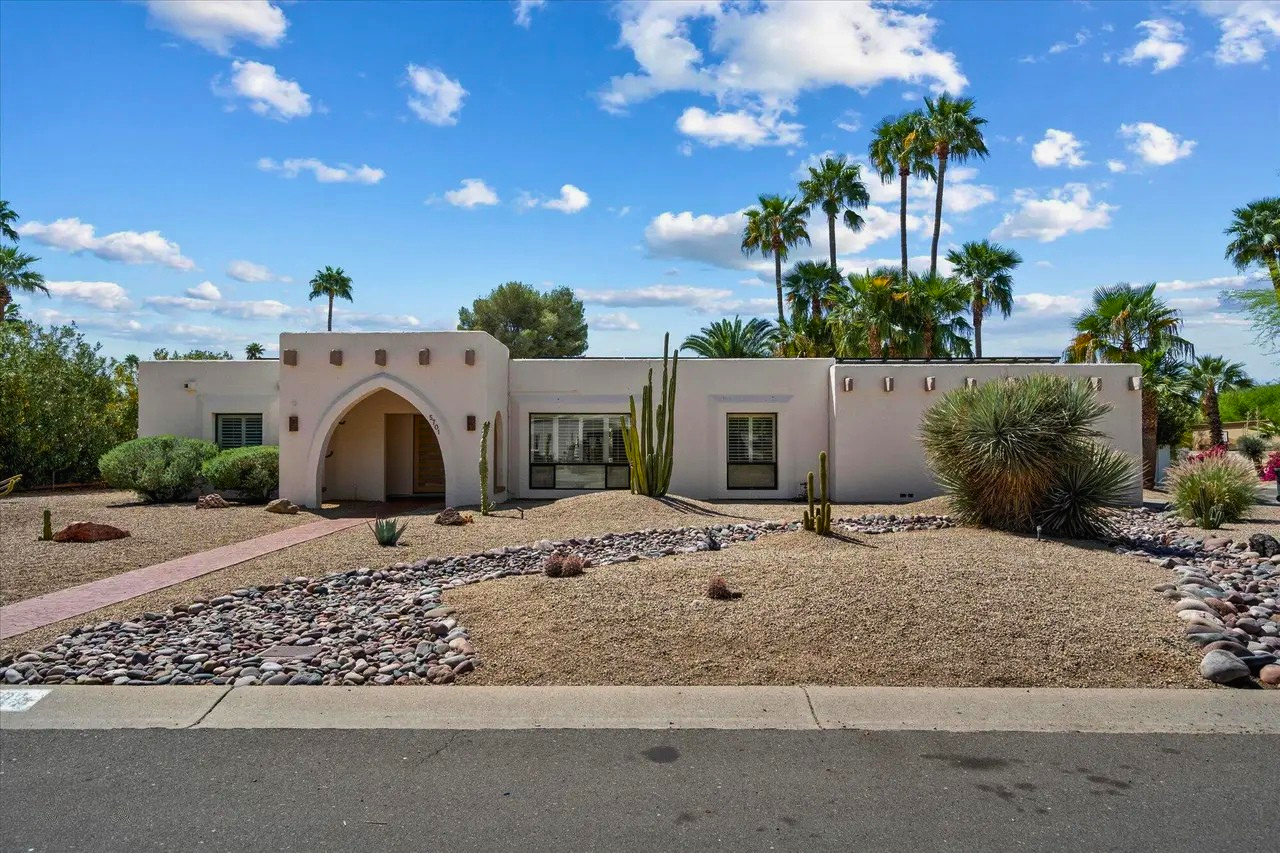
A furnished, income-producing Scottsdale home with seller-paid closing costs and a new roof, timed for a bonus depreciation strategy.
Read the case study →
Two brothers exchanged a $2 million California multifamily property into two Arizona single-family rentals, cutting property tax to about a quarter of what it had been.
Read the case study →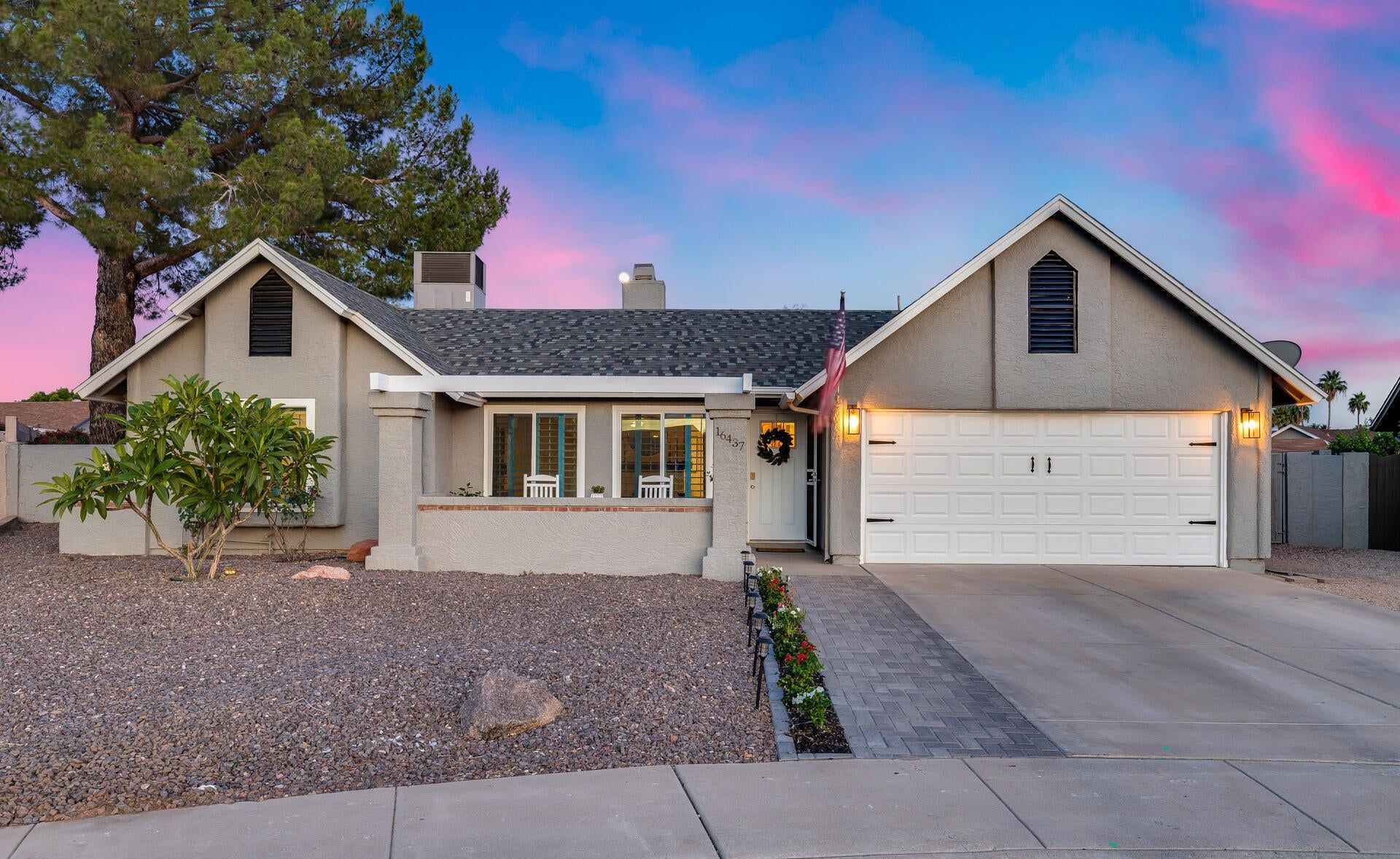
A California investor exchanged into a Glendale rental bought $20K under list with a cash offer, structured with her CPA and estate attorney for a stepped-up basis.
Read the case study →See all client wins & case studies →
Trusted by 175+ five-star clients
"Eric took the time to understand our goals, explain different investment strategies, review potential cash flow, discuss long-term appreciation, and coordinate with our CPA throughout the 1031 exchange process."
"Since we were in California, we relied on Eric for every detail that we needed and he delivered!"
"His patience and professionalism gave us confidence during the whole process."
"In the end, he negotiated an incredible deal on a quick move-in home that had been sitting for a while, helping us secure a home that exceeded our expectations while taking advantage of builder incentives we wouldn't have known were available."
"Eric was very responsive during my lengthy new home buying process. He even went the extra mile and took care of the final walkthrough inspection!"
Read all 175+ Google reviews → Client testimonials → Client wins & case studies →
Minor typos are corrected; the wording is otherwise the clients'.
Frequently asked questions
Is real estate or the stock market a better investment?
Neither is better in every case. Stocks offer liquidity, low costs and easy diversification. Real estate offers leverage, rental income, control and tax advantages. Many investors build the most resilient wealth by owning both, with the mix based on their income, taxes, timeline and available time.
Is rental property better than investing in the S&P 500?
It depends on the period, the price you pay and how you finance it. Over the 10 years ending in 2026, the S&P 500 returned about 13.4% a year with dividends, while Phoenix home prices rose about 7.2% a year. With 25% down, though, a Phoenix rental's equity grew faster than the index before rent and costs. Buyers at the 2006 or 2022 peaks did far worse, so price and underwriting matter.
Are REITs better than owning rental property?
Neither is better across the board. REITs give you liquid, diversified, hands-off real estate exposure that fits inside retirement accounts. Owning rental property directly gives you leverage with a fixed-rate mortgage, depreciation that can shelter your income, and full control. REITs don't pass depreciation through to investors, and most of their dividends are taxed as ordinary income.
What percentage of my portfolio should be in real estate?
There's no universal rule. Start with an emergency reserve and a funded retirement plan, then look at how much of your net worth is already tied up in your home and in one local market. A rental makes sense when you have cash for 20% to 25% down plus reserves, an income and tax profile that benefits, and the time or a manager to run it.
Can I use IRA money to buy a short-term rental and lower my taxes?
Possibly. Retirees can withdraw from a traditional IRA, buy a short-term rental, and use a cost segregation study with 100% bonus depreciation to create a first-year loss. If the average guest stay is 7 days or less and they materially participate, that loss can offset the taxable IRA withdrawal, reduce future required minimum distributions, and leave heirs a property that may receive a stepped-up basis instead of a fully taxable inherited IRA. It requires careful planning with a CPA, and withdrawals before 59½ usually add a 10% penalty.
Can I use my 401(k) or IRA to buy rental property?
Possibly, with trade-offs. A self-directed IRA can own rental property, but you can't use it personally, all expenses must be paid from the IRA, any loan must be non-recourse, and leveraged income can trigger unrelated business income tax. A 401(k) loan is generally limited to the lesser of $50,000 or half your vested balance, and early withdrawals usually bring income tax plus a 10% penalty.
How do I start investing in rental property with $50,000 to $100,000?
Most first-time investors buy one property and keep six months of expenses in reserve. In Greater Phoenix, common starting points include new construction with builder rate incentives, smaller homes in cash-flow-focused suburbs, a mid-term rental near a hospital campus, or living in a home first with a lower down payment and renting it later. Underwrite all three rental strategies before you commit.
Is Phoenix a good place to buy a rental property in 2026?
It can be, with careful selection. Prices are stable, inventory is up, and buyers have more negotiating room than in recent years. Arizona also bars rent control and no longer taxes long-term residential rent. But 30-year rates above 7% and softer apartment rents mean many properties don't cash flow with standard down payments, so underwrite each property under multiple strategies.
How much money do I need to buy an investment property in Phoenix?
Most conventional investment loans require 20% to 25% down. On a $450,000 home, plan on roughly $112,500 for the down payment, plus closing costs, reserves of several months of expenses, and furnishing if you choose a mid-term or short-term rental.
What is a mid-term rental?
A mid-term rental is a furnished home rented for 30 days to several months, often to traveling nurses, relocating professionals or insurance-displaced families. It usually earns more than a 12-month lease, avoids short-term rental licensing and city lodging taxes, and requires less turnover than a vacation rental.
Do I need a license to run a short-term rental in Scottsdale?
Yes. Any property rented for less than 30 consecutive days in Scottsdale needs an annual city license, which costs $250 per property. You also need a state transaction privilege tax license, liability insurance, neighbor notification and compliance with safety rules such as pool barriers.
Can a short-term rental reduce taxes on my W-2 income?
Possibly. If the average guest stay is 7 days or less and you materially participate under IRS rules, the rental's losses, including bonus depreciation from a cost segregation study, may offset W-2 income. The rules are strict and require detailed records, so work with a CPA who specializes in real estate.
Is 100% bonus depreciation still available in 2026?
Yes. The One Big Beautiful Bill Act permanently restored 100% bonus depreciation for qualifying property acquired after January 19, 2025. It applies to components with useful lives of 20 years or less, such as appliances, furnishings and land improvements, not the building structure itself.
What are the pros and cons of long-term, mid-term and short-term rentals?
Long-term rentals offer the most predictable income, the lowest workload and the easiest financing, but the lowest returns and tenant risk. Mid-term rentals earn more than a 12-month lease with no lodging tax, but require furnishing, owner-paid utilities and more vacancy between stays. Short-term rentals have the highest revenue potential and can offset W-2 income, but bring the most work, summer seasonality in Phoenix, higher operating costs and the most regulation.
Do mid-term rentals qualify for the short-term rental tax loophole?
No. The short-term rental strategy requires an average guest stay of 7 days or less. Mid-term rentals, with stays of 30 days or more, are taxed as rental activities, so their losses are passive. They still benefit from depreciation, cost segregation and 100% bonus depreciation on furnishings, and they avoid lodging taxes.
What is depreciation recapture on a rental property?
When you sell a rental, the depreciation you deducted on the building is generally taxed at up to 25%, and bonus depreciation on shorter-life property can be taxed at ordinary rates. A 1031 exchange defers recapture, and heirs who inherit the property generally receive a stepped-up basis that can eliminate it.
Can rental losses offset my W-2 income if I earn over $150,000?
Generally not with a long-term or mid-term rental, unless you or your spouse qualify as a Real Estate Professional. The $25,000 rental loss allowance phases out between $100,000 and $150,000 of modified AGI. A short-term rental with an average stay of 7 days or less and material participation is the main exception; for 2026 those losses can offset up to $256,000 (single) or $512,000 (joint) of wages.
Should I sell stocks to buy rental property?
Not without a plan. Selling appreciated stock in a taxable account can trigger capital gains taxes, and pulling from retirement accounts can bring taxes and penalties. Compare the after-tax cost of funding the purchase with the property's expected return, and keep your emergency reserves intact.
Do I still pay rental tax on a long-term rental in Arizona?
No. Since January 1, 2025, Arizona cities can no longer charge transaction privilege tax on residential rentals of 30 days or more. Short-term rentals of less than 30 days are still taxed.
Why work with an agent who has a wealth management background?
Because a rental property affects your cash flow, taxes, risk and retirement plan, not just your net worth. Eric Ravenscroft spent 15 years in financial planning, including as a Director of Wealth Management, and was FINRA-licensed beginning in 2011 with the Series 7, 9, 10, 63 and 66. He also owns rental properties in Greater Phoenix. He evaluates each property in the context of your whole portfolio, models multiple rental strategies and will tell you when a deal doesn't make sense.
Let's see how real estate fits your portfolio
In 30 minutes, I'll review your goals and current investments, compare LTR, MTR and STR strategies for your budget, share current Phoenix and Scottsdale market insight, and give you honest next steps, even if that means waiting.
Book your strategy call Call or text (480) 269-5858
Eric Ravenscroft, CRS
Owner & Team Lead, The Ravenscroft Group at Real Broker · Former Director of Wealth Management · CRS · GRI · ABR · MRP · SRES® · RSPS
Eric founded The Ravenscroft Group at Real Broker after 15 years in financial planning, including serving as a Director of Wealth Management. Licensed through FINRA beginning in 2011, he held the Series 7, 9, 10, 63 and 66 licenses. CPAs and tax advisors around the country trust him with their clients, and he invests alongside them: he owns a portfolio of rental properties in Greater Phoenix in addition to stocks. Most agents can tell you about a neighborhood; very few can tell you what a property will do to your taxes, cash flow and long-term plan. His practice is built around answering both. Read how he went from finance to real estate.
He specializes in investment property, short-term rental investing, 1031 exchanges, new construction and California-to-Arizona relocation. He has closed more than $100 million in residential sales, earned more than 175 five-star Google reviews, and is verified by RealTrends as the #1 agent in Buckeye, Litchfield Park, Goodyear, Glendale and Waddell. He was also recently ranked #2 in Arizona and #22 across North America among all Real Broker agents. His commentary has appeared in The Wall Street Journal, Morningstar, MarketWatch and MSN Money, and he hosts The House of Ravenscroft podcast.
Full bio & credentials · Client wins & case studies · LinkedIn · Book a call · eric@theravenscroftgroup.com · AZ License SA691304000
Keep reading: more for Phoenix investors
- Client Wins & Phoenix Real Estate Case Studies
- Real Estate as an Asset Class
- Real Estate Tax Strategy
- Short-Term Rental Tax Strategy
- The Short-Term Rental Tax Break for W-2 Earners
- Short-Term vs. Mid-Term Rentals in Phoenix
- Scottsdale 85254 Turn-Key STR: Bonus Depreciation Case Study
- Why Phoenix Works for a 1031 Exchange
- 2026 New Construction Investor Rates
- Best Areas to Buy in Phoenix in 2026
- Arizona Investment Property
- Palm Valley Basement-Casita STR: Bonus Depreciation Case Study
- The Complete 1031 Exchange Investor Guide
- Real Estate Calculators
- All articles on the blog
How this guide was researched. Written by Eric Ravenscroft, CRS, a former Director of Wealth Management and former FINRA-licensed professional (Series 7, 9, 10, 63 and 66) who owns rental properties in Greater Phoenix. It draws on 15 years in financial planning and his work with Phoenix-area investors and the CPAs who refer them. Market figures come from the S&P Cotality Case-Shiller index, Freddie Mac, S&P Global, Phoenix REALTORS®, the Arizona Department of Revenue and local market reports. Retirement rules are checked against Schwab's guidance on SECURE 2.0. Tax rules are checked against IRS guidance, the Journal of Accountancy and the City of Scottsdale. Every figure links to its source, and estimates and illustrative scenarios are labeled as such. The guide is reviewed and updated quarterly. No company or source mentioned paid for inclusion.
Sources & further reading
- Freddie Mac Primary Mortgage Market Survey, week of November 5, 2026 (via RISMedia); 30-year fixed series (FRED)
- June 2026 Greater Phoenix Real Estate Market Report (ASREB)
- Is Phoenix a good place to invest in 2026? (Marketplace Homes)
- Residential rental guidelines and the end of city rental tax (Arizona Department of Revenue)
- Short-term rental information for owners and operators (City of Scottsdale)
- Bonus depreciation 2026 for real estate investors (Wiss); IRS Notice 2026-11 (Real Estate Cost Seg)
- Short-term rental tax strategy guide (The Short Term Shop)
- 2026 401(k) and IRA limits (IRS); 2026 capital gains thresholds (Kiplinger)
- One Big Beautiful Bill Act: QBI, SALT, 1031 and estate provisions (National Association of REALTORS®)
- 2026 excess business loss thresholds (BiggerPockets)
- Arizona lodging tax rates by city, July 2026 (Northern Arizona University)
- S&P Cotality Case-Shiller AZ-Phoenix Home Price Index, through August 2026 (FRED)
- S&P 500 annual and 10-year total returns, citing S&P Global (The Motley Fool)
- Passive loss limitations on rental real estate (Journal of Accountancy)
- Know the tax facts about renting out residential property, FS-2018-14 (IRS)
- Metro Phoenix 2026 median prices by city, Phoenix REALTORS® data (AZ Big Media, Nov 2026; Sept 2026; Nov 2026 market update)
- Inherited IRA rules and SECURE 2.0 changes (Charles Schwab)
Disclaimer: This article is general information, not investment, tax, legal, insurance or lending advice. The scenarios and the IRA-to-STR figures in the case study section are illustrative and based on stated assumptions; actual results vary. Eric previously held FINRA securities licenses; nothing here is a recommendation to buy or sell any security or to take a retirement account distribution. Figures are estimates based on the sources above as of November 2026 and will change. Consult a CPA, attorney, lender and financial advisor about your situation. Eric is compensated by real estate commissions when clients buy or sell through him; he receives no compensation from any product, lender, platform or source mentioned. Past client results don't guarantee future outcomes, and client reviews reflect individual experiences; no compensation was provided for any review. Eric Ravenscroft, Arizona License SA691304000. The Ravenscroft Group at Real Broker.
Categories
- All Blogs (332)
- Active Adult & 55 Plus Communities (17)
- Arizona Relocation Guides (34)
- Buyers (221)
- Financial Planning (65)
- General Real Estate (148)
- Income From Real Estate (63)
- Market Update (26)
- New Construction (30)
- News, Updates and Coming Soon (57)
- Real Estate Agent Financial Planning (23)
- Real Estate Investing (102)
- Sellers (107)
- Vacation and Short Term Rentals (46)
Recent Posts






About the Author
Eric Ravenscroft is a Top 1% REALTOR® across North America and one of Arizona’s most trusted real estate strategists. With 15 years of experience spanning real estate, wealth management, and investment planning, he helps clients make smarter, financially grounded decisions, from new construction and relocations to STR investments, 1031 exchanges, and long-term portfolio strategy.
Eric’s expertise has earned him industry recognition, Elite status with Real Broker, and features in major publications including the Wall Street Journal, MarketWatch, MSN, and Morningstar. Clients across the Greater Phoenix Metro rely on his clarity, strategic insight, and results-driven guidance.
Ready to make a confident real estate move? Call or text Eric today.