
The Complete 1031 Exchange Guide: Rules, Deadlines, Tax Strategy & Estate Planning for Real Estate Investors
The Complete 1031 Exchange Guide: Rules, Deadlines, Tax Strategy & Estate Planning for Real Estate Investors
A 1031 exchange doesn't avoid tax. It postpones a decision. Most explanations of like-kind exchanges stop at "sell one property, buy another, defer the gain." That's the mechanic. It's not the strategy. I spent years on the tax and financial planning side of this business before I ever wrote a purchase contract, and the way I was trained to think about 1031s is different from how most agents present them: as one move inside a much longer plan for a client's balance sheet, not a way to dodge a closing-day tax bill.
- A 1031 exchange defers capital gains tax by rolling it into the replacement property's lower basis — it doesn't eliminate the liability.
- The 45-day identification and 180-day closing deadlines run concurrently, both starting the day the relinquished property closes, with no extensions for a good-faith miss.
- Boot and basis, not the replacement property itself, determine whether the exchange fully defers your gain or triggers a partial tax bill.
- Most of the real strategy happens after the first exchange — DSTs, reverse exchanges, and 721/UPREIT contributions solve problems a simple swap can't.
- Held until death, the deferred gain can disappear entirely under Section 1014's step-up in basis — "swap till you drop" is an estate strategy, not a loophole.
- You can even move into the replacement property and later die owning it — done right, the step-up wipes out the original deferred gain, the personal-use appreciation, and the depreciation recapture, all in one step.

Before real estate, I worked as a Director of Wealth Management — on the tax and financial planning side of client relationships, not the transactional side. That's the lens this guide is written through: a 1031 exchange isn't a closing-day trick, it's one move inside a client's larger balance sheet, and it should be evaluated the way a planner evaluates any decision with a tax consequence attached — against the client's basis, timeline, and long-term goals, not just the listing in front of them.
I now advise Greater Phoenix clients directly on exchange strategy as a real estate advisor, working alongside their CPA, attorney, and Qualified Intermediary rather than in place of them. You can read more about my background at theravenscroftgroup.com.
- CRS · GRI · ABR
- Former Director of Wealth Management
- Top 100 Phoenix Metro
- Top 1% Nationwide
- $100M+ Closed
What a 1031 exchange actually does
Section 1031 of the Internal Revenue Code lets an owner of real property held for investment or business use sell that property and roll the proceeds into another qualifying property without recognizing the capital gain at the time of the sale. The tax isn't forgiven. It's deferred, and it attaches itself to the replacement property through a reduced cost basis.
That single distinction — deferral, not elimination — is the one most marketing material glosses over, because "defer" is a less exciting word than "avoid." But it's the entire reason a 1031 has to be evaluated as part of a broader real estate tax strategy rather than a standalone transaction. You are not making the tax bill disappear. You are choosing to carry it forward, at a size that compounds with every future exchange, until something eventually triggers it — a sale outside the exchange rules, or your death.
Relinquished property
The property you're selling. Must have been held for investment, or for productive use in a trade or business — not a primary residence, and not property acquired with intent to immediately resell (dealer property).
Replacement property
What you buy with the proceeds. Since 2018, must be real property. Personal property exchanges (equipment, vehicles, franchise licenses) no longer qualify under §1031 — that door closed with the Tax Cuts and Jobs Act.
Like-kind
For real estate, this is a much broader standard than most people expect. Nearly any U.S. real property held for investment is like-kind to any other — a rental duplex is like-kind to raw land, to a retail strip center, to an industrial warehouse.
Qualified Intermediary
A neutral third party who must hold the sale proceeds between closings. You are legally barred from touching the money — "constructive receipt" of funds, even briefly, disqualifies the entire exchange.
Here's the part that surprises people who come to real estate from other corners of finance: the like-kind standard for real property is remarkably forgiving. You are not required to trade a rental house for another rental house. Raw land, a Delaware Statutory Trust interest, a triple-net lease on a pharmacy, and a fourplex can all be like-kind to one another, provided each asset was or will be held for investment or business use rather than personal use.
In my planning years, I watched clients treat "like-kind" as the scary, technical part of the exchange and the actual deadline as an afterthought. It's backwards. I've never seen a 1031 fail because the replacement property was insufficiently similar to the one sold. I have seen exchanges fail because a client spent three weeks "just looking" before engaging a qualified intermediary, and burned a third of their identification window doing it.
How the mechanics actually work
A compliant exchange has a specific shape. Deviate from it and the IRS doesn't partially disqualify you — the whole exchange can unwind and the gain becomes taxable in the year of sale.
- Engage a Qualified Intermediary before you close on the sale. This has to happen before the relinquished property closing, not after. A QI who is brought in after the fact cannot retroactively fix a completed sale.
- Close the sale of the relinquished property. Proceeds go directly to the QI, not to you. Getting the listing strategy right on this side matters more than it gets credit for — a slow sale eats into the runway you'll have for the entire exchange. It's the same discipline behind getting a dated, non-updated home in a gated North Scottsdale community to the highest sale price ever recorded there for its size: pricing, positioning, and timing done correctly, not luck. Your closing documents are structured so you never have signature authority over the funds.
- Identify replacement property within 45 calendar days of the relinquished closing, in writing, delivered to the QI. There is no extension for weekends, holidays, or "we made an offer but it fell through."
- Close on the replacement property within 180 days of the original closing (or the due date of your tax return, including extensions, if earlier).
- Take title in the same name that held the relinquished property. An LLC that sold cannot have an individual member take title on the replacement side without careful planning around "drop and swap" structures.
The exchange isn't the closing. The exchange is the 180 days between closings, and almost everything that goes wrong happens inside that window.
Within the 45-day identification window, you're not required to identify only one property. The IRS gives you three ways to structure your list, and which one you use changes your flexibility considerably:
| Identification Rule | What it allows | Best suited for |
|---|---|---|
| Three-Property Rule | Identify up to three properties of any value | Most single-relinquished-property exchanges |
| 200% Rule | Identify any number of properties, as long as their combined fair market value doesn't exceed 200% of what you sold | Investors diversifying one large sale into several smaller assets |
| 95% Rule | Identify unlimited properties of any value, but you must actually close on 95% of the total value identified | Rarely used — the closing requirement makes it risky |
A client once asked me to identify five properties under the 200% rule because "more options seemed safer." It's the opposite of safer: the 200% rule only works if the combined value of everything on the list stays under twice what was sold, and a fifth property pushed the list over that ceiling by roughly 30%, which would have invalidated the entire identification — not just the property over the limit. We cut the list to three under the simpler Three-Property Rule instead. The lesson that stuck with me from my planning years applied directly: more optionality on paper isn't the same as more safety in practice, and it's worth running the math on a list before it's filed with the intermediary, not after.
The 45 / 180-day clock, and why it's unforgiving
Both deadlines are measured from the same starting point — the date the relinquished property closes — and they run in parallel, not in sequence. The 180-day clock is already ticking while you're inside the 45-day identification window; you don't get 45 days to identify and then a fresh 180 to close.
There is no administrative appeal for missing either deadline. Not a hardship exception, not a "the seller delayed closing" exception, not a natural-disaster exception outside of specific, formally declared IRS relief for federally declared disasters. If day 45 passes without a written identification in the QI's hands, the exchange is over and the gain is taxable in that tax year.
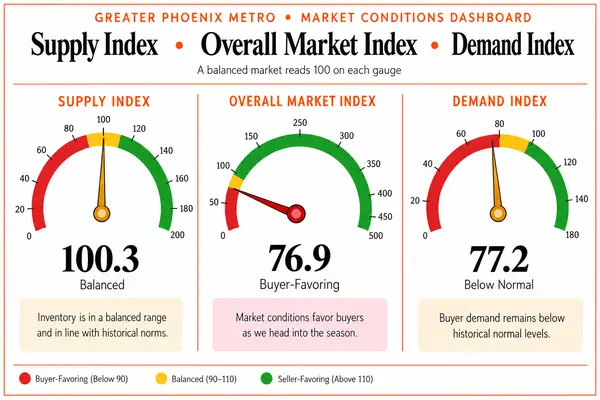
On the planning side, I built client timelines backward from day 180, not forward from day 0, because that's how cash flow planning works generically — you plan from the obligation to the present, not the present to some vague future goal. Applied here: if a lender needs 30 days to underwrite the replacement property loan, that loan application needs to be in well before day 150, which means the property needs to be under contract closer to day 120, which means your identification list on day 45 needs to already reflect properties you could realistically close, not aspirational ones. It also means knowing current Phoenix housing market conditions before day 45, not after — inventory and days-on-market shift what's realistically closeable inside your window. Our buyer resources are built with that clock in mind.

A delayed exchange we ran recently landed a client in Union Park at Norterra, North Phoenix — about 15 minutes from TSMC's Fab 1, in the heart of the semiconductor workforce housing corridor. Because we'd already done the market homework before the clock started, we were able to move decisively once the identification window opened and negotiate roughly $110,000 below the seller's original list price, in a market where many buyers were still anchored to peak-era pricing. The exchange deferred the full capital gain while repositioning the client's capital directly in front of one of the largest sustained job-growth stories in the Phoenix Metro.
Boot, basis, and the math nobody shows you
This is the section most real estate content skips entirely, because it requires actually running numbers rather than describing a concept. It's also where a financial planning background earns its keep.
Boot is any value you receive in the exchange that isn't like-kind real property — cash left over, debt relief that isn't matched by new debt, or non-like-kind property received alongside the real estate. Boot is taxable in the year of the exchange, even though the rest of the transaction is deferred. The two most common ways investors accidentally create boot:
- Trading down in value. To fully defer gain, the replacement property generally needs to be equal to or greater in value than the relinquished property, and you need to reinvest all of the net proceeds. Pocket any cash difference, and that cash is boot.
- Trading down in debt. If you pay off a $400,000 mortgage on the sale and only take on a $250,000 mortgage on the replacement, that $150,000 of debt relief is treated as boot unless you offset it with additional cash into the deal.
The other piece that determines everything downstream is carryover basis. Your basis in the replacement property isn't its purchase price — it's your old basis, adjusted for any additional cash invested or debt assumed. That lower basis follows the asset forward, which means depreciation on the replacement property is calculated on a smaller number than a cash buyer of the same property would use, and the deferred gain is sitting there, waiting.
| Item | Amount |
|---|---|
| Sale price, relinquished property | $1,200,000 |
| Adjusted basis, relinquished property | $400,000 |
| Realized gain | $800,000 |
| Replacement property purchase price | $1,400,000 |
| New basis in replacement property | $600,000 |
| Deferred gain carried forward | $800,000 |
Simplified illustration, ignoring closing costs and depreciation recapture, for explanatory purposes only. If you want to run your own numbers before a call, our calculators are a faster starting point than a spreadsheet from scratch.
Every intake meeting I ever ran on a prospective exchange started with the client's basis, not the property they wanted to buy. A client who calls excited about a replacement property and can't tell me their adjusted basis in what they're selling is, functionally, asking me to price a decision I can't yet price. Depreciation recapture alone — taxed federally at up to 25% regardless of your income bracket — can be a bigger number than the appreciation gain on a property that's been held a long time.
Where good deals go wrong
Choosing the wrong Qualified Intermediary
QIs are largely unregulated at the federal level, and the funds they hold aren't FDIC-insured in the way a bank deposit is. A handful of QI failures over the past two decades — including insolvencies where client exchange funds simply weren't there when needed — wiped out entire exchanges. Ask how funds are held (segregated, qualified escrow accounts versus commingled), whether the QI carries fidelity bond and errors-and-omissions coverage, and who has signing authority.
Related-party exchanges
Exchanging with a related party (family, or an entity you control) is permitted under §1031(f), but both parties must hold their respective properties for at least two years afterward, or the deferral can be retroactively disqualified. This trips up more family-owned real estate portfolios than almost any other rule.
This is the rule I've had to deliver as bad news more than once. A parent and adult child wanted to swap a rental duplex for a single-family home the parent actually wanted to occupy, each taking the other's property. On paper it solved both of their goals in one afternoon. It also would have been treated as a related-party exchange with a cash-out shortly after, which the IRS scrutinizes specifically because it can be used to convert investment property to personal use while still claiming deferral. We restructured the timeline so both properties would genuinely be held two years, which meant waiting — not the answer either of them wanted to hear.
Mixing personal and investment use
A second home used personally for part of the year, a property partially converted to a primary residence, or a short-term rental or vacation home with heavy personal use can all jeopardize qualification. The IRS has specific safe-harbor guidance in Rev. Proc. 2008-16 on how much personal use a vacation property can have before and after an exchange without losing eligibility — it's a narrower window than most owners assume.
Financing that falls through inside the 180 days
Lenders don't operate on the exchange clock's schedule. A financing contingency that dies on day 165 leaves no time to identify or close on a backup property, because your 45-day identification window has almost certainly already closed. This is the single most common reason planned exchanges collapse.
Myths, corrected
A 1031 exchange eliminates the capital gains tax entirely.
It defers it. The gain is embedded in the replacement property's lower basis and resurfaces if you sell outside the exchange rules.
You have to buy a "similar" property — house for house, apartment for apartment.
Like-kind for real estate is broad. Raw land into a commercial building, a rental into a DST interest — all can qualify.
You can do a 1031 exchange on your primary residence.
Primary residences don't qualify. They're covered under a separate, unrelated exclusion (Section 121), with its own dollar caps.
You can hold the sale proceeds yourself as long as you reinvest within 180 days.
Touching the funds at all, even for a day, is constructive receipt and disqualifies the exchange immediately.
You can only exchange one property for one property.
Exchanges can go many-into-one, one-into-many, or many-into-many, subject to the identification rules.
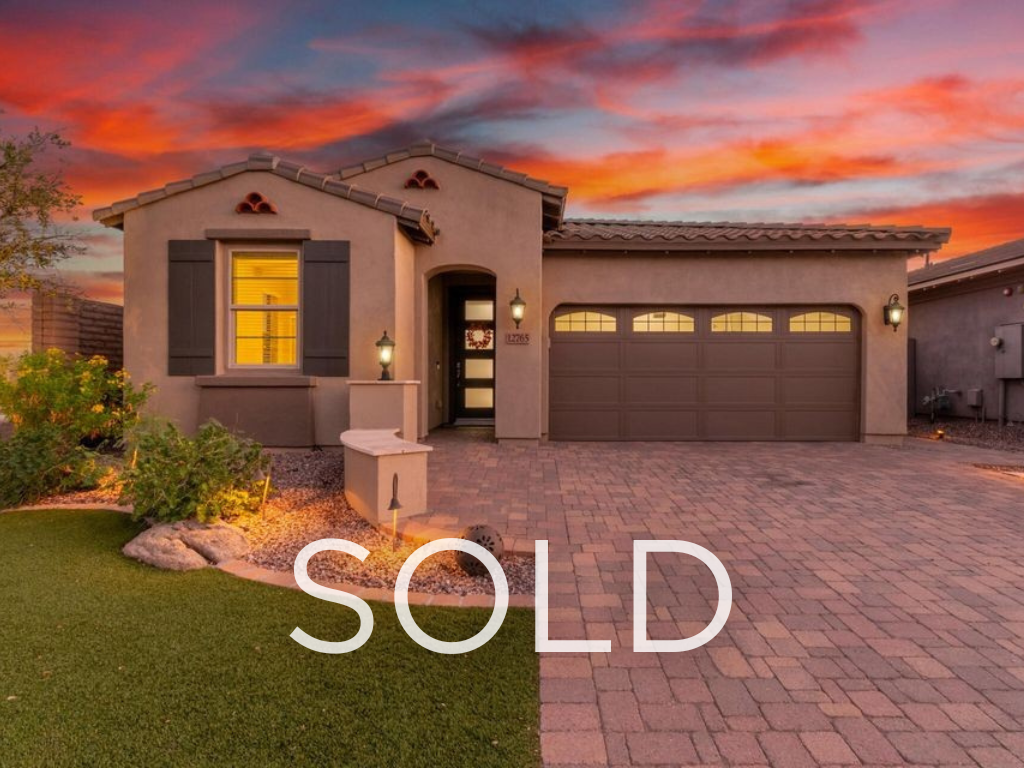
A related wrinkle worth knowing: co-owned property doesn't get to pool into one exchange. Two brothers co-owned a $2M California multifamily property that was generating solid rent but was weighed down by high property taxes, high insurance costs, and tenant-friendly California landlord law. Rather than one exchange, we structured two separate, parallel 1031 exchanges — each brother's roughly $1M share of the proceeds went into his own single-family rental, one in Vistancia (Peoria, AZ) and one in Verrado (Buckeye, AZ). Because each exchange was sized to that brother's own share rather than to the property's full value, both fully deferred their respective gains under the same value-matching rules covered above, not as an exception to them. The result for the family as a whole: stronger combined monthly rent, an annual property tax bill roughly a quarter of what it had been in California, and none of the rent-control exposure the original asset carried.
Co-owned property split between multiple exchangers has to be handled carefully — each owner's share needs its own compliant exchange, sized to that owner's interest, not the property's aggregate value.
Advanced strategy: past the first exchange
This is where the strategy separates from the transaction, and where most real estate agents stop being useful — because most of these structures are built with an accountant or attorney in the room, not just a broker.
Reverse exchanges
StructuralSometimes the right replacement property shows up before you've sold the relinquished one. A reverse exchange, structured under IRS safe harbor Rev. Proc. 2000-37, lets an Exchange Accommodation Titleholder take and hold title to the new property while you arrange the sale of the old one. It solves a real sequencing problem, but it's more expensive to run and requires financing that many lenders aren't set up for, since the EAT technically holds title during the parking period.
Improvement (construction) exchanges
StructuralLets exchange proceeds fund construction or renovation on the replacement property, with the EAT holding title while improvements are completed within the 180-day window. Useful when the ideal replacement is land plus a building program — this comes up often with clients drawn to Arizona new construction and developments — but the timeline is genuinely tight — permitting delays alone can eat the runway.
Delaware Statutory Trusts (DSTs)
PortfolioA DST holds title to institutional-grade real estate — a distribution warehouse, a medical office portfolio, a multifamily complex — and investors buy fractional beneficial interests that qualify as like-kind replacement property under Revenue Ruling 2004-86. For a client tired of the "three-in-the-morning phone call" side of direct Arizona investment property ownership, or trying to fully absorb a large gain across several smaller pieces to satisfy the 200% identification rule, a DST allocation can solve both a management-fatigue problem and a sizing problem simultaneously. The tradeoff is illiquidity and loss of operational control — you're a passive beneficiary, not a decision-maker.
UPREIT / §721 exchanges
PortfolioA less commonly discussed path: contribute the replacement property (often via a DST first, then a later contribution) into the operating partnership of a REIT in exchange for operating partnership units, under Section 721. Done correctly — typically as a "721 upleg" following an initial 1031 — it converts an illiquid direct real estate position into units that can eventually convert to REIT shares, trading direct ownership for liquidity and diversification, at the cost of giving up further 1031 eligibility on that position going forward.
Exchanging into a Tenants-in-Common (TIC) structure
PortfolioAn older cousin of the DST, governed by Rev. Proc. 2002-22, TIC structures let multiple exchangers each own an undivided fractional interest in one larger property, with unanimous-consent requirements on major decisions. They fell out of favor after the 2008 financial crisis exposed how unwieldy unanimous consent becomes with a large group of owners, but they still appear, and it's worth knowing the governance tradeoffs before an agent presents one as a simple alternative to a DST.
The exit that isn't an exit: exchanging until death
Here's the strategy that almost never gets explained clearly, because it sits directly at the intersection of tax planning and estate planning, and most people only have one of those two hats on at a time.
Deferred gain from a 1031 doesn't have to be paid by you at all. Under Section 1014, an heir who inherits real estate receives a step-up in basis to the property's fair market value as of the date of death. If you exchange properties throughout your lifetime, carrying deferred gain forward each time, and your heirs inherit the final replacement property rather than you selling it, the deferred gain that had been building for decades can be erased entirely — not deferred again, actually eliminated for income tax purposes. Estate and financial planners often refer to this shorthand as "swap till you drop."
The clearest example I worked on in my planning years involved a couple who had exchanged the same underlying equity through four properties over almost thirty years — from a small apartment building into a retail center, into a mixed-use property, into a fully-managed NNN asset as they aged and wanted less hands-on management. Their basis by the end was a small fraction of the property's value. Selling outright in their lifetime would have triggered a six-figure combined federal and state tax bill between capital gains and depreciation recapture. Their estate plan was built around holding the final replacement property until death instead, so their children would inherit it at a stepped-up basis. It wasn't a tax loophole they stumbled into — it was the reason every exchange along the way had been structured to keep that door open.
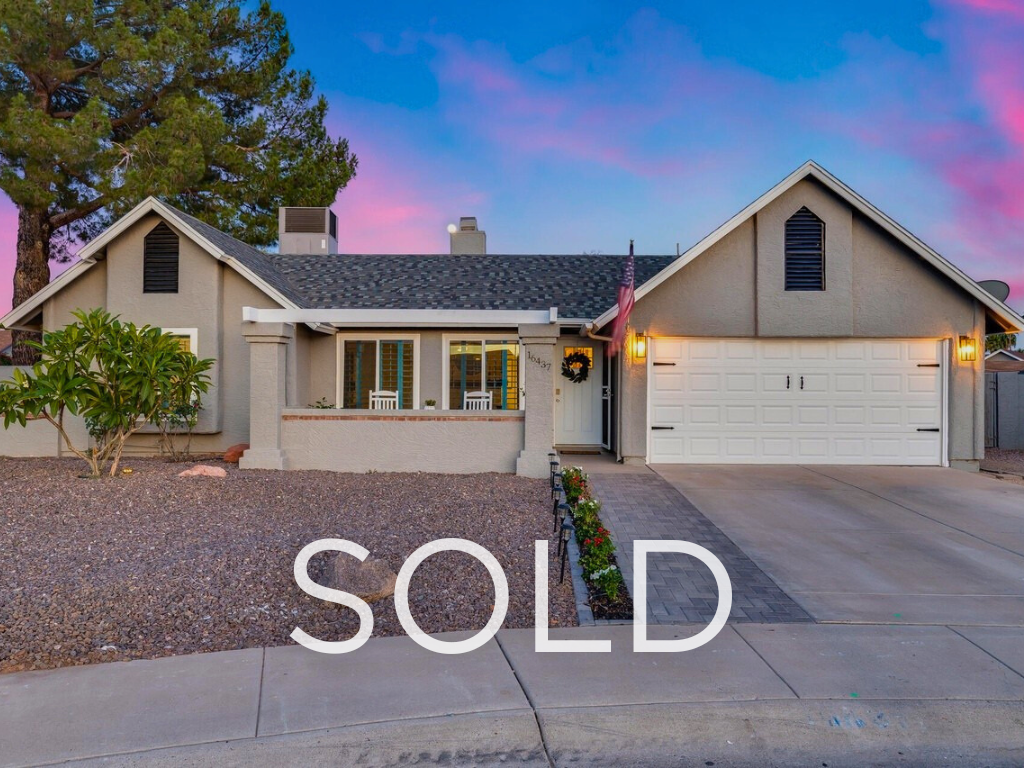
A real example with real numbers: a California investor had held a rental property for roughly 17 years, purchased for about $175,000 and now worth $550,000. Selling outright, without an exchange, carried an estimated combined tax bill of about $139,272 once federal capital gains, depreciation recapture, and California's 13.3% state tax were all stacked together. Instead, we structured a 1031 exchange into an Arizona replacement property, deferring that entire liability, with the plan built from the start around Section 1014 and Section 1031 working together — holding the Arizona property long-term so the next generation can eventually inherit it at a stepped-up basis rather than the family paying that six-figure bill at all.
This is the piece I'd bring up in almost every planning conversation about a long-held, highly appreciated rental portfolio, and it's the piece most real estate conversations never reach, because it isn't a real estate question at all — it's an estate planning question that happens to use real estate as the vehicle. It also isn't automatically the right answer. Estate tax exposure at the federal and state level, a family's liquidity needs, and whether heirs actually want to inherit real property (versus cash, versus a business) all matter more than the tax mechanics alone. A step-up strategy that ignores whether your kids want to become landlords isn't a plan, it's a tax trick with a family attached to it.
The primary-residence variant: exchange, rent, move in, hold
There's a specific sequence that combines everything in this section into one strategy, and it comes up often enough with long-term clients that it deserves its own walkthrough rather than being left implied. It looks like this: complete a 1031 exchange into a rental property, hold and operate it as a genuine investment for a meaningful period, then convert it into your primary residence, live in it, and — instead of ever selling it — hold it until death so it passes to your heirs.
The reason this works is almost the opposite of how most people think about it. If the plan were to eventually sell that converted home, you'd run straight into Section 121(d)(10)'s five-year rule: a residence acquired through a 1031 exchange isn't eligible for the home-sale exclusion at all until you've owned it five full years, on top of the ordinary two-of-five-years personal-use test, and any gain still gets prorated between "qualified" personal-use years and "nonqualified" rental years under §121(b)(5) — with depreciation-related gain excluded from the exclusion entirely. Holding until death sidesteps essentially all of that machinery, because none of it is triggered by anything other than a sale. Section 1014's step-up doesn't care how long you owned the home, doesn't prorate anything between its rental years and its personal-use years, and doesn't distinguish original deferred exchange gain from appreciation that happened after you moved in. Your heirs' basis simply resets to fair market value on the date of death, in one step, erasing the original deferred gain, the appreciation from every year you lived there, and the depreciation recapture exposure, together.
The timing is the entire risk in this strategy, and it runs in the opposite direction from what people expect. The danger isn't converting too late — it's converting too early. The IRS's comfort with a 1031 exchange rests on the replacement property having been genuinely acquired for investment or business use at the time of the exchange. Rev. Proc. 2008-16's 24-month safe harbor is the most commonly cited benchmark practitioners point to for demonstrating that intent before converting a property to personal use. Move in after six weeks instead of two years, and you're not just risking the §121 exclusion down the line — you're inviting an argument that the original exchange was never a bona fide investment acquisition, which can unwind the deferral retroactively and make the entire original gain taxable in the year of the first sale. The rental years aren't a formality to wait out. They're the part of the strategy that makes the rest of it defensible.
It's also worth naming plainly what this strategy is not: it is not a loophole, and it is not guaranteed to survive future legislation. Step-up in basis at death has been a recurring target in federal tax policy proposals for years. Any long-horizon plan built around "swap till you drop," in either its rental form or this primary-residence variant, should be revisited regularly, not treated as a fixed rule bolted onto a portfolio decades in advance.
Frequently asked
Can I do a 1031 exchange on a vacation home?
Only if it's held predominantly for investment, per the safe harbor in Rev. Proc. 2008-16 — generally, rented at fair market rent for at least 14 days a year in each of the two years before and after the exchange, with your own personal use capped at the greater of 14 days or 10% of the days it's rented. A property used mainly as a family retreat won't qualify.
What happens if I can't find a replacement property in 45 days?
The exchange fails, and the gain becomes taxable in the year the relinquished property was sold. There's no partial credit for having tried. Some investors mitigate this risk by identifying a DST interest as a backup option on their 45-day list, since DST allocations can typically close far faster than direct property purchases.
Do state taxes get deferred too?
Most states with an income tax follow the federal treatment, but not all, and a few states (California notably) require ongoing tracking and reporting (via forms like FTB 3840) when a California property is exchanged for an out-of-state replacement, precisely so the state can claim its deferred tax when the chain of exchanges eventually ends.
Can I convert the replacement property into my primary residence later?
Yes, but not immediately, and not without consequence. The IRS generally expects the replacement property to be held for investment for a meaningful period first (commonly cited guidance points to at least two years, per the safe harbor in Rev. Proc. 2008-16), and if you plan to eventually sell it as your home, Section 121(d)(10) requires five full years of ownership before the home-sale exclusion is even available, with the gain further prorated between rental and personal-use years. If instead you hold the property until death rather than selling, that entire set of rules becomes irrelevant — see the primary-residence variant covered in the estate-planning section above.
Is there a limit to how many times I can exchange?
No statutory limit. Investors run chains of exchanges across decades. Each one resets the clock and rolls the deferred gain forward into the newest replacement property's basis.





Trusted by leading financial institutions
These partnerships aren't paid placements. I've been independently vetted and approved by each institution based on performance, ethics, and client outcomes — the same scrutiny I bring to how I evaluate a 1031 exchange.
Recognized by nine separate financial institutions — each one a rigorous, independent approval.








View the Preferred Agent Savings Program →
Working across state lines through Real Broker has been seamless, a referring agent wrote after sending longtime Los Angeles clients to Eric for a purchase in Arizona. He handled their 1031 exchange contingency without a hitch, working transparently with escrow and every party involved and laying out every scenario — including the worst-case ones — so the buyers never feared losing the home they wanted.
Sources & further reading
Every rule and figure above traces back to primary IRS and Treasury guidance, not secondhand summaries. Where a topic needed more depth than fits here, these are the same source documents I'd point a client or their CPA to directly.
- 26 U.S. Code § 1031 — Exchange of real property held for productive use or investment.Cornell Law School, Legal Information Institute
- IRS Instructions for Form 8824 — Like-Kind Exchanges, current filing year.Internal Revenue Service
- IRS Fact Sheet 2008-18 — Like-Kind Exchanges Under IRC Code Section 1031.Internal Revenue Service
- Rev. Proc. 2008-16 — Safe harbor for exchanges of dwelling units used partly for personal purposes.Internal Revenue Service
- Rev. Proc. 2000-37 — Safe harbor for reverse like-kind exchanges (as modified by Rev. Proc. 2004-51).Internal Revenue Service
- Rev. Rul. 2004-86 — Classification of Delaware statutory trusts and DST interests as like-kind replacement property.Internal Revenue Bulletin 2004-33
- Rev. Proc. 2002-22 — Conditions for tenant-in-common interests to qualify as replacement property.Internal Revenue Bulletin 2002-14
- 26 U.S. Code § 1014 — Basis of property acquired from a decedent (step-up in basis).Cornell Law School, Legal Information Institute
- 26 U.S. Code § 121 — Exclusion of gain from sale of a principal residence.Cornell Law School, Legal Information Institute
- 26 U.S. Code § 721 — Nonrecognition of gain or loss on contribution to a partnership.Cornell Law School, Legal Information Institute
The property is the vehicle. The plan is the point.
A 1031 exchange, done well, is rarely about one transaction. It's a basis-management decision, a cash-flow-timing decision, and often an estate-planning decision, wearing a real estate transaction as its outfit. The agents and advisors worth working with on an exchange are the ones asking about your basis and your long-term goals before they start sending listings.
If there's one habit worth borrowing from the financial planning side of this work, it's this: before you fall in love with a replacement property, know your number — your basis, your recapture exposure, your realistic timeline against day 45 and day 180 — and let that number, not the listing photos, decide what kind of exchange you're actually running.
If you're weighing a 1031 exchange in the Greater Phoenix Metro — Scottsdale, Chandler, Gilbert, Tempe, Paradise Valley, Goodyear, and the surrounding valley — I'm happy to walk through your specific basis and timeline before you're under contract. If the exchange is tied to a bigger move rather than just a portfolio decision, our moving to Arizona and relocation resource guides are worth a look alongside this one.
Or reach me directly at eric@theravenscroftgroup.com
Categories
- All Blogs (324)
- Active Adult & 55 Plus Communities (17)
- Arizona Relocation Guides (31)
- Buyers (214)
- Financial Planning (61)
- General Real Estate (141)
- Income From Real Estate (60)
- Market Update (26)
- New Construction (29)
- News, Updates and Coming Soon (57)
- Real Estate Agent Financial Planning (22)
- Real Estate Investing (96)
- Sellers (107)
- Vacation and Short Term Rentals (45)
Recent Posts









About the Author
Eric Ravenscroft is a Top 1% REALTOR® across North America and one of Arizona’s most trusted real estate strategists. With 15 years of experience spanning real estate, wealth management, and investment planning, he helps clients make smarter, financially grounded decisions, from new construction and relocations to STR investments, 1031 exchanges, and long-term portfolio strategy.
Eric’s expertise has earned him industry recognition, Elite status with Real Broker, and features in major publications including the Wall Street Journal, MarketWatch, MSN, and Morningstar. Clients across the Greater Phoenix Metro rely on his clarity, strategic insight, and results-driven guidance.
Ready to make a confident real estate move? Call or text Eric today.