
How a California Investor Deferred $139,272 in Taxes and Built a Tax-Free Inheritance in Arizona
How a California Investor Deferred $139,272 in Taxes and Built a Tax-Free Inheritance in Arizona
Most real estate decisions are about the next deal. This one was about the next generation — a 1031 exchange structured not just to defer taxes, but to eliminate them entirely for the heirs.

Most real estate decisions are about the next deal. This one was about the next generation.
A California investor had owned a rental property for nearly two decades. The property had appreciated significantly — from an original purchase price of approximately $175,000 to a sale price of $550,000. On the surface, that's exactly what you want to see. In practice, it created a tax problem that would have permanently removed a six-figure sum from the family's wealth.
Selling without a strategy meant handing roughly $139,272 to the IRS and the state of California. Money that would leave the family and never come back. Instead, we built a plan.
The Foundation
How a 1031 Exchange Actually Works
A 1031 exchange — named after Section 1031 of the Internal Revenue Code — lets a real estate investor sell an investment property and reinvest the proceeds into a qualifying replacement property without paying capital gains tax in the year of sale. The tax isn't forgiven. It's deferred. But as you'll see in this case study, when combined with the right estate plan, deferred can become eliminated entirely for the next generation.
The IRS rules are specific and unforgiving. Here's what must happen for the exchange to be valid:
The exchange must also be equal or greater in value to fully defer all tax. Any cash you take out — called "boot" — is taxable. In this case, the full $550,000 was reinvested with no boot taken, which is why the tax bill at exchange was exactly $0.
Critical: California Investors Must Know This
The California Clawback Rule
California is one of a small number of states with a "clawback" provision on 1031 exchanges. Here's what it means in practice:
When a California investor exchanges a California property for an Arizona replacement property, California defers its state capital gains tax at the time of the exchange — as it must under federal law. However, if that investor later sells the Arizona property in a taxable event, California will seek to collect the state tax it deferred, even though the property is now in Arizona. California requires exchangers to file annual informational returns for as long as they own the out-of-state replacement property, specifically so it can track when a taxable sale eventually occurs.
This is not unique to Arizona — it applies to any state an investor exchanges into from California. And it's why the estate planning component of this transaction isn't optional. It's essential.
The clawback only applies to a taxable sale. If the replacement property is held until death and the step-up in basis under IRC §1014 applies, there is no taxable sale — and California has nothing to collect. The deferred state tax, like the deferred federal tax, is eliminated entirely for the heirs. Under current law, this is the only clean exit from California's clawback provision.
This is one of the primary reasons the estate plan was built into this transaction from day one, not retrofitted after the fact.
The Tax Problem
What a Direct Sale Would Have Cost
After nearly 17 years of ownership, the property's adjusted tax basis — the original purchase price minus accumulated depreciation — had dropped to approximately $88,455. That means the total taxable gain wasn't just the appreciation above the purchase price. It was $461,545.
Here's how that breaks down:
That's not a rounding error. That's a number that changes what the next generation inherits. The depreciation recapture piece alone surprises most property owners — 17 years of annual deductions come due all at once at sale. The IRS doesn't forget.
The Real Goal
This Was Never Just About Deferral
Most investors complete a 1031 exchange to preserve capital and move it into a better market. That was part of this picture — but not the whole story.
The goal was multigenerational: generate reliable rental income now, hold a growing asset in an appreciating Arizona market, and eventually pass that property to the grandsons in a way that minimized — or completely eliminated — the tax burden on the next generation.
"That goal changes everything about how you structure the transaction. It's the difference between completing a real estate deal and executing a financial plan."
Eric RavenscroftOnce we mapped out the full picture — the equity, the family goals, and the long-term tax implications — it became clear that this wasn't just a property swap. It was a multigenerational wealth transfer plan, built around a 1031 exchange and coordinated with a CPA and estate attorney to give the next generation a clean start.
The Legal Mechanism
Why the Step-Up in Basis Changes Everything
Under IRC §1014, when a property is inherited, the cost basis steps up to fair market value at the date of death.
In plain terms: every dollar of deferred capital gain accumulated inside the 1031 exchange — the full $461,545 — is permanently reset to zero for the heirs. The grandsons inherit the Arizona property at its fair market value on the day they receive it. The entire tax history of the original California property disappears. They only owe taxes on appreciation that occurs after they inherit.
There are three ways this story could have ended:
| Scenario | Tax at sale | What the grandsons receive | Tax on deferred gain |
|---|---|---|---|
| A — Sell CA, pay taxes, gift cash | ~$139,272 | ~$410,728 cash — no property | $0 — but $139K already gone |
| B — 1031 exchange, hold AZ, grandsons sell later | $0 now | AZ property with deferred basis | Full deferred gain + new AZ gain |
| C — 1031 exchange, hold AZ, pass at death with step-up This strategy | $0 | AZ property at stepped-up FMV | $0 on all deferred gain |
Scenario C is the strategy. Not because it requires the least effort — it requires the most coordination — but because it produces the best outcome for the family across every measure.
Why Structure Matters
The Estate Plan Is What Makes the Step-Up Work
The step-up in basis doesn't happen automatically just because you did a 1031 exchange. It happens because the property is held correctly and transfers correctly at death. This is where most investors — even experienced ones — leave the strategy half-built.
The estate attorney's role in this transaction was to ensure three things:
How the property is titled. If the Arizona property is titled incorrectly — in a way that triggers a taxable transfer before death, or that creates ambiguity about who owns what at the time of inheritance — the step-up can be compromised or lost entirely. The titling structure was designed specifically to preserve the IRC §1014 benefit.
How it transfers. The grandsons don't receive the property accidentally. The transfer mechanism — whether through a trust, a beneficiary deed, or another instrument — was established at the time of acquisition, not retrofitted later. Retrofitting creates risk. Building it in from day one eliminates it.
What the grandsons inherit. Under the current plan, they inherit the Arizona property with a cost basis equal to its fair market value at the date of death. Every dollar of gain accumulated during the California hold, the exchange, and the Arizona appreciation up to that date is wiped clean. They start fresh — and only owe tax on appreciation that occurs after they take title.
This is why the CPA, the estate attorney, and the real estate advisor all needed to be in the room before the California property listed. Each piece depends on the others. Change one and you potentially unravel the whole strategy.
The Replacement Property
16437 N 61st Avenue, Glendale, AZ 85306 · No HOA · Large Lot · Multi-Offer Win
The Arizona replacement property checked every box: a rare North Glendale profile at 16437 N 61st Avenue with a large cul-de-sac lot, no HOA restrictions, and the long-term flexibility that makes a property worth holding for a generation. In a multi-offer environment, a strategically structured offer — aligned to seller priorities, not just price — secured the home $20,000 under original list price.
How We WonCash Offer in a Multi-Offer Situation
This wasn't a soft market. Multiple buyers were competing for this property. The difference wasn't just price — it was certainty. We led with a cash offer, which eliminated financing contingencies and the risk of a deal falling apart in underwriting. For a seller, a clean cash offer at a lower price frequently beats a financed offer at full list. They get to close. They get to move on. The uncertainty is gone.
The result: secured $20,000 under original list price in a competitive situation, with clean terms and a timeline that worked for both sides. That $20,000 isn't just savings — on a 1031 exchange where every dollar of equity needs to be redeployed, buying below market means the exchange starts with immediate equity in the replacement asset.
The Income Story$2,500 a Month — Day One
The grandson occupies the property as a tenant at fair market rent — approximately $2,500 per month. That's $30,000 in annual rental income flowing back to the investor from a property that cost nothing in taxes to acquire. Over a 10-year hold, that's $300,000 in gross rental income — from an asset the family already planned to keep.
The investor moved from a burdensome California rental with escalating operating costs, landlord restrictions, and tax exposure, into a clean Arizona asset generating steady income in a state where the landlord holds the cards. Same capital. Dramatically better position.
The UpsideWhat This Property Could Become
The 17,236 square foot cul-de-sac lot — nearly 0.4 acres — is what makes this property genuinely rare in North Glendale. Most properties in the area sit on standard suburban lots. This one has room to grow in multiple directions, and no HOA to restrict any of it.
ADU potential. The lot has clear space for an accessory dwelling unit. A detached ADU in this submarket — properly permitted and built — could generate approximately $1,500 per month in additional rental income based on comparable ADU rentals in the Glendale/North Phoenix corridor. That's $18,000 a year from a second structure on land the family already owns. Combined with the main house at $2,500/month, total monthly income from the property could reach $4,000 — $48,000 annually — before any short-term rental optimization. For the grandsons, who are in their 30s, that's an asset they can build into over time.
Workshop and storage. The existing shed and workshop space — combined with RV parking — makes this property attractive to a broad range of tenants who value function, not just square footage. That profile tends to attract longer-term, stable occupants who treat the property well.
Short-term rental opportunity. With a Pebble Tec pool, sport court, large outdoor entertaining space, and no HOA, this property has the profile of a high-performing short-term rental. Arizona has no statewide ban on short-term rentals, and Glendale sits within driving distance of Spring Training, State Farm Stadium, and the broader Phoenix metro entertainment corridor. A well-managed Airbnb on a property like this — 4 bedrooms, a pool, a sport court, sleeping capacity for larger groups — is projected to generate approximately $90,000 in annual gross revenue. At that level, short-term rental income would dwarf the long-term lease rate and make this one of the highest-yielding assets in the family's portfolio. The optionality exists. Whether to exercise it is a decision the family can make based on their circumstances at any point in the hold.
Long-term appreciation. North Glendale has benefited from the broader Phoenix metro growth story — population inflow from California and other high-tax states, semiconductor investment anchoring demand in the West Valley corridor, and continued infrastructure development. A property with this lot size, this flexibility, and no HOA restrictions is the kind of asset that becomes harder to find — and more valuable — as the surrounding area continues to densify.
The grandsons didn't just inherit a rental. They inherited a platform.
- 17,236 sq ft cul-de-sac lot — nearly 0.4 acres
- 4 bedrooms / 2 baths, ~1,900 sq ft updated
- Pebble Tec pool + sport court
- RV parking + storage shed
- No HOA — full use flexibility
- Quiet cul-de-sac — long-hold appeal
- Beat multiple competing offers
- Closed $20,000 under original list price
- ADU, workshop + outdoor expansion potential
- Grandson occupies as tenant at fair market rent
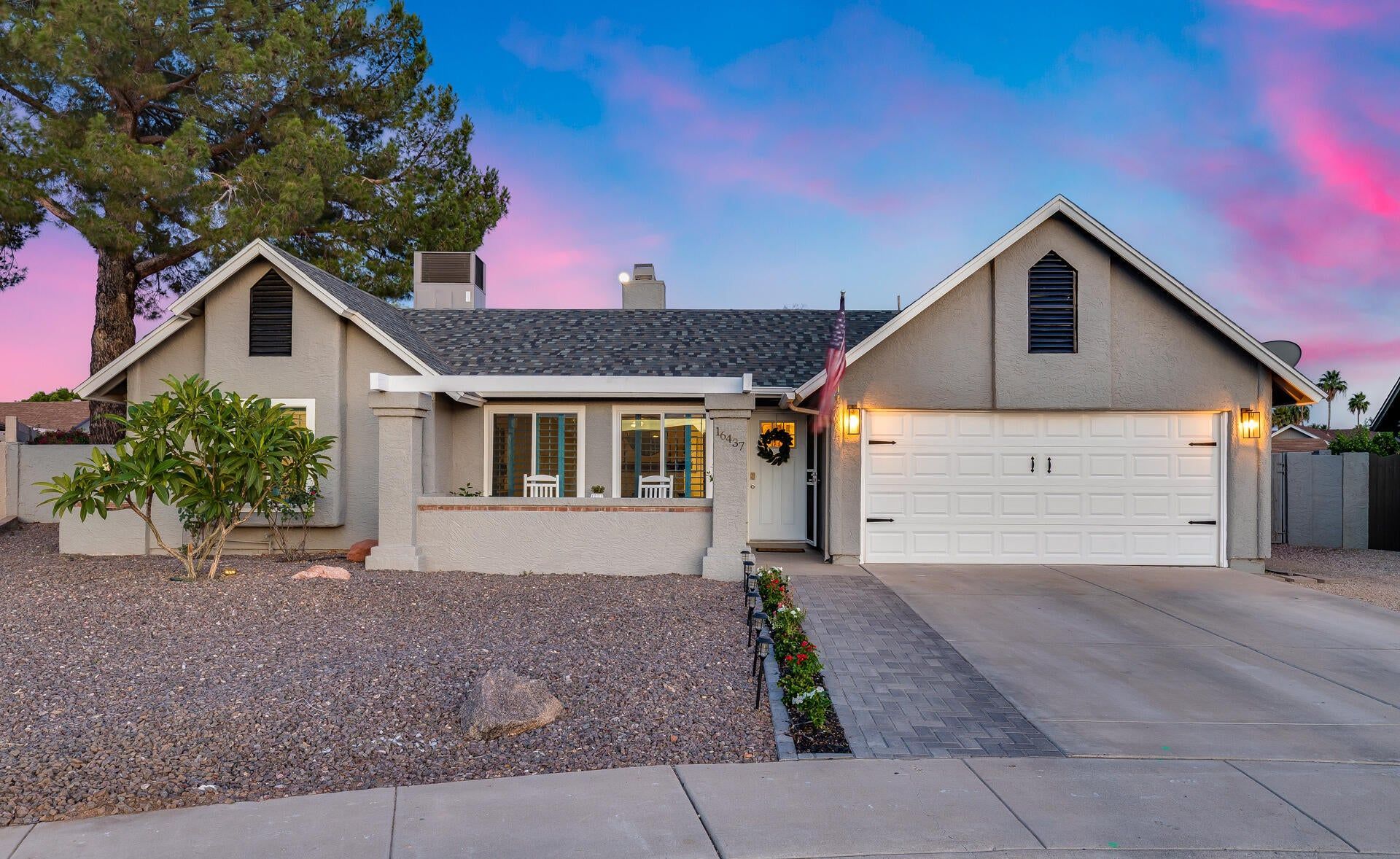
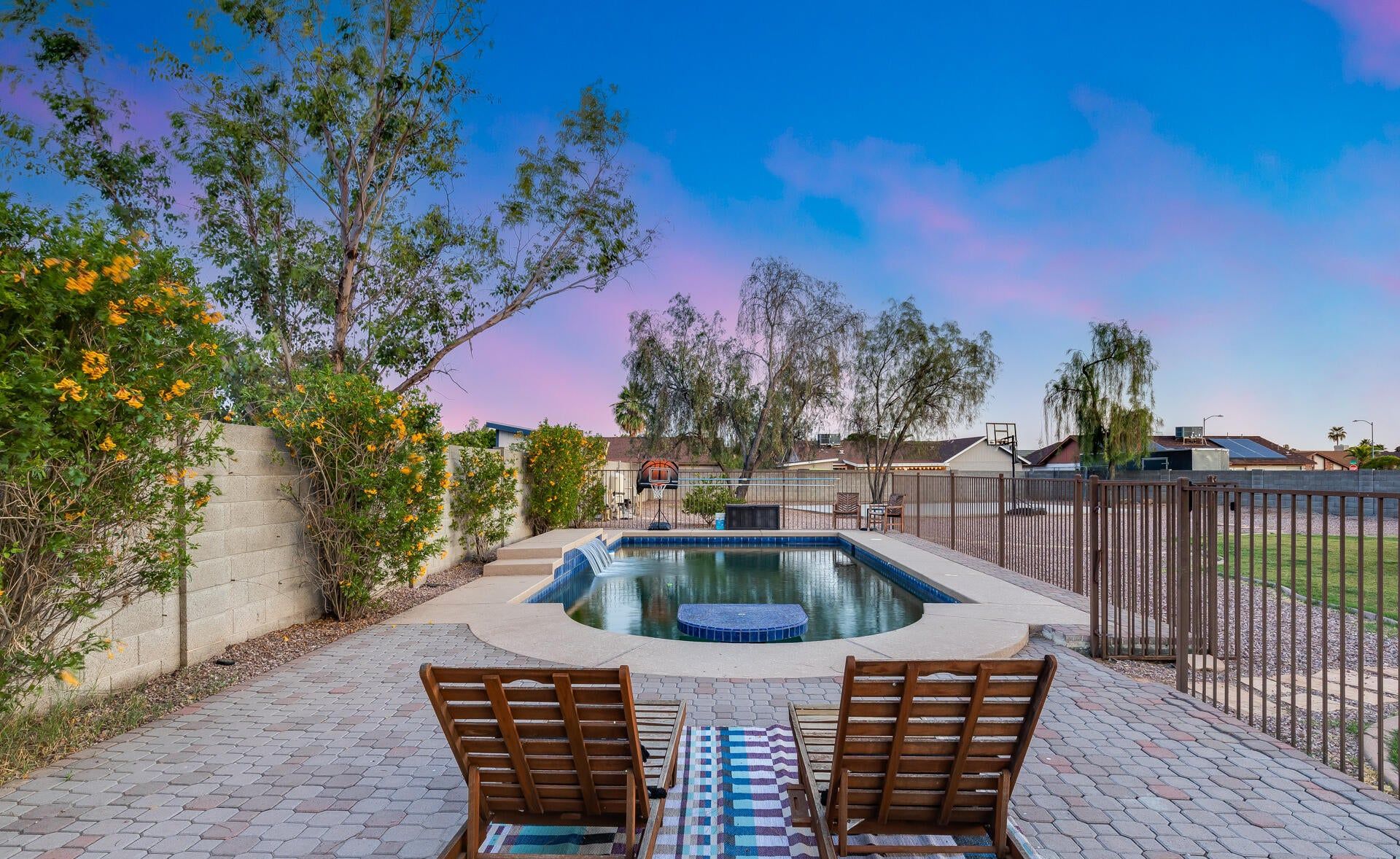
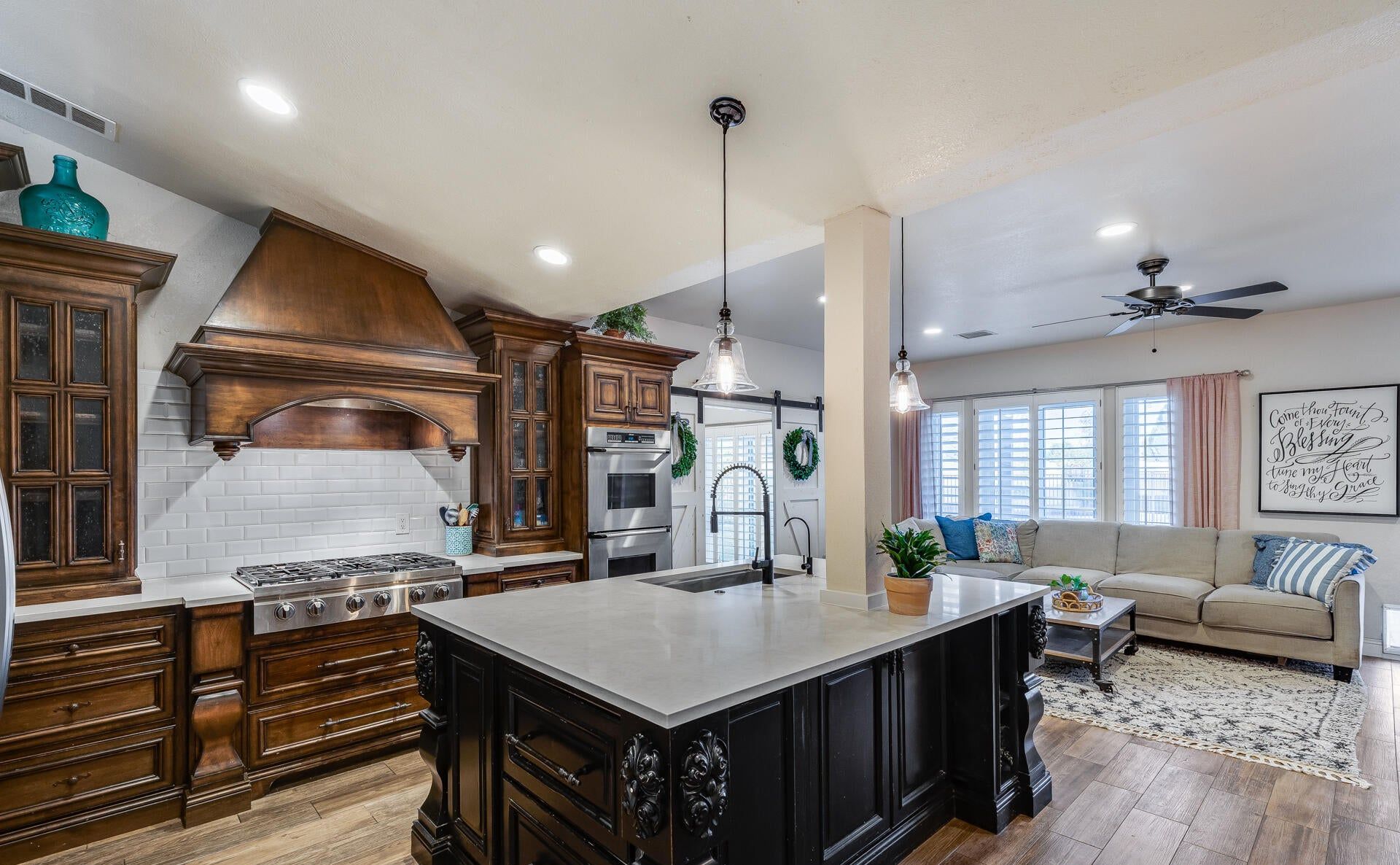
16437 N 61st Ave, Glendale AZ 85306 · 17,236 sq ft lot · No HOA · Closed $20K under list
Beyond the property itself, moving to Arizona delivered a fundamentally better ownership environment — one that matters when you're planning a multi-decade hold.
No Rent Control
A.R.S. §33-1329 prohibits Arizona municipalities from enacting rent control — unlike California, where local ordinances can cap rents and limit a landlord's ability to respond to market conditions. In Arizona, rent is set by the market. Full stop.
Lower Property Taxes
Arizona effective rates typically run 0.6–0.8% of assessed value on investment properties, compared to California's significantly higher burden on non-primary residences. On a $550,000 property, that difference compounds meaningfully over a 20-year hold.
Eviction Timeline: Weeks, Not Years
In California, a contested eviction can take 12 months or longer — and that's before appeals. In Arizona, the process typically resolves in 3–5 weeks. For a landlord planning a multigenerational hold, this difference in legal exposure is significant.
Landlord-Friendly Law
Arizona statutes broadly favor property owners. There are no just-cause eviction requirements, no mandatory relocation assistance, and no local ordinances that can override state law. What you own, you control.
Stable Insurance Costs
Phoenix sits outside major hurricane, flood, and wildfire corridors. Insurance costs are predictable — increasingly relevant as California premiums surge and some carriers exit the state entirely in fire-prone areas.
Lower State Capital Gains
Arizona's flat 2.5% capital gains rate vs. California's 13.3% — relevant if the grandsons ever decide to sell rather than hold. That's a 10.8 percentage point difference on any future gain, on top of the deferred gain already eliminated by the step-up.
The Team Behind the Strategy
What Made This Work: Coordination Before the Sale
A 1031 exchange built around an estate plan requires the right professionals involved well before the California property hits the market. This wasn't assembled after the fact.
Qualified Intermediary
Engaged before the California property was listed. All sale proceeds held in a segregated, FDIC-insured account. Both the 45-day identification and 180-day closing deadlines were tracked and met without exception.
CPA
Modeled all three scenarios before listing — putting a real dollar figure on what Scenario A would cost and confirming the depreciation recapture calculation. The decision to exchange wasn't intuition. It was a spreadsheet reviewed with a tax advisor first.
Estate Attorney
Addressed how the Arizona property should be held and how the transfer to the grandsons would be structured to maximize the step-up in basis benefit. The property's titling and trust structure were designed with the inheritance in mind from day one.
The real estate transaction was the vehicle. The CPA and estate attorney built the engine. Getting all three coordinated — before the California listing, not after — is what made the outcome possible.
The Full Scorecard
* Based on IRC §1014 under current law. IRC §1031 was preserved in the One Big Beautiful Bill, July 2025. Tax outcomes depend on individual circumstances and applicable law at time of transfer. This is not tax, legal, or estate planning advice — consult a qualified CPA and estate attorney.
Every Stakeholder Won
The grandsons are in their 30s today — established enough to appreciate what's being handed to them, young enough to hold that property for another generation if they choose. When the time comes, they won't inherit a tax problem. They'll inherit a clean asset, a paid-off step-up, and the kind of head start that most families never get to engineer. That's what this plan was always about.
This is what a 1031 exchange looks like when it's treated as a financial planning tool — not just a real estate transaction.
"We had the absolute pleasure of working with Eric during one of the most challenging and unique real estate situations we've ever faced — and we couldn't have asked for a better guide. What truly sets Eric apart is his dedication and calm approach. He took the time to fully understand our needs and the complexities of our case, then navigated each hurdle with thoughtful strategy and reassuring confidence. At every step, he kept us informed, advocated for us, and made us feel like we were his top priority. Thanks to Eric's tenacity and deep knowledge of the market, we not only got through a tough situation — we ended up with results that exceeded our expectations. He's not just a great realtor, he's someone you genuinely want by your side when things get complicated. He's a rare gem in the business, and we're incredibly grateful to have worked with him."
Verified Client · 1031 Exchange + Estate Strategy · California → Arizona
The Step-Up Approach Isn't for Every Situation
This strategy works best when the holding timeline is long, the property is meant to stay in the family, and a CPA and estate attorney are involved from the beginning. Every situation is different — the numbers above reflect this specific transaction and should not be applied to another without professional analysis.
If you're holding a California or out-of-state rental property and thinking about what the next chapter looks like — for yourself and for the people who matter most — reach out and we'll walk through the specifics together.
- Complete 2026 Phoenix 1031 Exchange Investor Guide
- 1031 Exchange Near TSMC — $110K Below List in North Phoenix
- California Multifamily → Two Arizona Rentals: Vistancia + Verrado
- Short-Term Rental Tax Strategy: Bonus Depreciation to Offset W-2 Income (2026)
- Palm Valley Basement + Casita STR — Bonus Depreciation Case Study
- Scottsdale 85254 Turn-Key STR — Bonus Depreciation Case Study
- Short-Term vs Mid-Term Rentals in Phoenix: Taxes, Risk, and Investment Strategy
Some wins you see coming.
Others you have to create.
16437 N 61st Ave, Glendale AZ 85306 · 1031 Exchange · IRC §1031 + §1014 · Multigenerational Estate Strategy
The strategy described in this post involves tax law, estate planning law, and real estate law — all subject to change. Step-up in basis rules are governed by IRC §1014 under current law. Nothing here constitutes tax, legal, or estate planning advice. Always consult a qualified CPA, tax attorney, and estate planning professional before implementing any tax or estate
Categories
- All Blogs (321)
- Active Adult & 55 Plus Communities (16)
- Arizona Relocation Guides (30)
- Buyers (211)
- Financial Planning (60)
- General Real Estate (139)
- Income From Real Estate (59)
- Market Update (26)
- New Construction (28)
- News, Updates and Coming Soon (57)
- Real Estate Agent Financial Planning (22)
- Real Estate Investing (94)
- Sellers (106)
- Vacation and Short Term Rentals (45)
Recent Posts






About the Author
Eric Ravenscroft is a Top 1% REALTOR® across North America and one of Arizona’s most trusted real estate strategists. With 15 years of experience spanning real estate, wealth management, and investment planning, he helps clients make smarter, financially grounded decisions, from new construction and relocations to STR investments, 1031 exchanges, and long-term portfolio strategy.
Eric’s expertise has earned him industry recognition, Elite status with Real Broker, and features in major publications including the Wall Street Journal, MarketWatch, MSN, and Morningstar. Clients across the Greater Phoenix Metro rely on his clarity, strategic insight, and results-driven guidance.
Ready to make a confident real estate move? Call or text Eric today.