
House Hacking Phoenix: How We Cut a $5,000 Mortgage to $1,700/Month
House Hacking Phoenix:
How We Cut a $5,000 Mortgage
to $1,700/Month.
A real deal. A real address. Real numbers. How one couple unlocked one of Downtown Phoenix's most coveted neighborhoods — and cut their housing cost by 66% without a single renovation.
They Wanted Scottsdale.
They Found Something Better.
Every week, buyers come to us with the same problem: they know the neighborhood they want, the lifestyle they're after — but when they run the numbers on a standard single-family home in Phoenix's most desirable corridors, the payment feels impossible.
In 2026, the median mortgage payment on a move-in-ready home in North Scottsdale or North Phoenix approaches $5,000/month. For most buyers, that isn't just a stretch — it's a deal-breaker.
But here's what most buyers never consider: the payment on a property is only one variable. The income the property generates is another — and when you optimize for both at once, an entirely different category of opportunity opens up.
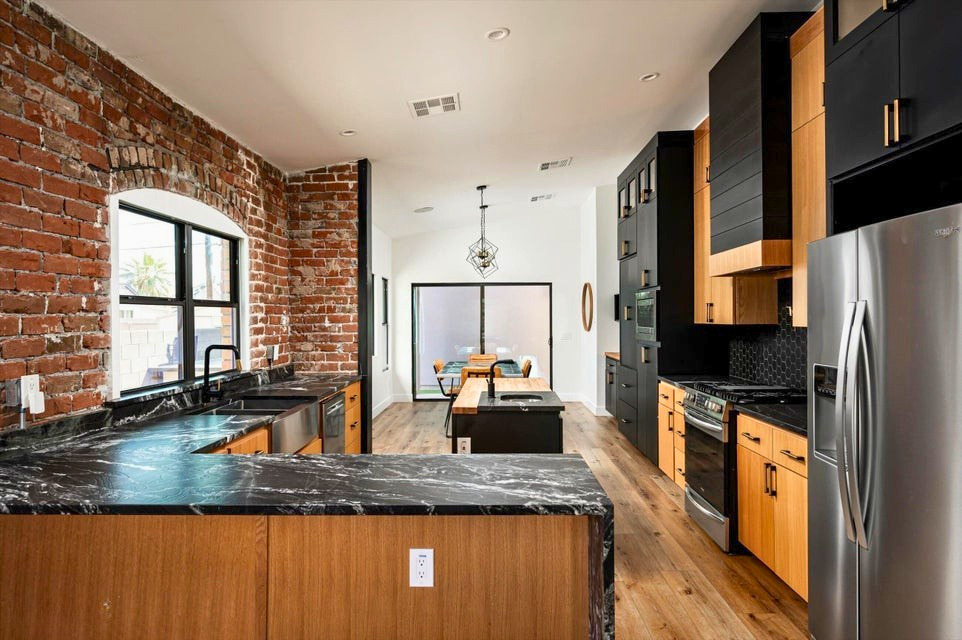
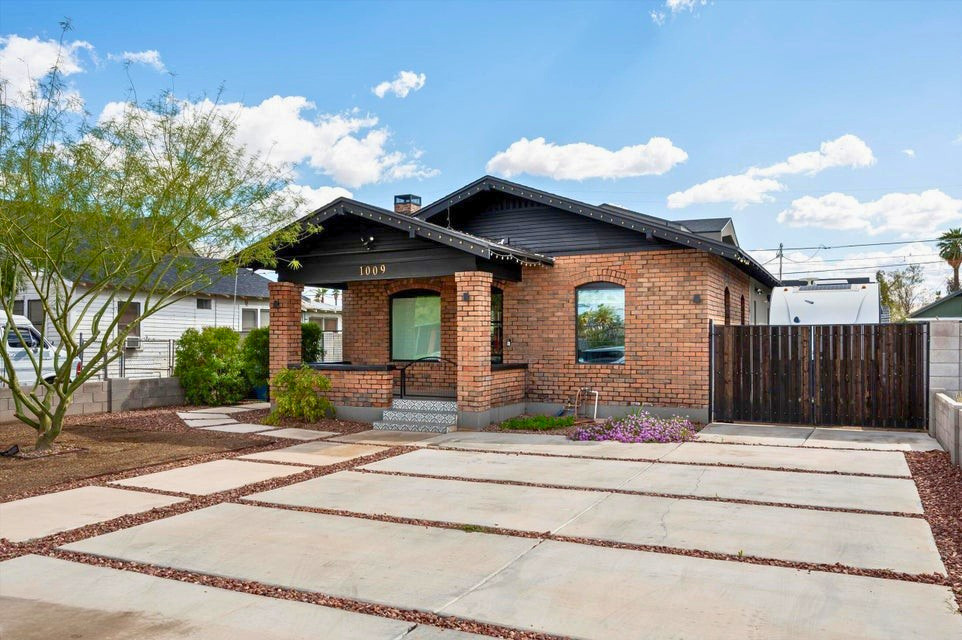
That's exactly what happened with this couple. They started in North Scottsdale. They ended up at 1009 E Garfield Street — in the heart of Downtown Phoenix's Garfield Historic District — at a property that didn't just meet their lifestyle goals. It effectively paid for itself.
"The goal wasn't to find a cheaper home. It was to find a smarter one."
The Ravenscroft Group · Strategy BriefWhat follows is the full story: the strategy, the property, the numbers, and a complete framework for applying the same approach wherever you're searching.
What Is Live-In Leverage?
Live-in leverage is the deliberate use of a multi-unit primary residence to generate rental income that offsets your mortgage. You live in one unit. Tenants occupy the others. Their rent reduces — sometimes eliminates — your monthly housing cost.
It's often called house hacking, but that term undersells what's happening. House hacking sounds like a workaround. Live-in leverage is a wealth strategy — one that treats your home not just as a place to live, but as the first income-producing asset in your portfolio.
Live-In Leverage vs. House Hacking in Phoenix: What's the Difference?
House hacking in Phoenix typically refers to any arrangement where a homeowner rents out part of their property to reduce housing costs — including renting spare bedrooms, basement suites, or accessory structures. It's a broad term with a broad range of results. Live-in leverage is a specific, higher-yield version: it targets properties with fully independent, self-contained units — guest houses, detached offices, casitas — that can each be leased at full market rent to unrelated tenants. The difference in income, privacy, and management complexity is significant. A spare bedroom might net $700/month; a self-contained guest house in the Garfield District nets $2,300/month. Same concept, very different execution.
Buy a multi-unit property as your primary residence
ADU with guest house, detached office, carriage house, or duplex — any property with two or more independently rentable spaces on one lot.
Live in the main unit, qualify for owner-occupied financing
Better interest rates, lower down payments than investment loans. FHA allows 3.5% down on properties up to four units when you occupy one.
Rent the additional units at market rate
Tenant income reduces your net housing cost. Depending on property and market, you can drop your effective payment by 30%, 50%, or more.
Build equity while you live — accelerated by tenant income
Your tenants help pay down your mortgage. Monthly net worth growth is faster than a traditional purchase precisely because you're paying less out of pocket.
The Property: 1009 E Garfield St
After pivoting from North Scottsdale, the search moved inward — to Downtown Phoenix's Garfield Historic District. Blocks from Roosevelt Row. Walking distance from Gallo Blanco and some of the city's most celebrated dining. Light rail at Roosevelt/Central Ave. And critically: a neighborhood where ADU-permissive zoning makes live-in leverage not just possible, but optimized.
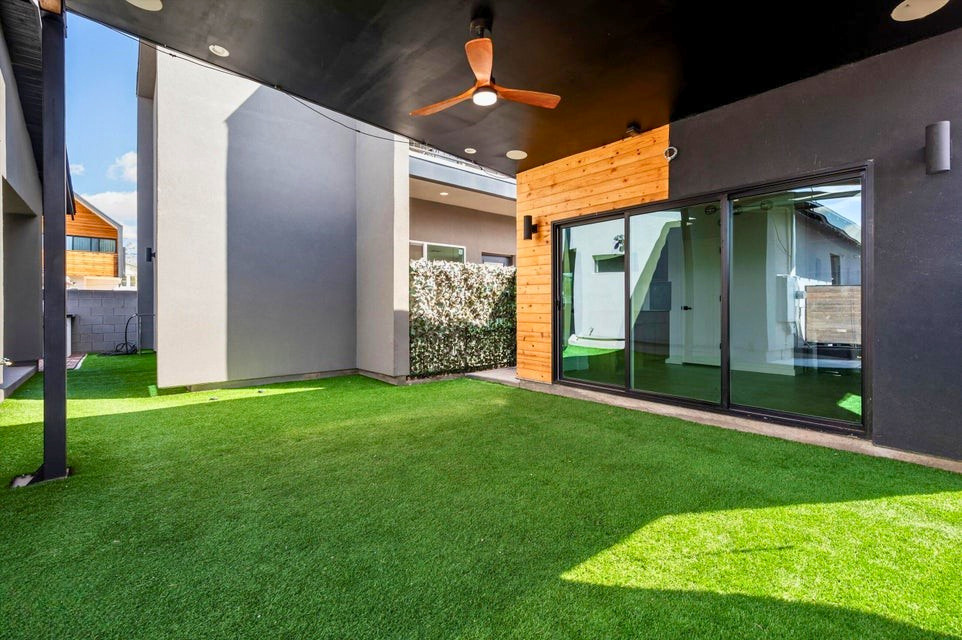
The property offered three distinct, independently leasable spaces on a single lot — the configuration that turns a standard mortgage into a cash-flow engine.
Why the Garfield Historic District?
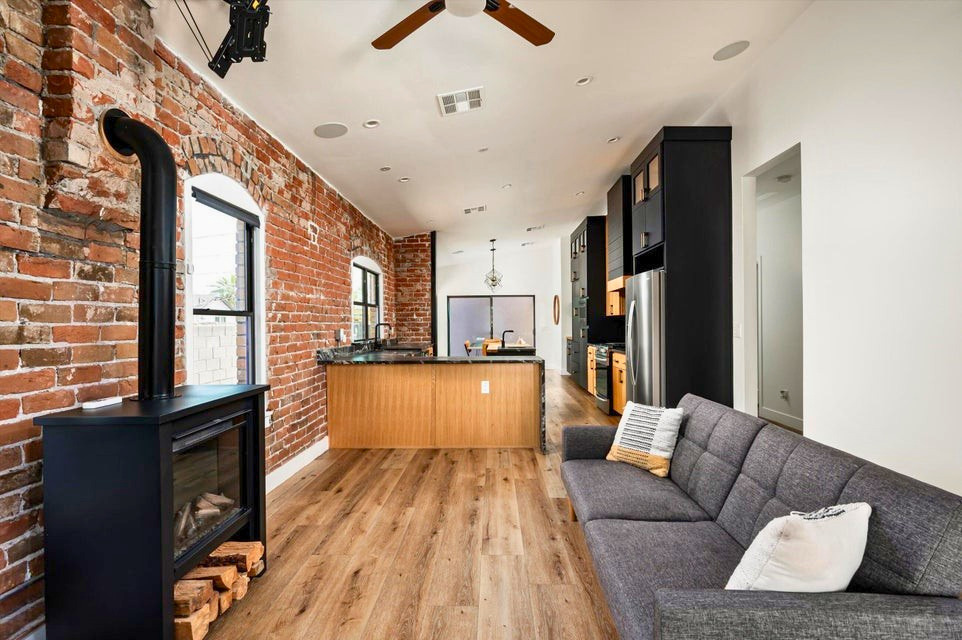
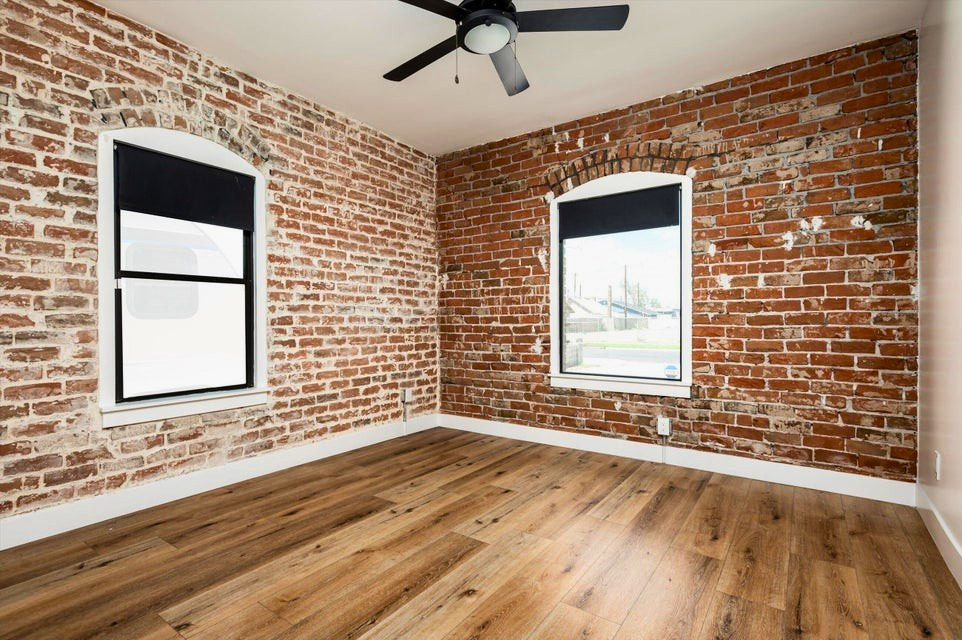
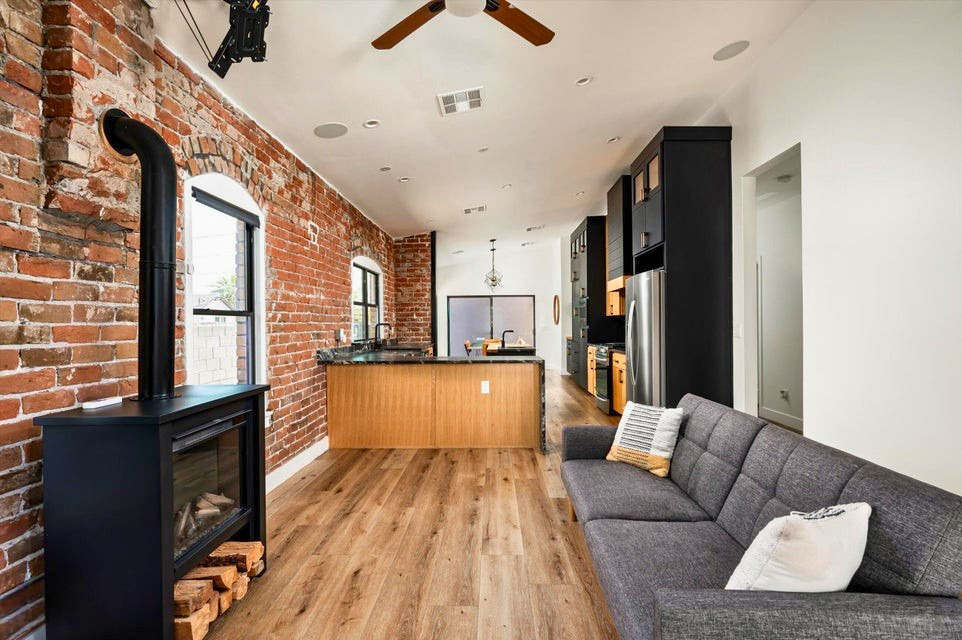
The Garfield District isn't just a good neighborhood — it's in the middle of a once-in-a-generation transformation. The exposed brick and original 1920s character you see in this property aren't liabilities. They're premium rental assets.
- Roosevelt Row adjacency. Blocks from Phoenix's premier arts and dining corridor. Tenants pay a real premium for walkable urban character.
- Light rail access. Roosevelt/Central Ave station provides car-optional living — a genuine rental premium in a car-dependent city.
- ADU-permissive zoning. Phoenix actively reformed infill zone regulations. Garfield allows fully legal, independent leases on separate structures within one lot.
- Historic character commands above-market rents. Exposed brick, original details, and mature landscaping rent for more per square foot than comparable new construction.
- Strong rental demand, low vacancy. Downtown Phoenix growth — ASU, tech expansion, hospitality — keeps vacancy tight and rents rising.
- Urban infill appreciation upside. Garfield-adjacent neighborhoods have consistently outperformed suburban Phoenix in appreciation during city growth cycles.
Interested in what other multi-unit and investment opportunities look like in the Phoenix Metro right now? Explore The Ravenscroft Group's investment property resources or learn more about Eric's approach.
The Real Numbers. No Fluff.
This is the section most real estate content skips. We won't.
Annualized — the full picture
- $39,600 / year in gross rental income — from two units on the same lot they live on.
- $20,400 / year effective housing cost vs. $60,000 gross — a $39,600 annual difference.
- 66% reduction in effective monthly housing cost — the equivalent of two free months of housing, every month.
- Equity building in a high-growth urban corridor while tenants help pay down principal.
Stress-tested scenarios
- One month vacancy / year on the guest house — effective monthly cost rises to ~$1,975. Still dramatically below the gross mortgage.
- Both units vacant one month each — effective cost ~$2,250/month. Still 55% below the gross payment.
- 8–10% maintenance reserve (~$264–$330/month) is standard practice and still leaves the strategy solidly favorable.
Why ADU Laws Are Changing Everything Right Now
The live-in leverage strategy isn't new — but its accessibility in 2026 is at an all-time high, thanks to sweeping ADU (Accessory Dwelling Unit) legislation across the Sun Belt.
What Counts as an ADU?
Any secondary dwelling unit on a single residential lot — detached or attached, newly built or pre-existing. Phoenix's updated code now permits multiple ADU types in infill zones like Garfield.
What's Changed in Arizona — 2024 to 2026
Arizona's ADU reform has been among the most aggressive in the Sun Belt. Key legislative changes affecting Phoenix homeowners — sourced from the City of Phoenix Planning & Development Department:
- Owner-occupancy requirements removed. Arizona law now prevents municipalities from requiring owners to live on-site to rent an ADU.
- Streamlined permitting. Most ADU applications in Phoenix can be approved administratively — cutting months from the timeline.
- Reduced setback restrictions. Minimums for detached ADUs have been reduced in urban infill zones, qualifying more properties than ever.
- Utility separation allowed. ADUs in permitted zones can have separate meters — critical for independent leasing at market rate.
For FHA multi-unit financing guidelines, see HUD Single Family Housing Policy Handbook 4000.1. For rental income tax treatment, refer to IRS Publication 527 — Residential Rental Property.
STR vs. MTR vs. LTR: Which Model Is Right?
One of the most valuable aspects of live-in leverage is flexibility. You control the rental model — and you can shift between them as the market and your life evolve.
- Highest nightly rate (150–200% of LTR income)
- Flexibility to use the unit personally
- Income spikes during Phoenix events and high season
- Easier pivot if circumstances change
- Active management: turnover, cleaning, listings
- Phoenix STR regulations require permits + tax remittance
- Seasonal softness — Phoenix summers affect demand
- HOA restrictions may apply
Mid-Term Rental (30–90 days) — The Sweet Spot in 2026
Mid-term rentals have emerged as the highest-yield, lowest-hassle model for ADU owners in urban Phoenix. Demand comes from traveling nurses, consulting professionals, and relocating tech workers — paying above long-term-rental rates with minimal management overhead. Phoenix's ASU Downtown campus and Banner Health expansion have made the Garfield corridor particularly strong for this model.
Long-Term Rental (12+ months)
The most predictable and passive of the three. A qualified long-term tenant creates stable, forecastable income with minimal ongoing involvement. This is the approach used at 1009 E Garfield — the right choice for owners who want income certainty over income maximization.
Where This Strategy Thrives in 2026

Phoenix is strong, but it's not the only market. Live-in leverage works wherever three conditions converge: ADU-permissive zoning, strong rental demand, and a meaningful gap between gross housing cost and achievable rental income.
The Full Picture: Pros, Cons & What to Know
- Dramatically lower net housing cost from day one
- Equity builds faster — tenants help pay your mortgage
- Owner-occupied rates beat investment property loans
- Income buffers payment pressure in high-rate environments
- Flexible — pivot STR / MTR / LTR as conditions shift
- Lower risk than flipping — no renovation deadline pressure
- Portfolio foundation — equity + experience for next move
- Requires a landlord mindset — management is ongoing
- Multi-unit inventory is limited; proactive search essential
- Lenders assess ADU income differently — strategy matters
- Zoning must be verified property by property
- Privacy considerations — proximity to tenants is real
- Rental income is taxable; structure with a CPA
The Qualifying Questions
- Are you comfortable being a landlord? Even with a property manager, you're responsible for tenant experience. Factor this in honestly.
- Can you qualify on the gross mortgage? Lenders may not count projected rental income in full. You need to carry the payment if units go vacant.
- Are you targeting the right neighborhoods? Live-in leverage requires strong rental demand. Location discipline matters even more here than in a traditional purchase.
- Do you have the right team? A multi-unit buyer's agent, an ADU-savvy lender, and a local property manager are all critical to execution.
How to Execute: A Step-by-Step Framework
Define your target net cost first
Start with what you want to pay — not the gross mortgage. If your target is $1,500–$2,000/month out of pocket, work backward to find the rental income requirement and property profile that delivers it.
Research ADU-permitted zones in your target market
Not all neighborhoods qualify. Request a zoning map overlay from your agent and focus on infill urban zones with ADU reform in place. In Phoenix: Garfield, Willo, key Downtown corridors.
Run rental comps before making an offer
Pull comparable rents for every unit before you fall in love with the deal. Conservative income estimates beat optimistic ones every time.
Get pre-approved with ADU income in mind
Work with a lender who knows how to underwrite ADU rental income. Conventional, FHA, and portfolio lenders all handle this differently — your pre-approval strategy directly affects buying power. Eric's team can connect you with ADU-specialist lenders in the Phoenix market.
Verify zoning and leasing legality before your contingency expires
Confirm each unit can be leased independently. Review lease templates, confirm utility separation, verify no HOA restrictions. Do this before your contingency window closes.
Line up tenants before or at closing
The best deals generate income from day one. If units are vacant, market them aggressively during escrow — don't carry the full mortgage for even one unnecessary month. See our guide to STR and investment property strategy in Phoenix for rental prep resources.
Frequently Asked Questions
What is live-in leverage, and how is it different from house hacking?
How much can live-in leverage actually reduce my mortgage payment?
Is this strategy legal in Phoenix, Arizona?
Can I use an FHA loan for a live-in leverage property?
Do I need to renovate to make this strategy work?
How is rental income taxed in a live-in leverage setup?
What's the difference between a long-term, mid-term, and short-term rental for an ADU?
What happens if my tenant stops paying or I need the unit back?
How do I find multi-unit properties like this in Phoenix?
Can I eventually move out and rent all three units?

Eric Ravenscroft is a Top 1% real estate professional across North America, ranked in the Top 100 in the Greater Phoenix Metro, and the owner of The Ravenscroft Group with Real Broker. With 15 years of combined experience in real estate, financial planning, and wealth management — including a prior role as a Director of Wealth Management — Eric brings a uniquely analytical, strategy-driven approach to every transaction in the Greater Phoenix Metro.
He has closed more than $100 million in residential sales, helped clients create over $133 million in long-term wealth, and earned 150+ five-star Google reviews. Eric is a preferred real estate partner for USAA, Chase, SoFi, PennyMac, Citibank, RBC, and HomeStory. He specializes in new construction, relocations, STR investments, multi-unit strategy, and active-adult communities across Scottsdale, Phoenix, Goodyear, Peoria, Chandler, Gilbert, and the broader Valley.
Ready to Run Your Own Numbers?
Real numbers, real strategy, no pressure. Eric builds your live-in leverage scenario from scratch — free.
Categories
- All Blogs (321)
- Active Adult & 55 Plus Communities (16)
- Arizona Relocation Guides (30)
- Buyers (211)
- Financial Planning (60)
- General Real Estate (139)
- Income From Real Estate (59)
- Market Update (26)
- New Construction (28)
- News, Updates and Coming Soon (57)
- Real Estate Agent Financial Planning (22)
- Real Estate Investing (94)
- Sellers (106)
- Vacation and Short Term Rentals (45)
Recent Posts








About the Author
Eric Ravenscroft is a Top 1% REALTOR® across North America and one of Arizona’s most trusted real estate strategists. With 15 years of experience spanning real estate, wealth management, and investment planning, he helps clients make smarter, financially grounded decisions, from new construction and relocations to STR investments, 1031 exchanges, and long-term portfolio strategy.
Eric’s expertise has earned him industry recognition, Elite status with Real Broker, and features in major publications including the Wall Street Journal, MarketWatch, MSN, and Morningstar. Clients across the Greater Phoenix Metro rely on his clarity, strategic insight, and results-driven guidance.
Ready to make a confident real estate move? Call or text Eric today.