
What Out-of-State Buyers Need to Know Before Buying in the Phoenix Metro
What Out-of-State Buyers Need to Know
Before Buying in the Phoenix Metro
From Scottsdale to Gilbert, Chandler to Peoria — the complete playbook for buying in the Valley from hundreds of miles away, with live 2026 market data.

With over 15 years guiding buyers and sellers through every Phoenix Metro market cycle since 2010, I've seen this market at its most frenzied and at its most balanced. I've helped hundreds of out-of-state buyers — from California families chasing top school districts in Gilbert, to Chicago remote workers landing in Chandler, to Midwest retirees who needed the full summer heat warning before committing. This guide reflects what I tell every relocation client before they set foot — or log on — to search the Valley. Recognized among the top 1% of agents nationwide, everything I know about what surprises people and what makes the difference between a great purchase and a costly mistake is in here.
The Phoenix Metro — known locally as "the Valley of the Sun" — is one of the largest and fastest-growing metro areas in the United States, spanning over 20 distinct cities across Maricopa County. In the past decade I've watched thousands of buyers land here from California, Illinois, Washington, Colorado, and the Midwest — and I've learned exactly where they stumble and where they succeed.
This guide covers everything an out-of-state buyer needs before making one of the biggest financial decisions of their life in the Copper State. I've added real buyer stories, school district data, commute realities, and new construction guidance that most guides skip entirely — because those are the things my clients ask me about every single week.
Why Out-of-Staters Are Choosing Phoenix
The Valley pulls buyers from across the country for reasons that are both financial and lifestyle-driven. Redfin data shows Chicago, Seattle, and Los Angeles as the three biggest feeder markets sending buyers to Phoenix — and it's not hard to understand why.

Compared to Los Angeles, Seattle, or Chicago, a Phoenix purchase can feel like an entirely different financial universe. The metro's job market — expanding in healthcare, technology, logistics, and advanced manufacturing — means relocators aren't just buying a lifestyle, they're landing in a city with real economic momentum.
Top feeder markets sending buyers to Phoenix (2025–2026)
Source: Redfin migration data, Oct–Dec 2025

Real Stories: Buyers Who Made the Move
Nothing I can write replaces hearing from people who have actually done it. Here are stories from buyers I've worked with and others who relocated to the Phoenix Metro — what surprised them, what they wish they'd known, and what they love about their decision.
We moved from the San Francisco Bay Area in early 2025 and bought in Chandler. The purchasing power difference was genuinely shocking — we got a 4-bedroom home with a pool for what a 2-bedroom condo cost us in Sunnyvale. The HOA was stricter than I expected, but the schools are legitimately excellent. My biggest tip: the August heat is real. We visited in July before buying. Do not skip this step.
I'm a remote software engineer and relocated from Chicago. I bought in Gilbert in December 2024 — right when the snowbird market was picking up and sellers were motivated. I closed entirely remotely and never set foot in the house until moving day. The video walkthroughs my agent did were incredibly thorough. I did do one Zoom with the inspector during the inspection, which I'd strongly recommend for anyone buying sight-unseen.
My husband and I retired from Seattle and moved to North Scottsdale in 2025. We'd visited Scottsdale three times over five years before we committed. The lifestyle — golf, hiking, restaurants, warm winters — is everything we wanted. What we didn't fully appreciate was how different the summers feel when you're not just visiting. Now we do what the locals call "snowbirding in reverse" — we spend July and August in the Pacific Northwest with family.
We came from the New York suburbs and knew nothing about HOAs. That was our first mistake — we almost bought a beautiful home in a master-planned community without reading the CC&Rs carefully. Turns out they had a no-short-term-rental clause, and we'd been planning to rent it out for part of the year. Our agent caught it in time. Read. Your. CC&Rs. Every page.
I moved from Denver for a healthcare job and bought in Tempe for its walkability and proximity to my hospital. The commute from Tempe to Banner Health on the 202 is genuinely manageable — 15 minutes off-peak. What surprised me most about buying: the property taxes are so much lower than Colorado. My home is similar in size and price to what I had in Aurora, but I'm paying about 40% less annually in property taxes.
I was skeptical about buying in a state I'd never lived in. I flew out twice, stayed for a week each time in different neighborhoods, and used those trips to really experience the commutes and the grocery runs and the everyday rhythm. Peoria ended up being perfect — affordable, well-run community, easy freeway access to downtown Phoenix. The utility bills in summer were higher than I budgeted, but once I added solar panels the second year, those came down significantly.
2026 Phoenix Metro Market Conditions — Right Now
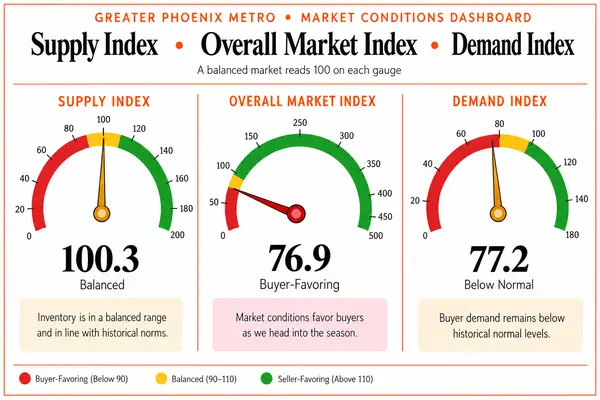
Understanding the current market is the single most important research step before making an offer. Phoenix in spring 2026 is shifting from balanced toward seller-favoring in many submarkets — but the story differs dramatically depending on which city you're targeting.
Sold listings jumped 32.1% from February to March 2026 — the largest month-over-month sales jump in recent memory. Months of supply dropped from 4.42 to 3.34 (a 24% decrease). The absorption rate surged to 29.92%. Active inventory held at ~25,265. Source: ARMLS® STAT Report, March 2026
Market Index by Phoenix Metro City
Index above 110 = Seller's Market | 90–110 = Balanced | Below 90 = Buyer's Market
| City | Market Index | Condition | Median Price | Trend |
|---|---|---|---|---|
| Chandler | 154.5 | Seller's Market | ~$480K | ↑ +5% (4 wks) |
| Fountain Hills | 141.3 | Seller's Market | ~$650K | ↑ Strong |
| Scottsdale | ~130 | Seller's Market | ~$1.0M | ↑ +15% YoY |
| Gilbert | ~125 | Seller's Market | ~$490K | ↑ Steady |
| Mesa | ~115 | Seller's Market | ~$430K | → Flat YoY |
| Phoenix (Central) | ~105 | Balanced | ~$460K | ↓ -5.2% YoY |
| Peoria / Glendale | ~100 | Balanced | ~$390K | → Stable |
| Goodyear / Avondale | ~95 | Balanced | ~$370K | → Flat |
| Buckeye | ~88 | Buyer's Market | ~$340K | ↓ Softening |
Source: The Ravenscroft Group, Greater Phoenix Market Report, March 31, 2026 · Full report
"Our agent in Chandler told us to expect a competitive offer situation, and she was right. We lost two homes before winning on our third offer. We had to move quickly — the Chandler market doesn't wait for out-of-state buyers to think it over."
City-by-City Guide: Where to Buy in the Valley
The Phoenix Metro spans over 9,000 square miles. Choosing the right city for your lifestyle, commute, and budget matters as much as choosing the right home.
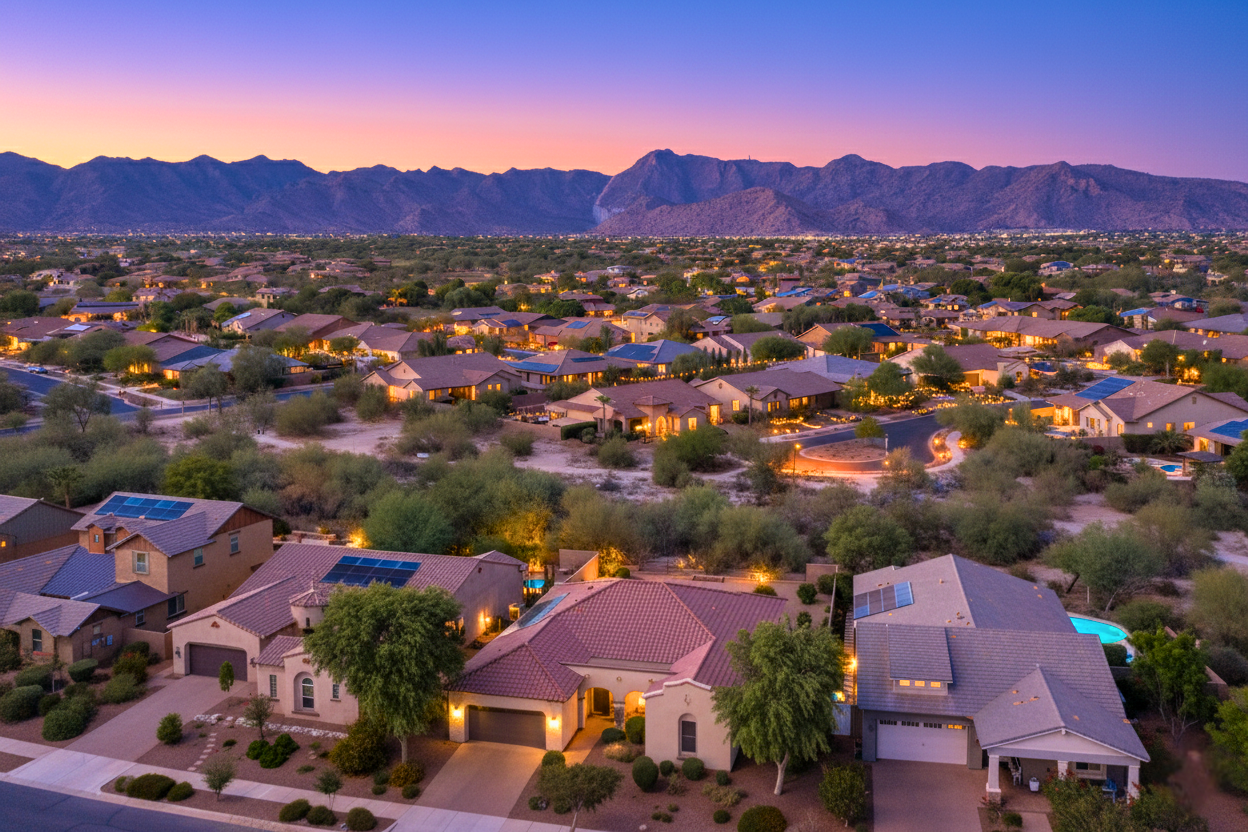
The Valley's premier destination for luxury buyers, retirees, and remote workers. World-class restaurants, resorts, and galleries. HOA communities dominate. Old Town is walkable and vibrant year-round.
Median: ~$1,000,000Currently the most competitive city in the Valley (index 154.5). Home to Intel, Amazon, and PayPal campuses. Top-rated schools. Limited new construction in established areas fuels intense demand.
Median: ~$480,000Consistently ranked one of America's safest cities. Excellent schools (including #1-ranked Gilbert USD), walkable Heritage District, thriving restaurant scene. Beloved by families relocating from California and the Midwest.
Median: ~$490,000Arizona's third-largest city. Diverse neighborhoods from affordable to mid-range luxury. Strong freeway access. Downtown Mesa is undergoing revitalization with arts and dining investment.
Median: ~$430,000Home to Arizona State University and a thriving walkable core. Mill Avenue district, Tempe Town Lake, and light rail access. Popular with young professionals and urban buyers. Best bike infrastructure in the metro.
Median: ~$440,000The Southeast Valley's fastest-growing community. Larger lots, newer homes, master-planned communities. Popular with buyers wanting more space. Longer commute but notable lifestyle trade-offs.
Median: ~$510,000Home to spring training stadiums and the Westgate Entertainment District. More affordable than East Valley with growing amenity base. Good access to I-17 corridor employers and TSMC chip plant jobs.
Median: ~$375,000–$400,000Buckeye is Arizona's fastest-growing city by percentage. Lots of new construction, lower price points, larger lots. A buyer's market right now. Ideal for remote workers who don't need to commute daily.
Median: ~$330,000–$360,000The Valley's most exclusive municipality. No commercial development, large custom lots, mountain views. Golf resort living, Camelback Mountain access. Buyers here are typically cash or jumbo loan.
Median: ~$2,500,000+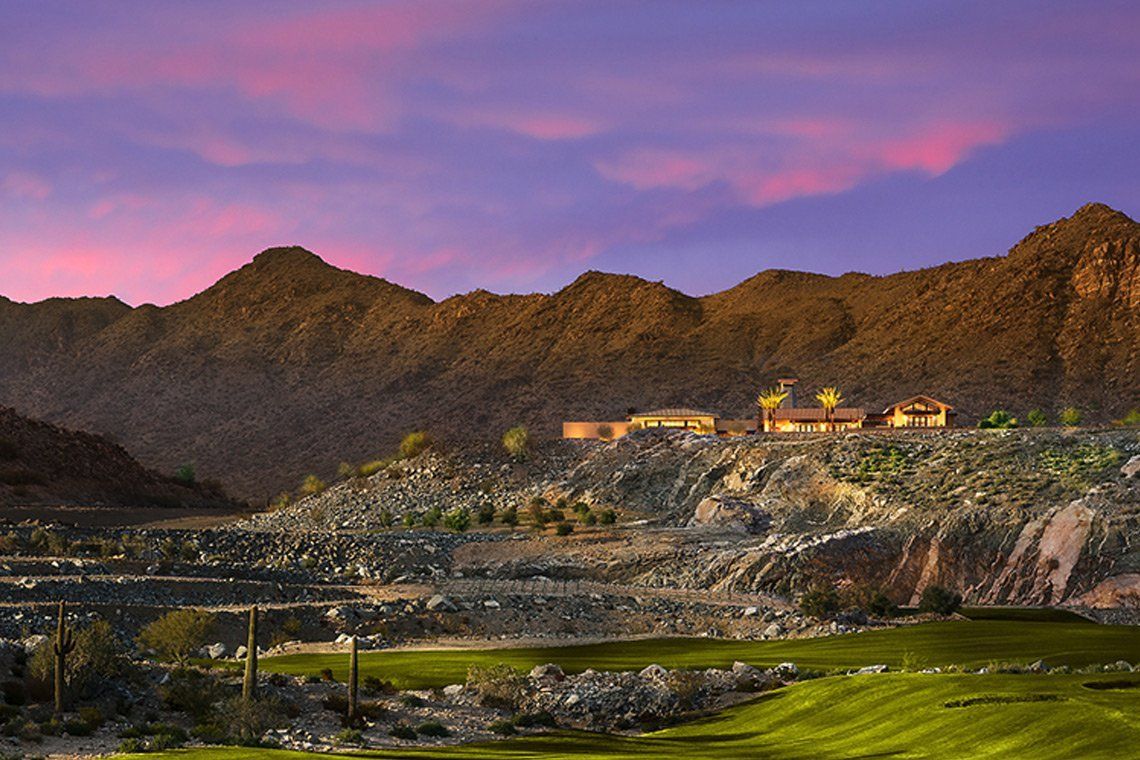
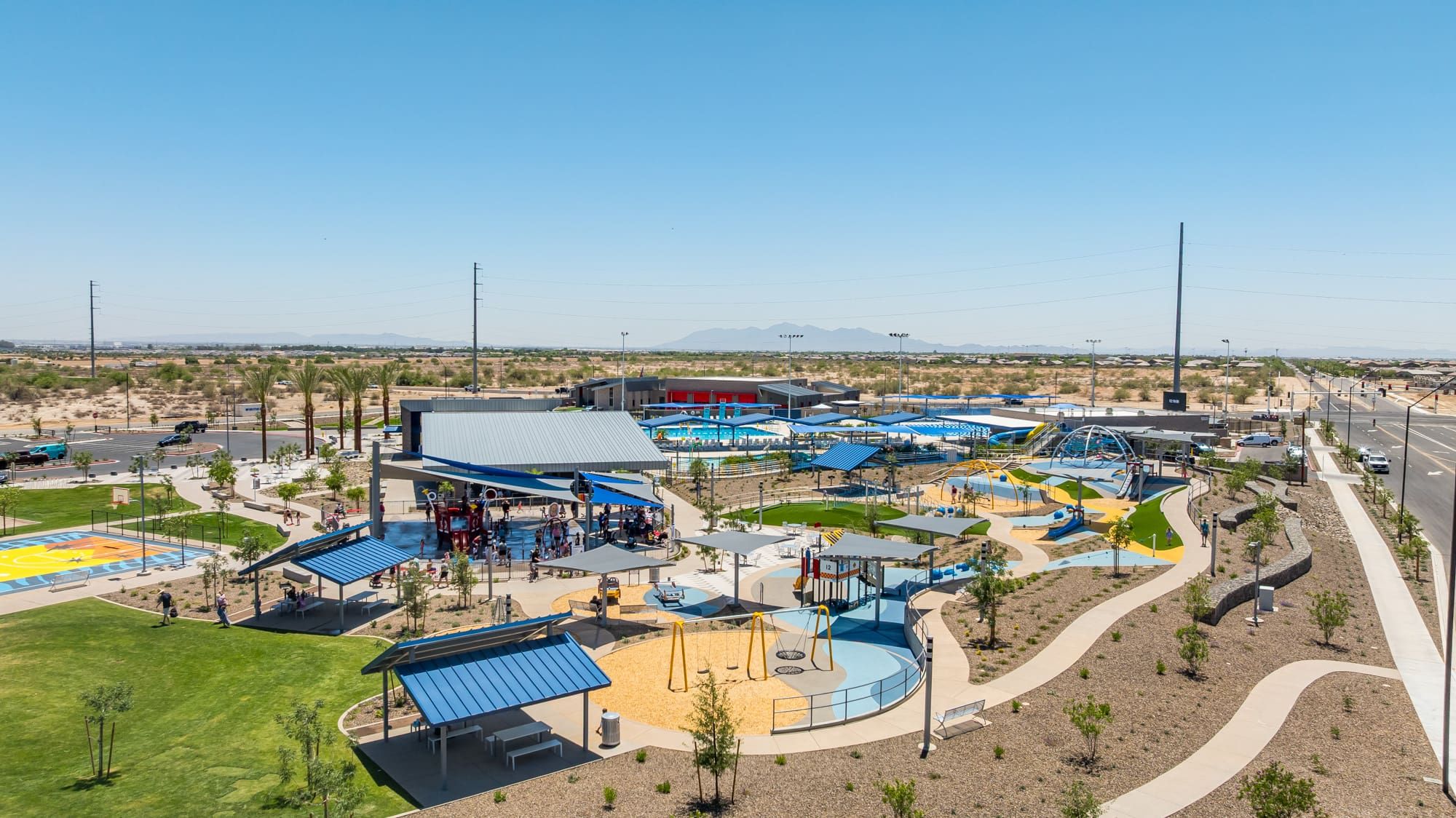
Best School Districts in the Phoenix Metro
"Best school districts in Phoenix" is one of the highest-volume searches from relocating families — and for good reason. School quality varies enormously across the metro. It also drives home values: buying in a top-rated district is one of the strongest long-term resale strategies in Phoenix.
Here are the districts that consistently earn top ratings from Niche.com and state assessments:
In Arizona, school district boundaries do not always match city boundaries. A home in "Gilbert" may fall within Higley USD or even Mesa USD depending on the exact address. Always verify the specific school assignments on the Arizona Department of Education website or GreatSchools.org for any home you're seriously considering — never rely on the city name alone.
"We moved specifically for the Chandler USD schools. Our daughter went from a struggling school in San Jose to a nationally recognized STEM program. That school district alone was worth the move."
Commute & Traffic Reality Check for Out-of-State Buyers
Phoenix is an almost entirely car-dependent metro. Light rail exists (the Valley Metro Rail runs roughly through Tempe, downtown Phoenix, and Mesa) but covers a narrow corridor. If you're coming from Chicago, New York, Seattle, or San Francisco — where mass transit is genuinely viable — you need to mentally shift to a driving-first mindset before choosing where to live.
The two key commute freeways are the 101 Loop (the outer ring, connecting Scottsdale to Tempe to Chandler to Peoria) and the 202 Loop (the inner East Valley connector). Rush hour runs 7–9am and 4–6:30pm. Summer heat doesn't meaningfully slow traffic, but monsoon storms in July–September can cause sudden, severe slowdowns.
Estimated Commute Times to Major Employment Centers
Off-peak estimates. Add 15–30 minutes during morning/evening rush on the 101 and I-10.
Buyers from car-dependent metros often underestimate Phoenix distances because the freeways feel fast — until they don't. If you commute even 2–3 days per week, the difference between a 15-minute and 45-minute drive is 5+ hours weekly. Model your actual commute days, not Google Maps "best case" estimates, before committing to an outer suburb.
"Coming from Denver where I biked to work, the car dependence was the biggest lifestyle adjustment. I've fully adapted now, but I'm glad I chose Tempe for the light rail access — at least I have one real alternative on bad traffic days."
Best Time for an Out-of-State Buyer to Purchase in Phoenix
Phoenix has a real estate calendar unlike most U.S. cities — shaped by extreme summer heat and a "snowbird season" that reverses the typical winter slowdown.
I tell every one of my out-of-state clients the same thing: if you plan to live here year-round, you must spend time here in July or August before you close. Not because of the home — because of what daily life feels like at 112°F. It's not a dealbreaker for most people, but it should be a fully informed decision.
Financing & Closing Costs for Phoenix Home Buyers
Mortgage rates have stabilized in the low-to-mid 6% range as of early 2026, with Fannie Mae projecting rates could fall toward 5.7% by year-end 2026 — a meaningful affordability improvement.
- Get pre-approved before touring anything. Under post-NAR settlement rules, Arizona requires a signed Buyer Representation Agreement before touring homes. Pre-approval is your baseline credential in any competitive Phoenix submarket.
- Closing costs: budget 2%–5% of purchase price. On a $455,000 median Phoenix home, that's $9,100–$22,750. Covers lender fees, appraisal ($230–$367), title insurance, escrow, and recording fees.
- Down payment: 20% recommended to avoid PMI. FHA loans allow 3.5% down; VA loans allow 0% for eligible veterans. PMI is now deductible as mortgage interest starting in 2026.
- Arizona Home Plus Program: First-time buyers may qualify for a 30-year fixed-rate mortgage paired with down payment assistance. Work with an Arizona-licensed lender to check eligibility.
- Use an Arizona-licensed lender. Local lenders understand Phoenix appraisal nuances, close faster, and have existing relationships with local title companies — real advantages in competitive markets.
- SALT deduction cap raised to $40,000 (2025–2029) under the federal tax changes — beneficial for buyers moving from high-tax states who itemize.
"We used our Seattle lender at first, and they were unfamiliar with how Arizona appraisals work in luxury markets. We switched to a local Scottsdale lender mid-process and it made a tangible difference — the closing was smoother and faster."
New Construction vs. Resale in the Phoenix Metro
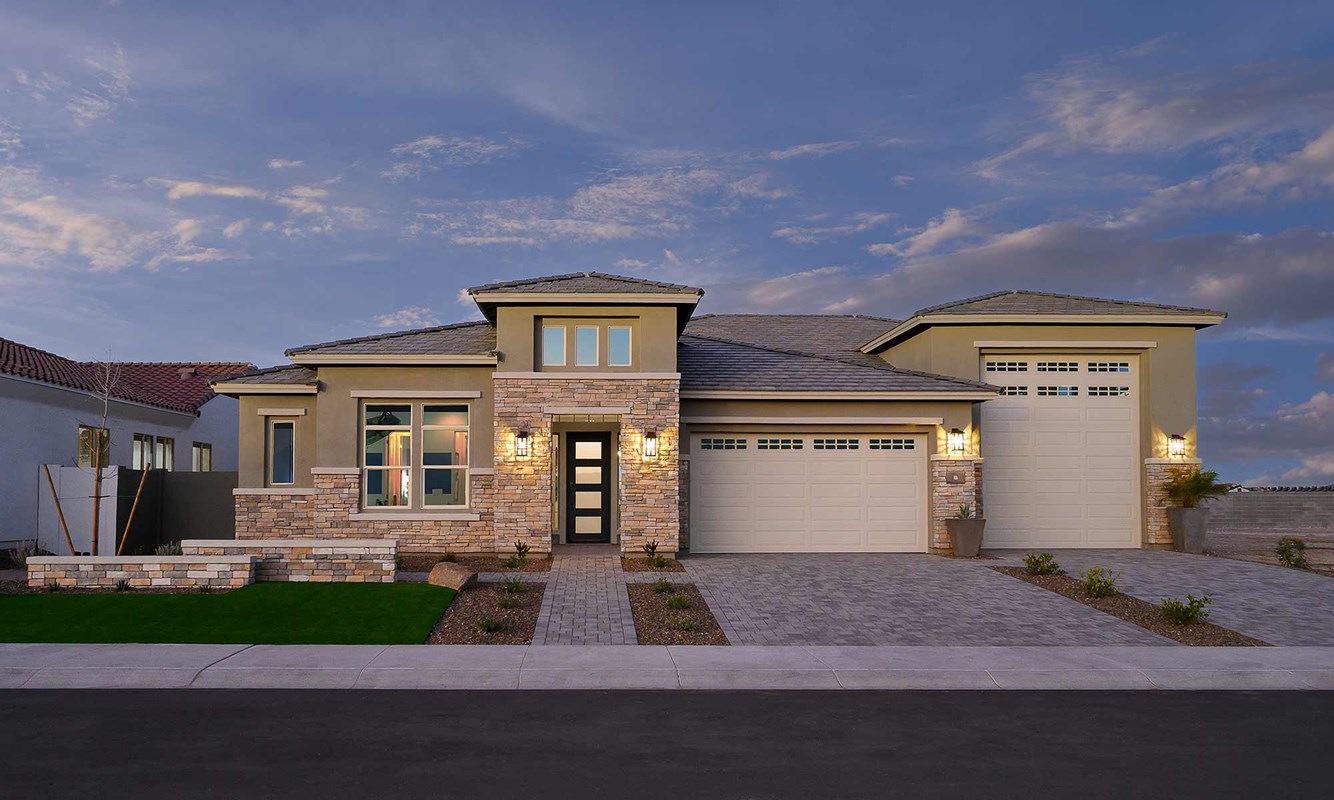
Phoenix is one of the most active new construction markets in the United States. Builders like Toll Brothers, D.R. Horton, Taylor Morrison, and Meritage have significant inventory across the metro — and new construction has unique advantages for out-of-state buyers buying remotely.
- Builder warranties (typically 1-year workmanship, 2-year mechanical, 10-year structural) — critical peace of mind for remote buyers
- Builder incentives active in 2026 — rate buydowns, closing cost credits, free upgrades. Some builders cutting base prices ~6% to attract buyers
- Easier to purchase remotely — design centers, digital portals, and scheduled build updates reduce the need for in-person visits
- Energy efficiency — modern builds meet stricter codes; lower HVAC and utility costs than older resale homes
- No competition — no bidding wars, no appraisal gaps on new builds (builder sets price)
- Trade-off: Often in outer suburbs (longer commutes); lot premiums add up; HOA structures more layered
- Established neighborhoods — mature trees, known community character, proven school attendance zones
- Closer to employment centers — inner-ring cities like Chandler, Tempe, and Mesa have limited new construction; resale is your only option in many desirable areas
- Negotiating power — especially in balanced or buyer-favoring submarkets where sellers are motivated
- Immediate availability — no 6–12 month build wait
- Trade-off: Potential for deferred maintenance; HVAC age matters critically in Phoenix; pool condition requires dedicated inspection; older roofs need careful evaluation
New construction is often the lower-risk path for buyers who cannot be physically present regularly. Builder portals, construction cameras, and scheduled milestone visits make the process more manageable. If you go resale, a thorough inspection with your virtual attendance is non-negotiable.
Property Taxes & State Tax Benefits
Arizona's property tax environment is one of its most compelling advantages. At roughly 0.77% effective rate — well below the national ~1.1% — it consistently surprises buyers from California, Illinois, and New York.
🏠 Property Tax Basics
- Avg. effective rate: ~0.77%
- Properties assessed at fraction of market value
- Primary residents: lower "Limited Property Value" classification
- Non-primary/investment: slightly higher rate
- Veterans with 100% service-connected disability: fully exempt (as of Jan 1, 2026)
- No estate or inheritance tax in Arizona
💡 2025–2026 Tax Law Changes
- Federal SALT deduction cap raised to $40,000 (2025–2029)
- PMI now deductible as mortgage interest (2026)
- City-level rental TPT (30+ days) repealed Jan 1, 2025
- No Arizona tax on Social Security benefits
- Personal Property Tax Exemption raised to $500,000 (Jan 1, 2026)
Establish primary residency promptly if that's your intent. The difference between primary and non-primary tax classification can amount to hundreds or thousands annually on higher-value properties. File with your county assessor after closing. Source: Maricopa County Assessor
"My home in Tempe is similar in value to my Aurora, Colorado home, but I'm paying about 40% less in annual property taxes. That difference alone covers two months of my mortgage payment. It's one of the biggest financial benefits I didn't fully appreciate until I lived it."
Phoenix Metro HOA Laws Every Out-of-State Buyer Must Understand
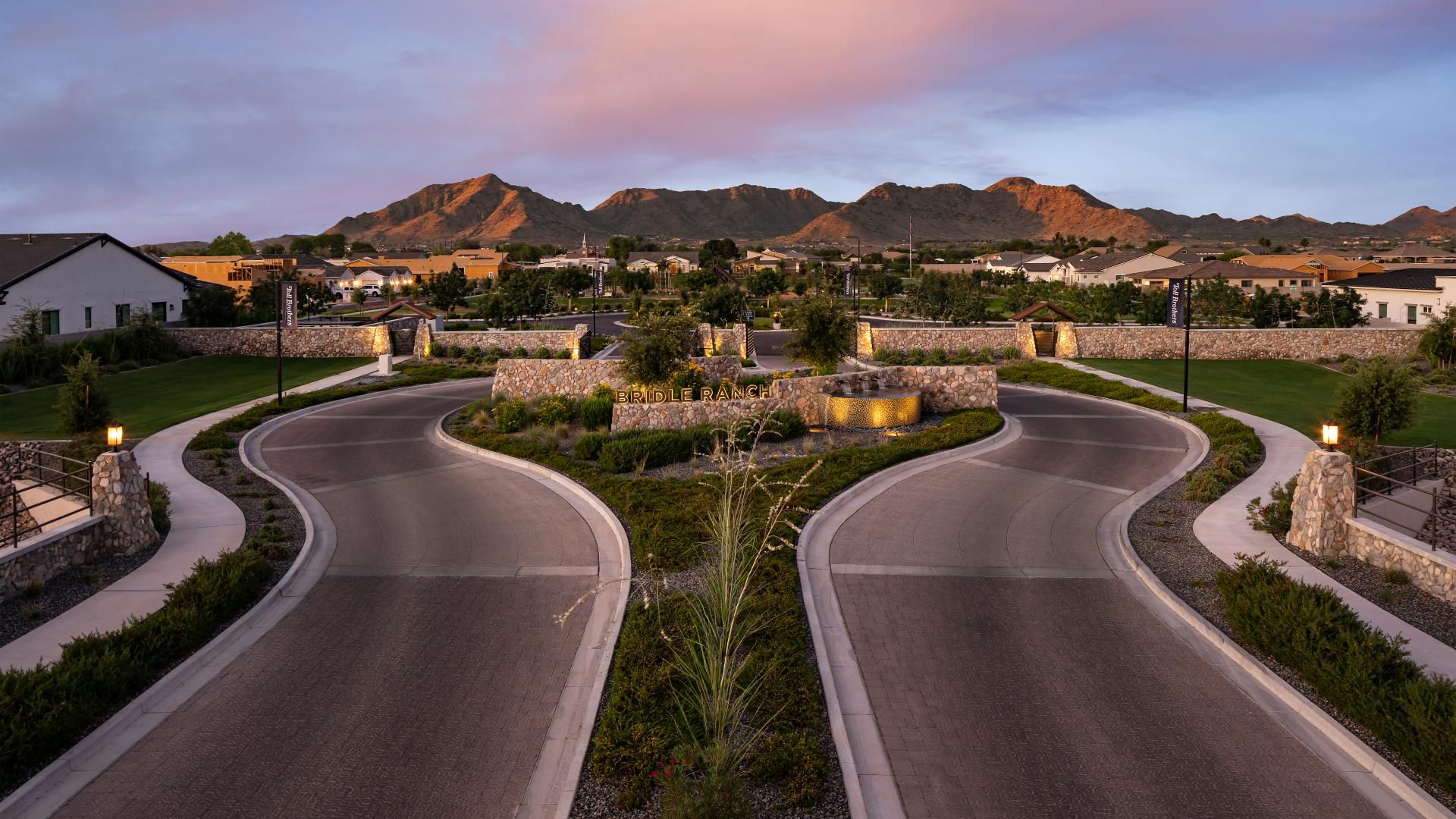
Over 31% of Arizona homes belong to an HOA — one of the highest rates nationally. In planned communities across Chandler, Gilbert, Scottsdale, and Queen Creek, the HOA prevalence is far higher. You will almost certainly buy into one.
What Arizona Law Requires Sellers to Disclose
- The HOA's full governing documents (CC&Rs, bylaws, rules & regulations)
- Current financial statements and reserve fund balance
- Notice of any active or pending litigation involving the HOA
- Outstanding assessments, liens, or compliance violations on the property
- Information about pending or upcoming special assessments
You have a legally mandated review period. Use every day of it. Source: Arizona Revised Statutes §33-1802
2025–2026 HOA Law Changes
| Change | Buyer Impact | Effective |
|---|---|---|
| Foreclosure threshold: $1,200 → $10,000 | HOA cannot foreclose for small unpaid balances | Sept 26, 2025 |
| Delinquency period: 1 year → 18 months | More time before foreclosure proceedings begin | Sept 26, 2025 |
| Open meeting recordings required (6 months) | Request past board recordings before you close — invaluable for vetting governance | March 2025 |
| Late fees capped at $15 or 10% of unpaid amount | Limits aggressive fee stacking | Ongoing (ARS §33-1803) |
"We almost bought a home without reading the CC&Rs because they were 96 pages and we were exhausted from the search. Our agent insisted. It turned out there was a complete prohibition on short-term rentals — which was a core part of our financial plan for the property. We walked away and found a community without that restriction. Read. Every. Page."
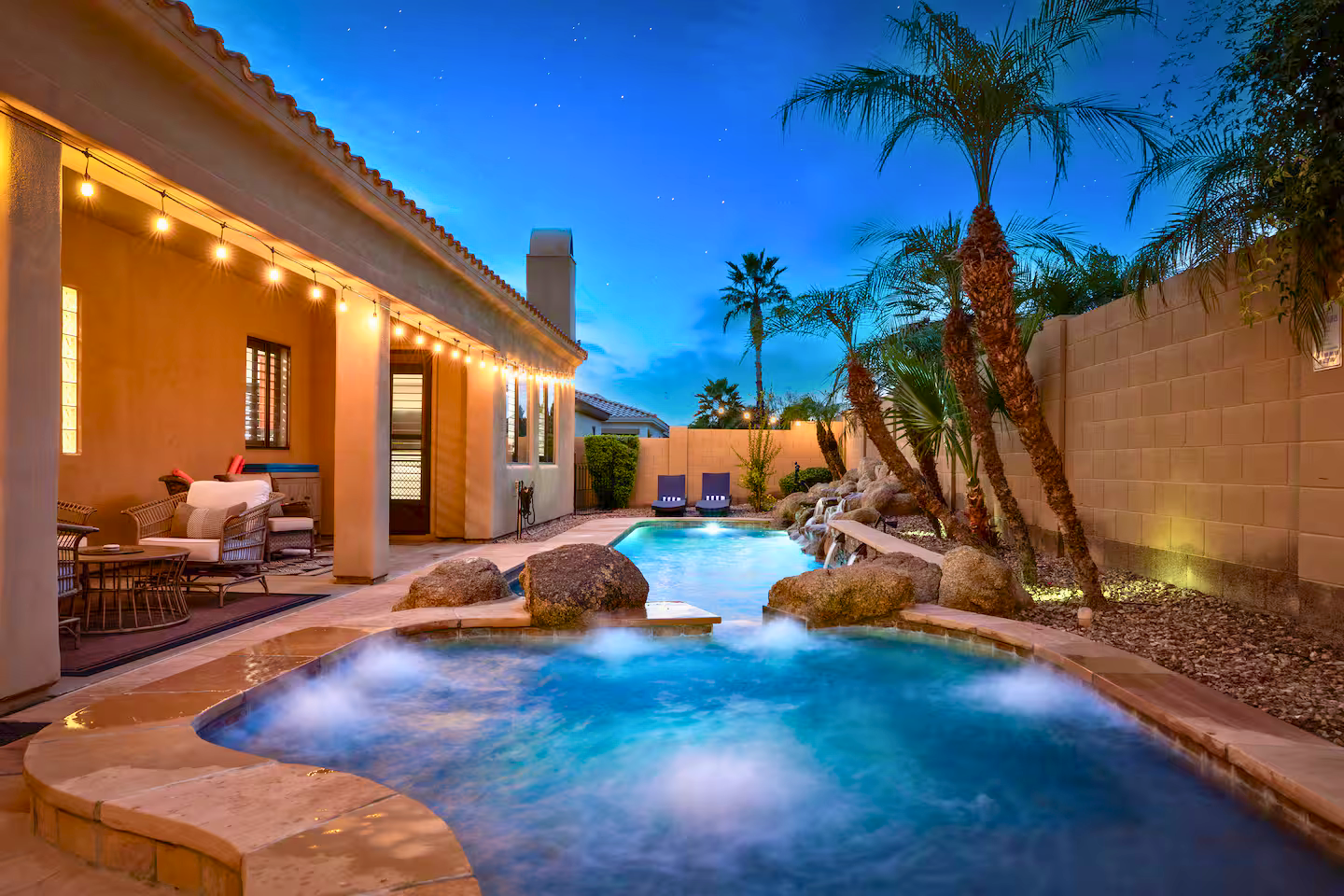
Heat, Utilities & Insurance — The Reality Check
Phoenix is not just warm — it is genuinely extreme from May through September. This affects home selection, operating costs, and insurance in ways that buyers from temperate climates don't intuitively grasp until they're living it.

HVAC: Your Most Critical Home System
An HVAC unit in Phoenix works harder than anywhere else in the continental U.S. Average lifespan is 12–15 years. Ask for the install date and service history. Replacement costs $6,000–$15,000+. A home with an aging HVAC in August is a financial emergency waiting to happen.
In an older Phoenix home with aging insulation, summer electricity bills of $400–$700+/month are common. In an energy-efficient newer build, $200–$350/month is typical during peak summer. Always request 12 months of utility history before making an offer. This is the most revealing financial document a listing never volunteers.
Flooding — Phoenix's Counterintuitive Risk
Parts of the Phoenix Metro experience 40 to 100 flood events per year during monsoon season (July–September). Desert soil has low water absorption — flash floods can occur with little warning. Check FEMA flood maps for any property near a wash or low-lying area.
Homeowners Insurance in 2026
Insurance rates are rising 8%+ in Arizona in 2025–2026. Homes near wildfire interface zones (relevant in North Scottsdale, Fountain Hills, Cave Creek corridors) face the most pressure. Get quotes before you're under contract — not after. Verify insurer availability in that specific ZIP code. Source: Arizona Department of Insurance
"My first summer utility bill in Peoria was $520. I nearly fell off my chair. The previous owners had not serviced the HVAC in years and the insulation in the attic was inadequate. After getting the HVAC serviced and adding blown-in attic insulation, my second summer averaged $290. The home inspection caught the HVAC age, but I didn't push hard enough on the insulation question. I would now."
Arizona-Specific Legal Rules That Differ From Your Home State
No Attorney Required — But Consider One for Complex Deals
Arizona does not require a real estate attorney for standard purchases. Arizona Department of Real Estate-licensed title companies and escrow agents handle most transactions. Hire an attorney for complex contingencies, boundary disputes, unusual deed restrictions, or estate purchases.
Seller Disclosure (SPDS)
Sellers must complete a Seller's Property Disclosure Statement covering the property's physical condition, known defects, HOA information, legal access, sewage disposal, and water systems. Read every word — as an out-of-state buyer who can't drive by the property regularly, this document is your primary due diligence tool.
Dual Agency Is Permitted
Arizona permits dual agency. The agent must obtain your consent, but their ability to fully advocate for you is inherently limited when representing both sides. For out-of-state buyers especially, independent representation is strongly recommended.
New Investor Ownership Limits (2025)
LLCs or corporations owning 10+ single-family homes must now register with the Arizona Corporation Commission and are limited to purchasing no more than 5% of single-family residences in any county — designed to protect individual buyers from institutional competition.
"Buyers are more informed than at any prior point in Phoenix real estate history. An overpriced home doesn't generate bidding wars — it generates silence. But well-located, well-priced homes that show well continue to move quickly."— Eric Ravenscroft, CRS GRI ABR · Greater Phoenix Market Report, March 2026 · Full report
How to Buy a Phoenix Metro Home Remotely: Step by Step
Arizona supports fully remote closings — e-signatures, Remote Online Notarization (RON), and title company-managed escrow mean you can own a Phoenix home without ever being physically present. Here's how my most successful out-of-state clients do it.
-
1
Get Pre-Approved With an Arizona-Licensed Lender
Before any agent takes your search seriously, have a pre-approval letter in hand. Use an AZ-licensed lender who knows Phoenix appraisal patterns. This step comes before browsing a single listing.
-
2
Sign a Buyer Representation Agreement With a Local Phoenix Agent
Required by law before touring homes. Your agent is your most critical asset as an out-of-state buyer — they're your eyes, ears, and advocate on the ground. Interview multiple agents; ask specifically how many out-of-state and remote buyers they've represented in the past 12 months.
-
3
Research Neighborhoods Deeply Before You Tour
Google Street View, neighborhood Facebook groups, school district ratings, Walkscore, and commute modeling tools. Your agent's local knowledge fills in the gaps. Narrow to 2–3 target cities before requesting showings.
-
4
Request Live Video Walkthroughs — Not Just Pre-Recorded Tours
Ask your agent for a live FaceTime or video call for every serious contender. They can show you what listing photos hide — HVAC age tag, ceiling cracks, neighbor proximity, garage condition, afternoon sun angles. Pre-recorded tours are marketing; live walkthroughs are research.
-
5
Make an Offer With the Right Contingencies
Always include an inspection contingency and appraisal contingency. In competitive Chandler or Scottsdale these may need tightening — ask your agent what's market-normal for that specific submarket and price point. Never waive inspection as an out-of-state buyer.
-
6
Attend the Home Inspection Virtually — In Real Time
Hire an Arizona-licensed inspector. Attend live via video call. A Phoenix-specific inspection must evaluate HVAC age and function, roof underlayment condition, UV damage to seals and fixtures, pool equipment (if applicable), and evidence of past water intrusion. Budget 3–4 hours.
-
7
Review the Title Report and HOA Disclosure Packet Thoroughly
Title: look for liens, easements, and encumbrances. HOA packet: verify monthly dues, check CC&Rs for rental restrictions, review reserve fund health, and request 6 months of board meeting recordings (now legally required).
-
8
Close Remotely via E-Signature and RON
Arizona supports fully digital closings. Sign electronically, wire closing funds to the title company, receive key access via lockbox code. The title company records your deed. You are now a Phoenix Metro homeowner.
"I closed entirely remotely on my Gilbert home — never walked through the door until moving day. The key was having an agent who was genuinely experienced with remote buyers, not just willing to try it. She knew exactly what I needed to see on video, what questions to ask the inspector, and how to coordinate the RON closing. Moving day was the first time I turned the key in the lock, and everything was exactly as described."
Common Mistakes Out-of-State Buyers Make in the Phoenix Metro
- Choosing a city based on price alone. Buckeye is affordable. But if you're working in Scottsdale, that's a 45-minute commute each way. In Phoenix, distance is measured in minutes — and those minutes compound over years of daily driving.
- Not visiting in summer. Viewing a home in February and committing to year-round Phoenix life is a classic trap. Book a July or August trip before you close. Walk outside at 2pm. Drive to the grocery store. Make the decision with full information.
- Skimming the CC&Rs. The HOA documents you receive at contract can run 80–120 pages. They are legally binding from the moment you close. Many Phoenix HOAs prohibit short-term rentals, regulate exterior colors, restrict parking, and fine for minor landscaping violations.
- Skipping or rushing the home inspection. Phoenix-specific issues — HVAC age, roof underlayment degradation, UV damage, pool equipment condition — require a thorough 3–4 hour inspection. Never waive it, and attend virtually in real time.
- Not requesting 12 months of utility history. Utility bills reveal HVAC efficiency, insulation quality, and the true monthly cost of ownership in summer — facts no listing sheet provides. Always ask before making an offer.
- Treating the Phoenix Metro as one market. Chandler is a seller's market at index 154.5. Buckeye is a buyer's market. The same offer strategy will not work across all 20+ cities in the Valley.
- Using an out-of-state lender without Phoenix experience. Lenders unfamiliar with Arizona appraisals can cause delays and surprises. Vet your lender specifically for Phoenix Metro experience before committing.
- Not having a full ground team. A local agent, a local lender, and an inspector who specializes in Phoenix homes — this team is your substitute for local knowledge. It's the single most important thing you can do as a remote buyer.
Frequently Asked Questions
It depends entirely on the submarket. As of March 2026, Chandler (index 154.5), Scottsdale, and Gilbert are strong seller's markets. Central Phoenix is balanced. Buckeye and outer West Valley cities remain buyer-favoring. Metro-wide, contracts are up 10% YoY and months of supply dropped to 3.34 — but with 25,000+ active listings, buyers still have meaningful choices in most areas.
The metro-wide median sale price was approximately $455,000 in March 2026, flat year-over-year. Scottsdale sits around $1M median. Gilbert and Chandler are $480K–$490K. Buckeye and Goodyear range $330K–$360K. The metro is too diverse to rely on a single number for purchase planning.
Gilbert USD and Chandler USD consistently rank #1 and #2 in Arizona by Niche.com. Scottsdale USD, Higley USD (Gilbert/Queen Creek area), and Cave Creek USD also earn A ratings. Verify exact school assignments by address — district boundaries don't always match city limits. Source: Niche.com and Arizona Dept of Education.
Legally and logistically yes — Arizona supports full remote closings through e-signatures and RON. However, if you plan to live there year-round, experiencing the summer heat before committing is strongly advised. At minimum, get a live video walkthrough from your agent for every serious contender.
New construction is often the lower-risk path for remote buyers — builder warranties, digital purchase portals, and scheduled construction updates reduce the need for in-person visits. Builder incentives are active in 2026 (rate buydowns, closing cost credits). Resale is essential if you're targeting inner-ring cities like Chandler or Scottsdale where new inventory is limited, or if you want an established neighborhood and immediate availability.
No — Arizona does not require one for standard purchases. Title companies and escrow agents handle closings. Consider hiring an attorney for transactions involving boundary disputes, unusual deed restrictions, or estate purchases.
Arizona's average effective rate is ~0.77% — well below the national average. Primary residents qualify for a lower "Limited Property Value" assessment. Vacation home and investment property owners are assessed at a slightly higher rate. Source: Maricopa County Assessor (mcassessor.maricopa.gov).
From $50–$100/month in basic communities to $300–$600+/month in luxury gated communities. Master-planned communities like Eastmark or Verrado have layered HOA structures with multiple assessment layers. Always confirm the total HOA obligation — including any pending special assessments — before making an offer.
More Voices From Buyers Who Made the Move
The thing no guide told me clearly enough: in Phoenix, you don't just buy a house, you buy into an HOA community. Understanding that going in changes your entire search strategy. I'm glad we embraced it — our community in Chandler is genuinely one of the best things about living here.
I bought a new construction home in Goodyear as a remote worker. The builder's portal let me track every phase of construction, and I flew out twice — once for the framing walkthrough and once for the pre-close walkthrough. The process was genuinely well-organized. The West Valley is underrated.
I'm a single woman who moved from Boston. Everyone told me Phoenix would feel isolating, but Scottsdale's social scene is vibrant and welcoming. The restaurant and arts scene in Old Town genuinely surprised me. The summers are hard, but I spend them traveling — the rest of the year is paradise.
We relocated from Nashville with two kids under ten and had no idea where to start. Eric walked us through the school district differences between Gilbert and Chandler on our very first call — that conversation alone saved us weeks of research. We ended up in Higley USD and couldn't be happier. The neighborhood feels safe, the community is engaged, and our kids love their schools. Best decision we ever made.
I was a first-time buyer coming from Atlanta with zero knowledge of Arizona. The financial planning angle Eric brought was something I hadn't found with any other agent — we looked at my full picture, not just the mortgage. He helped me understand exactly what my monthly costs would look like in summer versus winter before I ever made an offer. I bought in Tempe and the numbers have tracked almost exactly to what we projected. That preparation made all the difference.
My wife and I are both physicians who relocated from Philadelphia for positions at Mayo Clinic in Scottsdale. We had exactly three weeks between accepting our offers and needing to be in Arizona. Eric coordinated everything remotely — virtual tours, inspection attendance, remote closing — and we were handed keys on move-in day without a single hiccup. For professionals with zero time to spare, his process is exactly what you need.
Eric Ravenscroft, REALTOR®
I've spent 15+ years at the intersection of real estate and financial planning — which means when out-of-state buyers sit down with me, we don't just talk about the home. We talk about the full financial picture: property tax implications, HOA cash flow, mortgage structure, and how your Phoenix purchase fits your long-term wealth plan. That dual lens is what sets my approach apart.
I publish the Greater Phoenix Market Report — the data you've been reading throughout this guide — and I've been recognized consistently among the top 1% of agents nationwide. Whether you're relocating for work, retiring to the Valley, or buying remotely as a remote worker, I'll guide you through every step with the same data-driven clarity you found in this article.
A 30-minute call where we'll cover your target cities, budget, timeline, and the specific market conditions affecting your search — so you arrive informed and ready to move fast when the right home appears.
- Current market conditions in your target submarket
- What your budget realistically gets you right now
- HOA landscape and what to look out for
- Tax and financial planning considerations for your purchase
- How to structure your remote buying process for success
Categories
- All Blogs (324)
- Active Adult & 55 Plus Communities (17)
- Arizona Relocation Guides (31)
- Buyers (214)
- Financial Planning (61)
- General Real Estate (141)
- Income From Real Estate (60)
- Market Update (26)
- New Construction (29)
- News, Updates and Coming Soon (57)
- Real Estate Agent Financial Planning (22)
- Real Estate Investing (96)
- Sellers (107)
- Vacation and Short Term Rentals (45)
Recent Posts




About the Author
Eric Ravenscroft is a Top 1% REALTOR® across North America and one of Arizona’s most trusted real estate strategists. With 15 years of experience spanning real estate, wealth management, and investment planning, he helps clients make smarter, financially grounded decisions, from new construction and relocations to STR investments, 1031 exchanges, and long-term portfolio strategy.
Eric’s expertise has earned him industry recognition, Elite status with Real Broker, and features in major publications including the Wall Street Journal, MarketWatch, MSN, and Morningstar. Clients across the Greater Phoenix Metro rely on his clarity, strategic insight, and results-driven guidance.
Ready to make a confident real estate move? Call or text Eric today.