
New Construction Near TSMC in Phoenix: How a Tech Buyer Saved $79,990 and Cut Taxes With a Rental Property
New Construction Near TSMC in Phoenix: How a Tech Buyer Saved $79,990 and Cut Taxes With a Rental Property
A North Phoenix new construction case study: how I helped a high-earning tech professional buy one of the builder's last spec homes in Union Park at Norterra for $535,000, with a 4.75% investor rate and closing costs covered, then lease it at $3,000 a month to help offset W-2 income.

Most buyers saw a new build that had been sitting through several price cuts. My client and I saw one of the last spec homes a builder wanted off its books, in a master-planned community about five miles from TSMC Arizona's $265 billion semiconductor campus.
My client is a high-income tech professional with a large federal and state tax bill on W-2 income. Aditi came to me for a North Phoenix investment property that would do two jobs at once: produce steady rent, and create depreciation and deductions to shelter income. This case study walks through how we bought 2488 W Rowel Rd, Phoenix, AZ 85085 for $535,000 against an original list price of $614,990, how the tax benefits of a rental property work for high earners, and when the short-term rental bonus depreciation strategy makes sense. It's one piece of the broader real estate tax strategy I build with clients.





Trusted By
Phoenix & Scottsdale's Preferred Agent for
Leading Financial Institutions
I'm a preferred real estate partner for USAA, Chase, SoFi, PennyMac, Citibank, Citizens, Huntington, and Fifth Third — institutions that refer clients to me because they trust the strategy behind the property, not just the sale.







A real estate tax strategy for a high-income tech buyer
High W-2 earners in tech face a frustrating problem: most of their income is taxed at the top brackets, and there are few legitimate ways to reduce it. Real estate is one of the few. A well-bought rental creates depreciation — a paper expense — while the tenant pays down the mortgage and the property appreciates.
That goal shaped every search filter we used:
New construction
Lower repair risk, builder warranty coverage, modern systems, and a clean building basis that's easy to support in a cost segregation study. My 2026 guide to new construction homes in Phoenix covers why builders are often the most negotiable sellers in the market.
Durable rental demand
Close to major employers, top-rated schools, shopping, and freeways — the fundamentals that keep a rental leased.
Financing that cash flows
Investor loans usually cost more than owner-occupied loans. We needed a rate low enough for rent to carry the payment.
Strategy flexibility
A home that works as a long-term rental today and could be evaluated as a mid-term or short-term rental later. I compare those paths in my LTR vs. MTR vs. STR strategy guide.
The goal wasn't just to buy a house. It was to buy a deduction that pays rent — in the path of the biggest employer North Phoenix has ever seen.
How we negotiated $79,990 off a Phoenix new construction spec home
Spec homes are homes a builder starts without a buyer under contract. When a builder is down to its last few in a community, every unsold home carries interest, property taxes, HOA dues, and sales staff costs — and it delays the builder's move to its next project. 2488 W Rowel Rd was one of the last homes left in Aster at Union Park, and its listing history showed several price reductions. That was our leverage.
Most buyers ask a builder for one concession — a price cut or a rate buydown. On final inventory, I pushed for all three levers together:
A lower price also means a lower property tax basis and a stronger return on every dollar of cash invested. And because the builder funded the rate, the savings show up every month for the life of the loan — not just once at closing.
- The on-site sales agent represents the builder, not you. Builders commonly pay the buyer's agent, so your own representation often costs nothing extra.
- Builder incentives are frequently tied to the builder's preferred lender. Knowing how to stack a rate incentive with a price reduction is where most of the savings come from.
- Timing matters: quarter-end and closeout inventory are when builders are most motivated.
2488 W Rowel Rd: a new build in Union Park at Norterra, Phoenix 85085
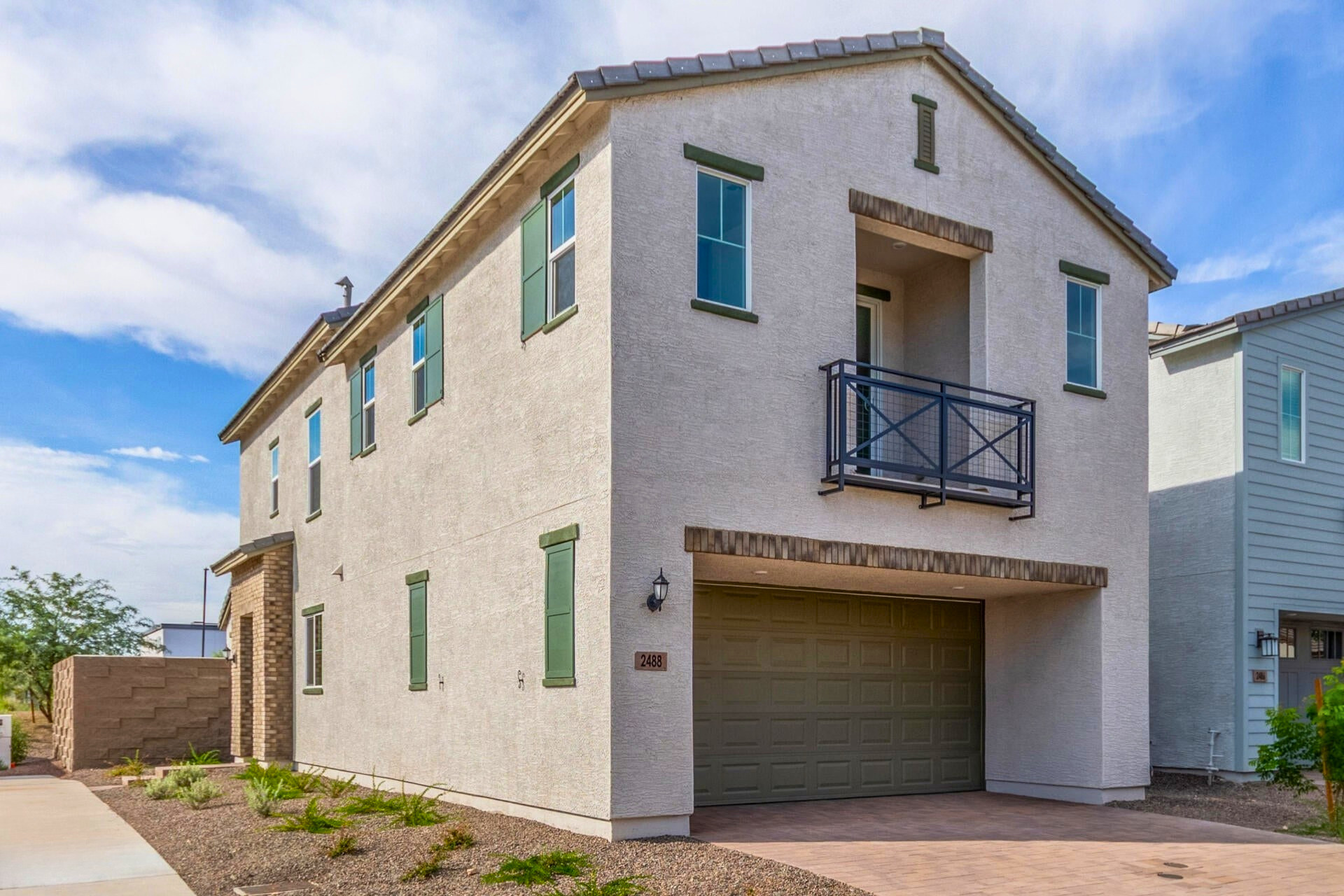
2488 W Rowel Rd is a 2025-built new construction home in Aster, a neighborhood within the Union Park at Norterra master-planned community in North Phoenix (ZIP 85085). It offers 1,964 square feet on a low-maintenance 3,445-square-foot lot (listing details).
2488 W Rowel Rd — one of the builder's final spec homes in Aster at Union Park.
What tenants search for — built in
Quartz counters, a large island, a private primary deck, and a 2-car garage are exactly the features that help a rental lease quickly at top-of-market rent.
Union Park at Norterra amenities
Union Park is one of North Phoenix's most in-demand master-planned communities, built along I-17 between Happy Valley and Jomax roads, next to USAA's Phoenix corporate campus.
Union Park at Norterra, in person

The resort-style pool at The Post, Union Park's 5,800 sq ft recreation center.

The kids' pool area — a draw for the family renters this community attracts.

Pickleball and basketball courts, a short walk from the home.
Inside the home
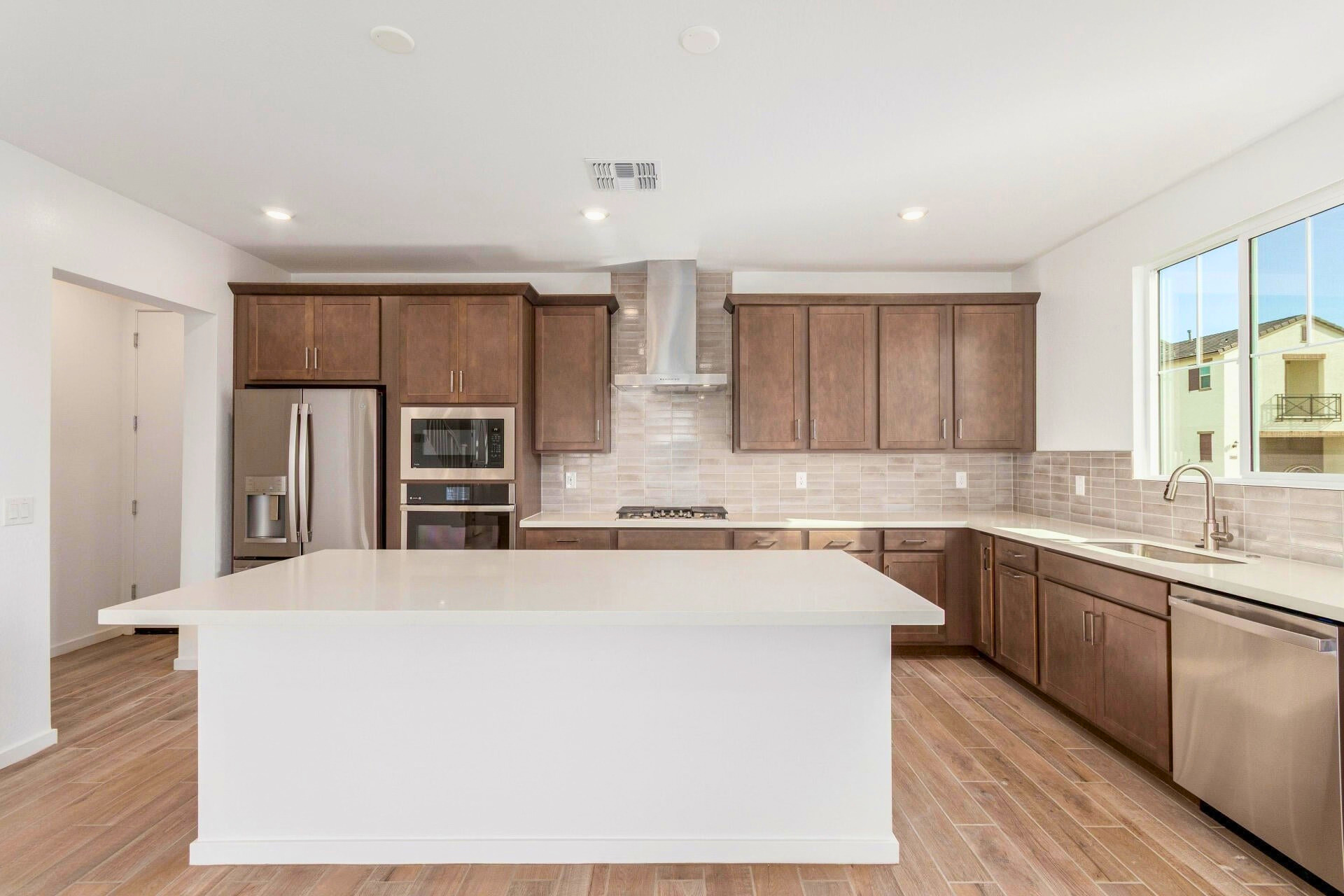
Gourmet kitchen with quartz counters and a large island.
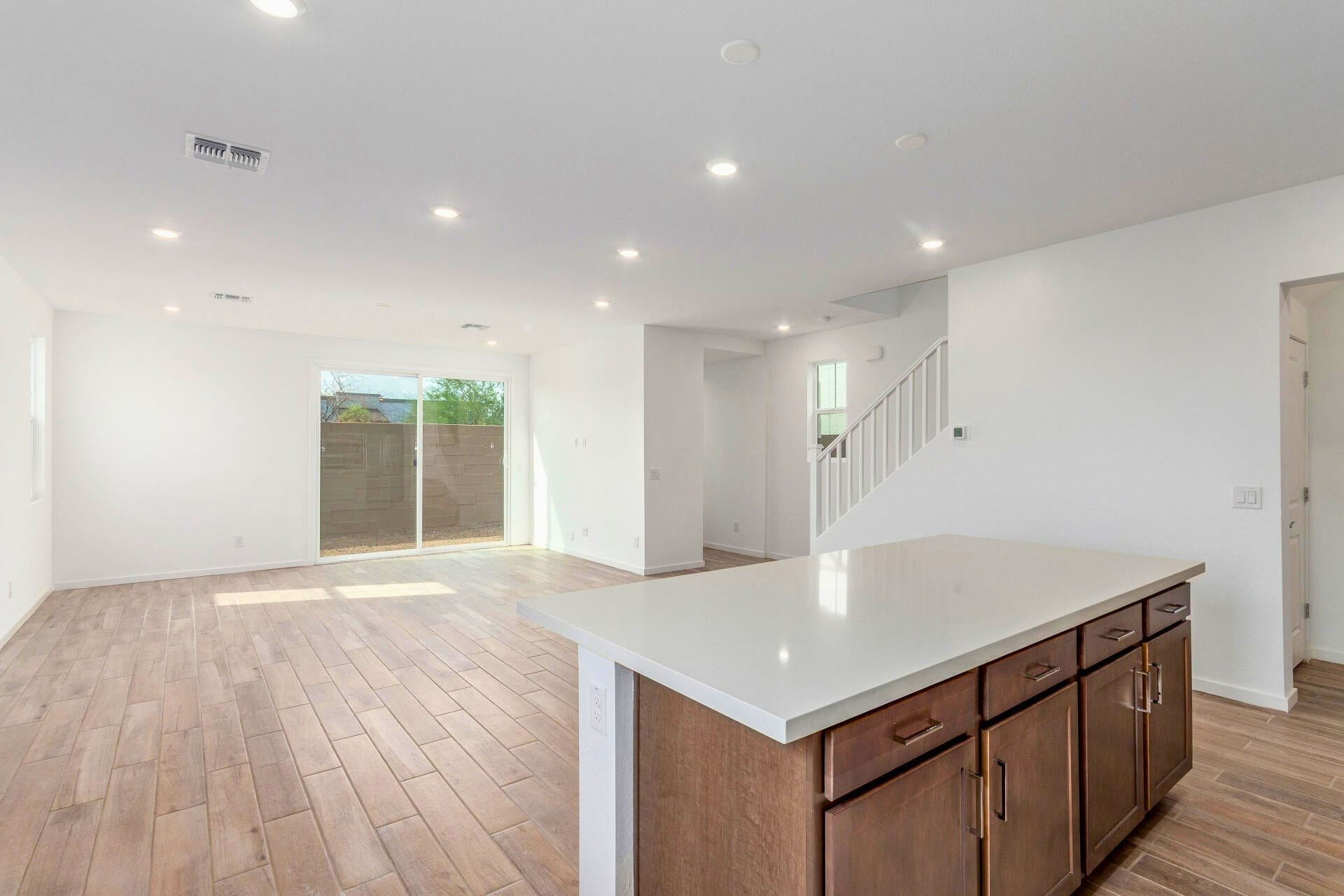
Open great room, flowing into the kitchen.
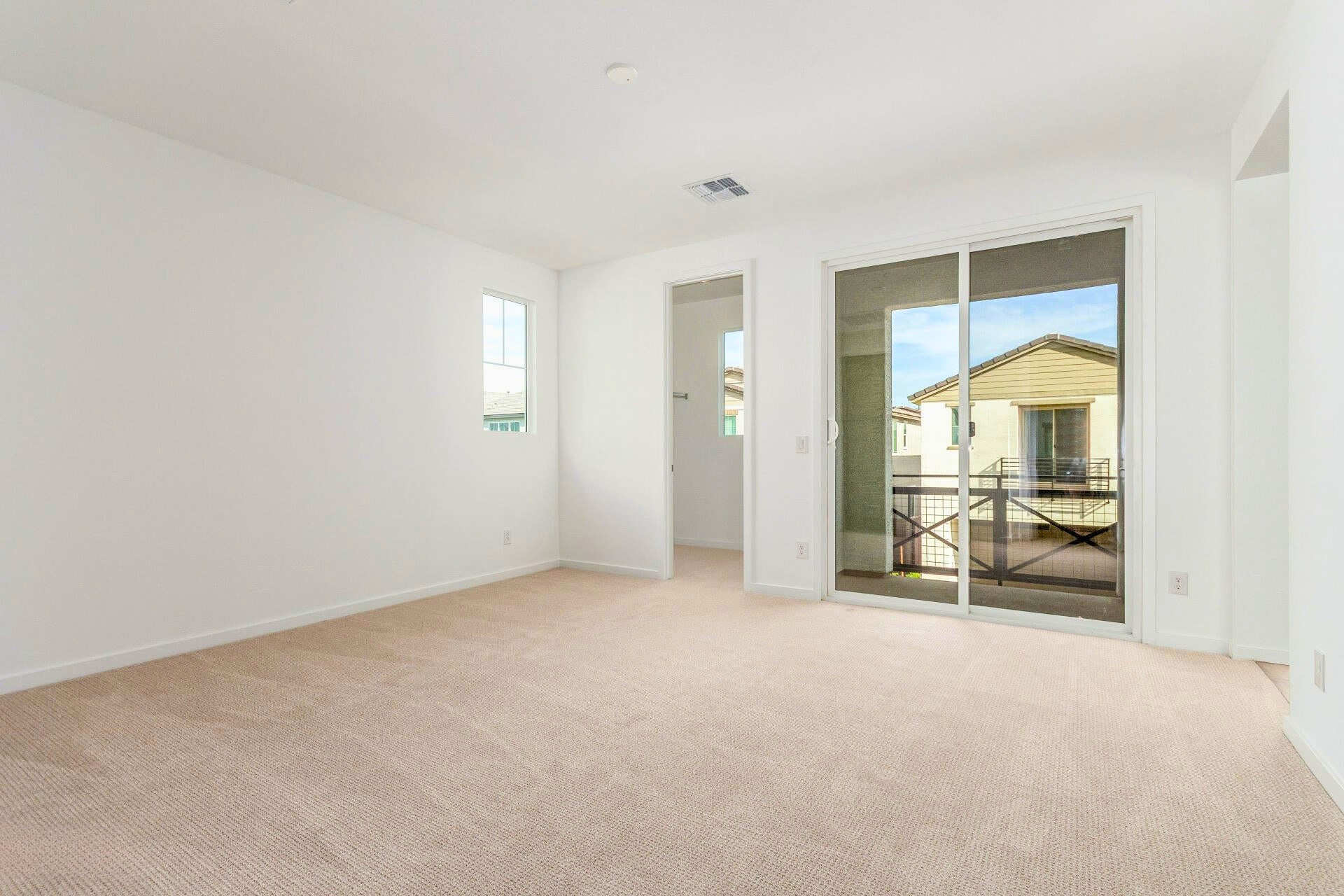
Primary bedroom — the suite includes dual walk-in closets and a private deck.
Homes near TSMC Arizona: why North Phoenix rental demand is rising
Union Park at Norterra sits about 5 miles from TSMC Arizona's semiconductor manufacturing campus in North Phoenix (Union Park). For a rental property owner, that's one of the strongest demand drivers in the Valley.

TSMC Arizona's North Phoenix campus — about five miles from Union Park at Norterra.
In July 2026, TSMC announced an additional $100 billion for four more advanced fabs, bringing its total planned Arizona investment to $265 billion across 12 facilities (City of Phoenix). TSMC Arizona already employs more than 3,500 people at its first operating fab, and a second fab is expected to begin production in the second half of 2027 (AZFamily).
One estimate puts the newest expansion at 10,000–12,000 construction jobs and roughly 12,000 permanent jobs once operational (AZFamily). Engineers, technicians, construction crews, suppliers, and relocating executives all need housing — and many prefer to rent first. That creates demand for long-term rentals and for furnished mid-term and short-term stays, which I break down in Phoenix short-term vs. mid-term rentals.
North Phoenix is growing beyond semiconductors, too: USAA's campus, the Norterra retail district, and new medical and corporate investment add more employers within a short commute. I track how that growth shows up in prices and inventory in my Phoenix housing market updates. And for buyers relocating for these jobs, my moving to Arizona guide is the place to start.
Rental results: leased near TSMC at $3,000 a month
After closing, the home rented quickly for $3,000 per month ($36,000 a year) — a gross rental yield of about 6.7% on the $535,000 purchase price. The discounted price, the builder-funded 4.75% rate, and covered closing costs are what made the numbers work from day one.
The first-year example below uses the actual purchase price, rate, rent, and HOA, plus stated assumptions: 25% down ($401,250 loan, 30-year), a 20% land allocation, and estimated property taxes and insurance. It illustrates how the math works; it is not the client's actual tax return.
That's the core idea: positive cash flow, principal paydown, and appreciation — while the tax return shows a loss. If you want to run numbers like these on a property you're considering, I keep a set of investment calculators clients use before going under contract.
Client Testimonial: North Phoenix New Construction Investment
Aditi's review joins 170+ five-star reviews from buyers, sellers, and investors across the Phoenix metro. See them all on Google → · Read client testimonials →
He provided thoughtful guidance on investment strategy, helped me evaluate the numbers and long-term potential, and was there to support me every step of the way.
I really appreciated his expertise, responsiveness, and genuine commitment to helping me make the right decision. Highly recommend!"
Rental property tax benefits for high-income W-2 earners
Tax details below reflect federal rules current as of September 2026 under the One Big Beautiful Bill Act. Percentages, thresholds, and guidance can change — verify current-year rules with your CPA before acting.
A rental property can produce positive cash flow while showing a tax loss on paper, mainly because of depreciation. These are the standard benefits every rental property owner should understand. My 2026 real estate tax savings guide covers each one end to end.
1. Depreciation — the biggest paper deduction
The IRS lets you deduct the cost of a residential rental building over 27.5 years, even while the property may be rising in value (IRS Publication 527). Land isn't depreciable, so the purchase price is split between land and building. With a 20% land allocation on this home, that's roughly $15,560 a year in depreciation for 27.5 years.
2. Deductible operating expenses
3. The catch for high earners: passive activity loss rules
Long-term rentals are generally passive activities under IRC §469. Passive losses can offset passive income, but usually not W-2 wages. The $25,000 allowance for owners who actively participate phases out between $100,000 and $150,000 of modified adjusted gross income, so most high-income tech professionals get no current deduction against salary.
Those losses aren't lost. Suspended passive losses carry forward indefinitely, offset future rental profits, and are released in full when the property is sold in a taxable sale.
Passive by default
- Depreciation shelters the rental income itself
- Excess losses carry forward — usually not usable against W-2 income
- Offsetting salary requires Real Estate Professional Status: 750+ hours a year and more time in real estate than any other job
- Lowest time commitment; best for stable, hands-off income
Non-passive by structure
- Average guest stay of 7 days or less
- Owner materially participates — no REPS status needed
- Paired with cost segregation and 100% bonus depreciation
- Losses can offset W-2 or other active income the same year
4. Long-term wealth and exit advantages
Short-term rental bonus depreciation and cost segregation in Phoenix
My client chose a long-term lease for stable, low-maintenance income. But for high-income W-2 earners who want to offset salary in Year 1, the short-term rental (STR) strategy is one of the most powerful legal tools available — often called the "short-term rental tax loophole". Here's what it would look like on a property like this one.
Step one: the 7-day average stay test
Under Treasury Reg. §1.469-1T(e)(3)(ii), a property where the average guest stay is 7 days or less isn't a "rental activity" for passive loss purposes. The average is total guest-nights for the year divided by the number of reservations — so a few long monthly stays can push the average over the line. That matters near TSMC, where contractor stays often run 30 days or longer.
Step two: material participation
The owner still has to clear one of the tests in Treasury Reg. §1.469-5T. This is why the strategy works without Real Estate Professional Status — I go deeper in the short-term rental tax break for W-2 earners.
100+ hours, and more than anyone else
Guest communication, pricing, listing management, restocking, and vendor coordination — and more hours than any cleaner, co-host, or manager.
Or 500+ hours on its own
A higher bar that satisfies material participation regardless of anyone else's time.
Or substantially all of the participation
The owner does essentially all the work in the activity.
Keep a contemporaneous time log. Reasonable estimates made at tax time carry far less weight than a log kept as you go.
Step three: cost segregation + 100% bonus depreciation
A cost segregation study reclassifies parts of the property that aren't the structural shell into shorter-lived asset classes. The One Big Beautiful Bill Act, signed July 4, 2025, permanently restored 100% bonus depreciation for qualifying property acquired and placed in service after January 19, 2025, with guidance following in IRS Notice 2026-11. That lets the reclassified value be deducted in Year 1.
| Asset Class | % of Building | Life |
|---|---|---|
| Structural components | 70–80% | 27.5 yrs |
| Land improvements (landscaping, hardscape, fencing) | 5–10% | 15 yrs* |
| Personal property (appliances, cabinetry, flooring, fixtures) | 12–20% | 5 yrs* |
| STR furnishings & décor | Added cost | 5–7 yrs* |
*Eligible for 100% bonus depreciation in Year 1 for property acquired after January 19, 2025. Ranges are typical, not a study result.
Year-one depreciation on this home: long-term vs. STR
Same property, same price — the only difference is how it's operated and whether a cost segregation study is done.
Illustration: 25% of the ~$428,000 building basis reclassified and bonus-depreciated ($107,000), plus the remaining basis over 27.5 years ($11,670), plus $25,000 of furnishings. At a 37% federal bracket, that could reduce federal tax by roughly $53,000 in Year 1, before operating expenses. More examples at different incomes in real numbers, real situations.
What operating an STR in Phoenix requires
- W-2 earners in the 32%+ bracket who want to offset salary in Year 1
- Owners who can realistically log the hours — or whose spouse can
- Properties where the HOA and city rules allow short-term stays
- Buyers who'd want the asset even without the tax benefit
- Buyers who want hands-off, predictable income — like this client
- Anyone unwilling to track hours and keep real records
- HOAs with minimum-stay rules that block short-term rentals
This is general, educational information about how rental property tax treatment can work — not tax or legal advice, and not a guarantee of any outcome. Work with a qualified CPA experienced in rental and cost segregation rules before purchasing.
FAQ: new construction near TSMC and rental property tax benefits
Can buying a rental property lower my taxes if I have a high W-2 income?
Yes, but how much depends on the strategy. A long-term rental creates depreciation and expense deductions that shelter the rental income, but losses are usually passive and can't offset W-2 wages for high earners. A short-term rental with an average stay of 7 days or less, where you materially participate, can create losses that offset W-2 income.
How did you get $79,990 off a new construction home?
It was one of the builder's last spec homes in the community, with several price cuts already in its listing history. Builders carry real costs on unsold final inventory, so we negotiated price, a builder-funded 4.75% investor rate, and covered closing costs together rather than settling for just one concession.
Is 100% bonus depreciation still available in 2026?
Yes. The One Big Beautiful Bill Act permanently restored 100% bonus depreciation for qualifying property acquired and placed in service after January 19, 2025. It applies to the 5-, 7-, and 15-year components a cost segregation study identifies — not the 27.5-year building structure.
Do I need a cost segregation study?
It isn't legally required, but without one most of the building is depreciated over 27.5 years and little qualifies for bonus depreciation. For a home at this price, a professional study typically costs a few thousand dollars and is paid directly to the engineering or accounting firm.
How far is Union Park at Norterra from TSMC?
About 5 miles from TSMC Arizona's North Phoenix campus, with quick access to I-17, Loop 101, and Loop 303.
What rent can a new build near TSMC earn?
Every home is different, but this 3-bedroom, 2.5-bath, 1,964-square-foot new build in Union Park leased at $3,000 a month — about a 6.7% gross yield on the purchase price.
Do I need a permit to run an Airbnb in Phoenix?
Yes. Phoenix requires a short-term rental permit ($250 a year) and an Arizona TPT license, plus $500,000 in liability insurance, neighbor notification, and a 24/7 contact. HOA rules also apply and can restrict short-term stays.
What happens to the depreciation if I sell the property later?
Depreciation lowers your basis, so more of the sale price becomes taxable gain — that's depreciation recapture. Many investors defer it with a 1031 exchange into another investment property, or hold until death for a step-up in basis.
Eric Ravenscroft: the Phoenix investment and tax strategy advisor behind the deal
I'm the founder of The Ravenscroft Group at Real Broker — a Top 1% REALTOR® across North America and Top 100 in the Greater Phoenix Metro. I hold the CRS designation, the highest credential in residential real estate, alongside GRI, ABR, MRP, SRES®, and RSPS.
Before real estate, I served as a Director of Wealth Management, advising physicians, executives, and business owners on tax planning and long-term wealth building. That's why my process starts with your tax picture, not a list of homes: we define what the property needs to do for your return, underwrite rent and downside on every serious candidate, and use builder incentives and negotiation to buy the numbers — not just the house.
New construction near North Phoenix's employment corridor is one of the places I find the most leverage for investors right now. You can see how this strategy has played out for other clients on my client wins page — including a Scottsdale STR acquisition with bonus depreciation and a turn-key STR in Scottsdale 85254. Read more about my background, or how I approach financial planning alongside real estate.
"Most agents can tell you about a neighborhood. Very few can tell you what a property will do to your 1040. I built my practice around closing that gap."
If this kind of breakdown is useful, I send ongoing newsletters and guidance on Phoenix investment strategy — no charge, no obligation to work together.
Looking for a tax-smart investment property near TSMC?
This works when the price, the financing, and the tax strategy all line up — matched to your income, your bracket, and a North Phoenix market with real rental demand behind it.
Book a Strategy CallKeep exploring
Resources clients use alongside this strategy.
Categories
- All Blogs (324)
- Active Adult & 55 Plus Communities (17)
- Arizona Relocation Guides (31)
- Buyers (214)
- Financial Planning (61)
- General Real Estate (141)
- Income From Real Estate (60)
- Market Update (26)
- New Construction (29)
- News, Updates and Coming Soon (57)
- Real Estate Agent Financial Planning (22)
- Real Estate Investing (96)
- Sellers (107)
- Vacation and Short Term Rentals (45)
Recent Posts





About the Author
Eric Ravenscroft is a Top 1% REALTOR® across North America and one of Arizona’s most trusted real estate strategists. With 15 years of experience spanning real estate, wealth management, and investment planning, he helps clients make smarter, financially grounded decisions, from new construction and relocations to STR investments, 1031 exchanges, and long-term portfolio strategy.
Eric’s expertise has earned him industry recognition, Elite status with Real Broker, and features in major publications including the Wall Street Journal, MarketWatch, MSN, and Morningstar. Clients across the Greater Phoenix Metro rely on his clarity, strategic insight, and results-driven guidance.
Ready to make a confident real estate move? Call or text Eric today.