
TSMC North Phoenix Real Estate: The Investor's Guide to Submarkets, Rentals & 1031 Exchanges
TSMC North Phoenix Real Estate: The Investor's Guide to Submarkets, Rentals & 1031 Exchanges
TSMC's build-out isn't one headline — it's a staged, multi-year construction schedule with dates already on the record. Here's how to read that schedule like an investor, find the workforce nobody's writing about, and separate real signal from hype.
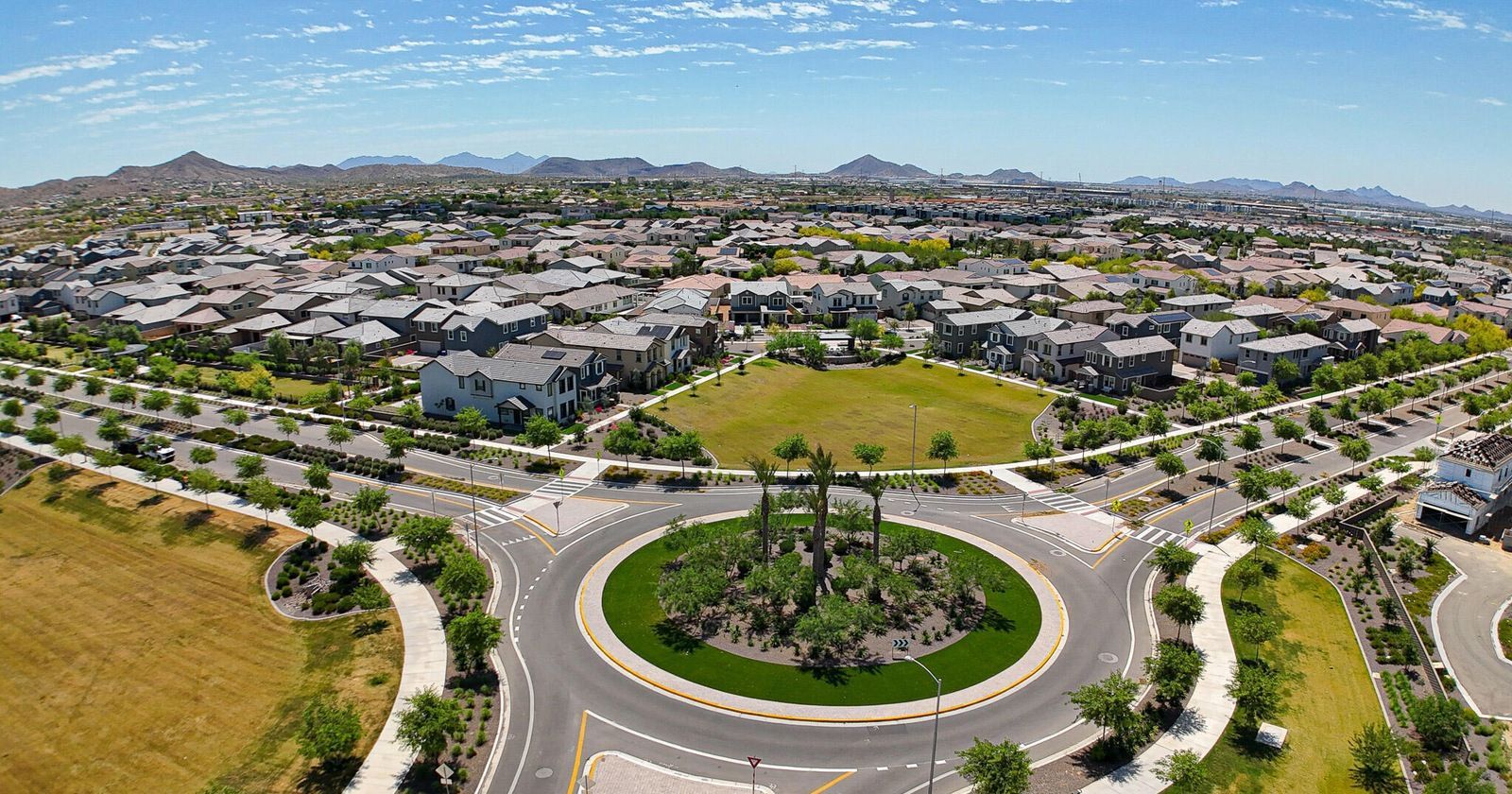
Most coverage of TSMC's Arizona campus treats it as a single event — a headline number, a ribbon-cutting, a wave of relocations. It isn't. It's a decade-long sequence of construction phases, each with its own timeline, workforce, and window of opportunity.
Investors who understand the sequence have an edge that most buyers and even most agents aren't using: the dates are public. Fab completions, equipment installation windows, and expansion announcements are matters of record, not speculation. That's rare in real estate investing, where "growth is coming" is usually a guess. Here, it's a schedule.
Three angles come out of that schedule that almost no one locally is writing about with real numbers behind them: which submarkets are positioned ahead of their own appreciation curve, who the second wave of workers actually is, and what recurring rental demand looks like across a build-out this long.
- The build-out, in order
- Read the timeline before the market does
- The workforce story nobody's writing about
- The ecosystem filling in around it
- The recurring mid-term rental window
- Rental strategy playbook
- The 1031 exchange play
- The international buyer wave
- Submarket comparison
- Get a revenue projection
- What could go wrong
- Frequently asked questions
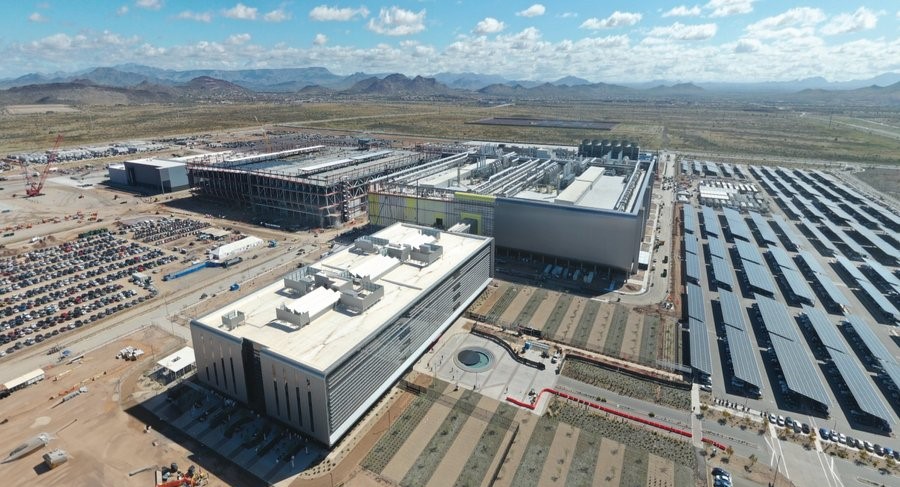
Every phase on this track has a public date. That's the edge.
Read the Timeline Before the Market Does
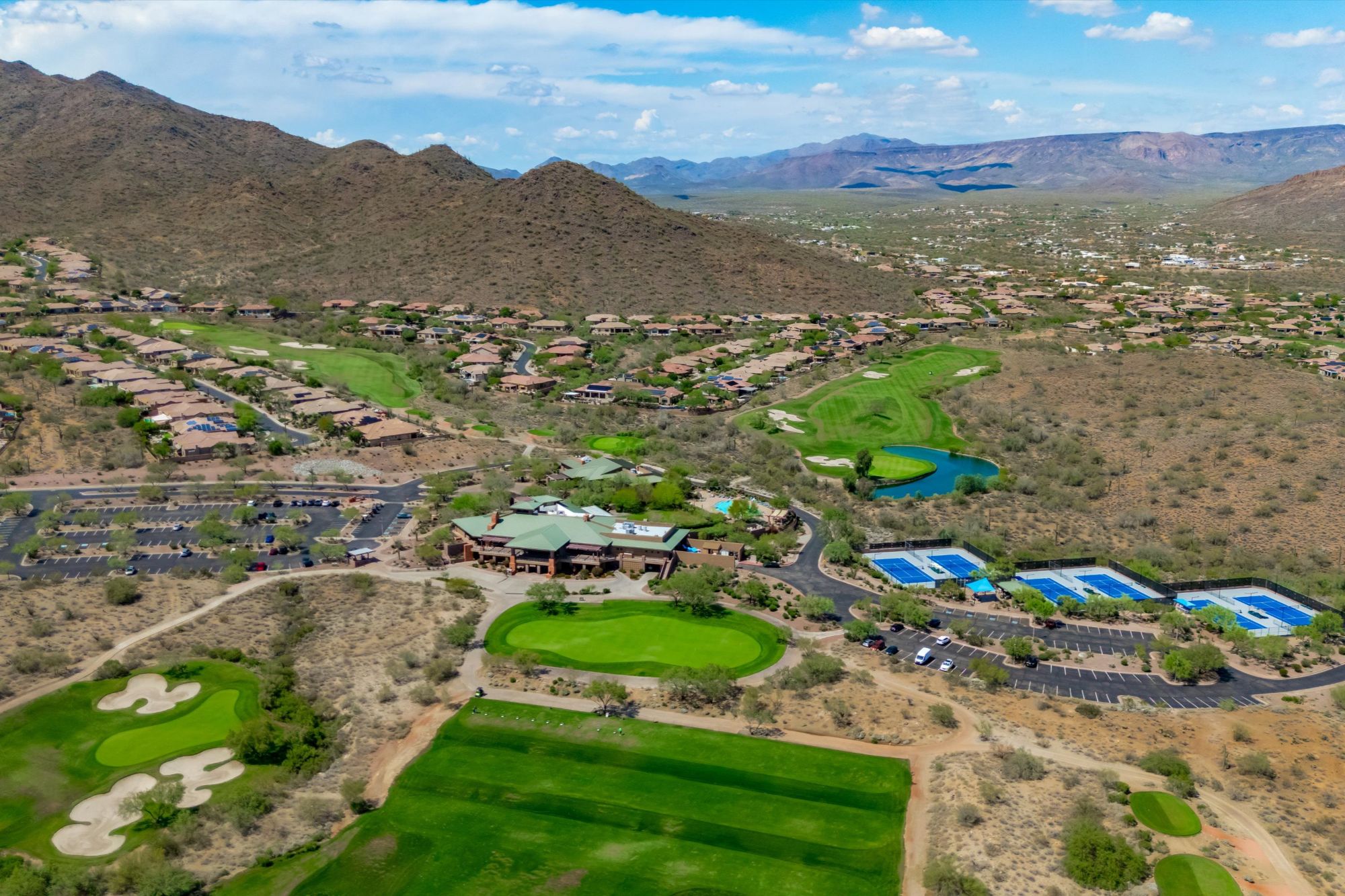
The clearest evidence that proximity to the corridor moves prices is what already happened around Fab 1. Since it ramped to mass production, the submarkets closest to the campus — Norterra, Stetson Valley, Fireside at Desert Ridge, and parts of Deer Valley and Anthem — have behaved differently than the rest of the metro.
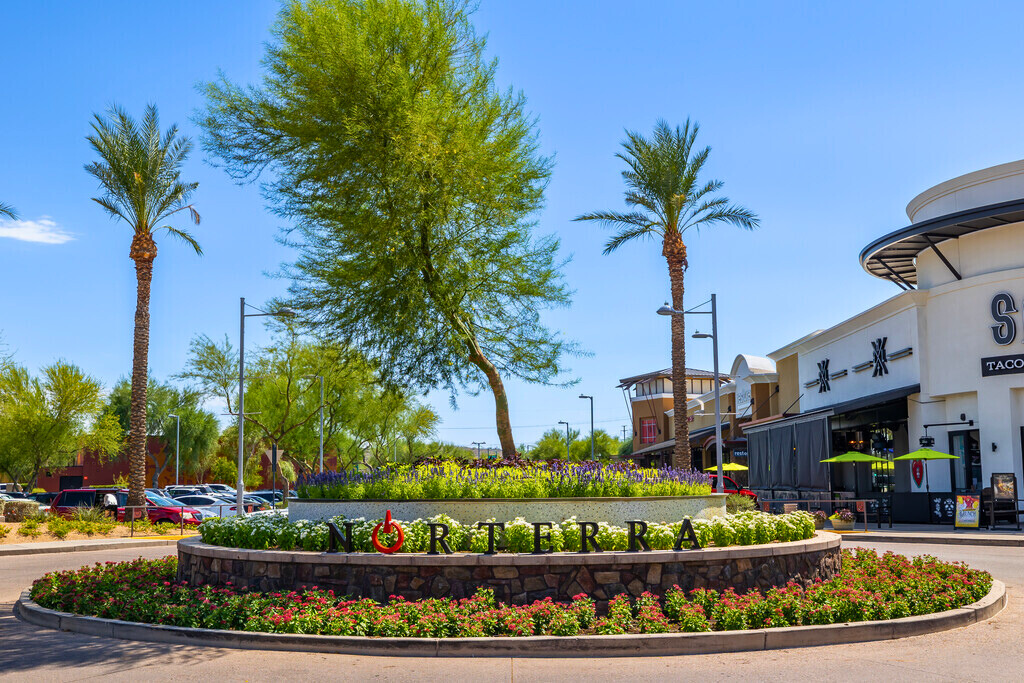
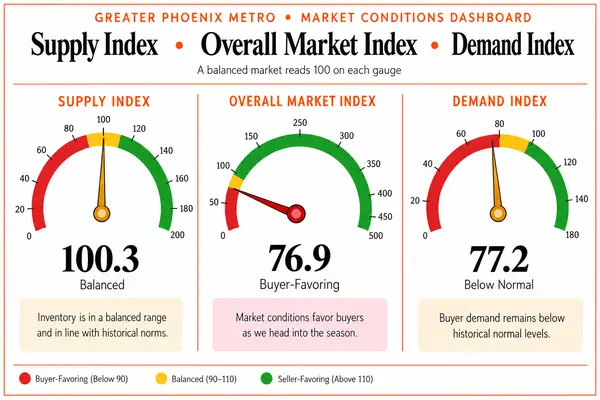
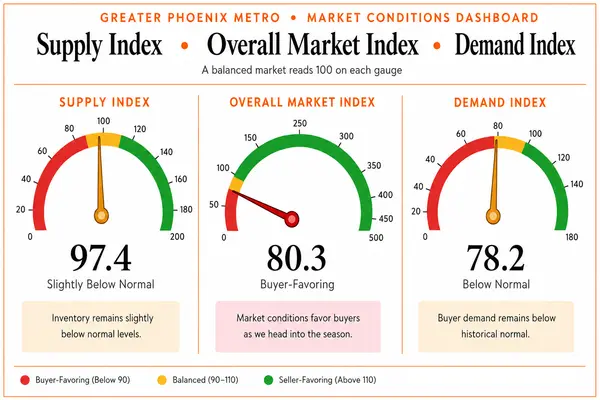
That's happening while the broader Phoenix metro is doing the opposite — inventory is up sharply and roughly a third of active listings have taken price cuts. The corridor isn't following the metro trend. It's following the construction schedule.
We've watched this exact movie before
Phoenix has already run this experiment once, on the other side of the valley. Chandler was largely agricultural land until Intel opened its first fab there in 1980 — and over the following decades, that single manufacturing investment helped turn Chandler into one of the East Valley's strongest, most established submarkets. Industry voices are now drawing that comparison directly to North Phoenix: at a March 2026 Bisnow development summit, ViaWest managing director Alex Boles compared today's TSMC-driven transformation of North Phoenix to Chandler's decades-long shift from farm town to tech hub, and predicted it would reshape the diversity of the entire metro economy. Intel is still expanding its Chandler campus today, with a further $20 billion committed to new fabs there — proof that a semiconductor anchor's economic pull doesn't stop after the first building opens.
That doesn't guarantee North Phoenix repeats Chandler's trajectory. But it means this isn't a novel bet for the region — it's closer to a rerun, with the added advantage of a construction schedule that's actually public this time.
Which raises the actual investment question: if proximity to Fab 1 repriced Norterra and Anthem between 2022 and today, which submarkets sit in the same position relative to Fab 2's 2027 production date and Fab 3's 2030 target — right now, before that gets priced in?
Where to be looking
- The 51st Avenue / Halo Vista corridor — the mixed-use development approved alongside the expanded campus footprint, still in its early build phase.
- West and north of the current hot zone — New River and the Loop 303 corridor through north Peoria, which sit closer to the campus than they did to Fab 1's original footprint but haven't seen the Norterra-level attention yet.
- Anything inside the Deer Valley Unified boundary that hasn't already repriced — school quality is doing real work in buyer decisions here alongside commute time.
Not sure which submarket fits your budget and timeline?Let's map it out together — 15 minutes, no obligation.
Book a CallThe Workforce Story Nobody's Writing About
Nearly every piece of TSMC housing content in Phoenix is written about the same buyer: a TSMC or Apple-adjacent engineer earning six figures, shopping in Norterra or Anthem. That buyer is real, but they're a fraction of the workforce this build-out is creating.
Arizona has attracted more than 70 semiconductor-related expansions since 2020, representing over $314 billion in investment statewide — equipment makers, materials suppliers, advanced packaging firms, and logistics providers, not just TSMC itself. Industry estimates put the multiplier at roughly four to five additional jobs supported for every direct chip-manufacturing job, and a meaningful share of those are skilled trades and technical operations roles, not just engineering salaries.
This isn't abstract. The Greater Phoenix Economic Council tracks it directly: since TSMC's original announcement, 39 semiconductor-related companies have relocated to the region, creating more than 7,700 jobs and generating over $37 billion in capital investment. One concrete example — Benchmark Electronics opened a Mesa facility in 2023 specifically to manufacture equipment used in chip production. That's the profile of employer this workforce actually has: mid-size manufacturing and equipment firms, not just TSMC's own badge.
That's a very different household budget than the buyer everyone else is writing for — and a very different set of submarkets. Instead of $550K–$700K North Valley inventory, this workforce is a natural fit for $300K–$450K entry points further out along the Loop 303: Surprise, El Mirage, west Glendale, and west Peoria.
Why this matters for an investor
These submarkets don't carry the "TSMC premium" yet, and they aren't competing for the same content or buyer attention as Norterra. But the demand backing them isn't tied to one employer's headquarters — it's tied to an entire supply chain that keeps adding expansions on its own announcement schedule, independent of TSMC's. That's a more durable rental and resale thesis than it looks like on the surface, and it's underpriced in both the market and the local content covering it.
| Submarket | Approx. median | Distance to campus | Primary buyer pool |
|---|---|---|---|
| Norterra / Sonoran Foothills | $600K+ | ~5 miles | TSMC / senior engineering |
| Anthem | ~$625K | ~12 miles | Engineering, dual-income families |
| Deer Valley (broader) | ~$425–630K | ~6–10 miles | Mixed — wide price range by pocket |
| North Peoria / Loop 303 | $400–500K | ~10–15 miles | Supplier & contractor staff |
| Surprise / El Mirage | $300–450K | ~15–20 miles | Skilled trades, technicians |
| West Glendale | $320–420K | ~15 miles | Skilled trades, first-time buyers |
Highlighted rows mark the corridor's under-covered entry points. Prices are directional as of mid-2026 — pull current comps before underwriting.
Get the full submarket data sheet
The comparison table above, updated quarterly, with inventory counts and days-on-market by zip code — walk through it live on a call.
The Ecosystem Filling In Around It
Jobs and housing are the first wave. Right behind them is the retail, dining, and hospitality build-out that turns a job site into a place people actually want to live — and it's already under construction, not just planned.
Halo Vista: the "city within a city"
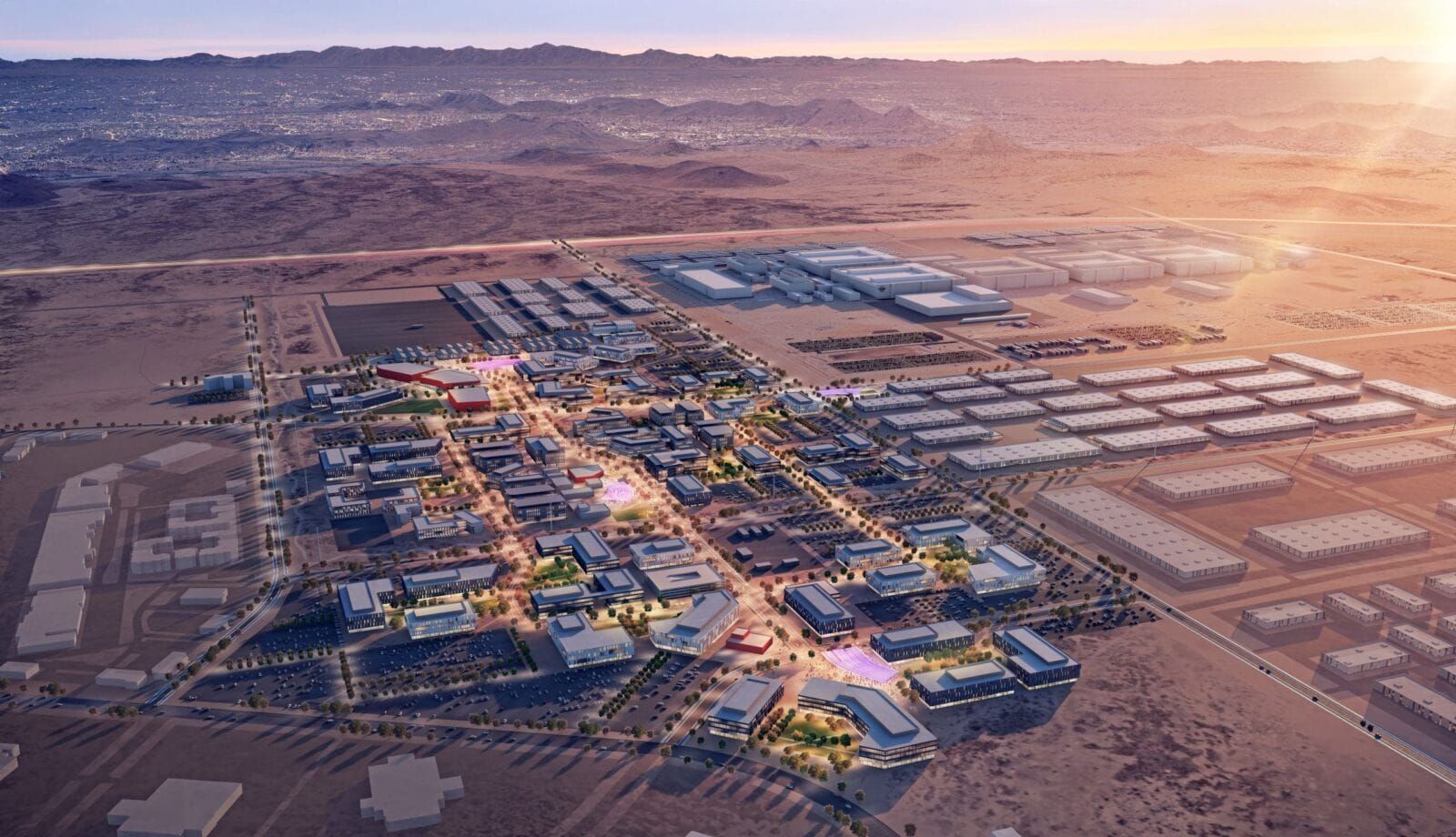
The largest piece is Halo Vista, a 2,300-plus-acre master-planned development wrapping directly around TSMC's campus, backed by Mack Real Estate Group and McCourt Partners. At full build-out it's planned to include roughly 30 million square feet of commercial space, split across retail, industrial, and research uses, plus around 9,000 multifamily units. It's designed explicitly as the support ecosystem for TSMC's workforce and supply chain — not a speculative add-on. Mack Real Estate has framed it as a 20-year buildout that could add nearly $33 billion to the regional economy once complete, and construction is already underway: horizontal infrastructure (roads and utilities) broke ground in April 2026, with vertical construction — starting with Costco and an auto mall — expected as early as 2027.
The supplier build-out isn't hypothetical
Mack Real Estate Group has stated that roughly 1,500 suppliers already do business with TSMC and may want proximity to its only U.S. manufacturing site — which is the real scale behind the "supplier workforce" thesis in Section 02. Peoria, about 25 minutes northwest of the campus, has separately established its own innovation corridor specifically to attract TSMC suppliers and the housing that comes with them, showing the ecosystem effect is already spreading beyond Halo Vista's own footprint.
The Recurring Mid-Term Rental Window
Every new fab phase creates a temporary but predictable wave of housing demand before it ever produces a single chip: construction crews during the build, then equipment-installation specialists and contract engineers during commissioning — typically 30- to 90-day stays, and typically not people looking to buy or sign a 12-month lease.
What makes this different from a one-time relocation story is the cadence. Fab 2's equipment installation window opened in mid-2026. Fab 3 will have its own installation window as it approaches its 2030 production target. Four more fabs, still on undated timelines, will each bring their own build-and-commission cycle after that. For a property positioned near the I-17 / Deer Valley / Norterra corridor, that's a multi-year, recurring furnished-rental demand cycle — not a single spike to catch or miss.
Evaluating a mid-term rental play?I can pull live comps for your target submarket on a call.
Book a CallTreat this as a demand signal with an unusually well-documented cause, not a guaranteed return. The corridor's advantage over a typical short-term rental market isn't higher yield promises — it's that you can actually see the next 2–3 demand windows on a construction calendar before they happen.
Match Your Strategy to the Timeline
The opportunities covered earlier in this piece call for three different rental strategies — not one. Which one fits depends on the phase of the build-out you're targeting and how hands-on you want to be. For a deeper breakdown of each approach, see the full Phoenix rental strategy guide (LTR, MTR & STR).
Long-Term Rental
Mid-Term Furnished Rental
Short-Term Rental
Ready to pick a strategy?Let's talk through which one fits your goals, budget, and risk tolerance.
Book a CallWhat would this address rent for?
Bring the address and tell me which strategy you're considering — long-term, mid-term furnished, or short-term. I'll pull current comps for that submarket live on the call and walk through a projection across the strategies that fit. Want to see how this works first? Visit how much income your property can generate.
This isn't an instant, algorithm-generated number — TSMC-driven submarkets are moving too fast right now for automated estimators to stay accurate. I personally pull current comps for your specific address on the call. Prefer to run your own numbers first? Try our helpful calculators.
Why This Corridor Is a Strong 1031 Exchange Play
A lot of the equity likely to flow into this corridor isn't new money — it's appreciated equity sitting in another property, often in California or another high-cost market, waiting for a tax-efficient way to move. A 1031 exchange is how that equity moves without a tax bill along the way, and this corridor happens to fit the mechanics of an exchange unusually well.
The mechanics, briefly
- Real property only. Since the 2017 tax law, only real property held for investment or business use qualifies — no personal residences, no equipment or other personal property.
- Like-kind is broad. Almost any U.S. investment real estate is like-kind to any other — a rental home, land, or small multifamily elsewhere can become a single-family rental, a mid-term furnished property, or an STR in this corridor.
- Trade equal or up. To defer 100% of the gain, reinvest all net proceeds and replace at least as much debt as was paid off. Buying down in price or debt creates taxable "boot" on the difference.
- A qualified intermediary holds the funds. Proceeds can never touch the seller's hands during the exchange — even briefly — or the exchange is disqualified.
Why the corridor fits well
Three things make this specific market a good fit for exchangers, not just buyers with new cash:
- A wide price range under one growth thesis. The submarkets in this article run from roughly $300K to $900K+, which gives an exchanger selling almost anywhere a same-corridor replacement option without stretching to satisfy the equal-or-up rule.
- Strategy flexibility. The long-term, mid-term, and short-term paths in Section 05 mean a replacement property can be matched to what the exchanger actually needs — passive cash flow, active management, or a hybrid — instead of forcing a like-for-like swap with the property being sold.
- A dated, forward-looking thesis. Most exchanges get underwritten on trailing comps alone. This corridor comes with publicly dated catalysts — Fab 2's 2027 production date, Fab 3's 2030 target — that an exchanger can point to when explaining the reinvestment decision to a CPA, partner, or lender.
Already inside a 45-day identification window?Let's move fast — I can help you shortlist qualifying properties before the clock runs out.
Book a CallExperience matters more than most investors realize
I've guided 1031 exchanges for clients relocating from out of state, including coordinating an exchange contingency for a Los Angeles-based repeat client purchasing in Arizona — timing the identification window against a new-construction closing schedule while keeping escrow, the qualified intermediary, and all parties aligned (see more client wins and case studies). With a background as a director of wealth management alongside real estate, I bring a portfolio-level view to these conversations: how a specific exchange fits your broader tax picture, cash flow needs, and long-term goals. I coordinate closely with your CPA and qualified intermediary throughout — I'm not a substitute for either.
The International Buyer Wave Nobody's Writing About
Almost every piece of TSMC housing coverage assumes the incoming workforce is domestic — relocating from California, Texas, or another U.S. tech hub. A real and growing share of it isn't. TSMC is a Taiwanese company staffing a Taiwanese-engineered campus, and that's bringing a genuine international relocation wave that almost no local real estate content addresses directly. Our Phoenix relocation resource covers what to expect for both domestic and international movers.
The number of Taiwanese nationals working in the U.S. recently hit a record high, with a meaningful share of that increase tied directly to the TSMC Arizona build-out. On the ground, that's turning into an actual community: a growing Taiwanese population is forming across Peoria, Glendale, Surprise, and Deer Valley, with restaurants, markets, and services increasingly reflecting Asian tastes and needs — the kind of organic cultural infrastructure that tends to accelerate once it reaches critical mass, not fade.
Why this is a distinct buyer segment, not just more demand
- Different financing path. International and foreign-national buyers typically need a valid passport, proof of employment, financial statements, and often a U.S. bank account — a materially different process than a domestic conventional loan. Our buyer resources walk through what to expect at each step.
- Different priorities. Proximity to emerging cultural amenities — Asian grocery access, community services, international schools — sits alongside commute time and school ratings as a real decision factor for this buyer, and it isn't something a standard CMA captures.
- Different timeline pressure. Many are relocating on a company timeline tied to a specific fab's staffing ramp, which tends to compress the house-hunting window compared to a typical domestic move.
This segment overlaps directly with two strategies already covered in this piece: it's a natural driver of the short-term rental demand in Section 05 (extended-stay housing while house-hunting or waiting on a visa/documentation step), and it reinforces the case for the established, amenity-rich communities named there — Anthem, Verrado, Vistancia, and Sterling Grove are exactly the kind of communities this buyer profile gravitates toward once ready to purchase.
Working with a relocating international buyer or client?I can walk through what to expect on financing, timeline, and neighborhood fit.
Book a CallWhat Could Go Wrong
- Timelines move both ways. Fab 2 accelerated a full year, from 2028 to 2027 — but the four newest fabs announced in July 2026 have no confirmed dates at all. Treat undated phases as directional, not a schedule you can underwrite against.
- Water remains a scrutiny point. TSMC's Arizona operations rely heavily on reclaimed water and recycling systems, but water policy in the broader Phoenix metro is an active, evolving conversation that affects new-construction approvals in some submarkets.
- Proximity isn't destiny. Metro-wide, inventory is running 15–20% above last year and roughly a third of listings have taken price cuts (see current Phoenix housing market updates). A corridor property still has to compete on its own fundamentals — condition, price, schools — not just its zip code's story.
- Growth means construction pain in the near term. North Phoenix residents are already reporting worsened traffic and strained commutes as construction accelerates. Developers and ADOT say they're coordinating mitigation — dust control, noise limits, defined work hours, and an I-17/Loop 303 interchange upgrade — but buyers considering the corridor today should factor in several years of active construction, not a finished neighborhood.
Common Questions
Is buying near TSMC's Phoenix campus a good real estate investment?
Which Phoenix neighborhoods are closest to TSMC's fab campus?
How many jobs is TSMC's Arizona expansion actually creating?
Is short-term or mid-term rental demand near TSMC real, or speculative?
What could slow down or derail TSMC's Arizona growth?
Want the submarket-level numbers?
I track proximity, inventory, and pricing data across the North Valley corridor on an ongoing basis. If you're evaluating a specific property or submarket against this timeline, let's run the actual numbers together.
Book a Free Strategy Call
Categories
- All Blogs (321)
- Active Adult & 55 Plus Communities (16)
- Arizona Relocation Guides (29)
- Buyers (211)
- Financial Planning (60)
- General Real Estate (139)
- Income From Real Estate (59)
- Market Update (26)
- New Construction (28)
- News, Updates and Coming Soon (57)
- Real Estate Agent Financial Planning (22)
- Real Estate Investing (94)
- Sellers (106)
- Vacation and Short Term Rentals (45)
Recent Posts

About the Author
Eric Ravenscroft is a Top 1% REALTOR® across North America and one of Arizona’s most trusted real estate strategists. With 15 years of experience spanning real estate, wealth management, and investment planning, he helps clients make smarter, financially grounded decisions, from new construction and relocations to STR investments, 1031 exchanges, and long-term portfolio strategy.
Eric’s expertise has earned him industry recognition, Elite status with Real Broker, and features in major publications including the Wall Street Journal, MarketWatch, MSN, and Morningstar. Clients across the Greater Phoenix Metro rely on his clarity, strategic insight, and results-driven guidance.
Ready to make a confident real estate move? Call or text Eric today.