
How Cost Segregation Turned a $1.235M Phoenix Short-Term Rental Into a $252,000 Tax Deduction
How Cost Segregation Turned a $1.235M Phoenix Short-Term Rental Into a $252,000 Tax Deduction
Inside the acquisition of 4435 E Kings Avenue: a fully furnished, turnkey short-term rental bought for California investors — passed over twice by other buyers over inspection items — and the cost segregation and bonus depreciation strategy that turned it into an immediate six-figure write-off.







A referral from a financial advisor, and a very specific problem to solve
This deal didn't start with a property search. It started with a phone call from a financial advisor partner in California, on behalf of clients who had a problem most people would love to have: too much taxable income.
His clients were high earners — the kind of household income that California and the IRS both notice — and they were looking for a legitimate way to reduce their tax exposure without taking on a business they didn't understand or a risk they weren't prepared for. Real estate came up, as it usually does. What came up next was more specific: could a short-term rental actually move the needle on their tax bill, and if so, how? It's a version of a question I hear constantly from W-2 earners in a similar bracket — and the honest answer is that it depends entirely on doing it correctly.
That question is where my work with these clients began. Over several calls with the advisor and the buyers together, we walked through what the short-term rental strategy actually requires — not the version that circulates as a rumor at dinner parties, but the version that holds up with a CPA and, if it ever comes to it, with the IRS. This is one piece of a broader real estate tax strategy I build with clients, alongside broader financial planning around the property itself.
The short-term rental tax strategy, in the code and in plain English
People sometimes call this the short-term rental tax loophole, though "loophole" undersells how specific the requirements actually are. Here's both versions — the one your CPA needs, and the one that actually matters day to day.
In the language of the tax code
Under IRC §469, rental real estate is normally a passive activity — the losses it generates can only offset other passive income, not W-2 wages or business profits. Short-term rentals get a specific carve-out. If the average guest stay is seven days or less (or up to thirty days when substantial services like daily cleaning are provided), the activity falls outside the passive rental definition entirely.
From there, the owner has to clear one of the material participation tests under Treas. Reg. §1.469-5T — commonly, working more than 100 hours on the property and more than anyone else involved, including the property manager. Meet that bar, and the activity is treated as non-passive. No REP status required.
That's the door. A cost segregation study is what walks through it: an engineering-based analysis, ideally including an on-site inspection per the IRS's own Cost Segregation Audit Techniques Guide, that reclassifies components of the purchase price — flooring, cabinetry, appliances, fencing, landscaping, pool equipment — out of 27.5-year depreciation and into 5-, 7-, and 15-year property under IRC §168(k). The One Big Beautiful Bill Act (OBBBA) permanently restored 100% first-year bonus depreciation for qualifying property placed in service after January 19, 2025, which means those reclassified components can be deducted in year one, in full. For a broader look at how this plays out across different income levels, I keep a set of real estate tax strategy scenarios for 2026.
In plain English
Normally, if you buy a rental property, the tax losses it produces are stuck in their own little bucket — they can lower the tax on other rental income, but they can't touch the tax on your salary or your business profits. That's the rule for almost every landlord, and it's part of why so many high earners underestimate real estate as an asset class in the first place.
Short-term rentals get an exception, but you have to earn it. You can't just own the property — you have to actively run it: setting your own pricing, coordinating your cleaner, handling guest messages, making the calls a real operator makes. Do that, and the IRS treats you less like a passive landlord and more like a small business owner.
Once you clear that bar, a specialist walks through the home and essentially prices out everything in it separately from the building itself, and because of a recent change in the law, all of that can be written off immediately instead of over decades. For this property, that added up to a $252,000 deduction in year one alone, money that directly offset the clients' other income. I keep a full breakdown of how I evaluate short-term rentals and vacation homes for this exact purpose, along with a set of calculators clients use to sanity-check acquisitions before we go under contract.
What happens later: recapture, and the planned exit
None of this is a permanent, tax-free windfall, and it's worth being straight about that. When a property like this eventually sells, the depreciation taken along the way doesn't just disappear — it's generally recaptured. The 5- and 7-year components pulled out through cost segregation are recaptured as ordinary income under IRC §1245 up to the amount deducted, and the building's own depreciation is subject to a top 25% rate on the "unrecaptured §1250 gain." In plain terms: the $252,000 deduction is largely a timing benefit — real cash-flow value today — unless the exit is handled deliberately.
That's exactly why these clients aren't planning to simply sell this property down the road. The plan is to eventually roll it into a 1031 exchange — trading into another investment property and deferring both the capital gain and the depreciation recapture into the replacement property's basis, rather than triggering a tax bill at the sale. Done again at the next sale, and the one after that (an approach sometimes called "swap till you drop"), that liability can keep deferring indefinitely. If the property is ever passed to heirs instead of sold, its basis steps up to fair market value at death, and the deferred gain and recapture can disappear from the tax picture entirely. I go deeper on how depreciation, 1031 exchanges, and step-up in basis fit together in this article.
Eric is a preferred real estate partner for USAA, Chase, SoFi, PennyMac, Citibank, Citizens, Huntington, and Fifth Third — reinforcing his standing among the industry's most trusted advisory professionals.








Nine weeks, one home two other buyers had already walked away from
Understanding the buyer, not just the budget
Before we looked at a single listing, we spent time on the phone — myself, the financial advisor, and the clients — making sure they understood exactly what material participation would require of them day to day. A tax strategy only works if the people living it actually want to live it.
Targeting a very specific pocket of Phoenix
We narrowed the search to a corridor where the next street over is technically Scottsdale — same demand, same guest profile, same comp set — without the Scottsdale price per square foot. That distinction alone changed the entry price by six figures without changing the revenue potential at all. It's the kind of gap that shows up clearly if you're tracking Phoenix housing market updates month over month rather than just the headline median.
The home other buyers had passed on
4435 E Kings Avenue had already been under contract with at least one other buyer who walked after inspection turned up a list of items. Most buyers see a punch list and see a headache. We saw a fully renovated home — over $622,000 in documented upgrades, down to the studs on the addition — sitting at a price that no longer reflected what was actually inside it.
Negotiating from a position of knowledge, not hope
Because we understood exactly what the inspection items were and what they'd actually cost to resolve, we negotiated a $13,000 credit in lieu of repairs and brought the price down from a $1,300,000 ask to a $1,235,000 close — a $65,000 discount on a home that had already been renovated to a standard most STR investors spend years and hundreds of thousands of dollars trying to reach.
Close, and the keys already turning
The clients closed on a fully furnished, fully decorated, ready-to-book property — right down to the kitchen drawers and the backyard furniture — and, through a partnership on our side that made an unusually clean handoff possible, took over the existing Airbnb listing's bookings and guest reviews rather than starting from zero.
A house built to perform, not just to look good in photos
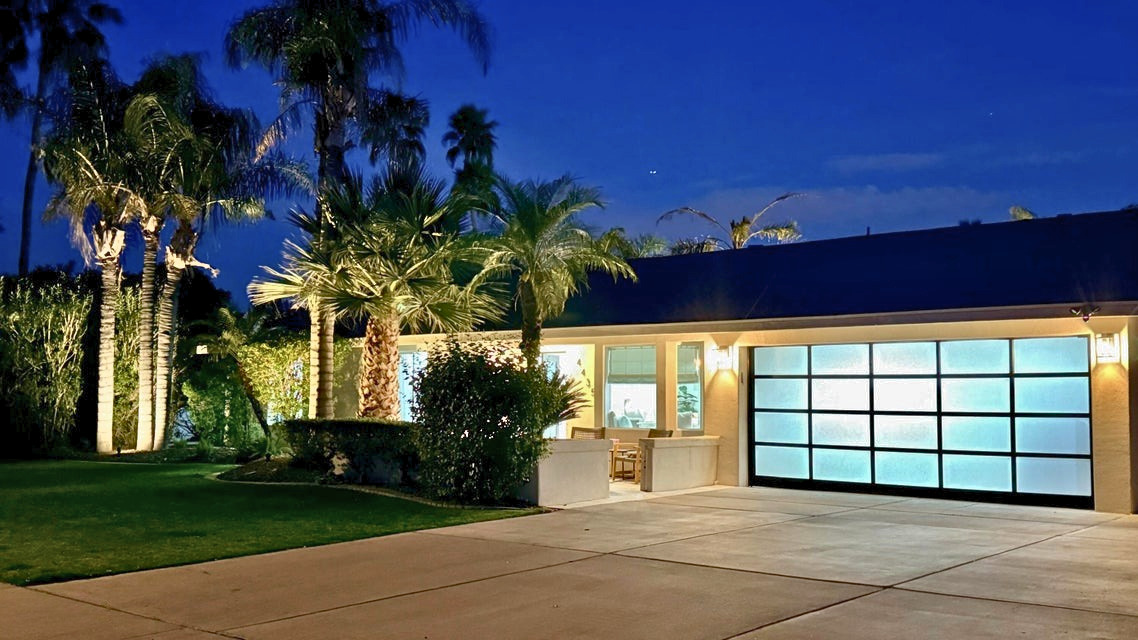
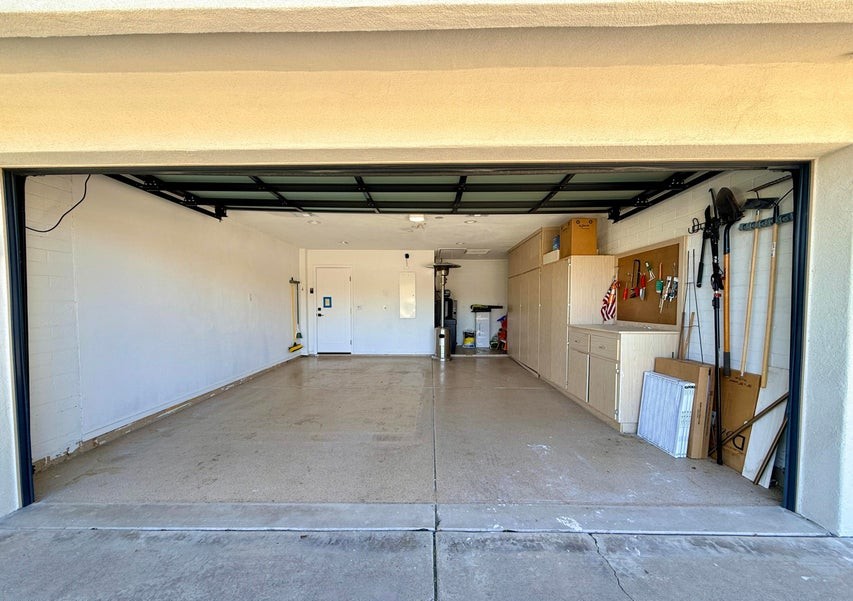
Four bedrooms — two guest suites and a primary that outclasses most of the comp set — three full bathrooms, and 2,522 square feet on a 10,044 square foot lot. The garage has already been converted and conditioned into a game room, which meant one more revenue-generating space without a single additional dollar spent. It's also a layout flexible enough to work as a long-term or mid-term rental if the strategy ever needed to pivot — see my Phoenix rental strategy guide comparing LTR, MTR, and STR for how the numbers shift across each.



New framing, lumber package, drywall, spray foam insulation, and vaulted ceilings — a full second living wing built rather than bolted on, with its own tiled bathroom finished to match the primary.
Full cabinet package, marble countertops and a waterfall island, a marble-wrapped fireplace, all-new appliances, engineered flooring, and custom bifold doors throughout.
Tile through both guest bathrooms and the primary suite, glass shower enclosures, a custom stone-wrapped vanity, and fully built-in closets across the house and the addition.
New A/C and ductwork for both the original home and the addition, a new roof, all-new electrical and lighting, and a fully integrated smart home system with a dedicated rack and smart switches throughout.
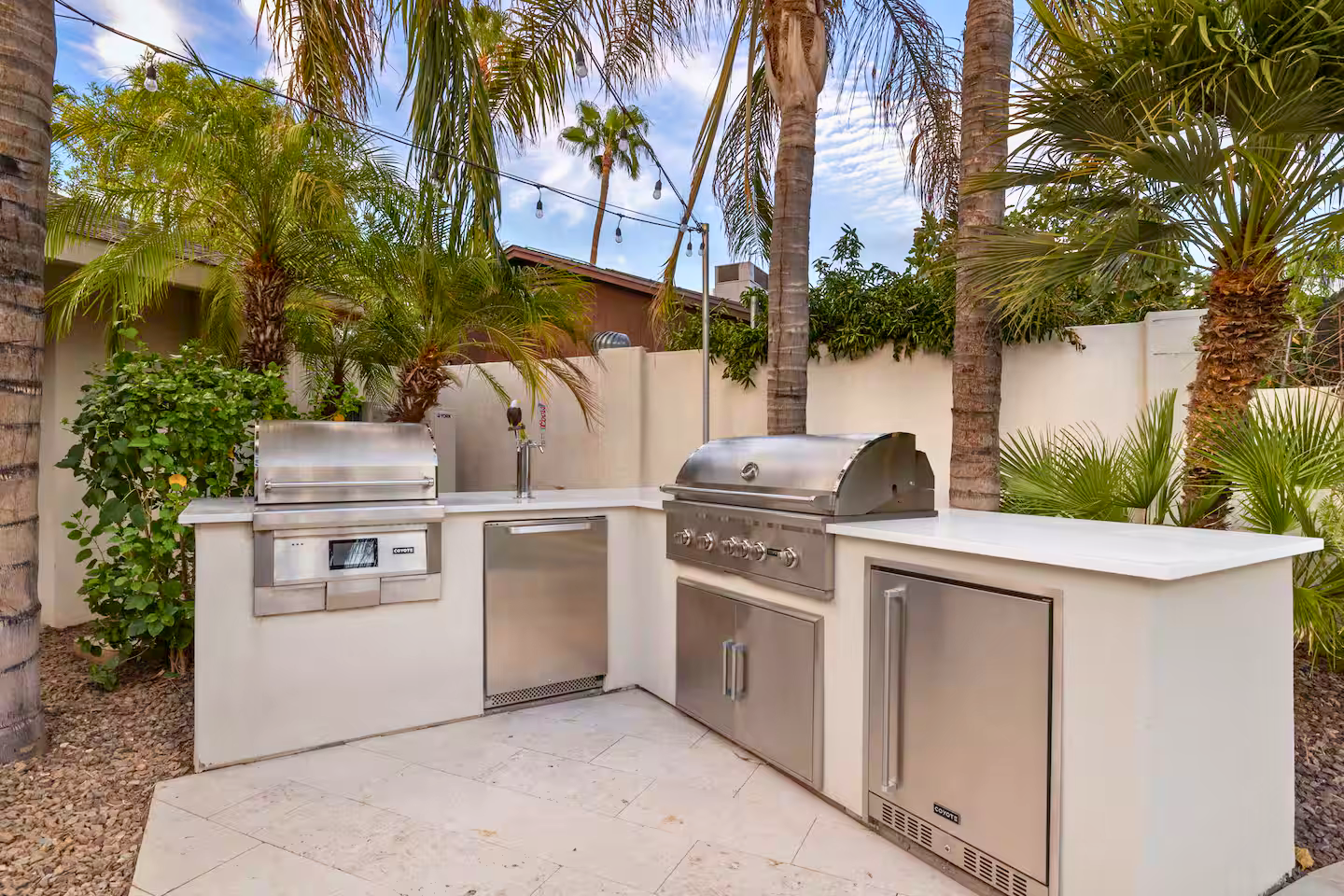
Refurbished pool with new Pebble Tec, pump and filter; 1,400 square feet of white travertine; a timber-framed pergola; a misting system; a raised garden bed; an outdoor kitchen and BBQ; and landscaping with a new drip and sprinkler system, front to back.
A hot tub, a sauna, or a second seating area around the pergola would each layer on top of an already resort-grade backyard — upside the clients haven't needed to spend a dollar on yet.



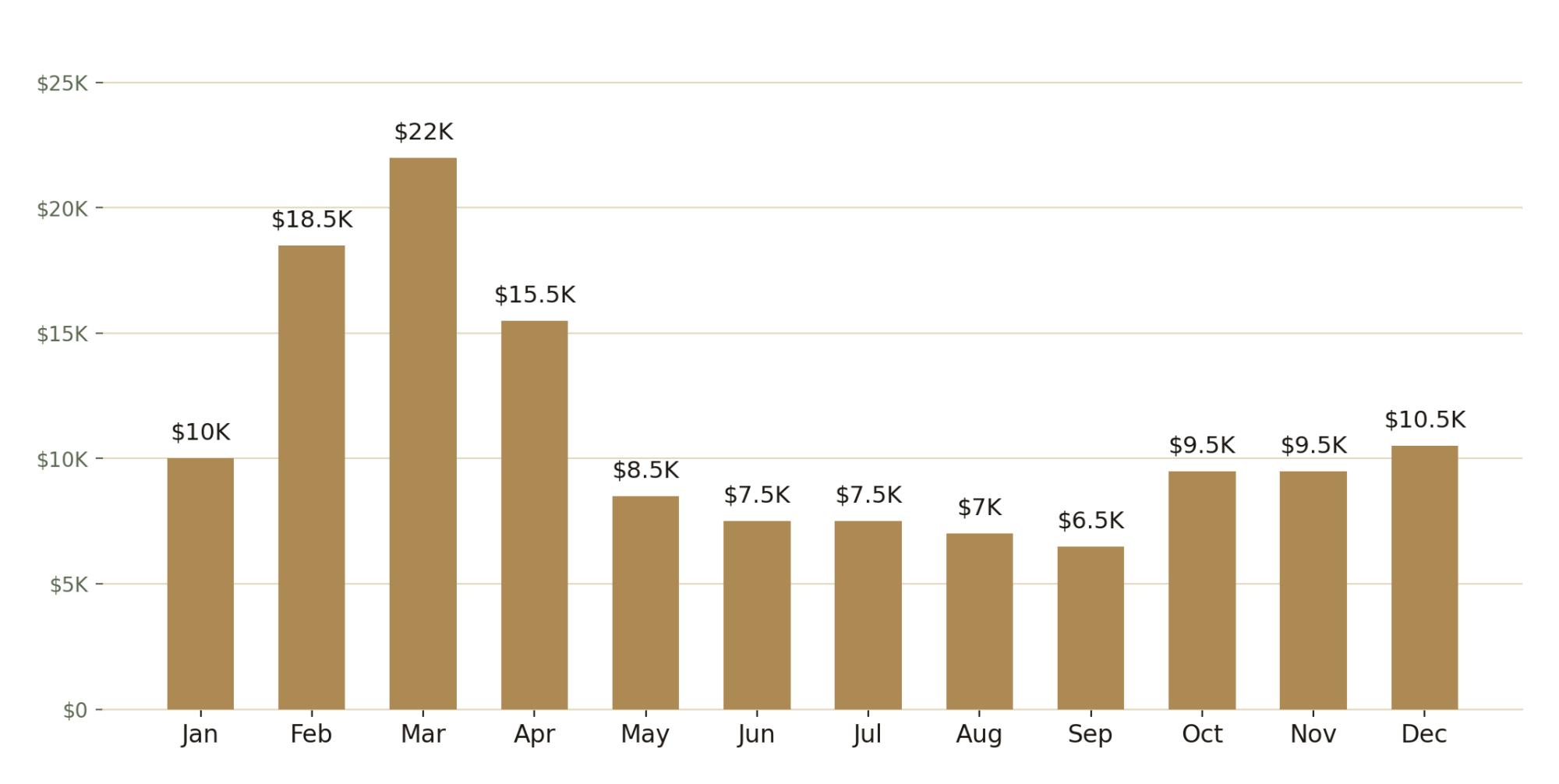
What $1,235,000 actually bought, on paper and on the calendar
This is the same underwriting I run on every Arizona investment property a client is considering, before we ever go under contract.
| Projected annual revenue | $133,106 |
| Operating expenses | $14,700 |
| Operating income | $118,406 |
| Mortgage & taxes | $74,263 |
| Year-one cash flow | $44,143 |
| Purchase price | $1,235,000 |
| Down payment (25%) | $300,000 |
| Standard + bonus depreciation, year one | $267,076 |
| Total tax deduction, year one | $330,979 |
| 10-year projected total return | $1,336,918 |
These are the same figures I run before a client signs a purchase agreement — not a projection for your return. If you want to sanity-check a property you're considering, I keep a page on how much income a property can generate. For the depreciation side specifically — including how it interacts with 1031 exchanges and step-up in basis down the road — I break down the full mechanics in this article.
Fully furnished, already booked, already reviewed
Furniture, decor, kitchen items, outdoor furniture — everything the clients would have spent months and tens of thousands of dollars sourcing was already in place at close. That alone took the timeline from "buy, then build a rental" down to "buy, then open the calendar." For anyone earlier in that process, I keep a full Arizona short-term rental guide covering permitting, setup, and management before you get to this point.
"Turnkey" gets used loosely in this market, so it's worth being specific about what it actually meant here. A lot of listings call themselves turnkey and really just mean the furniture stays — a couch, a bed, maybe a TV. This property went considerably further. The kitchen alone came stocked with real flatware, dinner plates, glassware, and wine glasses for a full group, plus every small appliance a guest actually reaches for on vacation — a coffee maker, a toaster, an Instant Pot, an air fryer, even a popcorn maker.
What made this an even cleaner win is something that almost never happens in a resale: the clients took over the existing Airbnb listing itself — the guest reviews and the bookings already on the calendar — rather than launching a brand-new listing with zero history and zero social proof. Through a partnership on our side, we made that handoff possible for them.
You can see the listing as it stands today here: the property on Airbnb.

A Five-Star Client Review
"We were introduced to Eric about two months ago. He was highly recommended, and we now know why. In those two months, Eric educated us about the opportunities with short-term rentals, rental revenue analysis, connections with mortgage brokers, insurance brokers, title and escrow companies — advice, recommendations, everything. Since we were in California, we relied on Eric for every detail we needed, and he delivered. We were able to make an offer and close on a beautiful home that was fully furnished and ready to rent out immediately. The whole process was very efficient and quick. We are very appreciative to Eric and are looking forward to working with him again on other real estate opportunities in Arizona." — Alberto, Buyer, 4435 E Kings Avenue
This is one of several stories like it — see more in my collection of client wins across Phoenix real estate.
170+ Five-Star Google Reviews for The Ravenscroft Group
About Eric Ravenscroft
I'm the founder of The Ravenscroft Group at Real Broker — a Top 1% REALTOR® across North America and Top 100 in the Greater Phoenix Metro, recognized as a Platinum Producer (2022–2025) and President's Club recipient (2021–2025). I hold the CRS designation — the highest credential in residential real estate — alongside GRI, ABR, MRP, SRES®, and RSPS. My production is independently verified by RealTrends, which ranks me the #1 agent by both volume and transaction sides in my city based on 2025 sales data.
Before real estate, I served as a Director of Wealth Management, advising physicians, executives, and business owners on tax planning, investment strategy, and long-term wealth building. That background is what turned a passed-over listing on Kings Avenue into a fully underwritten, fully furnished acquisition in nine weeks — coordinated end to end with a California-based financial advisor and closed without the client ever needing to manage a renovation, source a single piece of furniture, or start a rental listing from scratch.
I've closed more than $100 million in residential sales and helped clients create over $152 million in long-term wealth. My insights on Phoenix real estate and investment tax strategy have been featured in The Wall Street Journal, Morningstar, MarketWatch, MSN Money, and The Residential Specialist. I'm also the host of The House of Ravenscroft — a completed series, still free to stream in full on Spotify, Apple Podcasts, YouTube, Amazon Music, and iHeartRadio.
I'm the preferred real estate partner for USAA, Chase, SoFi, PennyMac, Citibank, Huntington, and Fifth Third — institutions that refer their clients to me because they trust me to deliver both the right property and the right strategy. You can read more about my background, how I approach personal financial planning alongside real estate, or sign up for my newsletter and market guidance if you'd rather get strategies like this one before they become blog posts.
"Most agents can tell you about a neighborhood. Very few can tell you what a property will do to your 1040. I built my practice around closing that gap."
- Top 1% REALTOR® Across North America
- Top 100 in the Greater Phoenix Metro
- Platinum Producer 2022–2025
- President's Club 2021–2025
- Host, The House of Ravenscroft
- $100M+ Closed · $152M+ Client Wealth Created
What clients usually ask before doing this themselves
No. The property has to actually operate as a short-term rental — average guest stays of seven days or less, or up to thirty days with substantial services like daily cleaning. A long-term rental that occasionally hosts a short stay doesn't qualify, and neither does a property bought with the intent but never actually listed and booked.
Most owners qualify under the "more than 100 hours, and more than anyone else" test — including your property manager and cleaner — or the flat 500-hour test if you're hands-on. Either way, the hours need to be contemporaneously documented as you go, not reconstructed after the fact for your accountant.
Yes, but it changes which material participation test you're relying on. If a property manager is doing meaningful hours of work, you generally need to clear the 500-hour test yourself rather than the "more than anyone else" test, since the manager's hours now count as a competing claim.
An audit tests two things: whether your cost segregation study followed an engineering-based approach with a real site inspection, and whether your material participation hours are backed by contemporaneous records — a calendar, a log, guest-message timestamps. A properly documented study and log hold up; a desktop estimate and a reconstructed hours log generally don't.
Not automatically. When the property eventually sells, the depreciation taken is generally recaptured — as ordinary income on the cost-segregated components, and at up to a 25% rate on the building itself. It's largely a timing benefit unless the exit is planned. These clients intend to eventually roll the property into a 1031 exchange, which defers both the gain and the recapture into the next property instead of triggering a tax bill at sale.
This only works when the property, the participation, and the paperwork all hold up together.
That's the part I build with clients — matched to your income, your bracket, and an Arizona market that actually supports the structure.
Book a Strategy CallA few other resources clients use alongside this strategy
These are the pieces I point clients to most often when a conversation like this one comes up — you'll find the rest on the blog.
Categories
- All Blogs (321)
- Active Adult & 55 Plus Communities (16)
- Arizona Relocation Guides (30)
- Buyers (211)
- Financial Planning (60)
- General Real Estate (139)
- Income From Real Estate (59)
- Market Update (26)
- New Construction (28)
- News, Updates and Coming Soon (57)
- Real Estate Agent Financial Planning (22)
- Real Estate Investing (94)
- Sellers (106)
- Vacation and Short Term Rentals (45)
Recent Posts







About the Author
Eric Ravenscroft is a Top 1% REALTOR® across North America and one of Arizona’s most trusted real estate strategists. With 15 years of experience spanning real estate, wealth management, and investment planning, he helps clients make smarter, financially grounded decisions, from new construction and relocations to STR investments, 1031 exchanges, and long-term portfolio strategy.
Eric’s expertise has earned him industry recognition, Elite status with Real Broker, and features in major publications including the Wall Street Journal, MarketWatch, MSN, and Morningstar. Clients across the Greater Phoenix Metro rely on his clarity, strategic insight, and results-driven guidance.
Ready to make a confident real estate move? Call or text Eric today.