
First-Time Home Buyers in Phoenix: Look Beyond the Sales Price
Home / Blog / Buying in Arizona
First-time home buyers · Phoenix metro
First-Time Home Buyers in Phoenix: Look Beyond the Sales Price
The lowest-priced home isn't always the most affordable. Here's how I compare homes on their true monthly and long-term cost, so you choose one that works today and ten years from now.

By Eric Ravenscroft, CRS, GRI, ABR · Owner, The Ravenscroft Group at Real Broker · Former Director of Wealth Management
Updated · 18-minute read
Loan and program details reviewed by Zach Wain, Broker/Owner, Wain Capital LLC (NMLS #207079)
Quick answer
Is the cheapest home the most affordable for a first-time buyer in Phoenix?
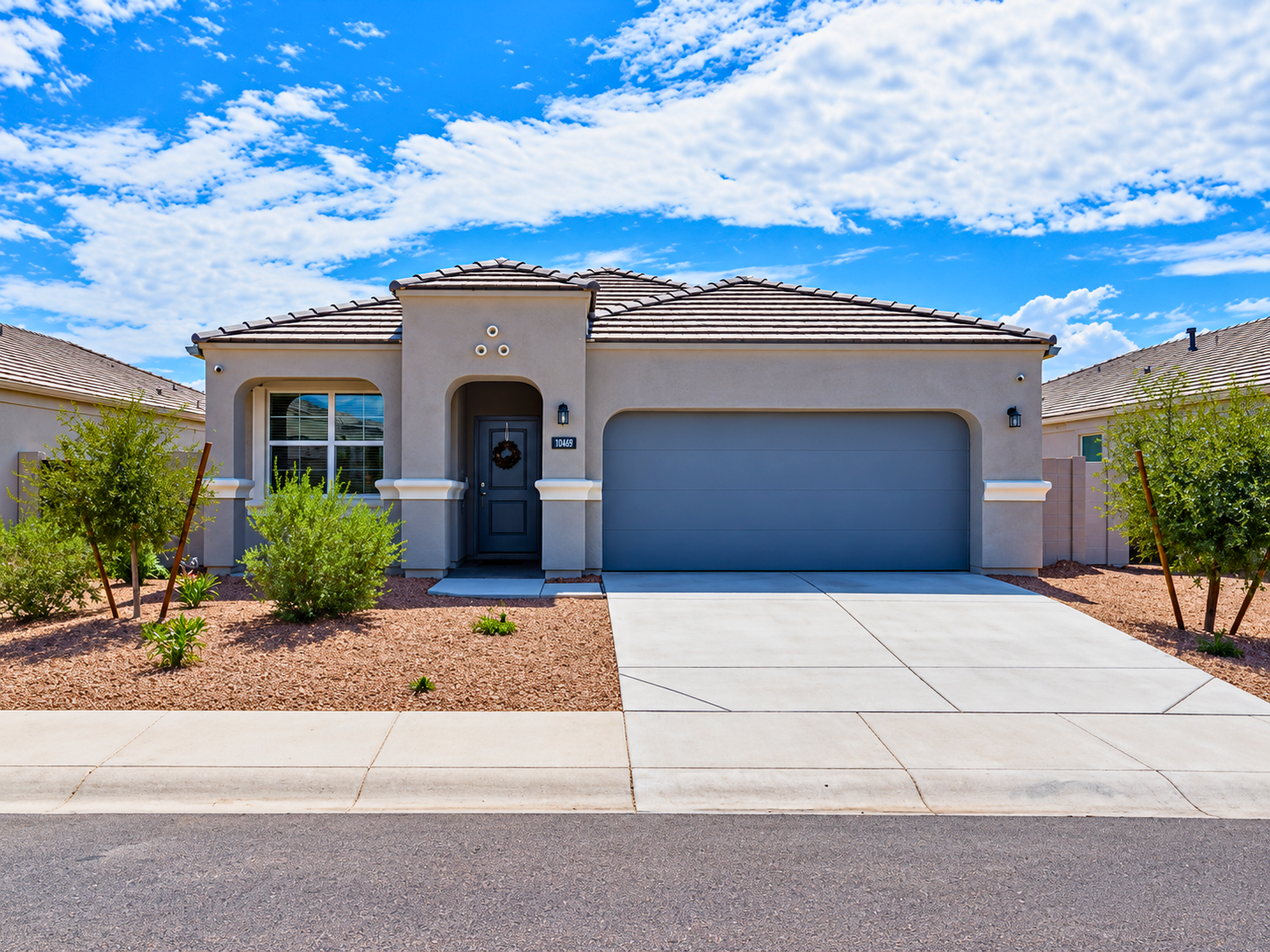
Not always. Once you add the mortgage rate, builder incentives, HOA dues, insurance, taxes and upcoming repairs, a $380,000 condo can cost more each month than a $500,000 new construction home. Compare the full monthly cost and the next 10 years of ownership costs, not just the price. Purchase price should be the beginning of the analysis, not the end.
Touring homes with first-time buyers recently highlighted an important lesson. They had filtered their search to homes under $400,000 because that felt "safe." Then we ran the full monthly numbers side by side, and the lower-priced condo was the more expensive home to own.
Before real estate, I spent years as a Director of Wealth Management, so I look at a first home the way a financial planner looks at any big commitment: what does it really cost, and what could it cost later? In this guide, I'll walk you through exactly how I help buyers compare homes in Phoenix, Buckeye, Goodyear, Peoria, Scottsdale and the surrounding Valley.
Key takeaways
- Compare payments, not prices. In our example, the $500K new build costs about $100 a month less than the $380K condo.
- The incentive does the heavy lifting. At the full market rate, that same new build would cost about $570 a month more than the condo. Get the rate terms in writing.
- Arizona heat ages homes fast. A 20-year-old home can face an AC, water heater and roof bill in the same few years.
- HOA fees need a closer look. What the fee covers, and how well the reserves are funded, matter more than the number.
- Plan for flexibility. Rental restrictions decide whether you can keep the home as a rental if life changes.
- New construction isn't always the answer. An updated resale home with seller concessions can win.
Want this comparison on homes you're considering? It's free.
Book a free true-cost call →Why the cheapest home isn't always the most affordable
The monthly payment, not the list price, decides whether a home fits your budget. As of Freddie Mac's November 5, 2026 survey, the average 30-year fixed rate was 7.18%, its third straight weekly decline, but still above 7% every week since late September (Freddie Mac). Meanwhile, some builders are still paying to buy rates down: a September 2026 analysis found reduced mortgage rates on 13.8% of new construction listings nationally, with an average advertised rate of 3.92% (The Close).
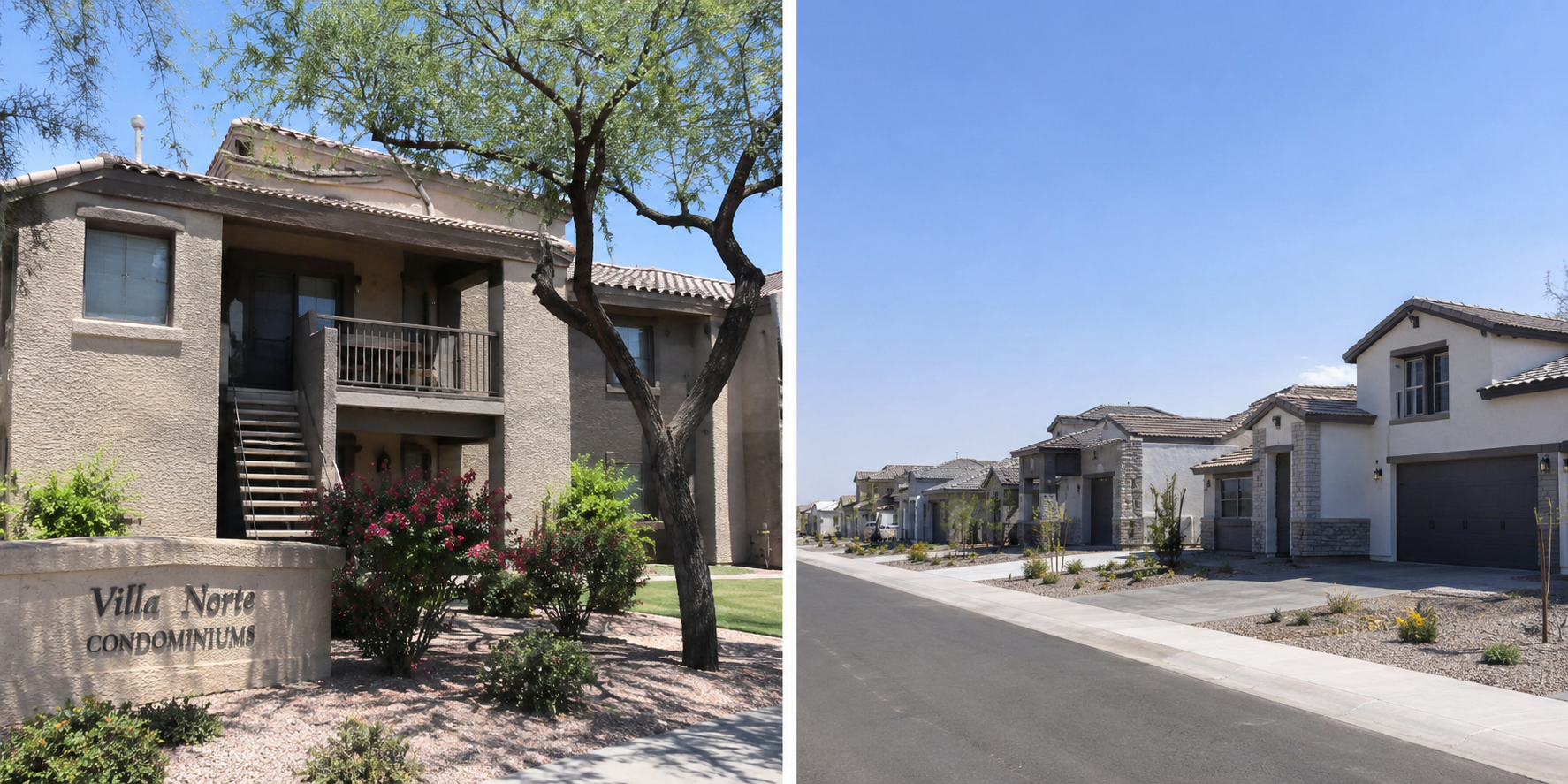
Example: $380,000 resale condo vs. $500,000 new build
Illustrative estimate. Both homes assume 5% down and a 30-year loan. Your actual taxes, insurance, HOA dues and rate will differ.
| Monthly cost | $380K resale condo (built ~2004) |
$500K new build (builder incentive) |
|---|---|---|
| Loan amount | $361,000 | $475,000 |
| Interest rate | 7.18% (market average) | 4.99% fixed (builder-paid) |
| Principal & interest | $2,446 | $2,547 |
| Property tax (est.) | $160 | $300 |
| Homeowners insurance (est.) | $40 (HO-6 policy) | $110 |
| HOA dues | $425 | $95 |
| Mortgage insurance (est.) | $180 | $198 |
| Monthly payment | $3,251 | $3,250 |
| Repair reserve (roof share, aging HVAC, water heater) | $150 | $50 |
| True monthly cost | $3,401 | $3,300 |
How I estimated it: principal and interest are standard 30-year amortization. Property tax, insurance and mortgage insurance are typical figures for these price points in Maricopa County, not quotes, and the repair reserve reflects the system ages in checklist item 1. Your lender's Loan Estimate is the final word.
In this scenario, the $500,000 home costs about $100 less per month, even though its price is $120,000 higher. Over five years, that's roughly $6,000, before counting any surprise repairs on the older property.
The catch: the incentive is doing the heavy lifting. At the 7.18% market rate, the new build's principal and interest would be about $3,218 instead of $2,547, pushing its true monthly cost to roughly $3,970, about $570 a month more than the condo. That's why the first question on any new build is: what exactly is the rate, is it fixed for 30 years, and what does it require?
What the table doesn't show
- Cash to close. The new build needs about $6,000 more for the down payment. Builders often offset this with closing cost credits.
- The rate after year one. Some incentives are temporary (a 2-1 buydown), not fixed for 30 years. Always confirm which one you're getting.
- Equity. A larger loan builds equity faster in dollars, but you also carry more debt.
- Lender strings. Most builder rates require using the builder's lender, and sometimes its title company.
Want to test your own budget first? My free real estate calculators run payments, affordability and rent-vs-buy, and my guide Can You Afford a Home in Phoenix in 2026? walks through the income math.
Get this comparison on the homes you're touring.
I'll build a side-by-side true monthly and 10-year cost estimate for each home you're serious about. Free, no obligation.
The true cost of homeownership: my 7-point Phoenix checklist
Every home I help a first-time buyer evaluate goes through the same seven checks. Together, they answer one question: what will this home really cost me over the next 1, 5 and 10+ years?
1. Age of the roof, HVAC, windows and major systems
The Arizona heat is hard on homes. Air conditioners here run most of the year, and hard water shortens the life of water heaters and plumbing fixtures. A 20-year-old home can face several big replacements within the same few years.
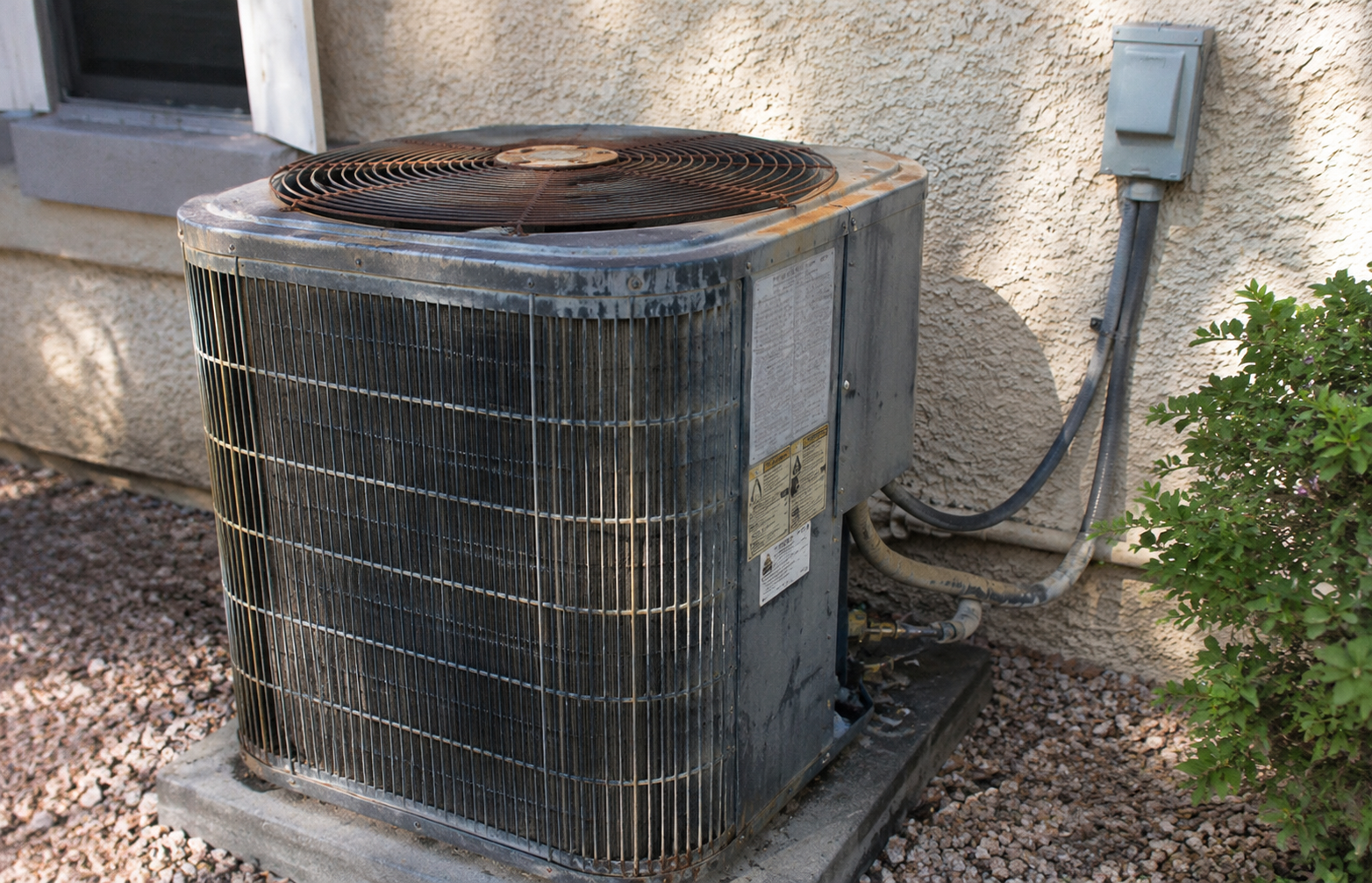
| System | Typical life in Phoenix (approx.) | Replacement cost (approx.) |
|---|---|---|
| HVAC system | 10–15 years | $9,000–$15,000 |
| Water heater | 8–12 years | $1,500–$3,000 |
| Tile roof underlayment | 20–30 years | $12,000–$25,000 |
| Foam (flat) roof recoat | 5–10 years | $2,000–$5,000 |
| Shingle roof | 15–20 years | $10,000–$18,000 |
| Dual-pane windows | 20–25 years | $8,000–$20,000 |
| Pool pump / equipment | 8–12 years | $1,000–$3,500 |
Rough planning ranges. Get bids from licensed Arizona contractors and rely on your home inspection.
In Arizona, your inspection period (the BINSR window in the standard purchase contract) is when you find these issues and negotiate. I also review the Seller's Property Disclosure Statement (SPDS) for permit history, past leaks and system ages.
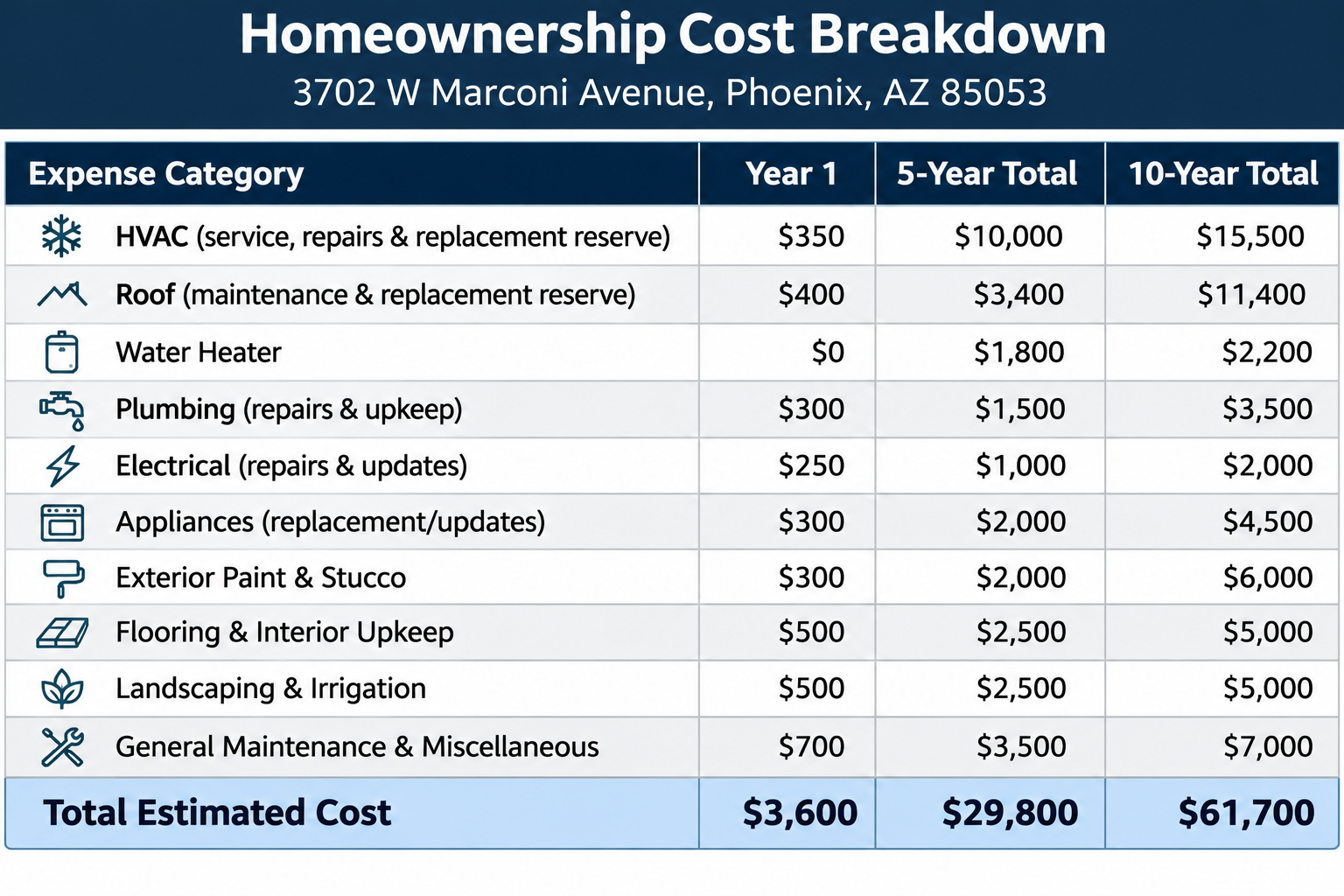
2. Expected maintenance and capital expenses over 1, 5 and 10+ years
I map out what each home is likely to need, year by year:
Want to see real ones? Here's the cost of ownership worksheet I built for first-time buyers in Deer Valley, and the 1, 5 and 10-year projection for Jamie and Rick in Scottsdale, which helped them rule out homes with expensive deferred maintenance.
A new build usually comes with a builder warranty, often 1 year on workmanship, 2 years on systems and 10 years structural. Confirm the exact terms in writing with each builder.
3. HOA fees and what they actually cover
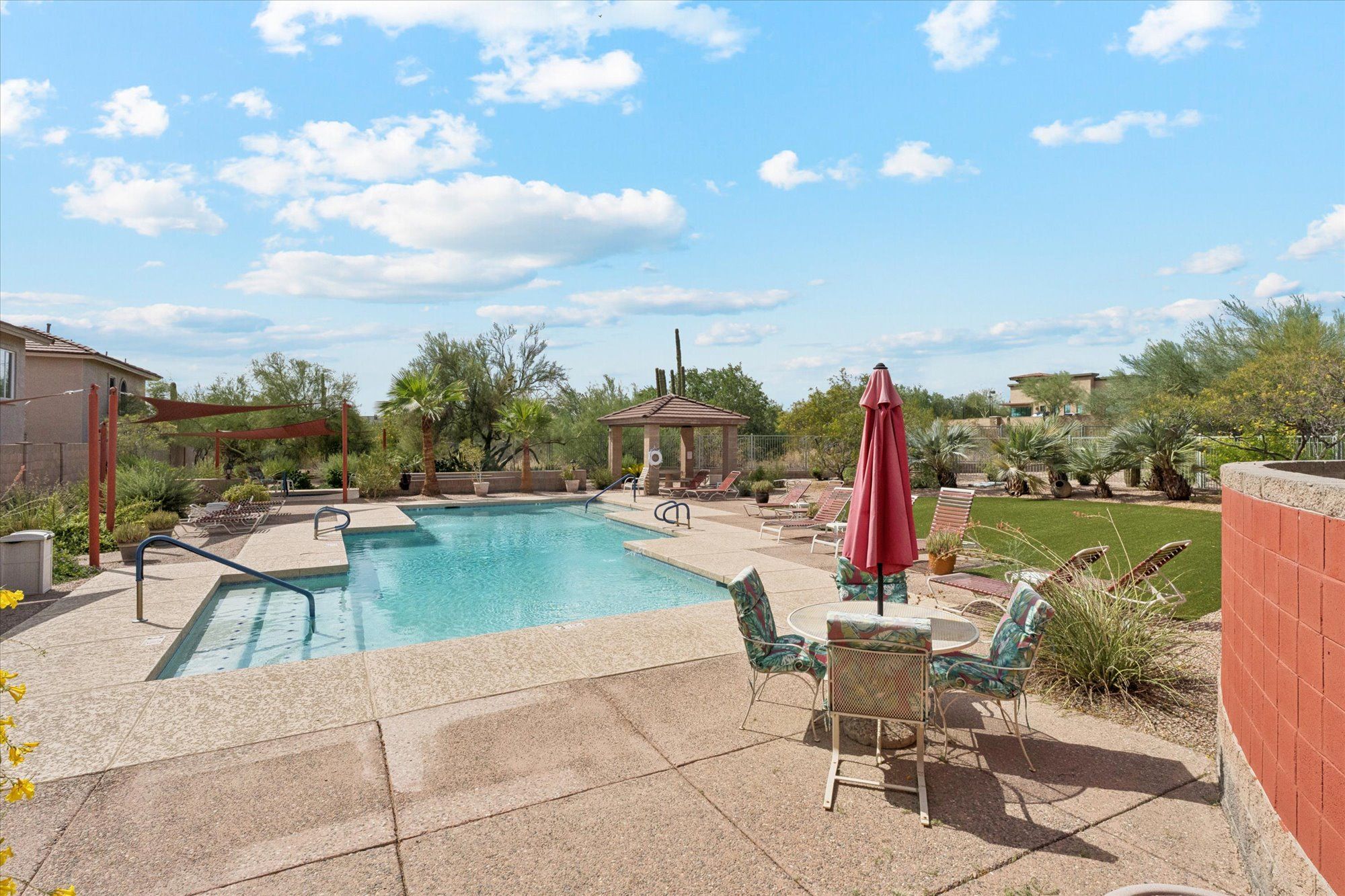
A $425 HOA fee might include water, trash, exterior maintenance, roof replacement and building insurance. Or it might cover only a pool and landscaping. Before you compare, I review:
- The HOA budget and reserve study (is enough saved for future repairs?)
- Any recent or planned special assessments
- Master insurance coverage and deductible
- Pending litigation
- For condos: whether the project is FHA- or VA-approved, which affects your loan options
A low HOA fee with an underfunded reserve can cost far more than a higher, well-funded one.
4. Rental restrictions and future flexibility
Many first-time buyers don't plan to stay forever. If your job changes or your family grows, can you rent the home instead of selling? HOA rules (CC&Rs) may set minimum lease terms, cap the number of rentals or ban short-term rentals. Some new communities limit leasing in the first year. I read these documents with you before you commit.
5. Resale potential and surrounding growth
What's being built nearby matters as much as the home itself. I look at planned freeways, employers, schools, shopping and how much new supply is coming. Lots of similar new homes in one area can mean more competition when you sell. Water supply rules also shape where Valley growth can happen, so I check this for outlying areas. For current prices, inventory and days on market by city, see my monthly Phoenix housing market updates.
6. New construction incentives and interest rate buydowns
Incentives can change the math more than any other factor. I cover them in detail in the next section.
7. Long-term rental potential
Even if you never become a landlord, a home that would rent well is a safety net. Median asking rent across the Phoenix metro was about $2,300 in July 2026 (SFR Analytics). I estimate likely rent against your future payment, factoring in HOA rules, property management costs and vacancy. If investing interests you later, see my guide to Arizona investment property.
Want to walk through this checklist on a real listing?
Book a walkthrough call →New construction incentives and rate buydowns, explained
Builders across the country are still leaning on incentives. In NAHB's September 2026 survey, 66% of builders reported using sales incentives and 38% cut prices (The Close).
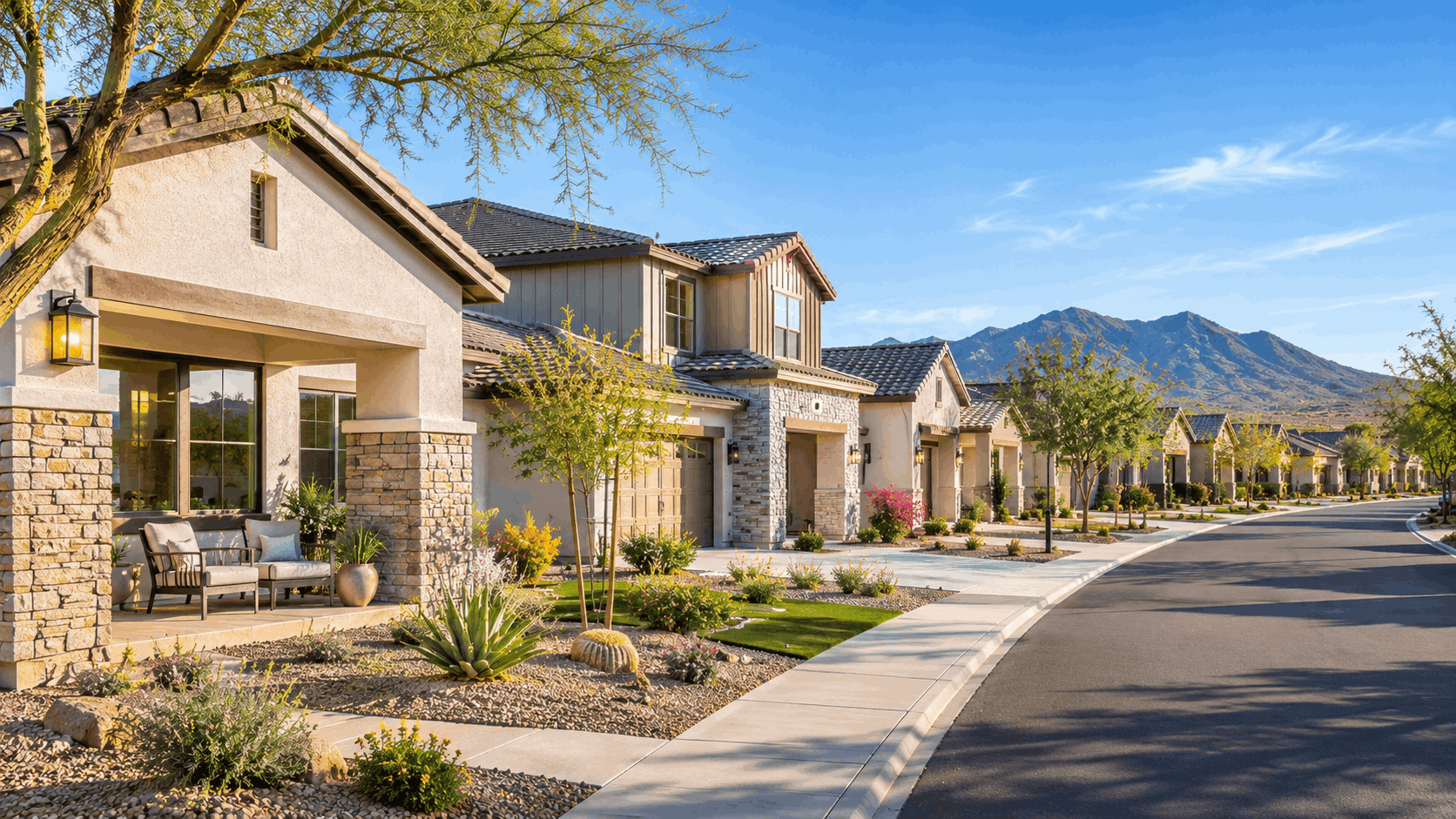
How incentives work in the Valley right now: the deepest across-the-board rate buydowns of 2024–2025 have wound down. Incentives still exist, especially on quick move-in homes that have sat on the market, but they're negotiated home by home. See where today's opportunities are in my end-of-2026 new construction deals.
| Incentive | How it works | Best for | Watch out for |
|---|---|---|---|
| Permanent rate buydown | Builder pays points so your rate is lower for all 30 years | Buyers staying 5+ years | Usually tied to the builder's lender |
| Temporary buydown (2-1 or 3-2-1) | Rate starts low and steps up yearly until it reaches the note rate | Buyers expecting income growth or a refinance | Payment rises in years 2 and 3 |
| Closing cost credit | Builder pays some or all of your closing costs | Buyers short on cash | May be worth less than a price cut |
| Price reduction | Lower contract price | Buyers who want a smaller loan | Less monthly relief than a buydown |
| Upgrades / design credit | Free flooring, appliances, blinds, etc. | Buyers who'd pay for these anyway | Adds less value than cash or rate help |
How a temporary buydown changes your payment
On a $405,000 loan at 6.5%, principal and interest is about $2,560 a month. With a builder-funded 2-1 buydown, it drops to about $2,052 in year one and $2,300 in year two, then returns to $2,560 from year three on (The Close).
That early relief is real, but you must qualify for, and be comfortable with, the full payment from day one.
My rules for comparing builder offers
- Get the incentive in writing, including whether the rate is fixed, temporary or adjustable.
- Compare Loan Estimates. Get a quote from the builder's lender and at least one outside lender for the same scenario (CFPB guide).
- Price the incentive in dollars. In our example, the 4.99% rate saves about $670 a month in principal and interest versus the market rate. Buying a rate down that far can cost a builder tens of thousands of dollars, so ask what it's worth and whether you can take it as a price cut or closing credit instead.
- Ask about standing inventory. Completed, unsold homes often get the biggest incentives.
- Check the deadline. Many incentives require closing by a set date.
- Never skip an independent inspection, even on a brand-new home. I recommend a pre-drywall inspection and a final inspection before closing.
- Bring your own agent from the first visit. Most Phoenix-area builders offer to pay the buyer's agent, but usually only if your agent is registered on your first visit. You'll sign a written buyer agreement with your agent that spells out compensation, so confirm the builder's offer in writing. The on-site sales team works for the builder.
For the full playbook, read my Phoenix New Construction Buyer's Guide and browse current Arizona new construction communities.
Touring new builds soon? Talk to me first.
I'll show you which builders have the strongest incentives right now, and make sure you're registered so the builder's offer to pay your agent applies.
First-time buyer programs and loan options in Arizona
Reviewed by Zach Wain, Broker/Owner of Wain Capital LLC in Scottsdale, NMLS #207079. Zach reviewed the loan, mortgage insurance, loan limit and down payment assistance details in this guide.
The true-cost math above tells you which home is affordable to own. These programs and loans help with the other hurdle: the cash to get in the door. Several of them can be combined with each other and with a builder's incentive, so it pays to check them before you choose a home.
Down payment assistance in the Phoenix metro
| Program | Help available | How it's repaid | Key requirements |
|---|---|---|---|
| HOME+PLUS Arizona IDA · statewide |
Up to 4% of the loan for down payment and closing costs | 0% deferred second loan, forgiven after 5 years. Repay it if you sell or refinance before then. | Household income up to $155,386 (as of April 2026); homebuyer education course; works with conventional, FHA, VA and USDA loans |
| Open Doors City of Phoenix |
Up to 10% of the purchase price for down payment and closing costs | 0% deferred loan, forgiven after an affordability period of up to 15 years | First-time buyer; home inside Phoenix city limits; price up to $470,250; income at or below 80% of area median; 8-hour education course plus one-on-one HUD counseling |
| Home in Five Advantage Maricopa County |
Down payment and closing cost assistance as a second loan; a Platinum version is built for first-time buyers | Forgivable or repayable, depending on the option you choose | Amounts, income caps and credit minimums are revised during the year; extra help has historically gone to teachers, first responders and veterans |
Program terms as published by the Arizona IDA and City of Phoenix, November 2026. Funding and limits change; confirm current terms with a participating lender. Arizona Is Home, the state's other down payment program, serves rural counties and excludes Maricopa County (JVM Lending).
The trade-off to know: assistance programs can carry a slightly higher interest rate than a standard loan, and they typically require their own approved lender. Run them through the same true-cost comparison. A builder-paid rate with no assistance can beat a program loan, and sometimes you can use both.
Low-down-payment loan options
| Loan | Minimum down | Good fit for | Watch for |
|---|---|---|---|
| Conventional (first-time buyer) | 3% | Good credit; plans to stay several years | Private mortgage insurance until you reach 20% equity, then it can come off |
| FHA | 3.5% | Lower credit scores or higher debt ratios | Mortgage insurance usually lasts the life of the loan unless you put 10% down; condos must be FHA-approved |
| VA | 0% | Eligible veterans, service members and some spouses | A one-time funding fee unless you're exempt; condos must be VA-approved |
In Maricopa County, the 2026 loan limits for a single-family home are $557,750 for FHA and $832,750 for conventional loans. VA loans have no loan limit for borrowers with full entitlement (Homebuyer.com, JVM Lending). Both examples in this guide fit under either limit. Notice how the loan type ties back to checklist item 3: an FHA or VA buyer can only use those loans on a condo if the whole complex is approved.
The cash you'll need at closing
- Earnest money: a deposit when your offer is accepted, often around 1% of the price. It counts toward your down payment.
- Inspection and appraisal: paid during escrow, typically several hundred dollars each.
- Closing costs: lender, title and escrow fees plus prepaid taxes and insurance, commonly a few percent of the price. Builder credits, seller concessions and HOME+PLUS can cover much of this.
- Reserves: keep a cushion for the first AC repair or HOA special assessment. It's the cost first-time buyers most often forget.
Not sure which program or loan fits? I'll connect you with lenders who run all three side by side. I don't receive referral fees or anything of value from any lender I recommend.
Compare my options →New construction isn't always the answer
A resale home can be the better choice, and I tell buyers so when the numbers say it. Resale often wins when:
- The seller will pay concessions. Resale sellers can also fund a rate buydown or closing costs, and in today's buyer-friendly market many will.
- Location matters most to you. Established neighborhoods are often closer to jobs, freeways and amenities, with mature trees and larger lots.
- The systems are already updated. A 2005 home with a new roof, AC and water heater may have low near-term costs.
- There's no HOA, or a low one. That also gives you more freedom to rent, add solar or park an RV.
- You can see the finished neighborhood. No surprises about what gets built next door for the next five years.
I also check for issues that only apply to resale, such as leased solar panels that transfer with the home and permits for past additions.
Comparing homes across the Phoenix metro
Each part of the Valley has a different mix of price, home age and incentive activity. The typical Phoenix-metro home value was about $441,000 in September 2026, according to Zillow's Home Value Index. Here's how I frame each area for first-time buyers:
| Area | What first-time buyers typically find | What I check closely |
|---|---|---|
| Phoenix | Older resale homes and condos near jobs; some infill new builds; new supply near the TSMC campus in North Phoenix. See a first-time buyer win in Deer Valley. | System ages, condo HOA reserves, FHA condo approval |
| Buckeye | Large master-planned communities with heavy new construction; typical value about $391,000 (Sept 2026, Zillow) | Builder incentives, commute, future supply, special taxing districts |
| Goodyear | Newer resale and new construction near the Loop 303 job corridor | Incentives vs. 5–10-year-old resale, HOA rules |
| Peoria | Established resale in the south, newer communities like Vistancia in the north | Roof and HVAC age, school boundaries, HOA amenities vs. fees |
| Scottsdale | Higher prices; condos and townhomes as entry points, plus value pockets like North Scottsdale west of the 101. See how first-time buyers bought here. | HOA fees, rental and short-term rental rules, special assessments |
Values from Zillow's Home Value Index as cited in my market updates. Local conditions change quickly; ask me for current data on any community.
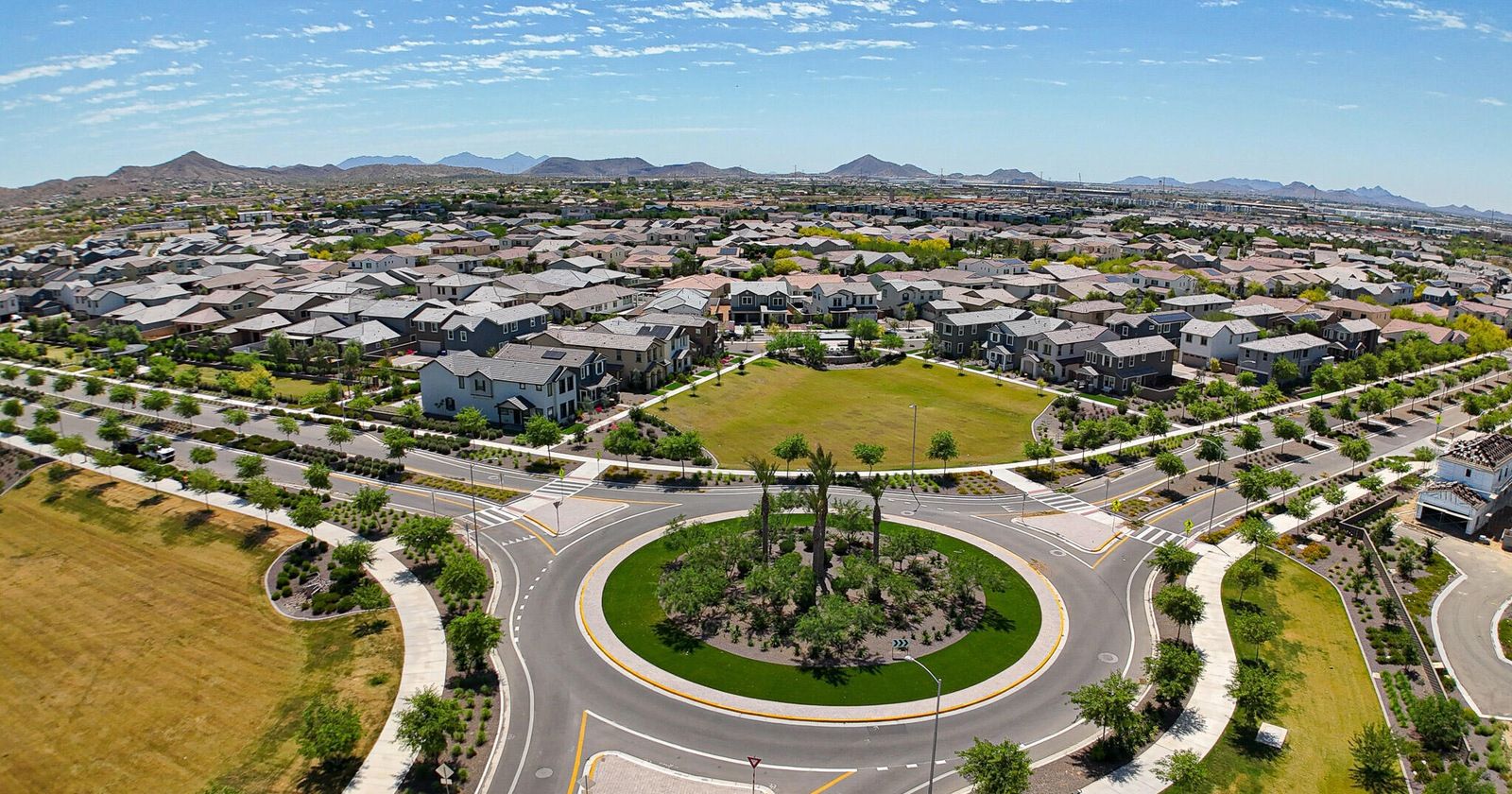


Buckeye is also where RealTrends ranks me the #1 agent, along with nearby Litchfield Park, Goodyear, Glendale and Waddell. Moving from out of state? Start with my Phoenix relocation resource and best areas to buy in Phoenix for 2026.
Not sure which city fits your budget? Let's compare.
Compare neighborhoods →Real first-time buyer results: the true-cost approach in practice
Two first-time buyer purchases I represented, at two very different price points. The same true-cost analysis drove both. Each result reflects that client's situation and isn't a promise of future outcomes. See more on my client wins page.
First-time buyers · Deer Valley, Phoenix · Referred by Chase
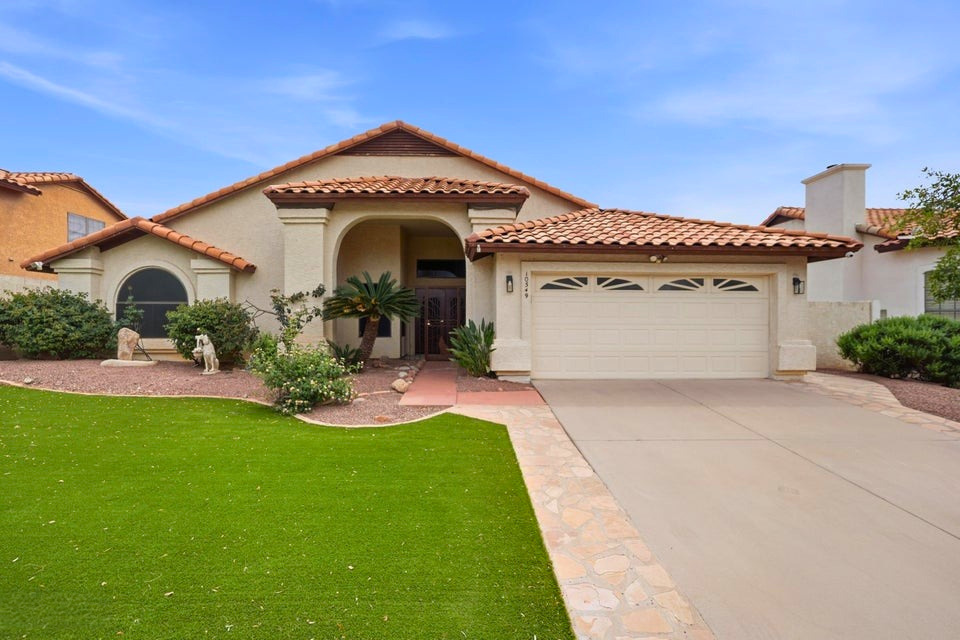
A no-HOA corner lot for about 10% under list, with $0 closing costs
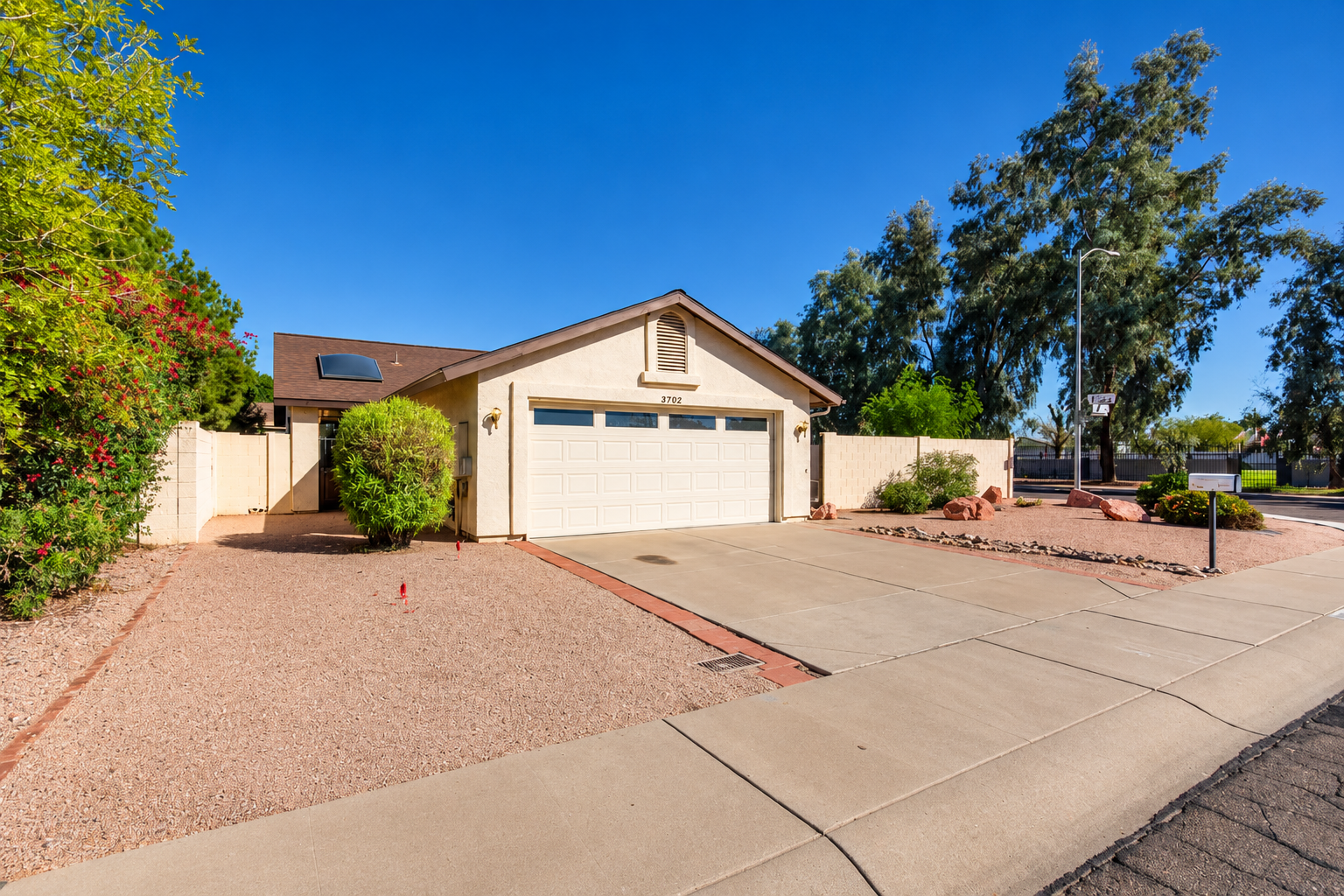
The buyers: a couple referred through Chase's preferred-agent program. They paid off their debt first, got fully pre-approved, and told me Phoenix wasn't their forever home. So the first question wasn't "can you afford the payment?" It was "what will this home let you do when you move?"
The true-cost approach: every serious contender got a scorecard (upside, condition, resale, rental fit, remodel budget) and a 1, 5 and 10-year cost of ownership worksheet. On tours, I showed them the roof, HVAC, sewer line, windows and electrical panel, and what termite mud tubes and root intrusion look like, so the inspection report held no surprises.
The deal: a 3-bed, 2-bath estate sale on a corner lot with no HOA. Because the sellers wanted a clean resolution, we offered decisively: about 10% below list, seller-paid closing costs and additional credits, for near-zero cash to close beyond the down payment.
The flexibility: with no HOA, the home can later work as a long-, mid- or short-term rental when they relocate, the same rental-restriction and rental-potential checks in this guide.
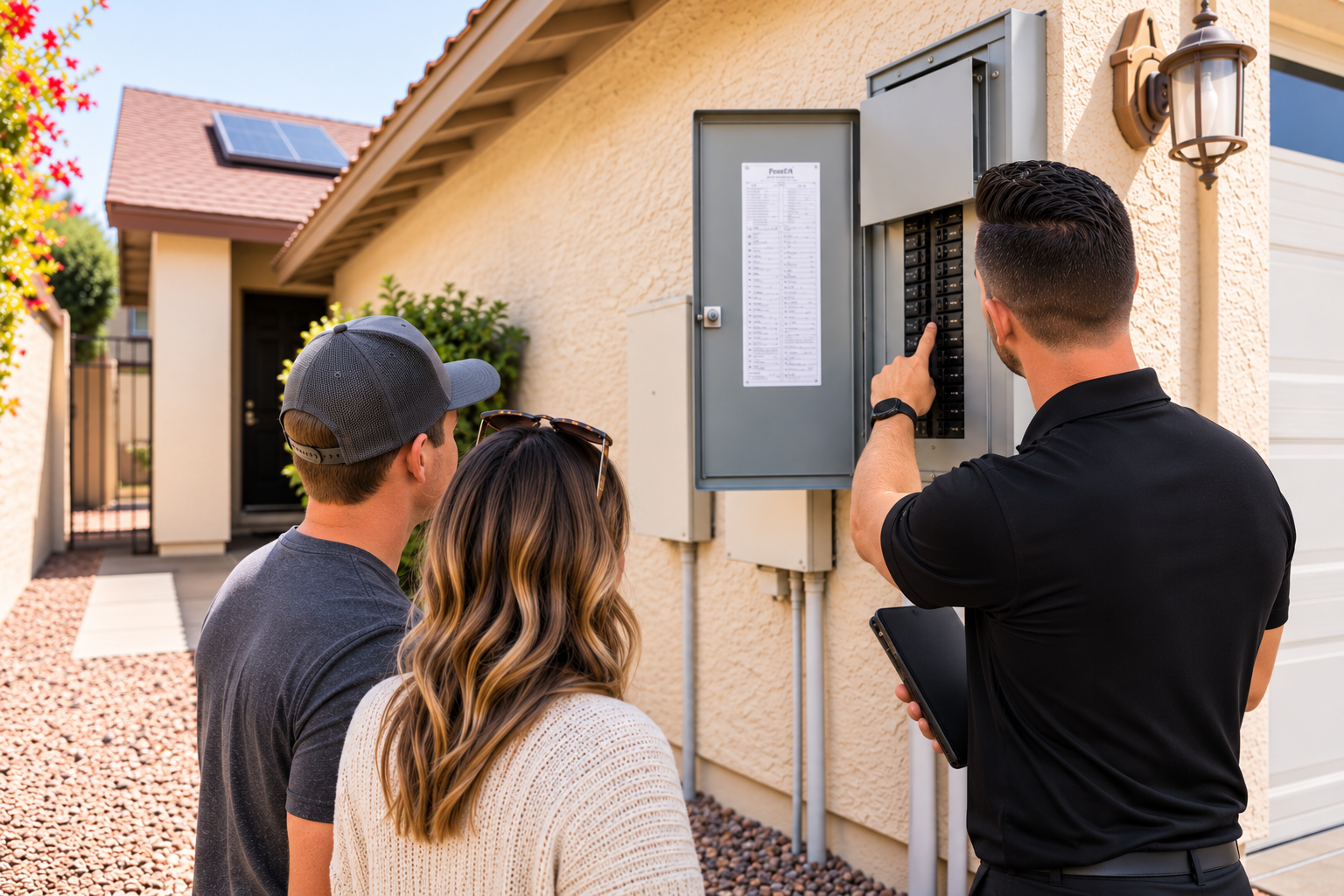
The lesson: affordability hasn't disappeared from Phoenix. It moved to motivated sellers, and the buyers who can move fast and know their numbers.
First-time buyers · Scottsdale · Closed May 2026
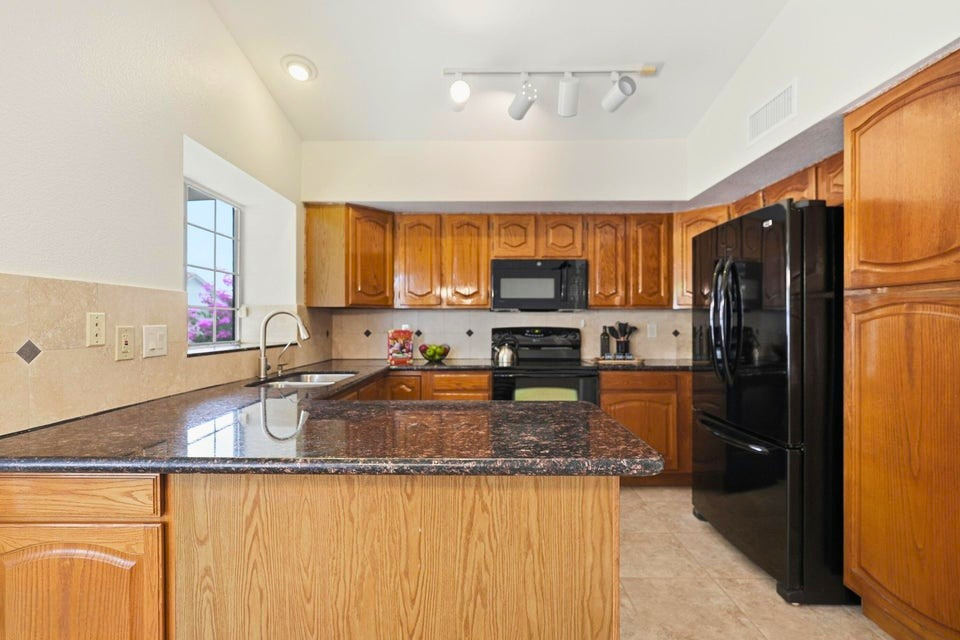
A $765K home in a $1 million neighborhood, plus $25,000 in seller-paid repairs
The buyers: Jamie and Rick, first-time buyers referred by a partner in Southern California. A previous agent had left them to make decisions without guidance, so they came in cautious and interviewed several agents before choosing me.
The true-cost approach: on every tour, I estimated remodel costs, checked the roof, HVAC, plumbing and windows, and built a 1, 5 and 10-year cost projection, the same checks in this guide. We ruled out most of the 24+ homes we saw, not because they were unlivable, but because the 10-year numbers didn't work.
The deal: an underpriced estate sale in a neighborhood where updated homes sell for $1,000,000+. We beat several competing offers at full list price in 2 days, helped by an appraisal waiver: the lender valued the home $20,000 above the price.
The inspection: the roof, a likely issue with limited disclosure history, turned out to be shot. After a multi-round negotiation, the seller paid for a full roof replacement, a full exterior repaint and plumbing repairs, about $25,000 that would otherwise have come out of the buyers' pockets in year one.
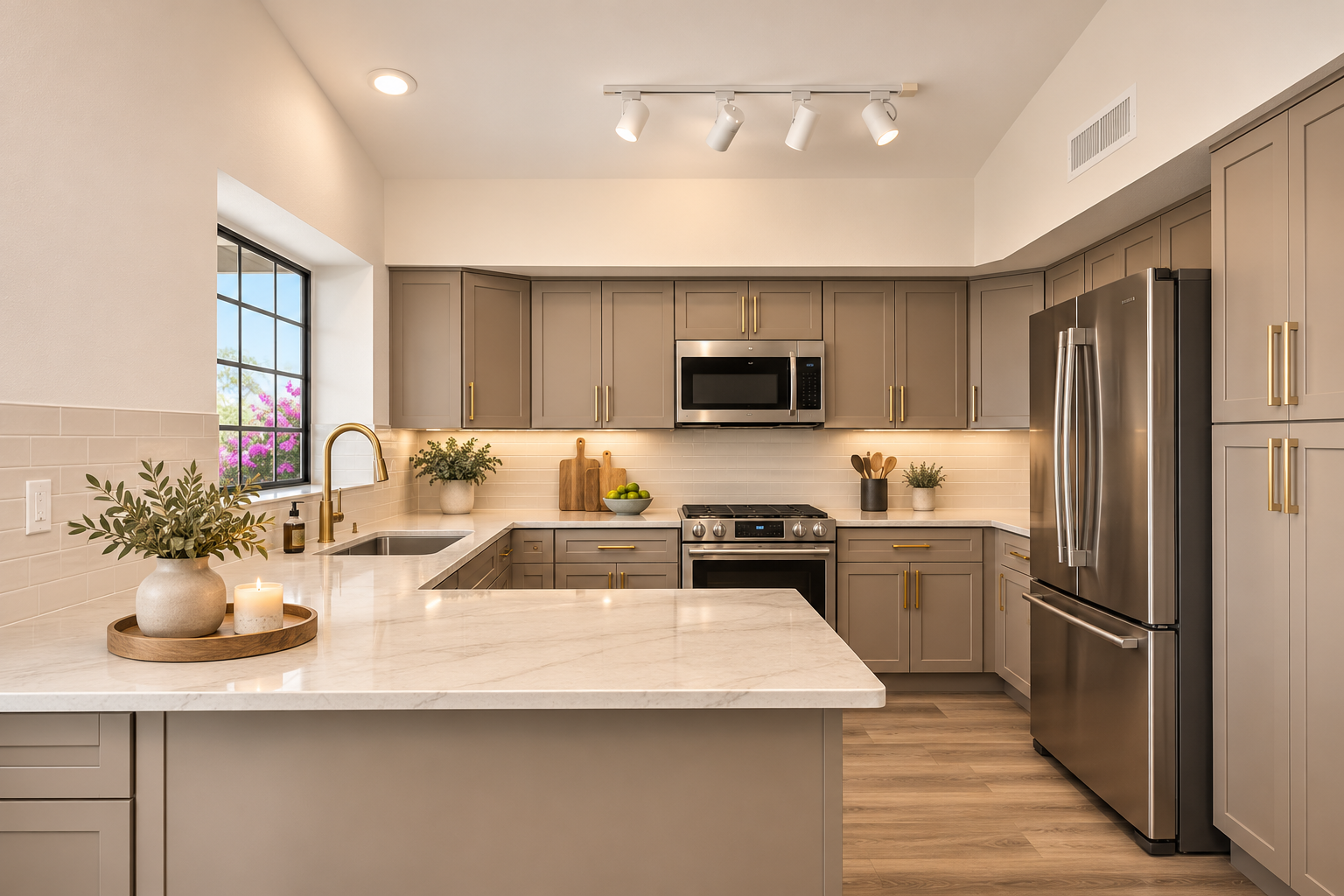
The lesson: the lowest-risk path wasn't the cheapest-looking listing. It was knowing exactly what the roof would cost, and getting the seller to pay for it.
Illustrative scenario · Phoenix condo
The condo that looked cheaper
This composite shows a pattern I see often. First-time buyers love a $375,000 Phoenix condo with a $410 HOA. The documents show an underfunded reserve study and a roof replacement assessment under discussion, and the unit's AC is 14 years old. Compared side by side with a new build carrying a builder-paid rate and closing credit, the condo's true monthly cost comes out higher, with a likely five-figure assessment on top. The price was lower; the cost of owning it wasn't.
What my first-time buyer clients say
Five-star Google reviews from clients who bought their first home with me. They're a few of the more than 175 I've earned.
"With Eric's help and guidance, I was able to close on my house in October! He made the entire process so easy to understand by walking me through every step and breaking everything down clearly and thoroughly. Eric really took the time to understand what I was looking for, not just for now, but for my future goals as well which I really appreciated! … He considers every option and helps you weigh the pros and cons so you can make the best decision possible."
Michelle R. · First-time buyer · Google review
"My wife and me finished paying off our debt and decided it was time to buy our first house since we were expecting our first baby into the world. Eric came up recommended and was incredibly helpful and patient in dealing with us since it was our first time buying a home and we didn't know the process very well. He helped us not only find a home but a home that is perfectly suited our needs and wants."
Joshua J. · First-time buyers, Deer Valley case study · Google review
"As a first time buyer, there was a lot that my wife and I didn't know, and Eric helped through the entire process, ensuring we weren't getting lied to or scammed. Not sure things would have gone as smoothly otherwise."
Bailee W. · First-time buyers · Google review
"…just bought our first home and he was so much help through the whole process, answering all our questions and helping us find our first dream home."
Kendra D. · First-time buyers · Google review
"…I am very satisfied with his knowledge of the process and especially the VA Loan process. Very professional agent who will have your back."
Jimmy E. · First-time buyer · VA loan · Google review
"He answered any questions we had quickly and was informative on everything. I had no idea what I was doing and he tried to detail it as much as possible for me haha. 100% recommend!!"
Kaitlin D. · First-time buyer · Google review
Read all 175+ five-star reviews on Google → · See all client testimonials
Frequently asked questions
Is it better to buy a condo or a new construction home as a first-time buyer in Phoenix?
It depends on the full monthly cost, not the price. A condo often has higher HOA fees and older systems, while a new build may come with a builder-paid rate buydown and a warranty. Compare principal, interest, taxes, insurance, HOA, mortgage insurance and expected repairs for both.
What is a builder rate buydown?
It's when a builder pays the lender upfront to lower your mortgage rate. A permanent buydown lowers the rate for the life of the loan. A temporary buydown, such as a 2-1, lowers it only for the first one to three years.
Do I have to use the builder's lender to get the incentive?
Usually, yes, for rate-related incentives. You can still get an outside quote and compare Loan Estimates. Sometimes the builder will offer the incentive as a price reduction or closing cost credit instead.
Do I need my own agent when buying new construction?
Yes. Most builders offer to pay the buyer's agent, so representation often costs you nothing, and you'll confirm compensation in a written buyer agreement with your agent. The on-site sales consultant represents the builder. Most builders require your agent to be with you on your first visit, so contact your agent before you tour.
Should I get a home inspection on a new build?
Yes. Independent inspectors regularly find issues in new homes. I recommend a pre-drywall inspection, a final inspection before closing and an 11-month warranty inspection.
How much should I budget for maintenance on a Phoenix home?
A common rule of thumb is 1% to 2% of the home's value per year, more for older homes with aging HVAC or roofs. The Arizona climate is tough on AC systems and water heaters, so check their ages before you buy.
What should I look for in an Arizona HOA before buying?
Review the budget, reserve study, recent meeting minutes, special assessments, master insurance and the CC&Rs. Pay special attention to rental restrictions and what the monthly fee covers.
Can I rent out my home later if I move?
Often, but not always. Some HOAs set minimum lease terms, cap the number of rentals or ban short-term rentals. Your loan type may also require you to live in the home for at least a year.
Are mortgage rates going to drop soon?
No one can predict rates reliably. The 30-year fixed averaged 7.18% in Freddie Mac's November 5, 2026 survey. Buy a home whose payment works at today's rate, and treat any future refinance as a bonus.
Are there first-time home buyer programs in Phoenix?
Yes. The statewide HOME+PLUS program offers up to 4% of the loan for down payment and closing costs, forgiven after five years, for households earning up to $155,386. The City of Phoenix Open Doors program offers up to 10% of the price for qualifying first-time buyers inside city limits, and Maricopa County's Home in Five Advantage also offers assistance. Terms change, so confirm current details with a participating lender.
How much do I need to put down on my first home in Arizona?
Less than many buyers think. Conventional first-time buyer loans allow 3% down, FHA loans 3.5% and VA loans 0% for eligible veterans. Down payment assistance can cover some or all of that, but you'll still want cash for earnest money, inspections, closing costs and a repair reserve.
What is the FHA loan limit in Maricopa County for 2026?
The 2026 FHA limit for a single-family home in Maricopa County is $557,750. The conventional (conforming) limit is $832,750, and VA loans have no limit for borrowers with full entitlement.
Which Phoenix-area cities have the most new construction incentives?
Incentive activity tends to be strongest where builders have the most inventory, which often includes West Valley communities like Buckeye and Goodyear and East Valley areas like Queen Creek. Offers are now negotiated home by home and change monthly, so ask for a current list before you tour.
Keep reading
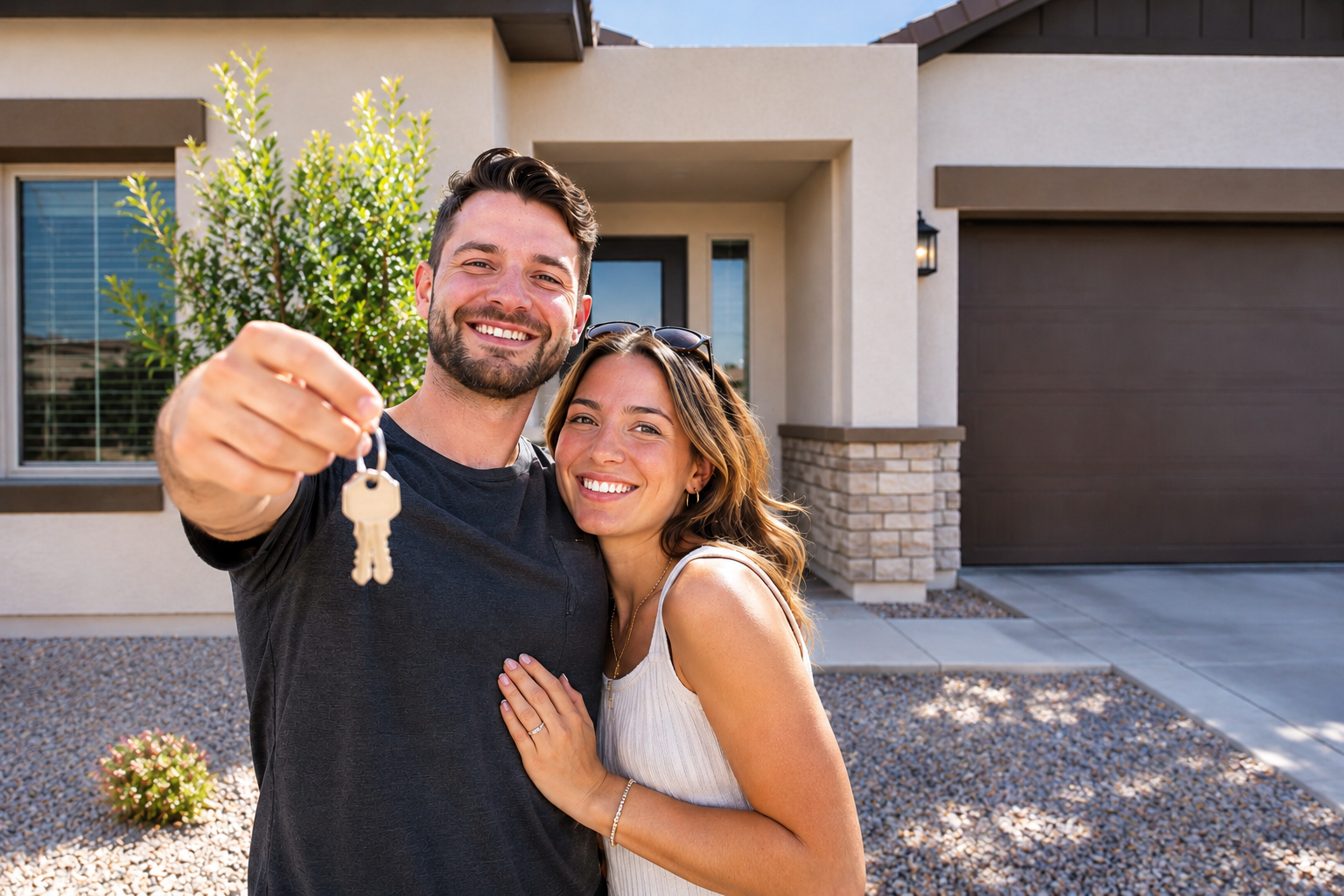
Purchase price is the beginning of the analysis, not the end.
For first-time home buyers in Phoenix, the goal isn't to buy the cheapest home or the newest home. It's to understand the true cost of homeownership and choose a property that makes sense today and over the years ahead. Starting your search in Phoenix, Buckeye, Goodyear, Peoria, Scottsdale or nearby? Let's run the numbers together.
Sources & further reading
- Freddie Mac: Primary Mortgage Market Survey (weekly 30-year fixed rate)
- Freddie Mac: Mortgage rates decline for third consecutive week to 7.18% (Nov. 5, 2026)
- Zillow Home Value Index: Buckeye, AZ
- SFR Analytics: Phoenix-Mesa-Chandler rental yields
- The Close: Builder incentives rise as mortgage rates near 7% (Sept. 18, 2026)
- Arizona IDA: HOME+PLUS down payment assistance
- City of Phoenix: Homeownership opportunities and Open Doors
- JVM Lending: First-time home buyer programs in Arizona (Aug. 2026)
- Homebuyer.com: 2026 Maricopa County loan limits
- Consumer Financial Protection Bureau: Compare Loan Estimates
- The Ravenscroft Group: Phoenix housing market updates (Zillow Home Value Index data)
Disclaimer: This article is for general education only and is not financial, legal or tax advice. Loan and program details were reviewed by Zach Wain, NMLS #207079; loan approval, rates and program eligibility depend on your full application. Eric Ravenscroft does not receive referral fees or anything of value from any lender he recommends. Rates, incentives and costs change frequently; consult a licensed lender and other professionals about your situation. The condo vs. new build comparison and the condo scenario are illustrative estimates. Client results reflect each client's situation and are not guarantees of future outcomes. Eric Ravenscroft, Arizona licensed real estate salesperson #SA691304000, The Ravenscroft Group at Real Broker AZ, LLC.
Categories
- All Blogs (329)
- Active Adult & 55 Plus Communities (17)
- Arizona Relocation Guides (32)
- Buyers (219)
- Financial Planning (63)
- General Real Estate (146)
- Income From Real Estate (62)
- Market Update (26)
- New Construction (29)
- News, Updates and Coming Soon (57)
- Real Estate Agent Financial Planning (22)
- Real Estate Investing (100)
- Sellers (107)
- Vacation and Short Term Rentals (46)
Recent Posts


About the Author
Eric Ravenscroft is a Top 1% REALTOR® across North America and one of Arizona’s most trusted real estate strategists. With 15 years of experience spanning real estate, wealth management, and investment planning, he helps clients make smarter, financially grounded decisions, from new construction and relocations to STR investments, 1031 exchanges, and long-term portfolio strategy.
Eric’s expertise has earned him industry recognition, Elite status with Real Broker, and features in major publications including the Wall Street Journal, MarketWatch, MSN, and Morningstar. Clients across the Greater Phoenix Metro rely on his clarity, strategic insight, and results-driven guidance.
Ready to make a confident real estate move? Call or text Eric today.