
Phoenix Builder Incentives: Should You Take a Rate Buydown or a Price Cut?
New Construction · Buyer Strategy · Phoenix Metro
Phoenix Builder Incentives: Should You Take a Rate Buydown or a Price Cut?
Builders across the Valley will hand you roughly the same dollars either way. What you do with them can swing your real cost by tens of thousands. Here's how I run the numbers for my clients, including the test I carried over from wealth management: treat the buydown like a bond.

Former Director of Wealth Management · #2 in Arizona, #22 in the U.S. at Real Broker
Updated · 22 min read
Financing math reviewed by Ryan Gilliam, Your Best Mortgage (NMLS #332576)






The short answer
Which builder incentive should you take?
- Keeping the loan 6+ years and rates stay high? A permanent rate buydown usually wins, often by a wide margin.
- Likely to sell or refinance within 3 to 5 years? The price cut usually wins. Its savings live in your equity and don't vanish at the closing table.
- Temporary 2-1 buydowns are the weakest use of incentive dollars in every scenario I modeled.
- The deciding variable is how much rate each incentive dollar buys. Get the builder lender's written pricing first.
- Price is permanent, rate isn't. You can refinance a rate when the market cooperates. You can never renegotiate what you paid.
- My wealth-manager test: treat the buydown like a bond you buy with the price cut you gave up. If its yield over your realistic hold doesn't clear your mortgage rate, take the price.
01Market context
Why this decision matters more right now
Rates have moved the wrong way for buyers this fall. Freddie Mac's Primary Mortgage Market Survey put the 30-year fixed average at 7.28% as of November 19, 2026, up from 7.11% a week earlier and about a full point above the 6.26% average a year ago.
The incentive picture across the Valley is uneven. As I covered in my April 2026 Phoenix market update, many builders pulled back from the sub-4% buydowns we saw early in the year. As of this writing in late 2026, the most aggressive packages I'm seeing are on finished spec inventory in parts of Buckeye, Surprise, Glendale, Peoria, Queen Creek, San Tan Valley and Maricopa. The Northeast Valley and established infill neighborhoods are a different story.
That's the first point I make to every new construction client: "Phoenix" is not one market. A quick move-in home in a West Valley master-planned community in December and a to-be-built lot in Scottsdale are negotiated very differently. My monthly Phoenix market updates track those differences by area.

02The options
The four ways builders package incentives
Most Phoenix-area builder offers are a dollar amount, often called "flex cash" or a closing credit, that you can steer in a few directions:
1. Price reduction
The contract price drops, along with your loan, down payment and recorded sale price. Builders resist this most because it sets a lower comparable sale for the whole community.
2. Permanent rate buydown
The builder pays discount points to lower your note rate for the life of the loan. A point costs 1% of the loan; how much rate it buys varies by lender and market.
3. Temporary buydown
A 2-1, 3-2-1 or 1-0 buydown subsidizes your payment for one to three years, then steps up to the full note rate. Fannie Mae requires lenders to qualify you at the full rate.
4. Closing costs & upgrades
Title, escrow and lender fee credits, or design-center upgrades, landscaping and appliances. Useful, but an upgrade priced at builder retail isn't worth its sticker price to you.
The Consumer Financial Protection Bureau says how much a point lowers your rate depends on the lender, the loan type and the overall mortgage market. About 0.25% per point is a common example, but builder-arranged forward commitments can buy more, and some quotes buy less. If any term here is new, my real estate financial glossary covers it.
03Running the numbers
One $30,000 incentive, three choices
Here's a realistic West Valley scenario. These are illustrative assumptions, not a quote from any specific builder. Your lender's pricing will differ.
Lender review: the financing scenarios in this article were reviewed and approved by licensed mortgage professional Ryan Gilliam of Your Best Mortgage in Gilbert (NMLS #332576).
| A. Price cut | B. Permanent buydown0.25% per point | B+. Permanent buydown0.375% per point | C. 2-1 temporary | |
|---|---|---|---|---|
| Purchase price | $520,000 | $550,000 | $550,000 | $550,000 |
| Down payment (20%) | $104,000 | $110,000 | $110,000 | $110,000 |
| Loan amount | $416,000 | $440,000 | $440,000 | $440,000 |
| Note rate | 7.25% | 5.545% | 4.693% | 5.25% / 6.25% / 7.25% |
| Monthly P&I | $2,838 | $2,511 | $2,280 | $2,430 / $2,709 / $3,002 |
| Where the $30,000 goes | Off the price | ~6.8 points | ~6.8 points | $10,372 subsidy + $19,628 closing costs |
How it's calculated: $30,000 ÷ $440,000 loan = 6.82 points. At 0.25% per point the rate falls 1.70%; at 0.375%, 2.56%. The 2-1 subsidy is the gap between the full-rate payment ($3,002) and the reduced payments over 24 months. Standard 30-year amortization. Run your own version with my mortgage and investment calculators.
On monthly payment alone, the buydown looks like a landslide: $327 to $558 lower than the price cut. But payment isn't total cost. The price-cut buyer also put $6,000 less down and owes $24,000 less on day one. To compare fairly, I add up cash down + every payment made + the loan balance still owed at each point in time. Lower is better.
04Total cost
Who wins depends on how long you keep the loan
| Years in the loan | B vs. A0.25%/pt | B+ vs. A0.375%/pt | C (2-1) vs. A |
|---|---|---|---|
| 3 years | Price cut by $12,578 | About even ($1,353 to price cut) | Price cut by $5,144 |
| 5 years | Break-even ($834 to price cut) | Buydown by $17,819 | Price cut by $8,474 |
| 7 years | Buydown by $10,966 | Buydown by $36,964 | Price cut by $11,712 |
| 10 years | Buydown by $28,645 | Buydown by $65,418 | n/a (market rate after year 2) |
Assumes rates stay near 7.25% and no refinance. Excludes investment return on the $6,000 smaller down payment, which modestly favors the price cut.
- Time horizon decides it. With typical pricing, the permanent buydown needs about five years to catch the price cut, then pulls away.
- Rate per point is the hidden lever. At 0.375% per point, the buydown breaks even near year three and saves about $65,000 over ten years. Same $30,000, very different outcome.
- The 2-1 lost every horizon I tested. Only about a third of the incentive reduces interest, and only for two years.
This is the same long-horizon thinking I apply in The True Cost of Owning a Home in Phoenix: The 10-Year Math. Year-one numbers rarely tell the real story.
Want this table run on the actual builder offer you're holding?
Book a strategy call05Show your work
More scenarios, with the math laid out
One example is never enough to make a six-figure decision. Below is the full calculation behind the base case, a sensitivity test on the one number that matters most, and three more buyer profiles I see every week in the Valley.
The worked example, step by step
Step 1: Monthly payment. Standard amortization: Payment = Loan × r ÷ (1 − (1 + r)−360), where r is the annual rate ÷ 12.
- Price cut: $416,000 at 7.25% (r = 0.604%) = $2,837.85
- Buydown: 6.82 points × 0.25% = 1.70% off, so $440,000 at 5.545% = $2,510.83
- Difference: $327.02/month in the buydown's favor
Step 2: Total cost after 5 years (cash down + payments + balance still owed)
| Price cut | Buydown | |
|---|---|---|
| Down payment | $104,000 | $110,000 |
| 60 payments | $170,271 | $150,650 |
| Loan balance at month 60 | $392,616 | $407,071 |
| Total | $666,887 | $667,721 |
At five years, the buydown is still $834 behind. Its $19,621 in payment savings has almost exactly offset the $6,000 larger down payment and the $14,455 higher balance.
Step 3: Total cost after 10 years. Price cut: $104,000 + $340,542 + $359,051 = $803,593. Buydown: $110,000 + $301,300 + $363,648 = $774,948. The buydown is now $28,645 ahead, and the gap widens every month you keep the loan.
Sensitivity: what each incentive dollar buys
Rate per point is the variable that decides this whole question, and it's the one buyers rarely ask about. Same $550,000 home, same $30,000 incentive, five different lender pricing outcomes:
| Rate drop per point | Resulting rate | Monthly P&I | Saves vs. price cut | Break-even | 10-year advantage |
|---|---|---|---|---|---|
| 0.20% | 5.886% | $2,606 | $232/mo | Month 83 (~7 yrs) | $13,784 |
| 0.25% | 5.545% | $2,511 | $327/mo | Month 62 (~5 yrs) | $28,645 |
| 0.30% | 5.205% | $2,417 | $421/mo | Month 50 (~4 yrs) | $43,423 |
| 0.375% | 4.693% | $2,280 | $558/mo | Month 38 (~3 yrs) | $65,418 |
| 0.50% | 3.841% | $2,060 | $777/mo | Month 28 (~2.3 yrs) | $101,563 |
Break-even is the first month the buydown's total cost (cash down + payments + balance) drops below the price cut's. Rates of 0.50% per point are uncommon; included to show the range.
The spread is enormous. The same $30,000 is worth $13,784 or $101,563 over ten years depending on how efficiently the lender converts it to rate. That's why "what's the par rate with no buydown?" is the most valuable question on the builder checklist.
Three more buyer profiles
Profile 1
Entry-level buyer
$425,000 home · $20,000 incentive · 10% down. A common West Valley quick move-in.
Profile 2
Move-up buyer
$750,000 home · $40,000 incentive · 25% down, often with equity from a prior sale.
Profile 3
The split
Base $550,000 home, with $15,000 taken as price and $15,000 as points.
| Option | Rate | Monthly P&I | Break-even | After 5 years | After 10 years |
|---|---|---|---|---|---|
| Profile 1 · Entry: $425K, $20K incentive, 10% down | |||||
| Price cut ($364,500 loan) | 7.25% | $2,487 | — | — | — |
| Buydown, 0.25%/pt ($382,500 loan) | 5.943% | $2,279 | Month 64 | Price cut +$1,232 | Buydown +$17,869 |
| Buydown, 0.375%/pt | 5.289% | $2,121 | Month 39 | Buydown +$11,253 | Buydown +$42,596 |
| Profile 2 · Move-up: $750K, $40K incentive, 25% down | |||||
| Price cut ($532,500 loan) | 7.25% | $3,633 | — | — | — |
| Buydown, 0.25%/pt ($562,500 loan) | 5.472% | $3,184 | Month 61 | Price cut +$418 | Buydown +$39,505 |
| Buydown, 0.375%/pt | 4.583% | $2,878 | Month 38 | Buydown +$24,433 | Buydown +$88,452 |
| Profile 3 · Split on the $550K base: $15K price + $15K points | |||||
| Full $30K price cut ($416,000 loan) | 7.25% | $2,838 | — | — | — |
| Split, 0.25%/pt ($428,000 loan) | 6.374% | $2,670 | Month 62 | Price cut +$372 | Split +$14,527 |
| Split, 0.375%/pt | 5.936% | $2,548 | Month 38 | Split +$9,026 | Split +$33,224 |
Each buydown is compared with the price-cut option in the same profile. Total-cost comparison method and 7.25% market rate as above. The entry profile excludes private mortgage insurance; at 10% down, PMI would apply to both options, and the price cut's smaller loan would lower it slightly, modestly favoring the price cut. Split rows compare against the full $30,000 price cut.
Three patterns hold across every profile:
- Home price doesn't change the break-even, the pricing does. Whether it's $425,000 or $750,000, break-even lands near month 62 at 0.25% per point and near month 38 at 0.375%. Bigger homes just magnify the dollars on either side.
- Move-up buyers have the most at stake. At strong pricing, the move-up buydown is worth about $88,000 over ten years. At weak pricing with an early exit, it costs real money. That's the profile where modeling it properly pays for itself.
- The split is a hedge, not a shortcut. It roughly halves both the upside and the downside, with the same break-even. It makes the most sense when you're genuinely unsure how long you'll stay, or when the builder will only go part way on price.
06Refinance risk
The scenario people skip: what if rates fall?
A buydown is only valuable while you keep that loan. Refinance, and the incentive you spent on points is gone. A price cut stays with you as a lower balance regardless of what rates do.
I modeled rates falling to 5.75% after two years, with the price-cut buyer refinancing (1.5% in refinance costs) and the buydown buyer keeping their loan whenever it's still the better rate. Over seven years:
- At 0.25% per point: the price cut now wins by about $11,853. The refinanced price-cut buyer reaches a $2,480 payment on a smaller balance.
- At 0.375% per point: the buydown still wins by about $14,145, because 4.69% beats most refinance outcomes.
A deep permanent buydown hedges you against rates staying high. A shallow one mostly bets that they will. And a refinance isn't guaranteed; your income, credit and home value all have to cooperate when rates fall.
A wealth manager's test for a builder incentive: treat the buydown like a bond
Before real estate became my full-time work, I spent more than a decade in wealth management evaluating fixed-income investments for clients. The way I look at a builder buydown comes straight from that world, and it cuts through most of the sales noise.
When you choose a buydown over a price cut, you're buying an investment. The purchase price is the $30,000 discount you didn't take. In return you receive a stream of payments, just like a bond:
| Bond term | The buydown equivalent |
|---|---|
| Purchase price | The $30,000 price cut you gave up |
| Coupon | Your monthly payment savings |
| Principal kicker | A lower rate pays the balance down faster, so you owe less at exit |
| Maturity | The day you sell or refinance. Coupons stop permanently. |
| Hurdle rate | Your mortgage rate. A price cut is like prepaying principal, which "earns" your note rate risk-free. |
That last row is what most buyers miss. The right benchmark isn't a savings account or a stock index. A price cut is a guaranteed return equal to your mortgage rate, so the buydown must beat roughly 7.25% here to be worth it. The 10-year Treasury yield, about 5.05% on Nov. 19, is a useful second check on whether you're being paid for the risk. (If you want the broader version of this debate, see Real Estate vs. Stocks.)
What the buydown "yields" depending on when it matures
| You sell or refinance after… | Typical pricing5.545% rate · $491/mo coupon | Strong pricing4.693% rate · $721/mo coupon |
|---|---|---|
| 2 years | −40.0% | −19.7% |
| 3 years | −13.7% | 6.6% |
| 4 years | 0.1% | 18.9% |
| 5 years | 7.9% (barely clears 7.25%) | 25.2% |
| 7 years | 15.5% | 30.5% |
| 10 years | 19.5% | 32.6% |
Annualized IRR on −$30,000 today, plus monthly payment savings on a $440,000 loan versus 7.25%, plus the lower remaining balance at exit. Same assumptions as above.
Seen this way, the buydown is a high-yield bond with a steep early-exit penalty. Hold it to year seven or ten and the return beats almost anything a conservative investor can buy. Exit in year two or three and you lose a large share of what you paid.
The bond risks to underwrite
- Call risk. Your buydown gets "called" the moment you refinance, usually because rates fell. Shallow buydowns are the most likely to be called early.
- No secondary market. You can't sell it. It doesn't transfer to the next buyer on a conventional loan.
- Life-event risk. Job changes, PCS orders, a growing family. Each is an unplanned maturity date.
- Concentration. All the value sits in one loan on one house. A price cut is equity you keep regardless of rates.
If the buydown's yield over your realistic holding period doesn't clearly beat your mortgage rate, with a cushion for an early refinance or move, take the price cut.
“Builders advertise the year-one payment. I evaluate the five- and ten-year cost, and what happens if rates move. Those are rarely the same answer.”Eric Ravenscroft
08Beyond the math
Factors the payment calculator won't show you
Why builders prefer buydowns
A $30,000 price reduction becomes a recorded sale every future buyer and appraiser will see. A buydown keeps the headline price intact. That doesn't make buydowns a bad deal, but it means you often have more leverage on price than the sales office suggests, especially on a finished spec home that's been sitting.
Qualifying and cash to close
A permanent buydown lowers the payment you qualify on, which matters if debt-to-income is tight. A price cut lowers your down payment and may help you reach a better loan-to-value tier or avoid mortgage insurance. Temporary buydowns generally do neither.
Resale and early exit
If there's a real chance you relocate, upsize or sell within a few years, favor the price cut. You'll owe less when you sell, and you won't be competing with the builder's next phase while carrying a premium you paid for a rate you're leaving behind.
The preferred lender question
Most buydown offers require the builder's affiliated lender. Compare its full Loan Estimate, including points, fees and APR, against at least one outside lender. An attractive rate sometimes comes paired with a higher base price.
Investors: basis and points
For rental buyers, a lower price reduces depreciable basis, while buydown points follow their own IRS rules on mortgage points. The trade-off isn't obvious, so coordinate with your CPA. My real estate tax strategy page explains how I work alongside tax professionals.
You can change your rate. You can never change your price.
Everything above treats the buydown fairly, and in a high-rate market it often wins on paper. But I always remind clients of an asymmetry the payment comparison hides: a rate is temporary, a price is permanent. If rates fall and your income and credit cooperate, you can refinance into a better rate. Nothing you do later will ever lower what you paid for the house.
Here's what a lower acquisition price does for you that a rate buydown never will:
- You owe less from day one. In the base example, the price-cut buyer starts with a $24,000 smaller loan and $6,000 more cash in the bank. In a softer market, that extra equity is a real cushion.
- A lower number on record. Your price becomes a comparable sale for appraisals and for the county. Arizona taxes homes on the assessor's Limited Property Value, not your purchase price, so don't expect a dollar-for-dollar tax cut. But new construction resets that value, so the assessor is valuing the home for the first time, and a lower documented price is useful evidence if you ever question your valuation. In states that tax closer to sale price, the effect is more direct.
- Lower costs tied to the loan. A smaller loan means lower mortgage insurance if you put down less than 20%, a lower lender's title policy and lower loan-amount-based fees. Homeowners insurance is priced on rebuild cost rather than purchase price, so don't count on savings there.
- More money at the sale. Your net proceeds are the sale price minus what you still owe, and the price-cut buyer owes less at every point along the way. A lower purchase price does mean a larger gain on paper, but for a primary residence the Section 121 exclusion ($250,000 single, $500,000 married filing jointly) shelters most homeowners from tax on that gain, as long as you meet the ownership and use tests (generally living there two of the last five years).
- The rate is still yours to fix. Yes, your payment is higher today, about $327 a month in the base example. But that's the one piece of the deal the market can hand back. A refinance carries its own costs and requires you to qualify, but the option belongs to you.
The buydown is a bet that you'll keep this loan for years. The price cut is a permanent advantage that keeps the option to improve your rate later.
09Decision guide
When each option wins
| Lean toward a permanent buydown if… | Lean toward a price cut if… |
|---|---|
| You expect to keep the loan 6+ years | You may sell, move or refinance within 3 to 5 years |
| The lender's pricing buys 0.30%+ per point | Rate per point is at or below 0.25% |
| Monthly cash flow or DTI is the constraint | Cash to close, LTV or equity is the constraint |
| You want protection if rates stay elevated | You expect rates to fall meaningfully |
| The builder won't move price but will fund points | It's a long-sitting spec home the builder needs closed |
One option buyers forget: you can split it. A partial price reduction plus enough points to reach a target rate often beats either extreme, and builders are frequently more flexible on a split than an all-price ask. For more examples, see my client case studies.
10Negotiation
Questions to ask the builder before you choose
- What is the total incentive in dollars, and can I apply it to price, rate or both?
- Is the advertised rate permanent or temporary? What's my rate in year three?
- How many points and fees does that rate require, and how much does the builder pay versus me?
- What does the same loan look like at par with no buydown? (This reveals the true rate per point.)
- Is the incentive conditional on your lender, a close date or a full-price offer?
- What have comparable homes in this community actually closed for in the last 90 days?
- How long has this specific home been finished, and is there a quarter-end or year-end push?
Get every answer in writing and make sure the final structure is in the purchase contract or addendum, not a sales-office flyer. If you're buying from out of state, my Phoenix relocation resource and what $750K buys in Phoenix vs. Southern California add useful context.
My bottom line
With 30-year rates above 7% and no clear sign of a quick drop, a permanent buydown with strong per-point pricing is the best use of builder incentive dollars for most Phoenix buyers who plan to stay put. If your timeline is short, the builder's rate pricing is weak, or you'd rather lock in a permanent advantage and keep the refinance option open, take the price. I'd pass on temporary 2-1 buydowns in almost every case unless they come on top of a real price or permanent rate concession.
Whatever the flyer says, insist on seeing it modeled over five and ten years, with a falling-rate scenario and a bond-style yield. That's the comparison that reflects your money.
11Client wins
How this played out for real clients
The math above isn't theoretical. Here are four recent new construction purchases, each one a different answer to the price-versus-rate question: one took the rate, one took the price, one got both, and one put the builder's money into the house.
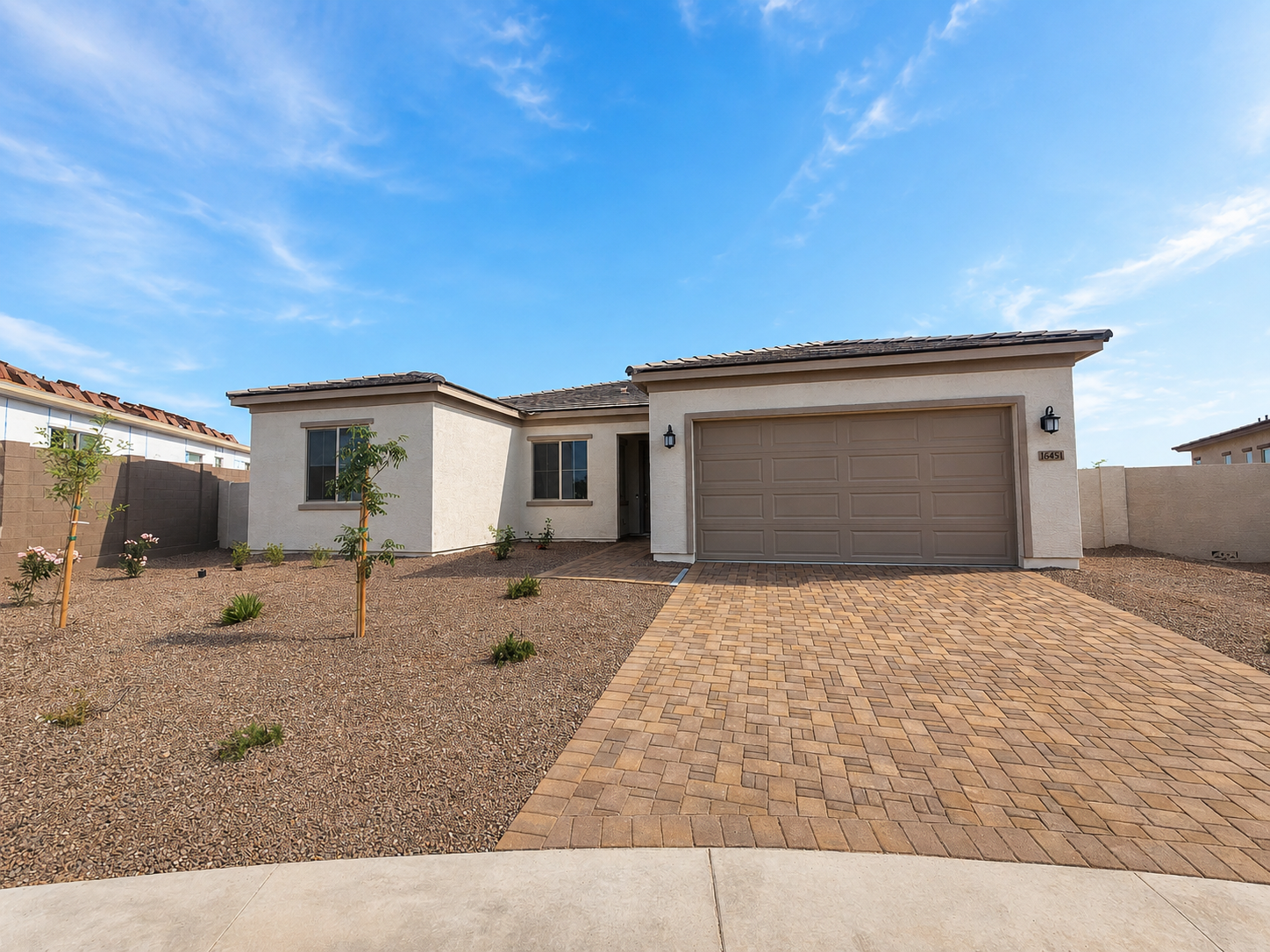
A permanent 4.25% 30-year fixed, about 3 points below market
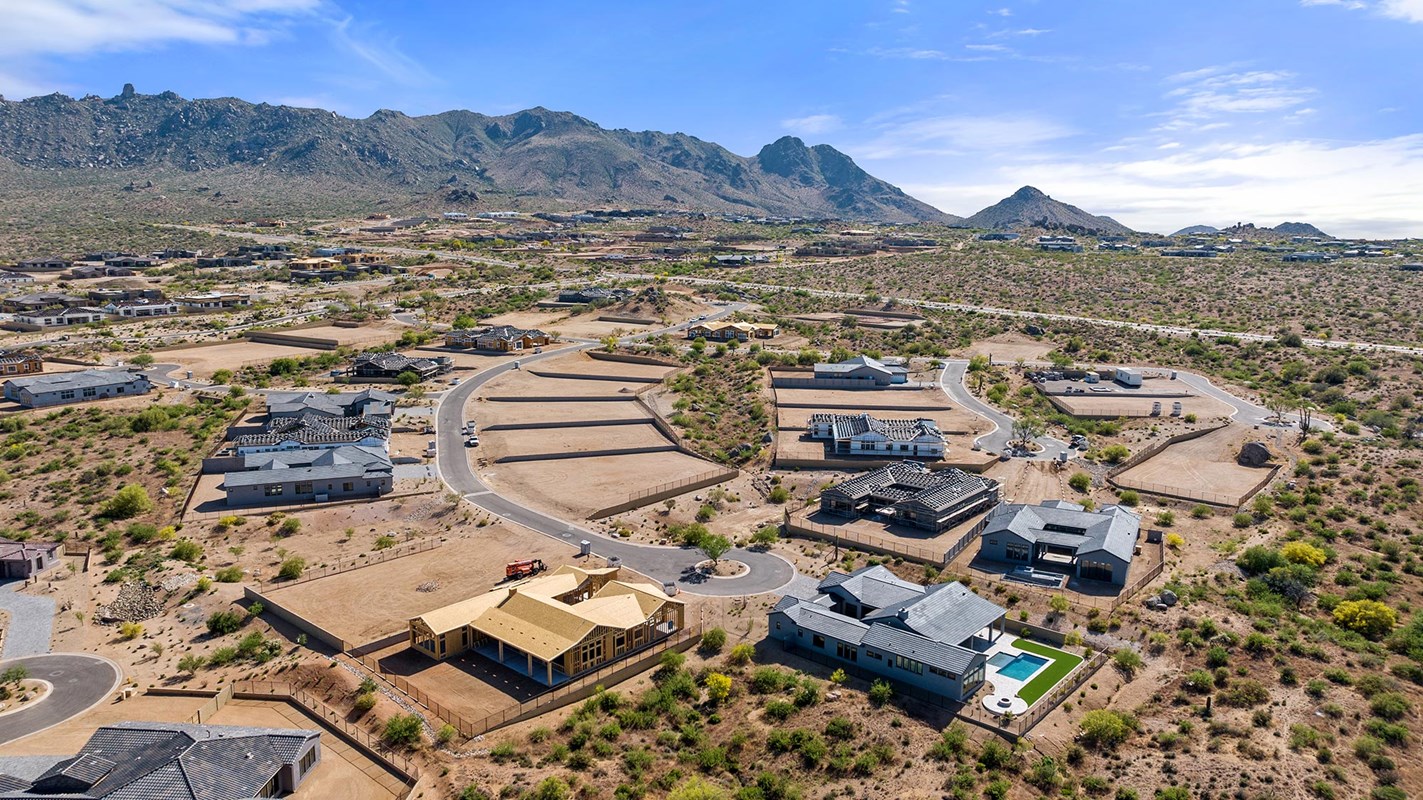
Bay Area clients built from dirt in this 55+ gated community. After comparing East and West Valley options, we negotiated the builder's incentive into a permanent rate about 3 points below the 7%+ market, plus fully covered closing costs. Compared with buying a resale at market rates, that's $750+ a month in savings, locked in for the life of the loan. The superintendent called it one of the cleanest builds his team had delivered in some time.
Read the case study →
A sale-contingent offer that won all three incentives
A family needed to sell their California condo before buying. We targeted a quick move-in that had sat for months. The builder accepted a contingent contract, cut the price, bought the rate down and covered closing costs on a 3,800 sq ft, 5-bedroom home.
Read the case study →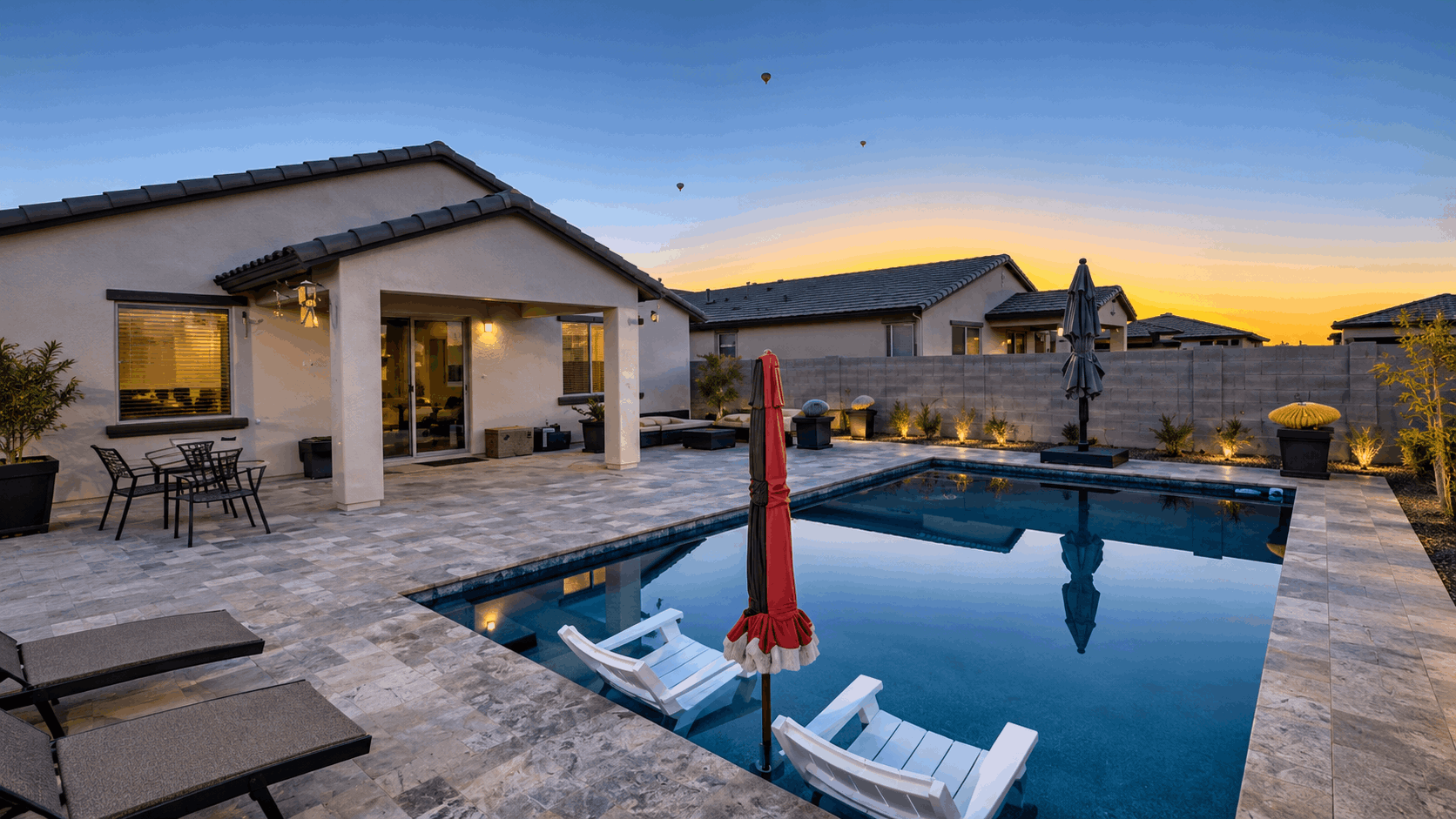
12% below builder list, and an earlier retirement
These buyers paid cash, so a rate buydown was worth nothing to them. The home was advertised with up to $23,731 in incentives; we pushed the builder to price instead and closed at $349,990.
Read the case study →
A $100,000 design credit on a build-from-dirt home
Quick move-ins here carried a seasonal premium and thin incentives, so we built from dirt and directed the builder's money into design selections, landing well under $1M-plus golf-course comps.
Read the case study →12FAQ
Frequently asked questions
Is a rate buydown or price reduction better on a new build in Phoenix?
It depends mainly on how long you'll keep the loan and how much rate the incentive buys. With rates near 7.25%, a permanent buydown at typical pricing breaks even with a price cut around year five and wins after that. If you expect to sell or refinance sooner, the price cut usually comes out ahead.
Are 2-1 buydowns worth it?
Usually not as the primary use of incentive money. On a $440,000 loan at 7.25%, a 2-1 buydown costs about $10,372 and only lowers payments for two years. Taking the same dollars as price or a permanent rate reduction produced a lower total cost in every horizon I tested.
How do I know if a builder buydown is a good investment?
Treat it like a bond. The cost is the price cut you give up, the coupon is your monthly savings, and maturity is when you sell or refinance. Compare its yield over your realistic holding period with your mortgage rate, since a price cut effectively earns that rate risk-free. In my example, typical pricing yields about 7.9% at five years and 19.5% at ten, but loses money if you exit within three.
Does the price of the home change whether a buydown makes sense?
Not much. In my modeling of a $425,000, $550,000 and $750,000 home, the break-even with a price cut landed near five years at 0.25% of rate per point and near three years at 0.375% in every case. Home price changes the size of the dollars at stake; the lender's rate-per-point pricing changes the answer.
What are the advantages of negotiating a lower price instead of a buydown?
A lower price is permanent. You start with a smaller loan and more equity, pay less on loan-size-based costs like mortgage insurance and the lender's title policy, set a lower comparable sale and keep more at resale. Your payment is higher at first, but you can refinance when rates improve. You can never go back and lower the price you paid.
How much does a mortgage point lower my rate?
One point costs 1% of the loan amount. The rate reduction varies by lender, loan type and market. About 0.25% per point is a common example, but builder-arranged buydowns sometimes buy more. Ask for the par rate and the bought-down rate side by side.
Do I have to use the builder's lender to get incentives?
Most rate buydown offers in the Phoenix area require the builder's affiliated lender, and some closing credits do too. You generally aren't required to use their lender to buy the home, but you may give up part of the incentive if you don't.
Can I negotiate a price cut and a buydown together?
Often, yes. Builders typically have a total incentive budget per home, and a split between price and points can beat either option alone, especially on completed quick move-in homes near quarter-end or year-end.
Where are builder incentives strongest in the Phoenix metro?
Incentives are usually strongest on finished spec inventory in supply-heavy areas. As of late 2026, that included parts of Buckeye, Surprise, Glendale, Peoria, Queen Creek, San Tan Valley and Maricopa. Offers change often, so verify terms community by community. My Arizona real estate FAQ covers more buyer questions.
170+ five-star Google reviews
What new construction clients say
Verbatim Google reviews from buyers I've represented with builders across the West Valley and beyond.
We’ve been working with Eric for the past few months after relocating to Arizona from another state and deciding to purchase a home here. From the very beginning, Eric provided invaluable guidance and support throughout the entire process. His knowledge of the market, financing, current trends, and future real estate developments is truly impressive.
Not only are his skills and experience exceptional, but so is the way he communicates with his clients — always calm, confident, and reassuring. Buying or selling a home can be an extremely stressful experience, and having Eric available whenever questions came up gave us great peace of mind and confidence that everything was under control. He was always accessible whenever we needed advice or assistance.
Since we were building a new home, the process came with additional challenges and required coordinating with multiple people. Thanks to Eric’s expertise and approach, we were able to identify important details in the construction process that we otherwise might have missed. Today, we are proud owners of a brand-new home. Even the builder appreciated how smoothly and professionally everything was handled under Eric’s guidance.
Thank you, Eric!
Last December, Eric helped us with the purchase of a new build in Buckeye. New construction is clearly his area of expertise. He’s extremely knowledgeable about the market and brought excellent negotiation skills and smart strategies to the table. Thanks to his efforts, we were able to secure most of the concessions we requested.
In addition, as an investor himself, Eric also shared valuable resources, tips, and insights that were incredibly helpful as we begin our own investment journey. He's truly a committed, reliable, and a professional agent. I highly recommend using Eric for you next home purchase.
Working with Eric on our recent home purchase was a fantastic experience, from start to finish. Eric provided us with excellent insight into the area, helped us through the design process to ensure we chose the right options, that kept us on budget, all the way through to helping with inspections prior to closing.
After closing, we are still in contact and Eric has been really helpful with any questions we have about the property.
I would definitely recommend Eric if you are looking to buy a new home, his help and professionalism were a major asset to us.
Eric Ravenscroft was instrumental in helping my wife and me purchase our new build home. He was knowledgeable, responsive, and guided us through every step of the process with professionalism. His attention to detail and clear communication made the experience smooth and stress-free. We both highly recommend Eric if you are looking to buy or sell your home!
Eric, Assisted us through moving from the Midwest to our new adventure in AZ! We appreciated his communication, professionalism, and educatuon he provided us, throughout the home build process. Eric continues to keep in touch with us even after the closing! As we influence our Midwest friends to comeout to the west, we will definitely refer Eric and the team!
I would like to recommend Eric Ravenscroft if you need a Real Estate Agent. Eric did an outstanding job in all aspects of the transaction. He stayed on top of communication with all of the parties that were involved. I also feel that he did his best to get me the best deal and loan that was available. He was there to talk me through my concerns, sometimes after hours. He was very knowledgeable about the area. He was also on a first name basis with the agents for the various builders.
I would highly recommend Eric and his company The Ravenscroft Group for any of your real estate needs.
We loved working with Eric! He was so patient with us and everything that we looked at throughout the year. One of the reasons we loved working with him was because he is very knowledgeable. We felt like we were getting the best price possible because he would take the time to pull comps and be very familiar with homes that sold nearby. We had a very good experience working with Eric and would highly recommend him!

- Licensed Arizona REALTOR® · SA691304000
- CRS · ABR · GRI · MRP · SRES® · RSPS
- Former Director of Wealth Management
- #2 in Arizona · #22 in the U.S. among Real Broker agents (quarterly production ranking, Oct. 2026)
- Real ELITE Agent, 2025 & 2026
- Top 100 Individual Agents, Greater Phoenix, 2026
- Platinum Producer 2022–2025 · President's Club 2021–2025
- Rankings per RealTrends and Real Broker production reporting.
- Host, House of Ravenscroft Podcast
About the author
Real estate advice built on a wealth management foundation
I'm Eric Ravenscroft, founder of The Ravenscroft Group at Real Broker. I've worked in real estate since 2009, starting in Southern California and licensed in Arizona since 2019, and I've closed more than $100 million in residential sales across the Phoenix metro. In Real Broker's October 2026 quarterly production rankings, I placed #2 in Arizona and #22 in the U.S. Rankings are based on RealTrends data and Real Broker's internal production reporting.
Before focusing on real estate full time, I spent 13+ years in financial planning and investments, including serving as a Director of Wealth Management overseeing roughly $8.5 billion in client assets and as a General Securities Supervisor. That background is why my clients get side-by-side loan comparisons, break-even math and tax-aware planning, not a sales pitch. It's also how this article's bond test came to be.
Today I specialize in new construction and builder negotiations, relocation to Arizona, investment property, 1031 exchanges and short-term rentals. My market commentary has appeared in The Wall Street Journal, MarketWatch, Morningstar and MSN Money, and I work closely with CPAs and financial planners who refer their clients.
Featured in
Commentary trusted by national financial media
Preferred partner
The agent financial institutions choose
The Ravenscroft Group is a preferred agent through home-buying benefit programs offered by major banks, lenders and member organizations. Eligible clients may receive cash-back rewards or savings at closing when they work with me.
- Program eligibility and reward amounts vary by institution and are confirmed case by case
- Preferred agent for Luke Air Force Base families through Real Broker's military services
Savings are funded by and subject to each institution's program terms and are not guaranteed. Eric Ravenscroft is not employed by or an agent of any participating institution.
See the preferred agent savings program → Military resources →






Keep reading
More from The Ravenscroft Group
Planning a new construction purchase?
Get the builder's offer modeled before you sign
I'll lay out the price cut, permanent buydown and split options side by side, with break-even, falling-rate and bond-yield scenarios, so you know exactly what the incentive is worth to you.
Book a strategy callExplore new constructionSources and methodology
- Freddie Mac, Primary Mortgage Market Survey, release of November 19, 2026 (30-year fixed average 7.28%; 6.26% one year earlier).
- Consumer Financial Protection Bureau, what are discount points and Loan Estimate explainer.
- IRS, Topic 504, Home Mortgage Points and Topic 701, Sale of Your Home. Maricopa County Assessor, Understanding Limited Property Value.
- Fannie Mae Selling Guide, B2-1.4-04, Temporary Interest Rate Buydowns. 10-year Treasury yield via Dow Jones / Morningstar, Nov. 19, 2026.
- Case study figures come from the linked client case studies; reviews are quoted verbatim from Google.
- All scenario, total-cost and IRR figures are the author's calculations using standard 30-year amortization and the stated assumptions, reviewed and approved by Ryan Gilliam, Your Best Mortgage (NMLS #332576). His license can be verified at NMLS Consumer Access. They are illustrations, not loan offers.
- Agent rankings per RealTrends and Real Broker production reporting. Press: MarketWatch.
This article is for educational purposes and is not a loan commitment, tax or legal advice. Rates, builder incentives and lending terms change frequently; confirm current terms with your lender and consult your CPA on tax treatment. Eric Ravenscroft, Arizona License SA691304000, The Ravenscroft Group, affiliated with Real Broker, LLC. Equal Housing Opportunity.
Categories
- All Blogs (337)
- Active Adult & 55 Plus Communities (18)
- Arizona Relocation Guides (35)
- Buyers (226)
- Financial Planning (67)
- General Real Estate (153)
- Income From Real Estate (66)
- Market Update (26)
- New Construction (31)
- News, Updates and Coming Soon (57)
- Real Estate Agent Financial Planning (23)
- Real Estate Investing (106)
- Sellers (108)
- Vacation and Short Term Rentals (48)
Recent Posts





About the Author
Eric Ravenscroft is a Top 1% REALTOR® across North America and one of Arizona’s most trusted real estate strategists. With 15 years of experience spanning real estate, wealth management, and investment planning, he helps clients make smarter, financially grounded decisions, from new construction and relocations to STR investments, 1031 exchanges, and long-term portfolio strategy.
Eric’s expertise has earned him industry recognition, Elite status with Real Broker, and features in major publications including the Wall Street Journal, MarketWatch, MSN, and Morningstar. Clients across the Greater Phoenix Metro rely on his clarity, strategic insight, and results-driven guidance.
Ready to make a confident real estate move? Call or text Eric today.