
Glendale, AZ Short-Term Rental Case Study: 4 Bedrooms Under $600K and a 100% Bonus Depreciation Plan
Client win · Short-term rental · North Glendale (Arrowhead), AZ
Glendale, AZ Short-Term Rental Case Study: 4 Bedrooms Under $600K and a 100% Bonus Depreciation Plan
A Washington-based financial advisor wanted two things from one property: a warm place to escape the gray winters, and a real tax strategy. Here is how we screened the Valley, why North Glendale won, what the property needed to become a high-performing STR, and the exact playbook I use with buyers and investors.
Property story
Primary residence converted to STR
The lot
Large corner lot, Arrowhead
The deal
Seller paid for a new roof + repairs
The tax angle
100% bonus depreciation eligible*
The short version
What this case study shows
- The goal was dual-purpose. A winter escape for the family, plus a short-term rental structured to take advantage of bonus depreciation against active income.
- North Glendale (Arrowhead) won the screening. Larger lots, value versus Scottsdale, school district strength, Loop 101 access to Scottsdale and Sky Harbor, and a front-row seat to the TSMC and Halo Vista build-out.
- The value was in the package. Under $600,000 bought four bedrooms and 2,313 square feet, a pool and putting green, a corner lot with room for most of the amenity stack, and no rental restrictions.
- The parcel mattered more than the neighborhood. A primary residence that needed only cosmetic work, on a large corner lot, in a section of Arrowhead with no STR or rental restrictions, at a time when turnkey STRs were scarce and many listings were small lots with deferred maintenance.
- Negotiation protected the basis. We offered aggressively to a relocating seller, then renegotiated when inspection found a failing roof. The seller paid for a new roof and minor repairs.
- The tax plan was built before the offer. 100% bonus depreciation (restored permanently for property acquired after January 19, 2025), a cost segregation study, the 7-day average-stay rule, material participation, and a personal-use plan coordinated with the client's CPA.
*Eligibility depends on the acquisition date, placed-in-service date, average guest stay, material participation and personal use. Educational content only, not tax advice. See the disclosures at the end.
The client
A referral built on a shared past in wealth management
This client found me through my website after several online outlets and portals kept pointing him to me as the go-to source for short-term rentals in the Phoenix area, specifically for the bonus depreciation angle.
Then we compared notes and realized we had worked at the same financial firm years ago, in different markets. He is a financial advisor himself, so he did not need a lecture on depreciation schedules. He needed someone who could speak both languages: real estate acquisition and tax planning. That is the blend I built my practice around after years in financial planning and wealth management.
His goal was simple to state and hard to execute: find a property he could use to escape the cold, wet, gray winters in Washington state, and use bonus depreciation to offset a large part of his income. A vacation home that happens to rent is a different asset than a rental that happens to be visited. We needed both jobs done by the same house from day one.
Out-of-state buyer
Washington-based, so video tours, local vendors and a boots-on-the-ground point of contact mattered.
Tax-literate
A financial advisor who wanted the real estate and the tax plan underwritten together.
Lifestyle goal
Warm, dry winters for the family, with the home earning income when the family is not there.
The search
How we screened the Valley: underwriting areas, not just listings
Before we looked at a single home, we looked at almost every part of the Valley the way you would screen a portfolio. For each submarket we walked through the same framework, and I coached the client on what a successful STR needs to look like.
| Lens | The question we asked | Why it matters for an STR |
|---|---|---|
| Demographics | Who lives, works and visits here? | Defines the guest pool: families, event travelers, golfers, corporate stays, relocation traffic. |
| Risk profile | What could impair income? | HOA and CC&R restrictions, city rules, seasonality, competitive saturation, insurance and maintenance exposure. |
| Upside | What is still ahead of the price? | Infrastructure, employer growth and development pipelines that lift both rates and values. |
| Appreciation | What supports long-term value? | School district strength, lot size, scarcity and entry price versus neighboring submarkets. |
| Pivot options | What if short-term rental is not the answer? | Every candidate was also modeled as a long-term rental and a mid-term rental (30+ day stays), so the property never depends on one strategy. |
After a few months of planning and strategy calls, the focus narrowed to one submarket: North Glendale, in the Arrowhead area.
Why this area
Why North Glendale (Arrowhead) is a strong short-term rental market
Great STR submarkets stack reasons to visit so the calendar does not hinge on one season or one event. North Glendale sits inside one of the densest sports, entertainment, golf and economic-growth corridors in the Valley, with larger lots and a lower entry price than Scottsdale.
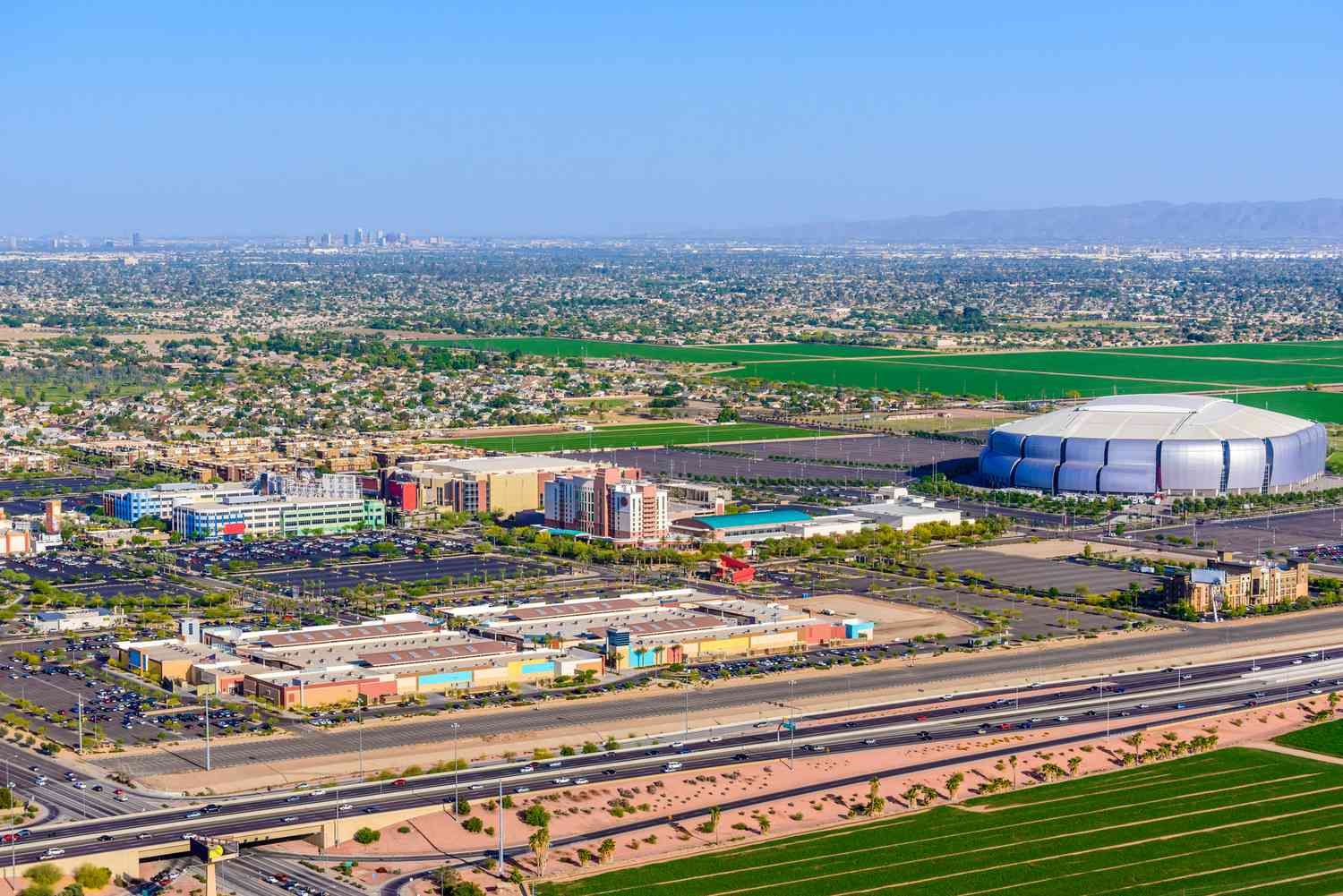
State Farm Stadium
Home of the Arizona Cardinals and a regular host of marquee events. It has hosted Super Bowl LVII (2023), the 2024 Men's Final Four and major concert tours. Every event is a demand spike for groups who want a house, not a hotel room.
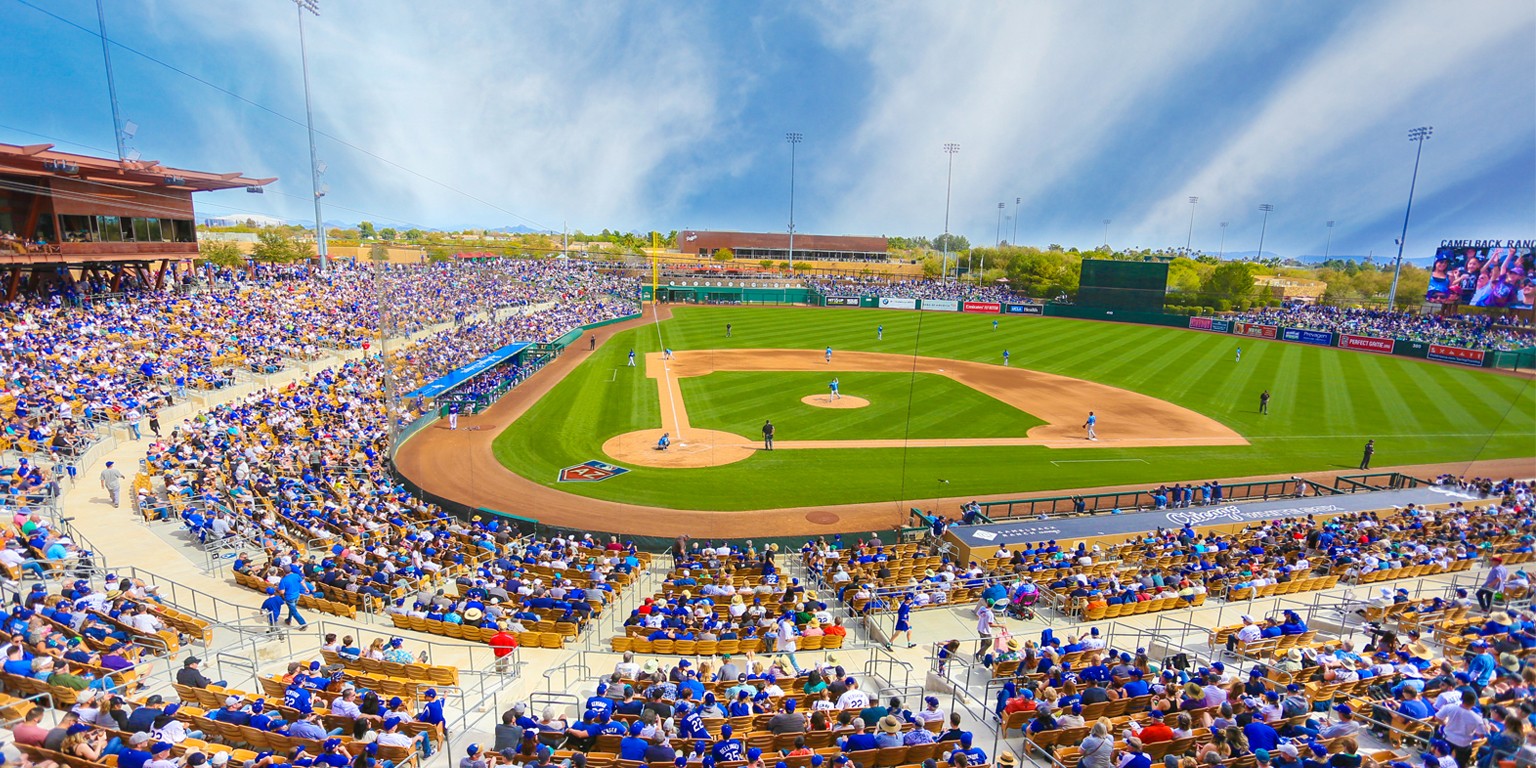
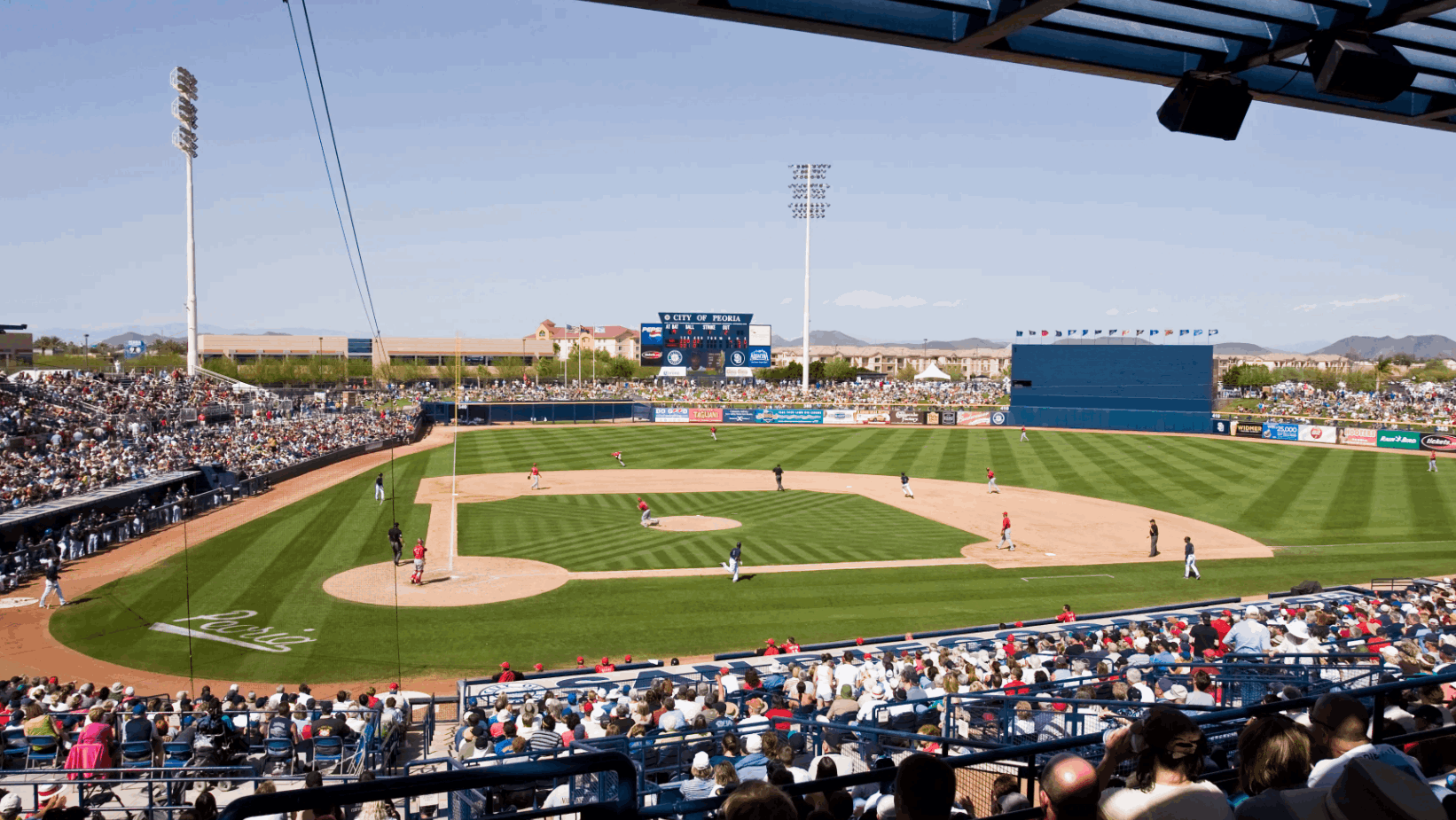
Cactus League spring training
Camelback Ranch-Glendale is the spring home of the Dodgers and White Sox. The 2027 slate runs February 19 to March 21 with 30 games, and all 15 Cactus League teams appear. Peoria Sports Complex, spring home of the Padres and Mariners, is also a short drive away.
Golf, right in Arrowhead
The Clubs at Arrowhead is a private club with two Arnold Palmer-designed courses, and the broader West Valley adds public options. Golf groups in winter are a built-in guest segment.
Westgate and Arrowhead Towne Center
Westgate's dining, shopping and arena events and Arrowhead Towne Center's retail keep guests busy between game days and tee times.
Scottsdale access
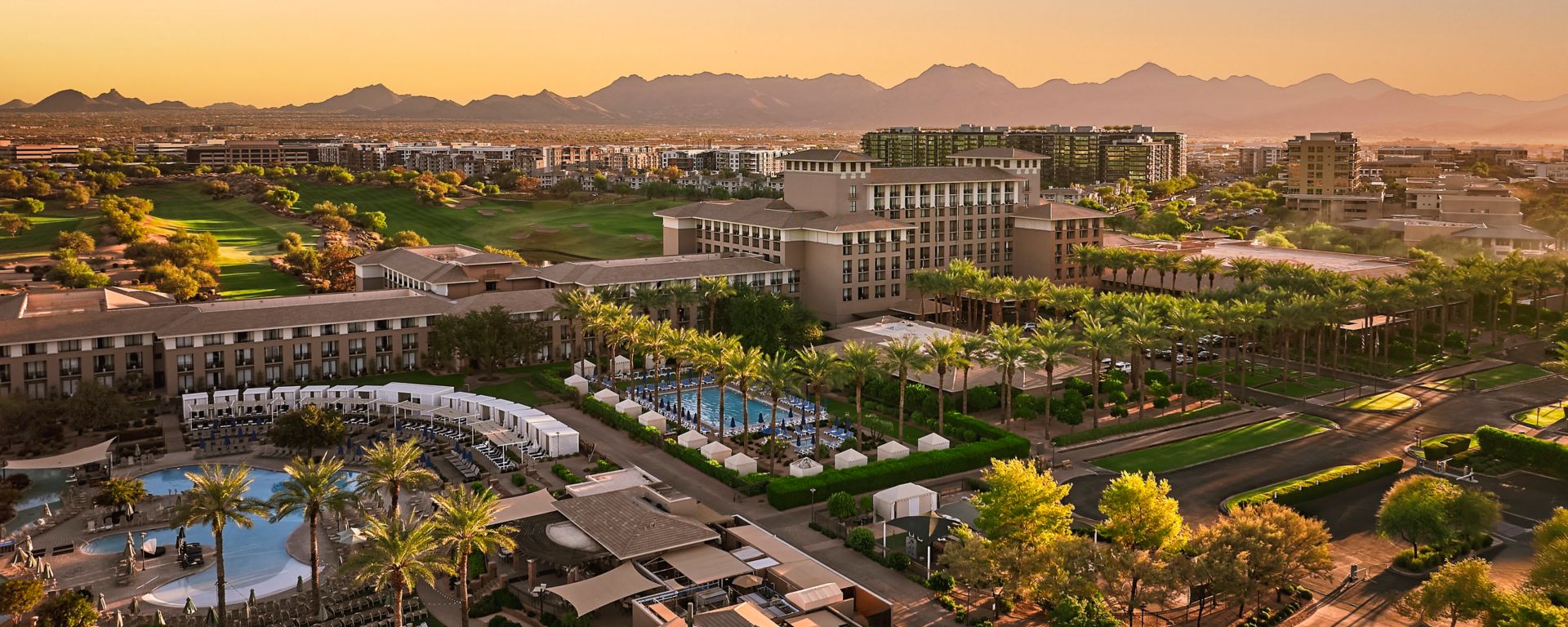
North Scottsdale, including the Kierland area, is just down the Loop 101, putting resorts, restaurants and nightlife within a drive, while guests get more space and privacy for less than a Scottsdale nightly rate.
Fly-in friendly
Phoenix Sky Harbor is roughly a half-hour away, which widens the guest pool beyond Arizona's drive-in market to the whole country.
The economic engine: TSMC and Halo Vista
Demand drivers are not only tourists. TSMC's Arizona buildout in north Phoenix is now a planned $265 billion commitment, with six chip fabs, two advanced packaging facilities and an R&D center. Fab 2 is on track for 2027 and Fab 3 for 2030, according to AZFamily's July 2026 reporting. Next door, Halo Vista, a roughly $7 billion, 2,300-acre mixed-use project, broke ground in March 2026 and is expected to host 60,000 to 80,000 workers at full build-out over about 20 years.
For a short-term rental owner that matters in two ways. First, it supports long-run housing demand and appreciation. Second, it creates a deep pool of mid-term guests: engineers, contractors, trades and relocating employees who need 30+ day furnished stays. That is the pivot option we underwrote on day one.
$265B
TSMC planned Arizona investment
$7B
Halo Vista mixed-use development
2,300
Acres at Halo Vista, broke ground March 2026
30
Spring training games at Camelback Ranch in 2027
Sources: AZFamily (Apr 13 and Jul 27, 2026), Glendale Independent (2027 Camelback Ranch schedule). The 2027 schedule is subject to MLB labor negotiations.
The demand calendar
| When | What fills the calendar | Typical guest |
|---|---|---|
| Aug to Jan | Arizona Cardinals home games at State Farm Stadium | Friend groups and families visiting for a game weekend |
| Oct to Apr | Peak golf and snowbird season | Golf groups, winter escapees, mid-term stays |
| Feb to Mar | Cactus League spring training | Baseball families and group trips |
| Year-round | Concerts, major events, TSMC and Halo Vista activity | Event travelers, contractors, relocating employees |
Where Glendale lands on revenue
Size and pool matter more than almost anything. Across the Valley, occupancy stays in a tight band, so the spread comes from nightly rate. In my Arizona STR guide I track what 4+ bedroom pool homes earn by city:
Source: BNBCalc, November 2026, as published in my Arizona STR guide. Market averages, not a projection for any specific property. Glendale lands mid-pack on revenue, but with larger lots and a lower entry price than Scottsdale. For a Scottsdale example, see this turn-key Scottsdale 85254 case study.
How to read it: Scottsdale averages about 65% more revenue than Glendale for this property type, but it also costs far more to buy. The investor question is never "which city earns the most?" It is "which parcel gives the best income and tax result per dollar of basis?"
Where I target across the Valley
Occupancy barely moves across the Valley, roughly 48 to 53% for 4+ bedroom pool homes. The spread comes from the nightly rate, so the real question is which market gives the best revenue for the price of entry and the rules on the ground.
| Submarket | Avg. annual revenue | Occupancy | Avg. nightly rate | How I use it |
|---|---|---|---|---|
| Scottsdale | $136,434 | 48.4% | $862 | Luxury, group and golf guests. Highest revenue and highest entry price. |
| North Phoenix and Arcadia | $109,259 | 52.1% | $632 | Value-add and tax-strategy buys with strong rates. |
| Chandler | $89,311 | 53.3% | $495 | Steady occupancy and mid-range rates. |
| Glendale (Arrowhead) | $82,675 | See below | See below | Stadium, spring training and golf demand, larger lots and a lower entry price. |
| Queen Creek and Surprise | $63,344 to $63,787 | 47.8 to 50.5% | $389 to $410 | Must win on purchase price, amenities or a mid-term plan. |
| Gilbert | See below | See below | See below | Works only inside communities that permit short-term rentals. |
Source: BNBCalc, November 2026, 4+ bedroom homes with a private pool, as published in my Arizona STR guide. Averages, not projections for any property. Glendale and Gilbert occupancy and rates are in the next table, from a different dataset.
Glendale and Gilbert by bedroom count
To fill in the two markets above, here is a second dataset that breaks both cities out by bedroom count. It covers all entire-home listings, not only pool homes, so do not compare it line by line with the pool-home table above.
| Market and size | Avg. annual revenue | Avg. nightly rate | Occupancy |
|---|---|---|---|
| Glendale, 4 bedrooms | $46,500 | $353 | 45% |
| Glendale, 5+ bedrooms | $86,900 | $617 | 46% |
| Gilbert, 4 bedrooms | $52,800 | $353 | 53% |
| Gilbert, 5+ bedrooms | $84,900 | $523 | 48% |
Source: AirROI, Glendale and AirROI, Gilbert, 12 months to October 2026. Averages, not projections. Data providers differ, and other sources show different Glendale figures, so I use one dataset at a time and treat all of them as a range.
The pool premium shows up here too. In AirROI's data, Glendale listings with a pool average about $42,000 a year versus about $18,800 without one. In Gilbert it is about $47,700 versus $25,700. Sixty-seven percent of Glendale listings and 72% of Gilbert listings have a pool, so a pool is closer to table stakes than a differentiator. What sets a property apart is what is around it.
How I rank an area before I look at a listing:
- Rules first. City registration, HOA and CC&R restrictions, and licensing. If the rules fail, the market does not matter.
- Nightly rate drivers. Events, golf, spring training, resorts and a premium outdoor experience, because rate, not occupancy, separates markets.
- Revenue per dollar of entry. A cheaper market has to earn its discount through price, amenities or a mid-term plan.
- A calendar with more than one season. Stacked demand drivers protect the year if one fades.
- Pivot demand. Corporate, relocation and contractor stays keep a mid-term or long-term exit open.
Scarcity was the opening. At the time we searched, truly turnkey STRs were rare. Many that did exist were underwhelming: small lots, deferred maintenance and a long to-do list before the first booking. That made a clean parcel on a big lot unusually valuable.
Demographics · who books
The target guest, and who lives in Glendale
A short-term rental is a product, and a product needs a customer. Part of my process is naming the guest before choosing the parcel, because the guest decides the amenity stack, the sleeping layout and the pricing.
| Guest segment | Why they come | What they need from the house |
|---|---|---|
| Game-day and event groups | Cardinals games, concerts, major tournaments | Beds for the group, parking, a pool for the afternoon, with a fire pit and game room planned for evenings and downtime |
| Spring training fans | Dodgers, White Sox, Padres, Mariners and visiting Cactus League teams | Space for several families, shade and a heated pool for cool desert nights |
| Golf groups | Winter golf in the West Valley | Multiple bedrooms and baths, outdoor lounging, a putting green to continue the trip at home |
| Multi-generational families | Holidays, reunions and warm-weather trips | Open living space, a community play area and courts a short walk away, four bedrooms for privacy |
| Snowbirds and winter escapees | Leaving the cold for 30 to 90 days | Mid-term pricing, work-ready Wi-Fi, laundry and a full kitchen |
| Corporate and TSMC-related stays | Project work, relocations and training rotations | Furnished stays of 30+ days, a desk, dependable internet and quiet |
| Scottsdale overflow guests | Want Scottsdale access without the price | A premium outdoor experience a hotel cannot match |
Who lives in Glendale
Residents also shape resale, long-term rental demand and appreciation. Citywide, Glendale has about 252,833 residents, a median age near 34.6 and a median household income around $73,530 (2024 ACS-based figures). It is a young, family-oriented, working market with large employers, expanding schools and a deep rental pool, which is exactly why a long-term rental stays on the table as a floor if the STR strategy ever needs to pivot (see my Arizona investment property guide).
Source: Arizona-Demographics.com summary of U.S. Census Bureau 2024 ACS 5-year estimates. Figures are citywide, not ZIP-specific. For clients I pull ZIP 85308 and block-level data during underwriting.


Why this property
6448 W Tonto Drive: the lot was the differentiator
Plenty of Valley homes have a pool. Very few have a large corner lot with room for an entire amenity stack, a layout that adds sleeping and lounging flexibility, and no rental restrictions on the parcel.
This was a primary residence turned short-term rental, not an existing STR. That matters, because most of the turnkey STRs I was seeing were disappointing: small lots that could not support any outdoor experience, years of deferred maintenance, and a renovation to finish before the first night could be booked.
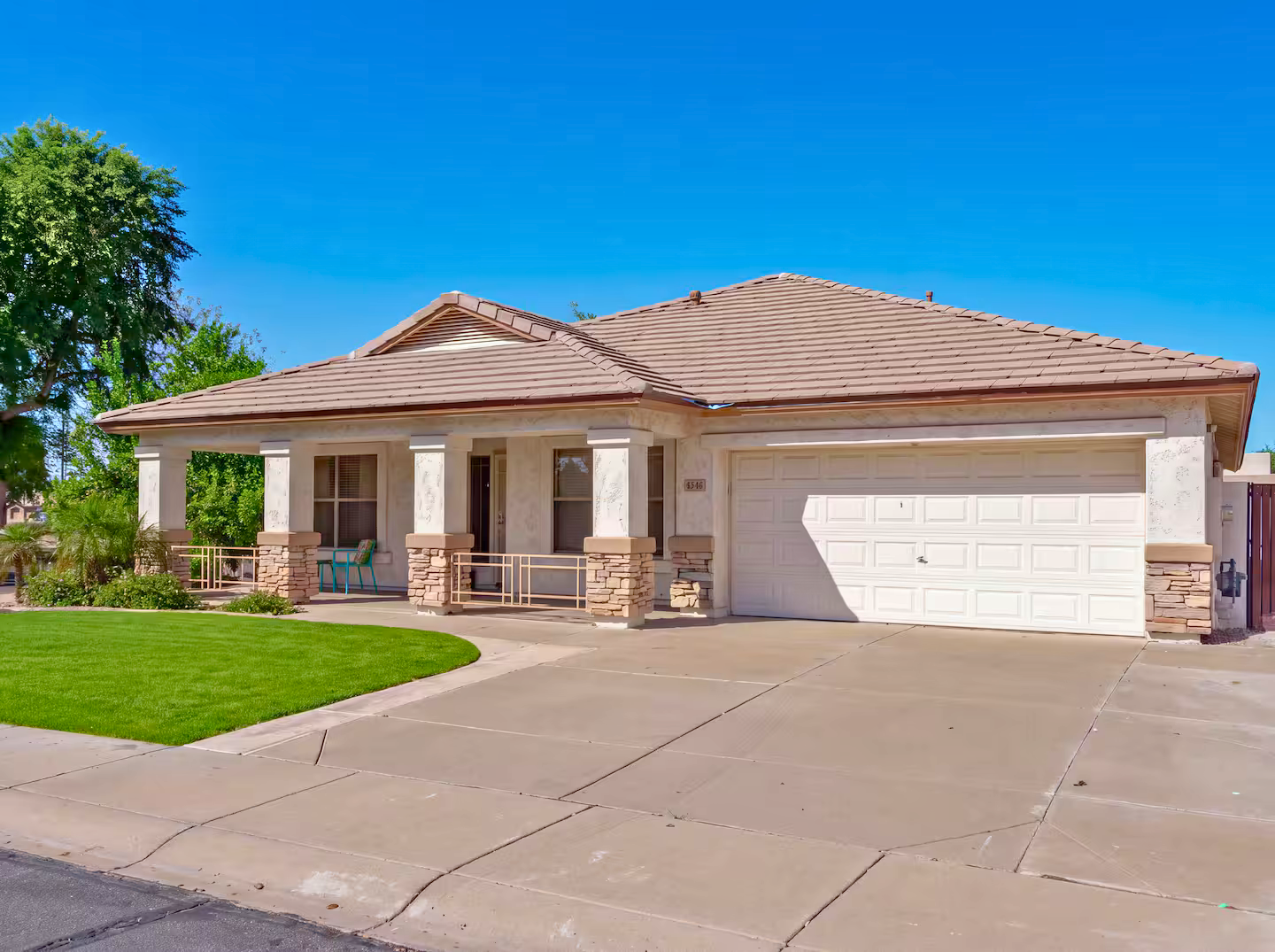
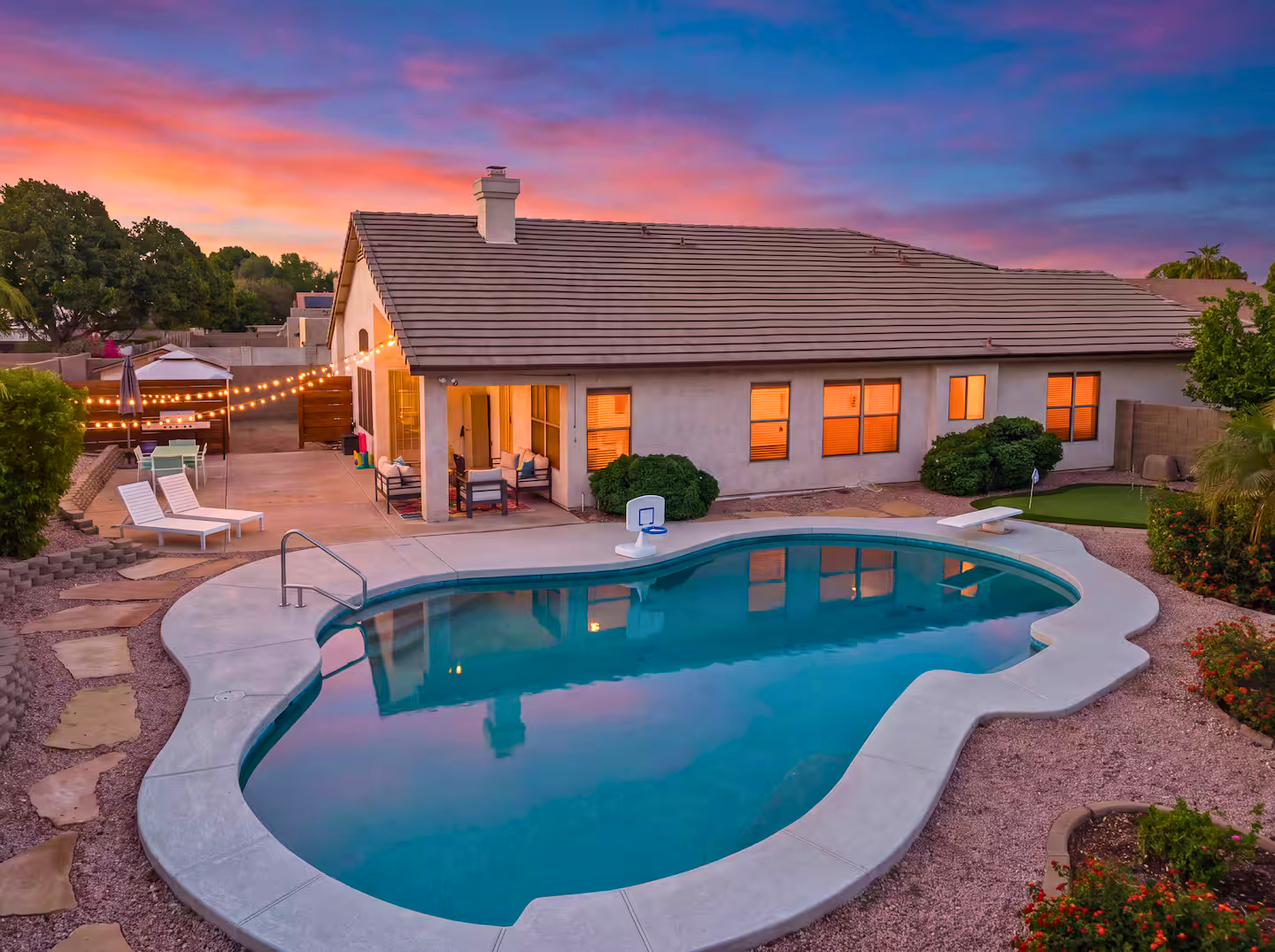
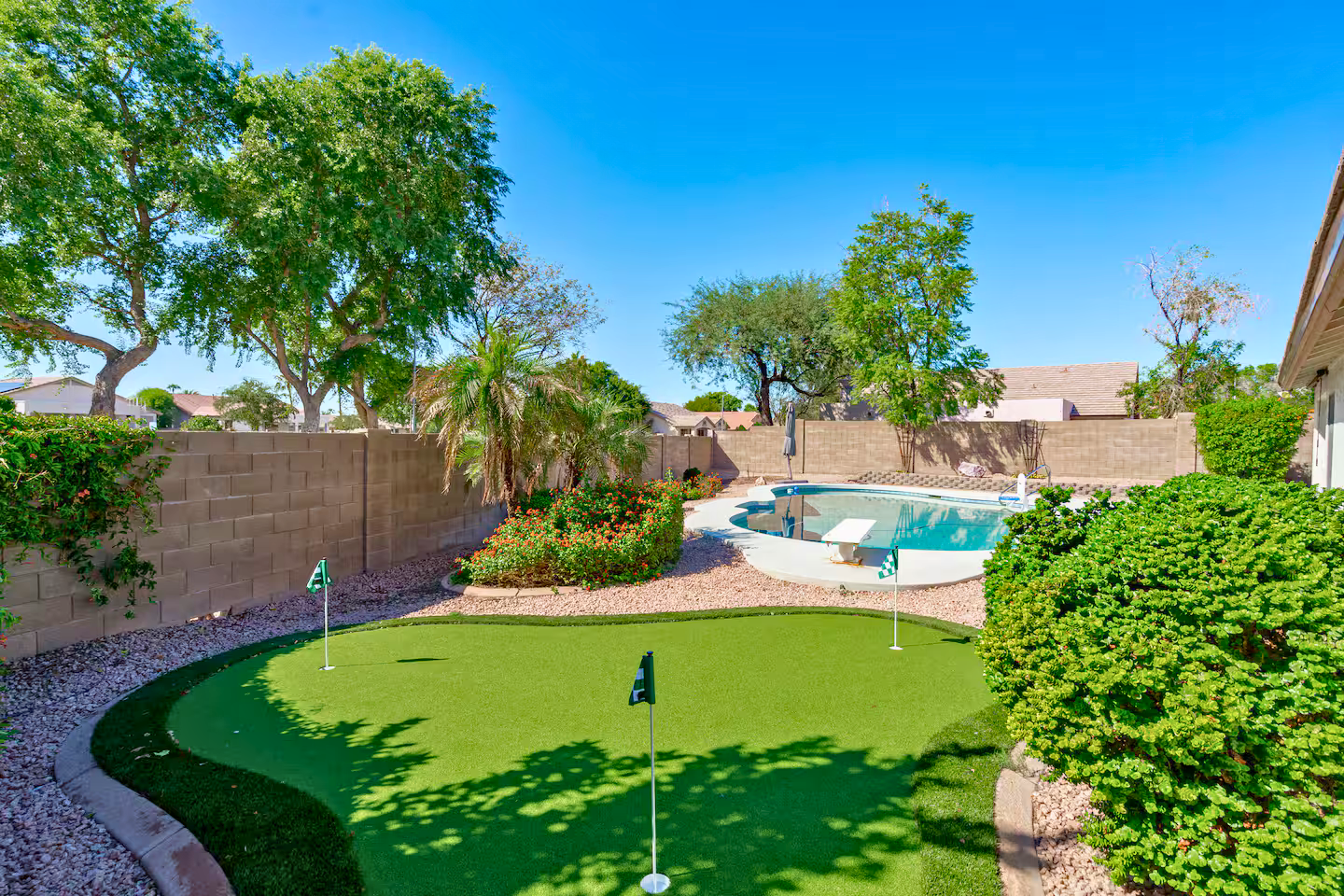
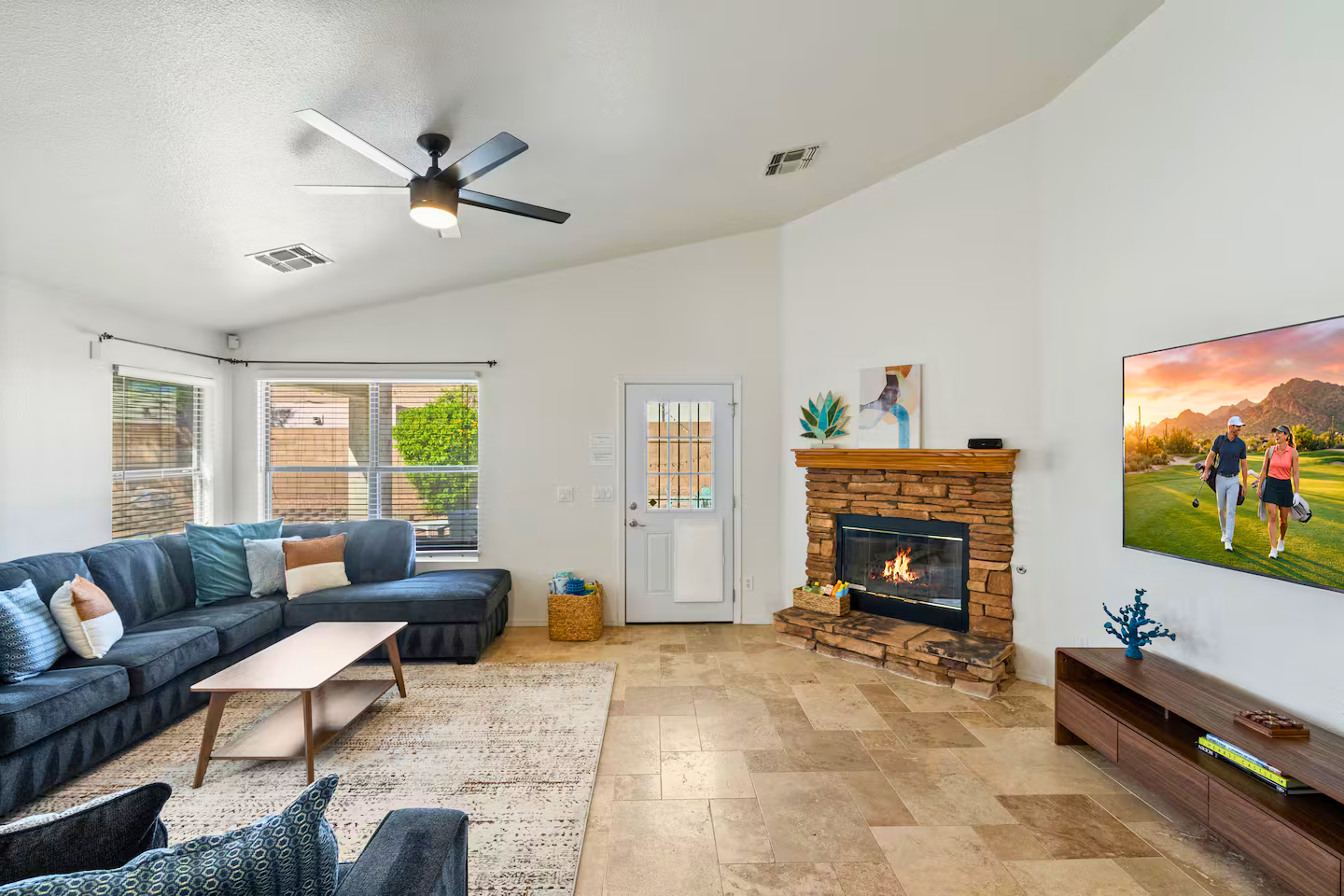
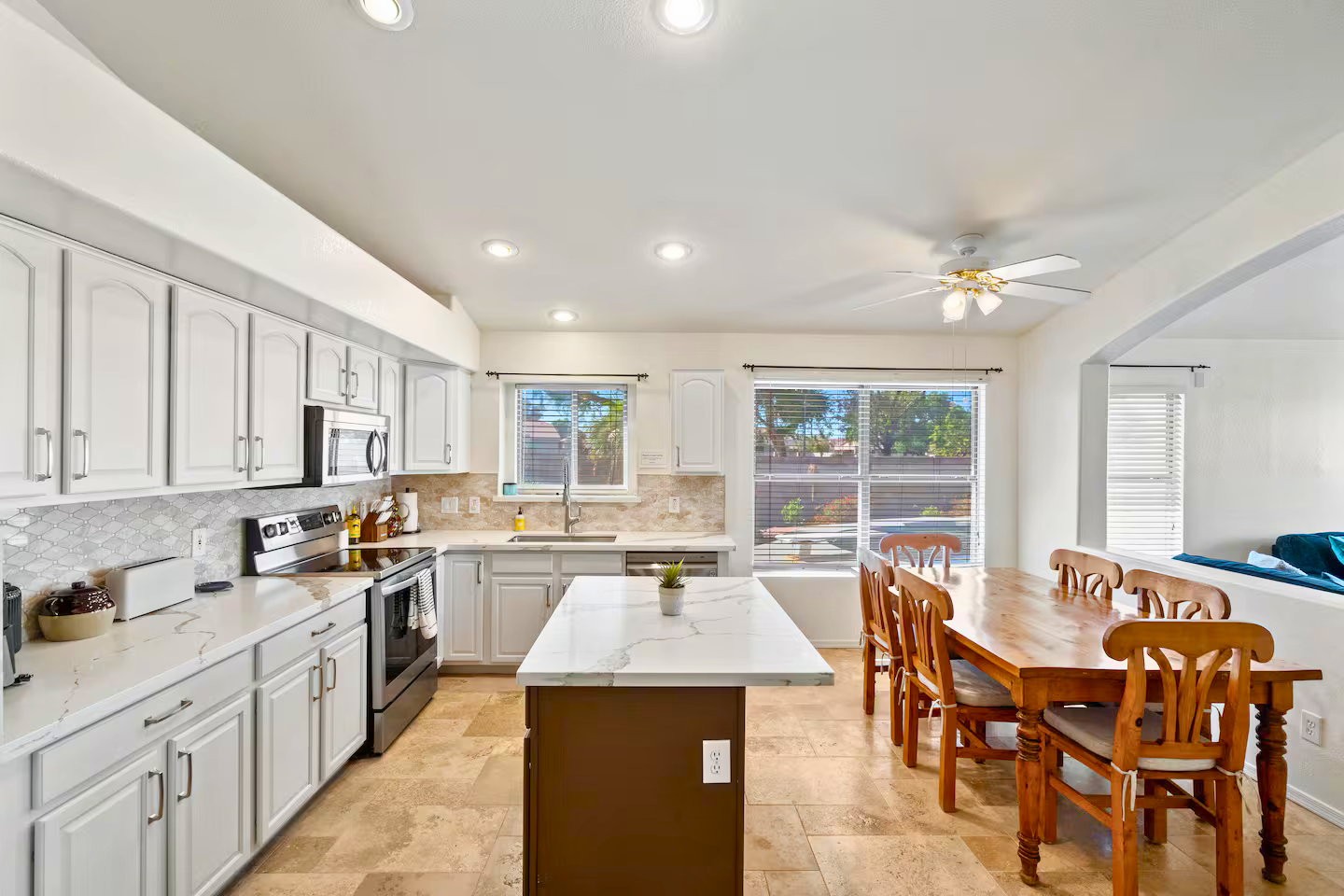
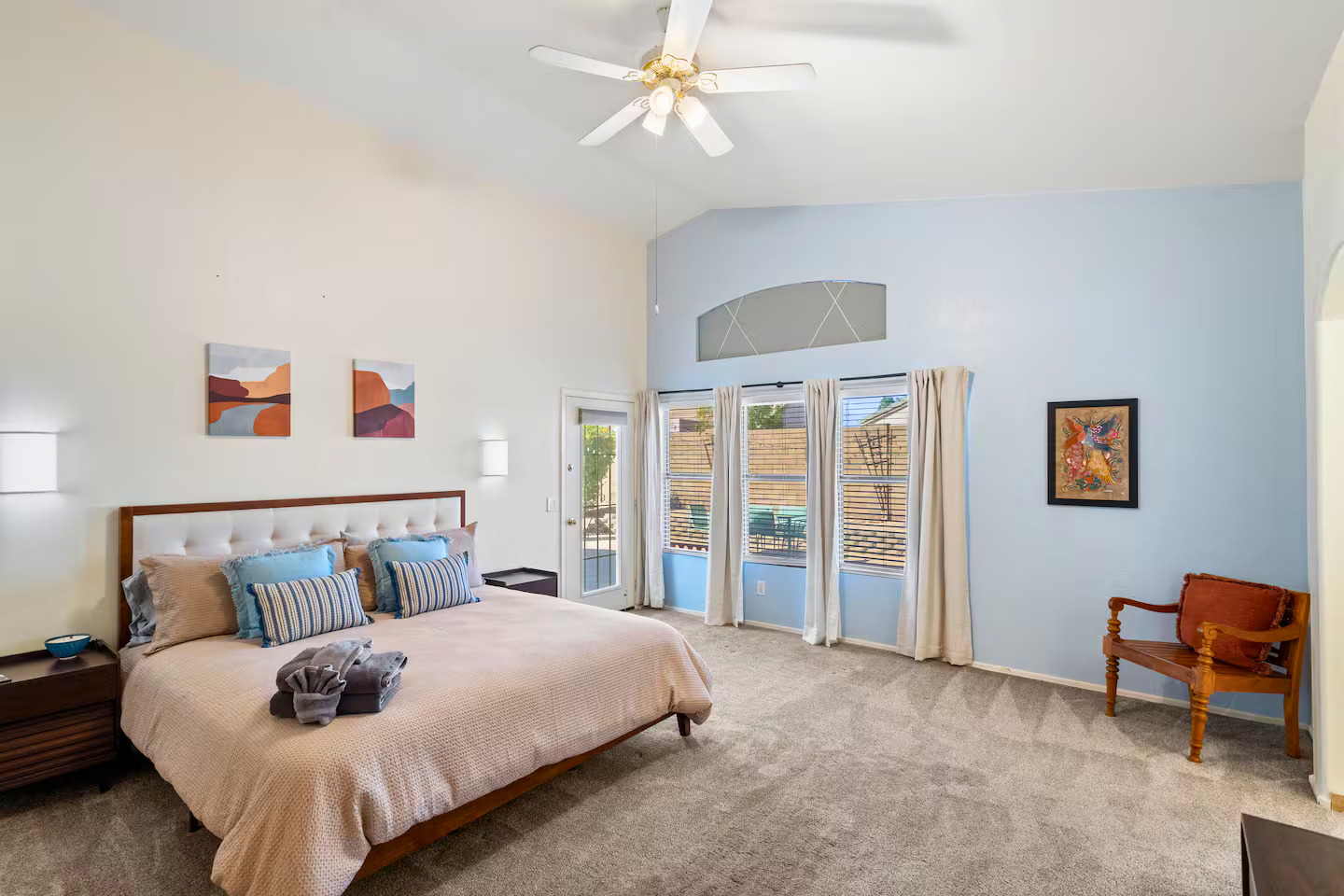
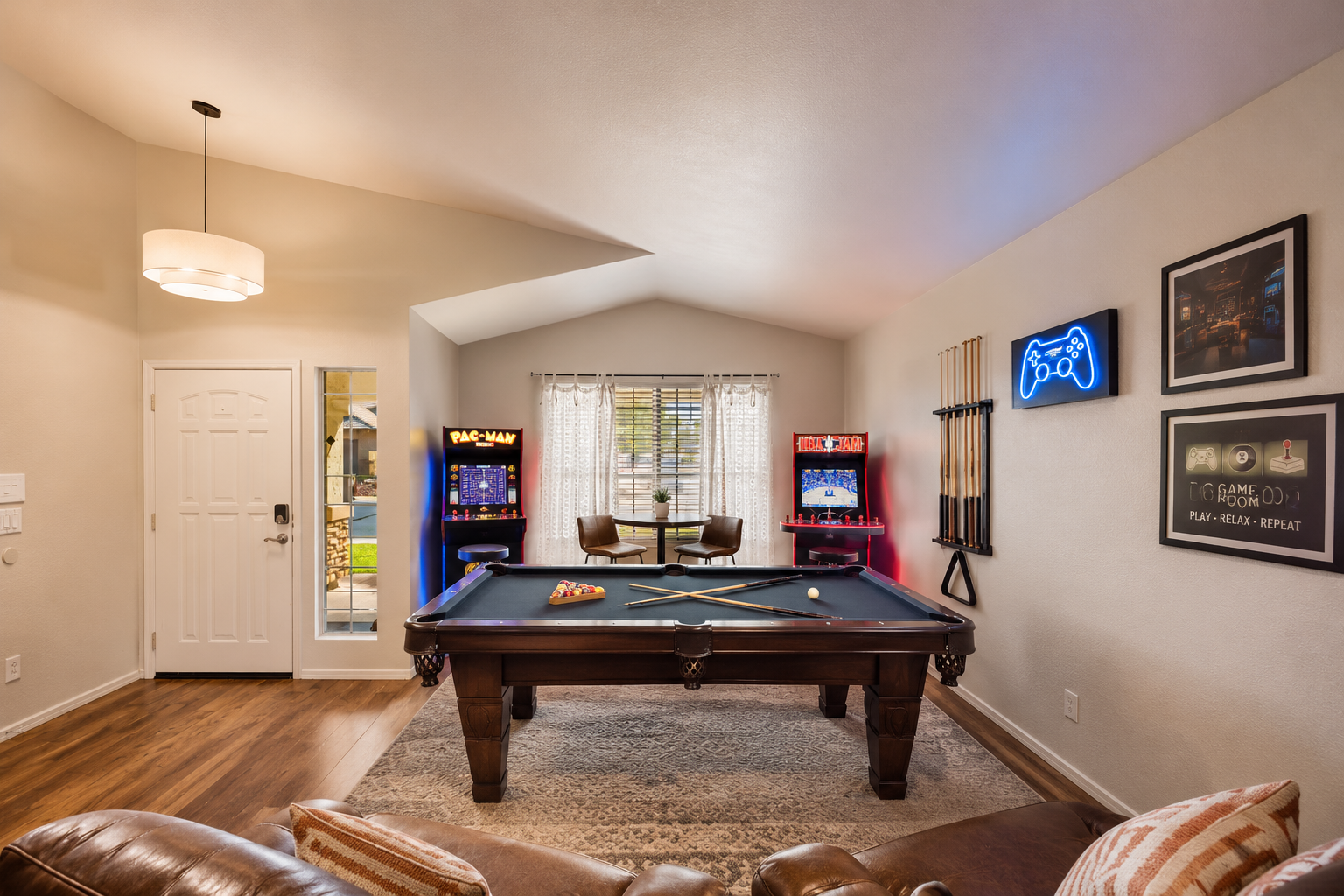
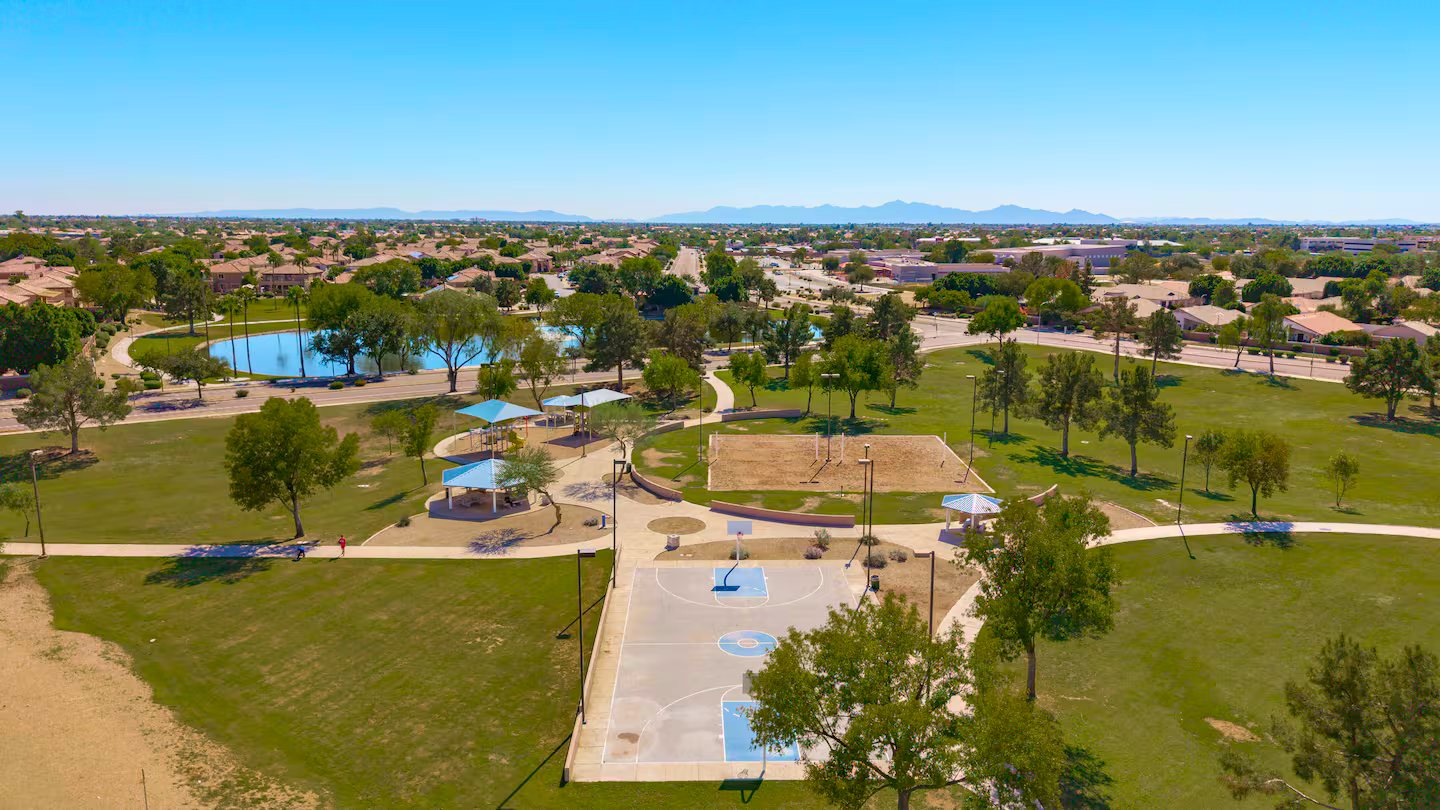
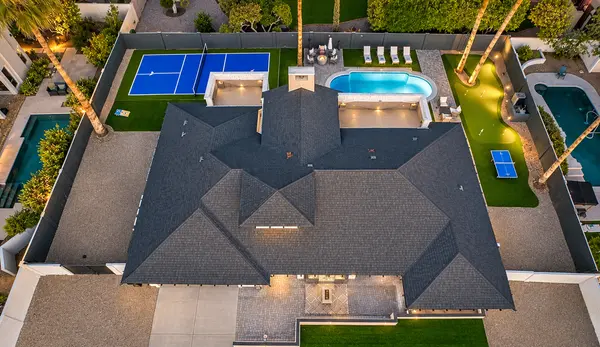
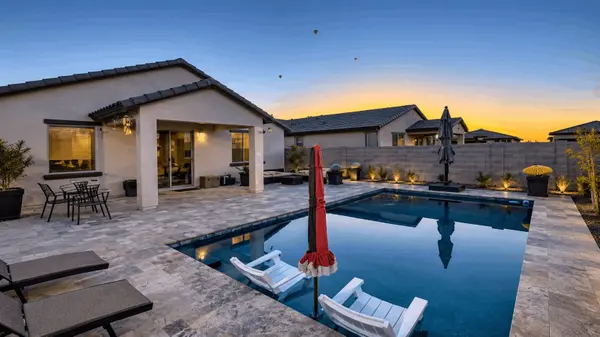
This one was the exception. It needed cosmetic work only. It sat on a large corner lot in the right section of Arrowhead, one with no STR or rental restrictions, which we confirmed before writing the offer. The lot had room for the outdoor experience we wanted, with a pool and putting green already in place and a fire pit planned. A short walk down the street, the community adds shared amenities including a play area, volleyball courts and basketball courts. Inside, four bedrooms across 2,313 square feet, a large open living area, and a two-car garage with a clear path to a game room.
That combination turns a house into a destination. The guest is not just renting four walls; they are booking a backyard.
- Large corner lot with space for the full amenity stack
- No STR or rental restrictions on the parcel, verified before the offer
- Cosmetic work only, not a renovation project
- Four bedrooms, 2,313 square feet and an open living area, enough to sleep a group of 11
- Two-car garage planned for a game room conversion
- Appreciation tailwinds: school district strength, TSMC and Halo Vista
From my field notes. When I walk a parcel for an STR buyer, I ask three questions before I look at a single finish. Can the lot hold the experience guests will pay for? Is it legal to operate here, confirmed in writing and not assumed? And is the work cosmetic or structural? A "yes, yes, cosmetic" parcel on a large lot is rare, and that is why we moved on this one.
The value: what under $600,000 bought
The headline is not the price alone. It is how much STR-ready space, land and amenity runway the price bought, and how little of it had to be fixed first.
| Factor | This property | Why it matters for an STR |
|---|---|---|
| Purchase price | Under $600,000 | A lower basis means the same revenue covers more of the carrying cost, and the buyer keeps capital for amenities. |
| Room count | Four bedrooms, two baths, 2,313 square feet, two-car garage. The Airbnb listing sleeps 11. | Groups book beds and gathering space. Flex rooms can sleep extra guests or work as a lounge. |
| Lot | Corner lot, about 0.21 acres per the county assessor | Corner position and yard depth leave room for outdoor features that smaller parcels cannot hold. |
| Amenities in place | Pool and putting green are in place. A fire pit and garage game room are planned. | The core of the guest experience is already there, and the rest is within reach. |
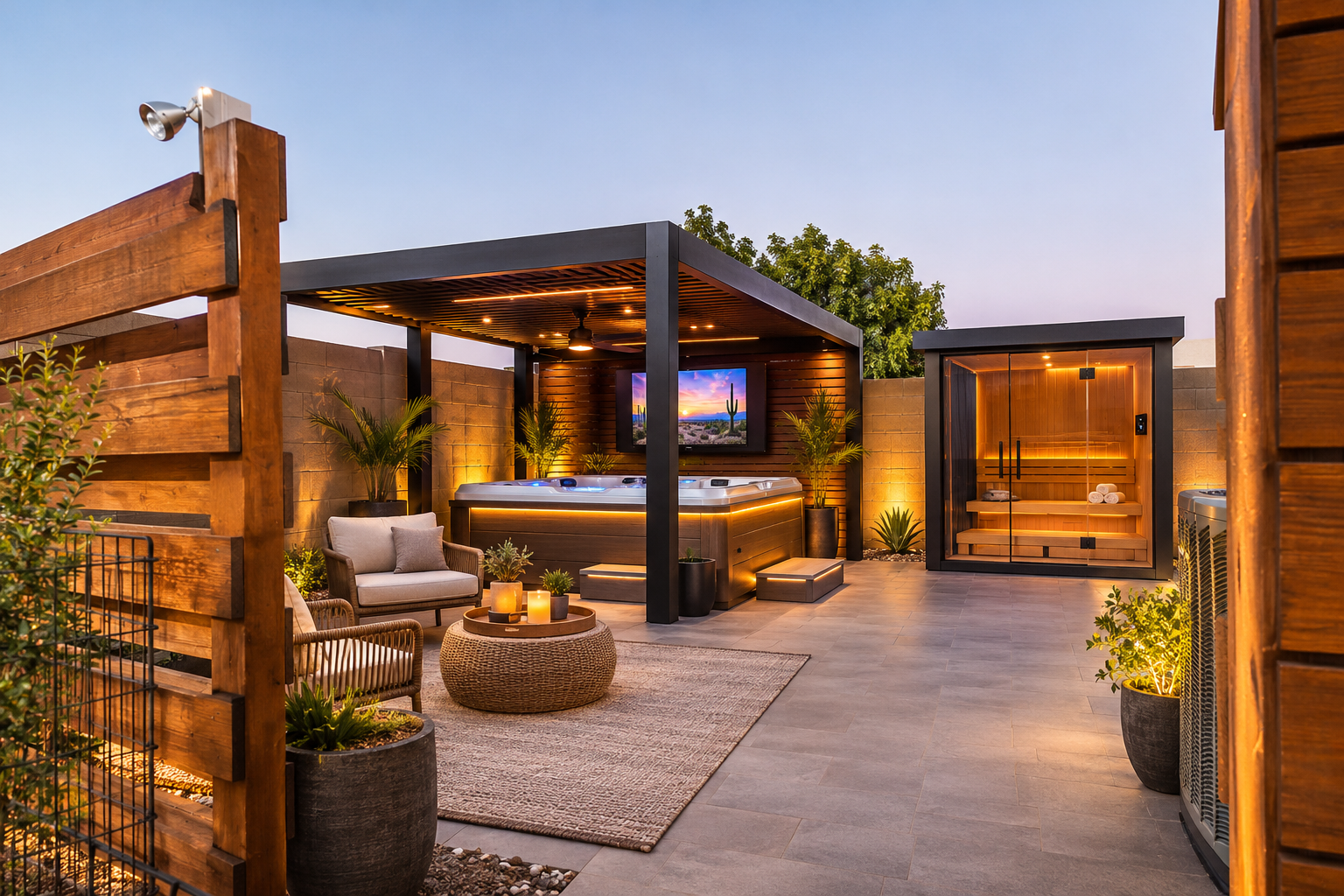
| Amenity runway | Garage conversion and the other side of the backyard | Most of the amenity stack can be added without moving walls or buying a bigger lot. |
| Condition and rules | Cosmetic work only, no STR or rental restrictions on the parcel | No renovation delay before the first booking and no rule risk to underwrite. |
Why this is value, not just a lower price. A cheaper house with a small lot, deferred maintenance or rental restrictions is a discount with strings attached. Here the price, the room count, the lot and the rules all line up, so the buyer is paying for an operating asset rather than a project. That is also why the depreciable basis is solid: the dollars went into the property, not into catching up on years of neglect. The $800,000 figure in the tax section is a hypothetical for illustration; at a lower price the same percentages apply to a smaller number. For why investors hold real estate at all, see my post on real estate as an asset class.
Property details are from public listing and county records and are summarized for education. Confirm specifics before relying on them.
Property gallery
The negotiation
Aggressive on price, then a roof entered the conversation
The seller wanted to relocate to Washington state to build a new home. Understanding why a seller is selling is leverage, and it shaped both our price and our terms.
1. Aggressive offer
We came in low, priced to reflect the seller's motivation to relocate and build, without losing the deal.
2. Offer accepted
The seller accepted. Then the inspection found the roof needed to be replaced.
3. Renegotiated hard
We negotiated and got minor repairs plus a new roof, covered by the seller.
This is where a financial lens pays off. A roof is a five-figure line item, and in an STR it is also a revenue risk: a leak mid-season means canceled bookings and refunds. Moving that cost to the seller protected cash, protected the basis the client would depreciate, and let him spend his capital on the amenities that earn.
From my field notes. I never let a buyer absorb a major inspection finding without a conversation. A roof is both a cost and a revenue risk in an STR, because a leak mid-season means canceled bookings, and the seller's motivation to close is the leverage that moves it off the buyer's side of the ledger.
Today and planned: the updates that build the property over time
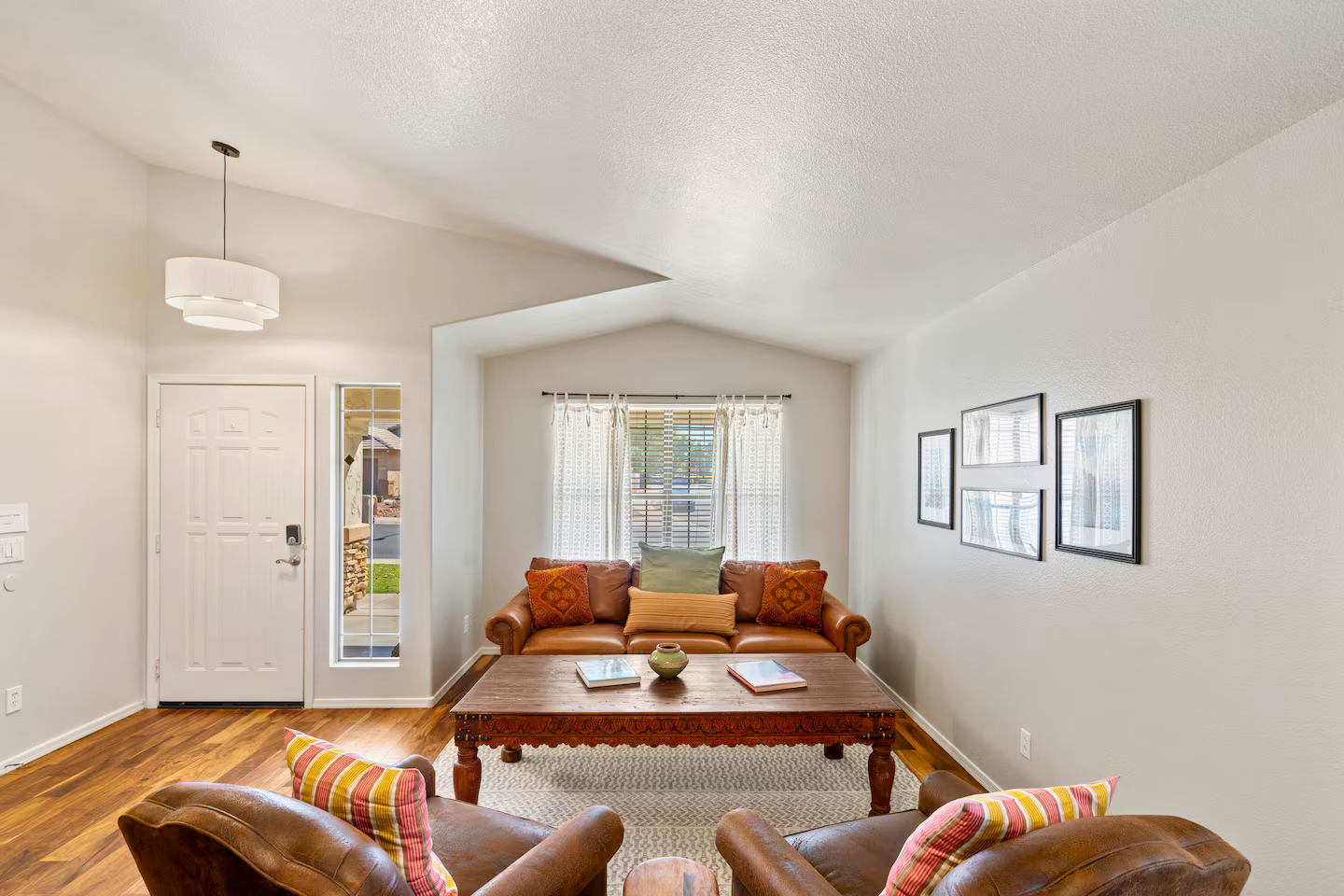
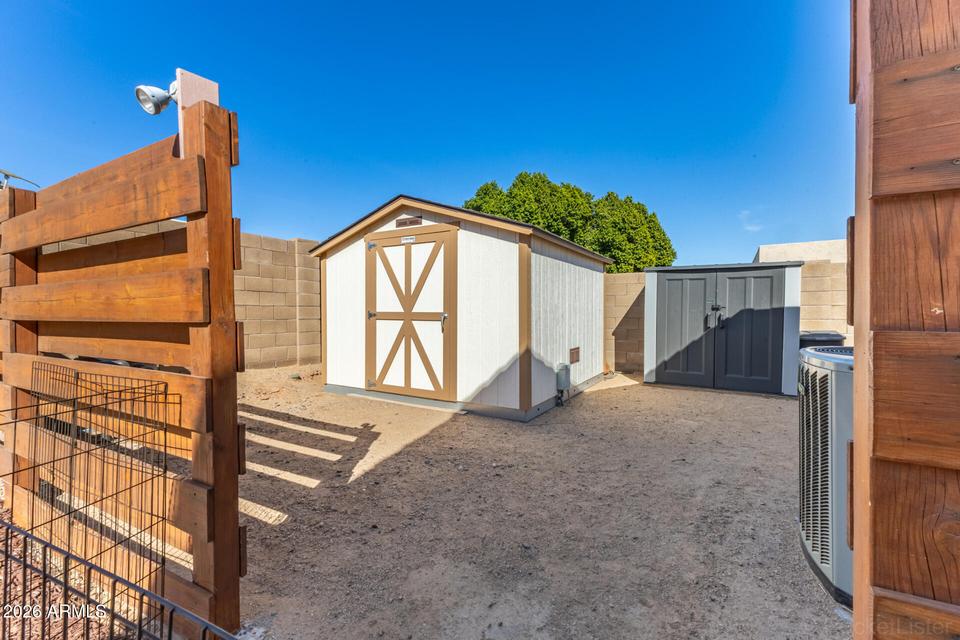
The negotiation protected the purchase. The plan from here is phased: launch on a cosmetic-only home, then add updates that raise the guest experience. Here is where two areas stand today next to what is planned. Plans can change as the project moves forward.
Front room
Other side of the backyard
What works · amenities
The short-term rental amenities that actually earn
Guests do not book square footage; they book an experience they can picture. In the Phoenix area the winning formula is a private outdoor space that photographs well and works in every season, backed by enough sleeping capacity for a group. For a cost-versus-return breakdown, see my guide to the best Airbnb amenities for ROI in Phoenix and Scottsdale.
| Amenity | Why guests pay for it | Arizona notes |
|---|---|---|
| Private pool, ideally heated | In my experience the most-used booking filter in the Valley and typically the biggest rate driver. | Heating extends the shoulder seasons. In AirROI data, Glendale homes with a pool average about twice the annual revenue of homes without one. Follow Arizona's pool barrier rules. |
| Spa or hot tub | Turns cool desert evenings into a feature. | A big draw for winter guests and Pacific Northwest visitors. |
| Outdoor living | Shaded patio, BBQ, dining for the full group, lounge seating. | Add shade and misting for summer. Photographs and reviews well. |
| Game room | Gives groups something to do in the heat of the day and after dark. | A garage conversion is often the cheapest way to add a differentiator. On one past deal I funded it with a seller credit. |
| Putting green | Matches the golf identity of the area and makes the listing memorable. | Lower maintenance than a pool; excellent for listing photos. |
| Fire pit | Low cost, high emotional return on a cool evening. | Check HOA and city rules for open flames. Gas is safer than wood. |
| Community play area and courts | The play area, volleyball and basketball courts are right down the street, a short walk away, which wins the multi-generational family guest without adding yard maintenance. | Confirm community rules and hours, and put them in the house manual. |
| Sleeping capacity and flex rooms | Groups book beds, not bedrooms. | Flex space can become a bunk room, a second lounge or a work space. This listing includes a dedicated workspace. |
| Work-ready basics | Fast Wi-Fi, a desk and a full kitchen open the mid-term market. | This is the pivot that keeps the property earning if tourism softens. |
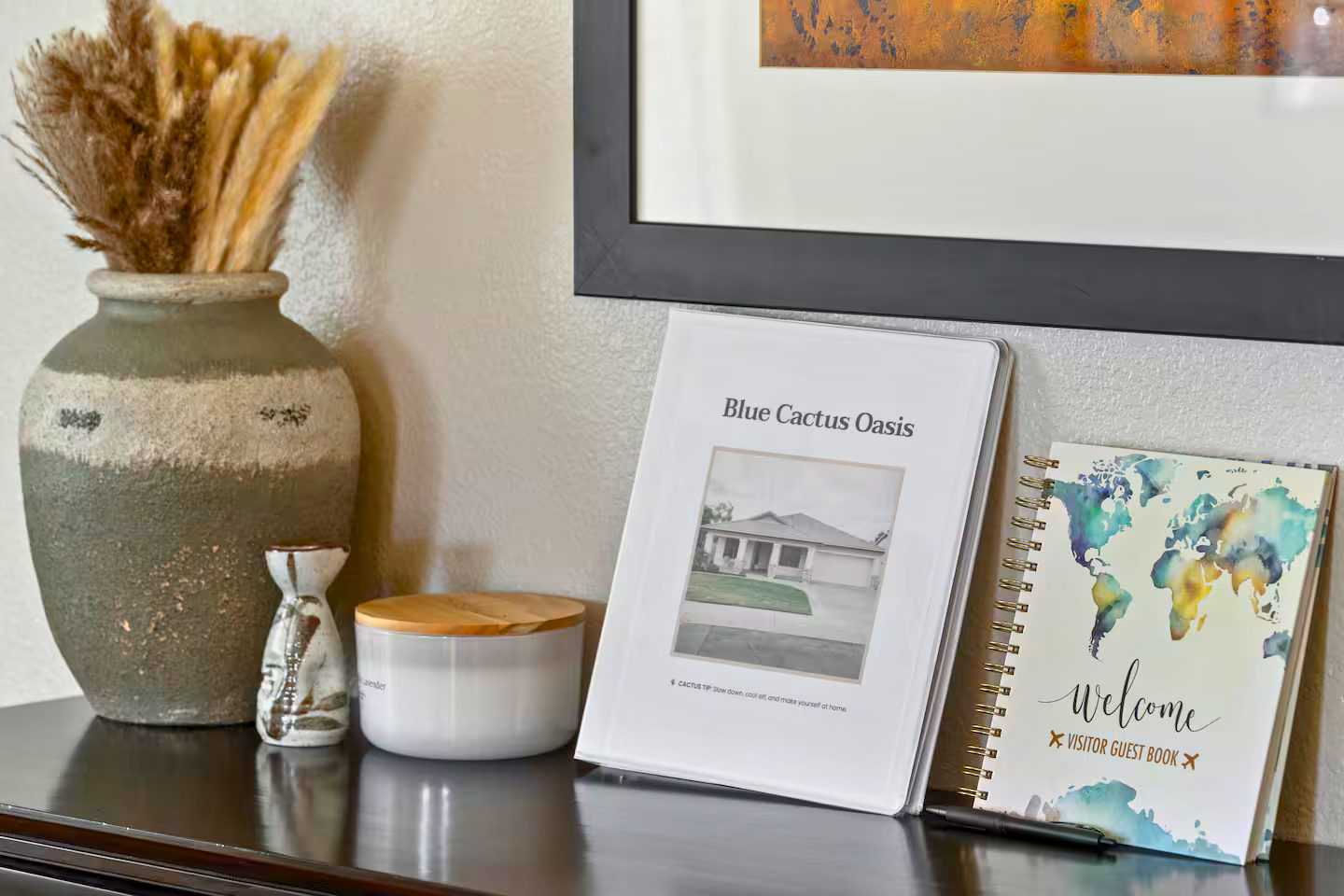
| Self check-in, welcome station and noise awareness | Smooth arrivals and neighbor-friendly operations protect reviews. | Disclose any exterior cameras. No indoor cameras. Noise monitors that do not record audio are the norm. |
What does not move the needle: over-themed decor, a dozen small gimmicks and cheap furniture. Spend on the three things guests photograph and review: the backyard, the beds and the first impression.
What each amenity costs and what it can return
Not every amenity earns its cost. These planning ranges come from my amenity ROI analysis. The payback figures are from a hypothetical Scottsdale model, not from any one property, and the revenue effects are correlations rather than proof.
| Amenity | Typical installed cost | Revenue effect | Base-case payback |
|---|---|---|---|
| Heat added to an existing pool | $3,000 to $8,500 | High for family and group stays, and it extends the shoulder seasons. | About 2 years |
| Heated pool, new build | $60,000 to $120,000+ | High, but the build cost is steep. | About 8 years |
| Hot tub | $5,000 to $15,000 | National average rates run about 14% higher than comparable listings without one (AirDNA). The premium appears smaller in Scottsdale. | About 4 years. Near zero added income if the home already has a heated pool and spa. |
| Garage game room | $5,000 to $35,000 | Moderate, with a lift in summer occupancy. | About 6 years at $25,000 |
| Putting green | $5,000 to $20,000 | Low to moderate. Memorable in photos and a draw for golf groups. | Not modeled |
Source: my Best Airbnb Amenities for ROI analysis. Costs are planning estimates to verify with licensed local contractors. Payback is the base case of a hypothetical model that excludes financing, taxes and construction downtime.
What this means when you buy: the cheapest revenue usually comes from finishing what is already there. Heat an existing pool before building a new one, convert space you already own and buy the property with the pool already in the ground. That is why this parcel mattered: the pool and putting green were in place, and the garage game room is a lower-cost upgrade rather than a major build.
Design for one guest, not everyone
The fastest way to a mediocre listing is to try to appeal to everyone. For this property the target is the group and family traveler who wants a resort-style backyard near the stadium, spring training and golf. Every amenity decision, from the putting green to the game room, maps to that guest. It also keeps the property differentiated in a market where many listings are built to the same generic template.
My approach · the playbook
The Ravenscroft STR acquisition playbook
Buying an STR is not a house hunt with a different keyword. It is an acquisition with an operating plan, a tax plan and an exit plan. This is the sequence I run with buyers and investors, and it is the same sequence we followed here. To compare long-, mid- and short-term strategies first, read my Phoenix rental strategy guide.
-
Define the job of the property
Income, lifestyle, tax or all three? How many personal-use days do you want? What is the target hold period? The answers change which property is right.
-
Get tax-fit advice before you search
Bring your CPA in early. Confirm your income level, how many hours you can document, and how personal use will affect deductions. I coordinate with your CPA; I do not replace one.
-
Screen submarkets like a portfolio
Demographics, risk profile, upside, appreciation potential and pivot demand for each area. We compare the whole Valley, not the neighborhood a portal happens to show.
-
Pass the regulation gate before any offer
Pull the CC&Rs. Confirm city registration and tax licensing. Verify there are no rental restrictions on the parcel. Arizona HOA documents can and do prohibit STRs.
-
Underwrite it three ways
Model the property as a short-term, mid-term and long-term rental. Haircut projections. A property that only works one way is a bet, not a strategy.
-
Filter the parcel for amenity runway
Lot size, layout, bedroom and bath ratio, pool potential, convertible space and condition. Cosmetic work is acceptable. Deferred maintenance on a small lot is a trap.
-
Write the offer around seller motivation
Read why the seller is selling and price the offer accordingly. Relocating, building or timeline-driven sellers create leverage.
-
Treat inspection as a second negotiation
Major findings such as a roof are leverage in the contract, not a surprise after closing.
-
Plan cost segregation and placed-in-service timing
Line up the study, the in-service date and the buildout schedule with your CPA so depreciation is captured in the intended tax year.
-
Build out, launch and review
Furnish for the target guest, shoot professional photos, set up licensing and pricing, then run a quarterly review. I coach clients through each step and connect them with trusted vendors.
After closing: clients of The Ravenscroft Group receive a Post-Closing Playbook covering a Day 1 setup checklist, an operations manual template, a vendor contact framework, a guest email capture system, a marketing cadence and a quarterly review process. Out-of-state buyers also get video tours and a local point of contact through the whole transaction.
The underwriting rules of thumb I use
| Input | Assumption I plan around |
|---|---|
| Revenue haircut | Model 70 to 75% of the projection, not 100% |
| Platform fees | Airbnb host-only fee about 15.5%; VRBO about 5% plus processing |
| Management | 15 to 25% of revenue if professionally managed |
| Maintenance and turnover reserve | 8 to 12% of gross revenue |
| Target cap rate | Roughly 6 to 9% on conservative revenue |
| Exit paths | STR, mid-term (30+ days), long-term lease, owner use or sale |
From my Arizona STR guide. Planning assumptions, not guarantees.
How I underwrite a property with you
Underwriting is where most STR purchases are won or lost. I build the model before you make an offer, and I build it to survive a bad year, not to sell a good one.
| Step | What goes into it |
|---|---|
| Revenue | Comparable listings and market data, then a haircut to 70 to 75% of the projection. |
| Operating costs | Airbnb host fee of about 15.5%, management of 15 to 25% if you hire it (or the value of your own time), maintenance and turnover at 8 to 12% of gross, plus insurance, utilities and taxes. |
| Startup costs | Furnishing and setup, commonly $15,000 to $40,000 or more, plus the amenity runway. |
| Financing | Conventional loans often start near 15% down and DSCR loans near 20 to 25%. I stress-test at today's rates. |
| Returns | Net operating income, cap rate and cash-on-cash. A cap rate of 6 to 9% is strong. Above 9% needs independent verification, and below 5% depends on appreciation and tax strategy. |
| Three-way test | The same property modeled as a short-term, mid-term and long-term rental, so you know the floor. |
| Tax fit | Handed to your CPA with the purchase price, expected placed-in-service date and personal-use plan. |
A worked example from my guide. A four-bedroom Phoenix home priced at $1,235,000 with about $300,000 down was projected at $133,106 of annual revenue and a 9.6% cap rate before any haircut. At 70 to 75% of that projection, revenue lands between roughly $93,000 and $99,800. That is why I haircut first, and why a cap rate above 9% gets a second look instead of a celebration. It was a pre-purchase projection, not a result.
What you receive when we work together:
- A three-way model (STR, mid-term and long-term) with the haircut applied
- A regulation and CC&R check completed before any offer
- A comparable set and a line-item amenity runway for the parcel
- An organized handoff to your CPA and, when you want one, a cost segregation firm
- Video tours and a local point of contact if you are buying from out of state
The mistakes I help buyers avoid
- Skipping the CC&Rs. The most common and most expensive mistake in Arizona STR buying.
- Buying a small lot with deferred maintenance because it was the only STR on the market.
- Underwriting only the best case. No haircut, no mid-term or long-term fallback.
- Ignoring material participation. A manager who logs more hours than you can undo the tax plan.
- Treating licensing as optional. City registration and tax licenses are required.
- Furnishing for yourself, not the guest. The target guest decides the amenities.
The tax strategy
Bonus depreciation and the STR tax loophole, explained plainly
This is the part of the strategy many agents are not set up to walk a client through, and the part where accuracy matters most. A short-term rental can be treated differently than a typical long-term rental under federal tax rules. When the facts line up and a CPA signs off, that treatment can turn depreciation into a deduction against active income.
What changed: 100% bonus depreciation is back
The One Big Beautiful Bill Act (Public Law 119-21) restored 100% bonus depreciation permanently for qualifying property acquired after January 19, 2025. IRS Notice 2026-11, announced January 14, 2026, provides interim guidance on the additional first-year depreciation rules. Paired with a cost segregation study, which separates shorter-lived components (5, 7 and 15 year property) from the building structure, a large part of the purchase can be deducted in year one instead of over 39 years.
The STR rule: how it can offset active income
Rental activity is normally passive. Passive losses generally can only offset passive income. But Treasury Regulation 1.469-1T(e)(3)(ii) carves out rentals where the average customer stay is 7 days or less. Those are not automatically classed as rental activities, which means that if the owner materially participates, the losses can be non-passive and may offset W-2 or business income. It has been part of the regulations since 1988; it is not a gray-area trick.
The first two are the legal tests, and both must hold in the same tax year. The last two are what make the plan work and hold up:
- Average stay of 7 days or less. Measured across the tax year: total rental days divided by the number of separate bookings. It is a factual test, not an election.
- Material participation. Under Treasury Regulation 1.469-5T, commonly met with more than 100 hours and not less than any other individual, or more than 500 hours. Under the 100-hour test a cleaner or manager who logs more time than you can cause a failure.
- Documented accelerated depreciation. A cost segregation study supports the allocation to shorter-lived property.
- A contemporaneous time log. Courts have rejected after-the-fact reconstructions of hours. Log them as you work.
A hypothetical example (not the client's numbers)
| Line item | Amount |
|---|---|
| Purchase price | $800,000 |
| Less land value (assumed 20%, not depreciable) | ($160,000) |
| Depreciable basis | $640,000 |
| Reclassified by cost segregation (assumed 25%) | $160,000 |
| Year-one bonus depreciation at 100% | $160,000 |
| Illustrative federal tax value at a 37% bracket | about $59,200 |
| Remaining building basis ($480,000 over 39 years) | about $12,300 a year |
Illustration only. Real allocations vary by property, and studies commonly reclassify somewhere around 20 to 35% of building basis. Land share, bracket, participation and the limits below change the result.
Amenities can be part of the tax plan. Site improvements added after closing, such as a pool, putting green, hardscape and landscaping, may qualify as shorter-lived property when placed in service. That is one more reason a large lot with real amenity runway matters, and one more thing to model with your CPA. For the wider picture, see my real estate tax strategy guide, or how W-2 earners use the short-term rental tax break.
What it takes to qualify
The tax benefit is not automatic. Three things have to line up: the property qualifies for bonus depreciation, the rental qualifies as an STR for passive-loss purposes, and you materially participate. Your CPA makes the final call on each.
1. Bonus depreciation: what has to be true
- Acquired after January 19, 2025. That is the date that triggers permanent 100% bonus under the One Big Beautiful Bill Act.
- Used property can qualify. It generally must not have been used by you before and must come from an unrelated seller.
- Placed in service. The home must be ready and available to rent in the tax year you claim it.
- A cost segregation study. It identifies the components with shorter recovery periods, commonly 5, 7 and 15 years, that bonus depreciation can apply to.
- Furniture and equipment. Items you buy for the rental can also be shorter-lived property.
- It is the default, not a requirement. You can elect out, and your CPA decides whether that makes sense for you.
2. Two routes to use rental losses against other income
| Short-term rental route | Real estate professional route | |
|---|---|---|
| Core test | Average guest stay of 7 days or less | More than half your working time and more than 750 hours in real property businesses |
| Also required | Material participation in the rental | Material participation in the rental |
| Who it usually fits | Full-time W-2 earners and advisors with a career outside real estate | People whose main work is real estate |
3. Material participation: the tests owners most often use
| Test | What it requires |
|---|---|
| 500 hours | You spend more than 500 hours on the rental in the year. |
| Substantially all | Your participation is substantially all of the participation by anyone. |
| 100 hours and the most | You spend more than 100 hours, and no other individual, including a manager or cleaner, spends more time than you. |
Source: Treas. Reg. 1.469-5T and 1.469-1T(e)(3)(ii)(A). Other tests exist. Keep a contemporaneous log of your hours, because hours without records do not hold up. A fully managed property with no owner involvement may not pass.
The limits and trade-offs you must understand
Personal use (IRC 280A)
If personal use exceeds the greater of 14 days or 10% of the days rented at a fair price, the home can be treated as a residence and deductions limited to rental income. For an owner who wants winter stays, this is the first rule to plan around, and it is why I bring the CPA in before the offer.
Excess business loss limit
Section 461(l) caps how much business loss can offset other income in a year. Any excess generally becomes a net operating loss carryforward rather than being lost.
Material participation is a real test
Hours must be real and documented. A hands-off, fully managed approach may not meet the test.
Depreciation recapture
Accelerated depreciation reduces your basis. On a sale, recapture can be taxed at ordinary rates (personal property) and up to 25% (building). Structuring, holding period and a 1031 exchange can change the picture.
Related: a Goodyear STR case study with full year-one depreciation modeling and my approach to Arizona STRs and vacation homes.
Who does what: my role and your CPA's
| I handle (real estate and planning) | Your CPA or tax attorney handles (tax advice) |
|---|---|
| Choosing a property type, layout and operating model that can support the strategy | Whether you qualify for the 7-day rule and material participation |
| Verifying rental rules, CC&Rs, licensing and the amenity runway before you offer | Your personal-use plan under section 280A and your loss limits under section 461(l) |
| Underwriting the property as an STR, mid-term and long-term rental | Cost segregation, placed-in-service timing and the bonus depreciation election |
| Coordinating timelines and introducing you to vendors, including cost segregation firms | Recapture planning, state treatment and your exit strategy |
I am not a CPA or tax attorney. My role is to make sure the property, the layout and the operating plan support the strategy you and your CPA choose. Confirm everything with a qualified tax professional before you buy.
Operate it legally in Glendale
Arizona law (A.R.S. 9-500.39) limits cities from banning short-term rentals outright, but owners must follow local rules, and HOAs can still restrict rentals. In Glendale that includes:
- City registration through Glendale's short-term rental portal, required before you advertise or rent, with a separate registration for each property. The portal's FAQ lists no registration fee, but the city's licensing page lists a $100 annual short-term rental license, so confirm the current fee with the city
- Arizona TPT license from the Department of Revenue (region code GE for Glendale), and transient tax filings. The city lists a combined rate of 15.7%
- Maricopa County Assessor registration under A.R.S. 33-1902 before the unit is occupied
- A designated emergency contact and owner contact information on file with the city
- Pool barrier compliance under Arizona law and a plan for nuisance complaints, since owners are responsible for guest conduct
Source: City of Glendale, Vacation and Short-Term Rentals. Verify current requirements before you operate.
In the client's words
What this buyer said about the experience
Eric was professional and thorough throughout our entire home-buying experience. My family and I were looking for a home in the greater Phoenix area that we could use personally and as a short-term rental. Eric helped us narrow down our options, and we found a great home in Glendale, Arizona.
His knowledge of the short-term rental market and what to look for in a property was extremely helpful. Since we live out of state, we really appreciated his willingness to do video tours, answer our questions, and be our local resource.
Eric also guided us through the negotiations and closing process, especially where things differed from our home state. He has even continued helping us as we set up the rental. We've really enjoyed working with Eric and highly recommend him!
175+ five-star reviews on Google
Read verified client reviews and see the full profile for Eric Ravenscroft, REALTOR® | The Ravenscroft Group.
About your advisor
Real estate strategy built on a wealth management foundation

$100M+
Closed residential sales
175+
Five-star Google reviews
15 yrs
Real estate, planning and wealth management
#2 AZ
#22 nationwide with Real Broker
I am Eric Ravenscroft, owner of The Ravenscroft Group with Real Broker. I spent over a decade in financial planning and wealth management, including a role as Director of Wealth Management, before moving into real estate full time. That background changes how I approach a purchase: I am helping you make a financial decision with ripple effects across taxes, cash flow, equity and long-term wealth, not just finding a house.
I have closed more than $100 million in residential sales, lead a national relocation division for buyers moving from Washington, California, Oregon, Texas, Illinois and beyond, and host the House of Ravenscroft Podcast on real estate, tax strategy and wealth building. My clients get a coach for the strategy behind the transaction, before, during and after closing.
As featured in





Trusted by the nation's largest financial institutions


Common questions
Glendale short-term rental and bonus depreciation FAQ
Is Glendale, AZ a good place to buy a short-term rental?
It can be, if the parcel is right. North Glendale and the Arrowhead area sit near State Farm Stadium, Camelback Ranch spring training, Westgate, Arrowhead Towne Center, Loop 101 access to Scottsdale and Sky Harbor, and the TSMC and Halo Vista build-out. Larger lots and lower entry prices than Scottsdale leave room for a pool, spa and game amenities. The deciding factors are lot size, layout, condition and whether the property has HOA or CC&R rental restrictions.
What is the short-term rental tax loophole?
Rental activities with an average customer stay of 7 days or less are not automatically treated as passive under the IRS passive activity rules. If the owner materially participates, depreciation and other losses can be non-passive and may offset active income such as W-2 wages, subject to other limits. The rule comes from Treasury Regulation 1.469-1T(e)(3)(ii). Confirm eligibility with a CPA.
Does 100% bonus depreciation apply to short-term rentals in 2026 and 2027?
The One Big Beautiful Bill Act (Public Law 119-21) restored 100% bonus depreciation permanently for qualifying property acquired after January 19, 2025. Paired with a cost segregation study, shorter-lived components of a short-term rental such as certain fixtures, furnishings, landscaping and site improvements may be eligible for first-year deduction. A CPA should confirm the placed-in-service date and allocation.
Can I use the property myself and still use the STR tax strategy?
Personal use matters. Under IRC section 280A(d), if personal use exceeds the greater of 14 days or 10% of the days the home is rented at a fair price, the property can be treated as a residence, which limits deductions to rental income. The plan for personal days should be built with your CPA before you buy, not after.
What amenities earn the most on a Phoenix-area short-term rental?
A private pool is the strongest single driver in Arizona, with heating and a spa extending the shoulder seasons. Outdoor living (shaded patio, fire pit, dining for the group), a game room, a putting green or similar backyard feature, and sleeping capacity that fits groups round out the stack. Amenities should match the guest you are targeting.
Does Glendale allow short-term rentals, and what registrations are required?
Arizona law limits cities from banning short-term rentals outright, but owners must comply with local requirements. The City of Glendale requires registration through its short-term rental portal, an Arizona Transaction Privilege Tax license, Maricopa County Assessor registration, and a designated emergency contact. HOA CC&Rs can still prohibit rentals, so verify the parcel before you offer.
What happens if the short-term rental does not perform as projected?
That is why every candidate property is underwritten three ways: as a short-term, mid-term and long-term rental. Glendale's employer growth and event calendar support mid-term demand, and a conventional lease remains a floor. Projections are haircut to a conservative share of modeled revenue.
How does Eric Ravenscroft help buyers find and buy a short-term rental?
The process covers goal and tax-fit planning with your CPA, submarket screening, a regulation gate before any offer, three-way underwriting, parcel filtering for amenity potential, offer and inspection negotiation, cost segregation timing, buildout and launch coaching, and ongoing performance review. Out-of-state buyers get video tours and a local point of contact.
What do I need to qualify for the short-term rental tax benefit?
Three things have to line up. The property must qualify for bonus depreciation, which for property acquired after January 19, 2025 is 100% and typically relies on a cost segregation study to identify shorter-lived components. The rental generally needs an average guest stay of 7 days or less so it is not treated as passive. And you must materially participate, for example by logging more than 500 hours, or more than 100 hours with no one else spending more time than you. Personal use limits and the excess business loss limit also apply. Your CPA makes the final determination.
How does Eric Ravenscroft underwrite a short-term rental?
Every candidate is modeled before an offer. Revenue is haircut to 70 to 75% of the projection, then Airbnb fees of about 15.5%, management or the value of your time, maintenance at 8 to 12% of gross, insurance, utilities and taxes are subtracted. The result is tested as a short-term, mid-term and long-term rental, with cap rate, cash-on-cash and financing stress-tested at today's rates. A cap rate of 6 to 9% is considered strong, and above 9% needs independent verification.
Which Phoenix-area markets are best for short-term rentals?
It depends on the goal. In BNBCalc data for November 2026, Scottsdale leads 4+ bedroom pool homes at about $136,000 of average annual revenue, North Phoenix and Arcadia follow near $109,000, Chandler is near $89,000 and Glendale is near $83,000, with a lower entry price and larger lots. Occupancy is similar across the Valley, so nightly rate and entry price decide the return. Rules vary by city and HOA, so confirm them before any offer.
Work with Eric
Want a property that does two jobs at once?
If you are weighing a short-term rental for lifestyle, income, bonus depreciation or all three, this is the engagement I run for clients across the Greater Phoenix Metro. We analyze the submarket first, then find the property that fits the strategy, and I stay with you through setup.
Call or text 480-269-5858 · eric@theravenscroftgroup.com
More case studies
More Arizona STR case studies with bonus depreciation
This Glendale deal is one of several. Each of these shows a different submarket, property type and tax plan. Figures in the linked posts may be underwriting projections, so read each one's own notes.
Related reading
Sources
- Public Law 119-21 (H.R. 1), One Big Beautiful Bill Act, Congress.gov
- IRS news release IR-2026-06 announcing Notice 2026-11 (January 14, 2026)
- 26 CFR 1.469-1T(e)(3)(ii) and 26 CFR 1.469-5T, Electronic Code of Federal Regulations; Internal Revenue Code sections 280A(d) and 461(l)
- A.R.S. 9-500.39, limits on regulation of vacation rentals and short-term rentals, Arizona Legislature
- AirROI: Glendale, AZ Airbnb data and Gilbert, AZ (12 months to October 2026)
- Public listing record for 6448 W Tonto Dr (lot size per county assessor)
- City of Glendale: Vacation and Short-Term Rentals
- AZFamily: Halo Vista breaks ground in north Phoenix (April 13, 2026)
- AZFamily: TSMC adds $100B to Arizona plans (July 27, 2026)
- Glendale Independent: Camelback Ranch 2027 spring slate
- Arizona-Demographics.com: Glendale, AZ (Census ACS 2024)
- BNBCalc and AirROI market data, as published in The Complete Arizona STR Guide (November 2026)
How this post was built. Tax rules are cited to the regulation, statute or IRS release linked above. Market figures are labeled with their source and month. Anything hypothetical is marked as such, and nothing here is a projection for the client's property. Local rules were checked against the City of Glendale's own page. I review and update this post when tax law, local rules or market data change. Last reviewed November 20, 2026.
Transparency. I represented the buyer in this transaction and, like any agent, am paid when a purchase closes. I recommend a CPA and a licensed inspector who are independent of me, and the tax strategy always belongs to you and your CPA.
Disclosures. Eric Ravenscroft is a licensed real estate professional (License ID SA691304000), not a CPA, tax attorney or financial advisor in this capacity. This article is educational, reflects the law and market data available as of November 2026, and is not tax, legal or investment advice. Bonus depreciation, the 7-day average-stay rule, material participation, personal-use limits and loss limitations are fact-specific; consult a qualified CPA before acting. Examples are hypothetical and are not projections or guarantees. Market figures are averages and do not predict results for any property. Short-term rental rules vary by city, HOA and over time; verify current requirements. Client details are shared with the client's consent and summarized for educational purposes.
Categories
- All Blogs (336)
- Active Adult & 55 Plus Communities (17)
- Arizona Relocation Guides (34)
- Buyers (225)
- Financial Planning (67)
- General Real Estate (152)
- Income From Real Estate (66)
- Market Update (26)
- New Construction (30)
- News, Updates and Coming Soon (57)
- Real Estate Agent Financial Planning (23)
- Real Estate Investing (106)
- Sellers (108)
- Vacation and Short Term Rentals (48)
Recent Posts



About the Author
Eric Ravenscroft is a Top 1% REALTOR® across North America and one of Arizona’s most trusted real estate strategists. With 15 years of experience spanning real estate, wealth management, and investment planning, he helps clients make smarter, financially grounded decisions, from new construction and relocations to STR investments, 1031 exchanges, and long-term portfolio strategy.
Eric’s expertise has earned him industry recognition, Elite status with Real Broker, and features in major publications including the Wall Street Journal, MarketWatch, MSN, and Morningstar. Clients across the Greater Phoenix Metro rely on his clarity, strategic insight, and results-driven guidance.
Ready to make a confident real estate move? Call or text Eric today.