
So You Want to Buy a New Construction Home in Phoenix? Here's What You Need to Know.
New Construction · Buyer's Guide
So You Want to Buy a New Construction Home in Phoenix? Here's What You Need to Know.
The financing that makes it cheaper than resale, the incentives builders won't volunteer, and the backyard that isn't included — plus two real client wins from this year.






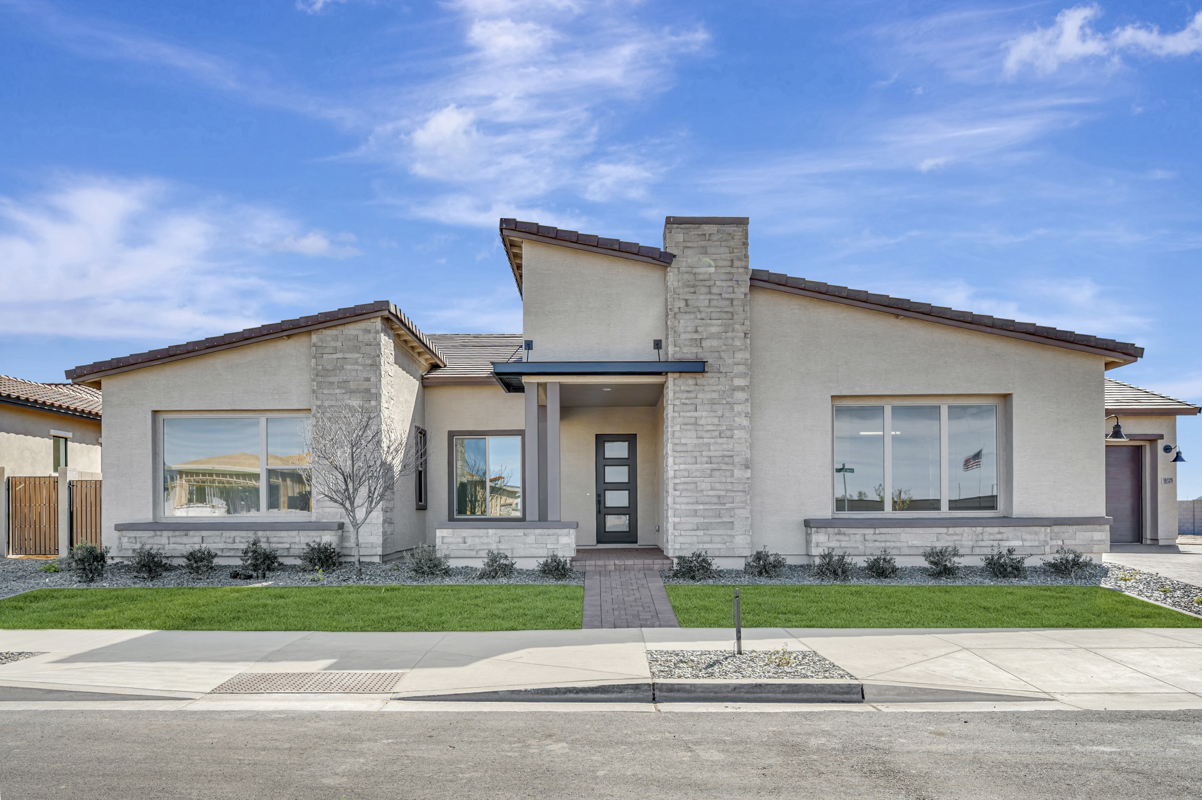
If you're shopping for a home anywhere in the Valley right now, you've likely noticed something that wasn't true a few years ago: in a growing number of price points, new construction is beating resale — not just on price, but on financing, terms, and total cost of ownership.
That sounds backwards. New homes are supposed to cost more than the one down the street. Not anymore — not with the way builders have been structuring incentives this year. Here's the financial case, the current incentive landscape, the truth about backyards, two real client wins, and why you should never walk into a sales office without your own representation. For the full, continuously updated version of this guide — every community, every builder, every incentive category — see my complete 2026 Phoenix Metro new construction guide.

The Financial Lens
Why new construction is often the cheaper home
Price and cost are two different things. Buyers who compare only the sticker price miss where the real savings live. I bring a financial planning background to every transaction — this is the same lens I use with every client.
The rate is bought down
Builder-paid 30-year fixed rates change the monthly math entirely — often several hundred dollars less per month than prevailing market rates.
Closing costs, covered
Many builders pay closing costs in full through their preferred lender — commonly $10,000–$25,000 back in your pocket at the table.
No inherited deferred maintenance
A builder warranty means your first years of ownership carry none of the roof, water heater, or HVAC surprises an older resale home hides.
Lower utility bills
Current energy codes mean better insulation and newer systems — meaningfully lower utility costs through the Arizona summer.
Real negotiating room
Design studio credits, price flexibility on standing inventory, and lot premium waivers — leverage a resale listing rarely offers.
No bidding wars
Builder pricing is builder pricing — often negotiable downward, never pushed up by a competing escalation clause.
The Current Landscape
What builder incentives actually look like this year
Incentives move fast — sometimes week to week — as builders manage inventory. This is a snapshot of the categories active across the Metro as of August 2026. For a deeper dive into how incentives shift on homes that haven't broken ground yet, see my guide to builder incentives on dirt builds in Phoenix.
Figures current as of August 2026 · shift by community and lender — confirm live terms before writing an offer.
Rate buydowns remain the single biggest lever. Permanent and temporary (2-1) buydown structures both show up depending on the builder and community — a permanent buydown holds for the life of the loan, while a 2-1 buydown steps back up to the note rate after year two. Both are worth understanding before you sign, and I walk every client through which structure they're actually being offered.
Closing cost credits and design center allowances are usually tied to using the builder's preferred lender — which can be genuinely valuable, but is always worth comparing against an outside quote first. Lot premium waivers and free landscaping packages show up more selectively, usually on homes that have already sat as completed inventory for 60–90 days, which is exactly where builders are most motivated to negotiate.
This incentive environment isn't static — it shifts by submarket, and sometimes by the week. My Phoenix housing market updates track these shifts as they happen, and I share current, community-specific numbers with every client before we tour a single model home.
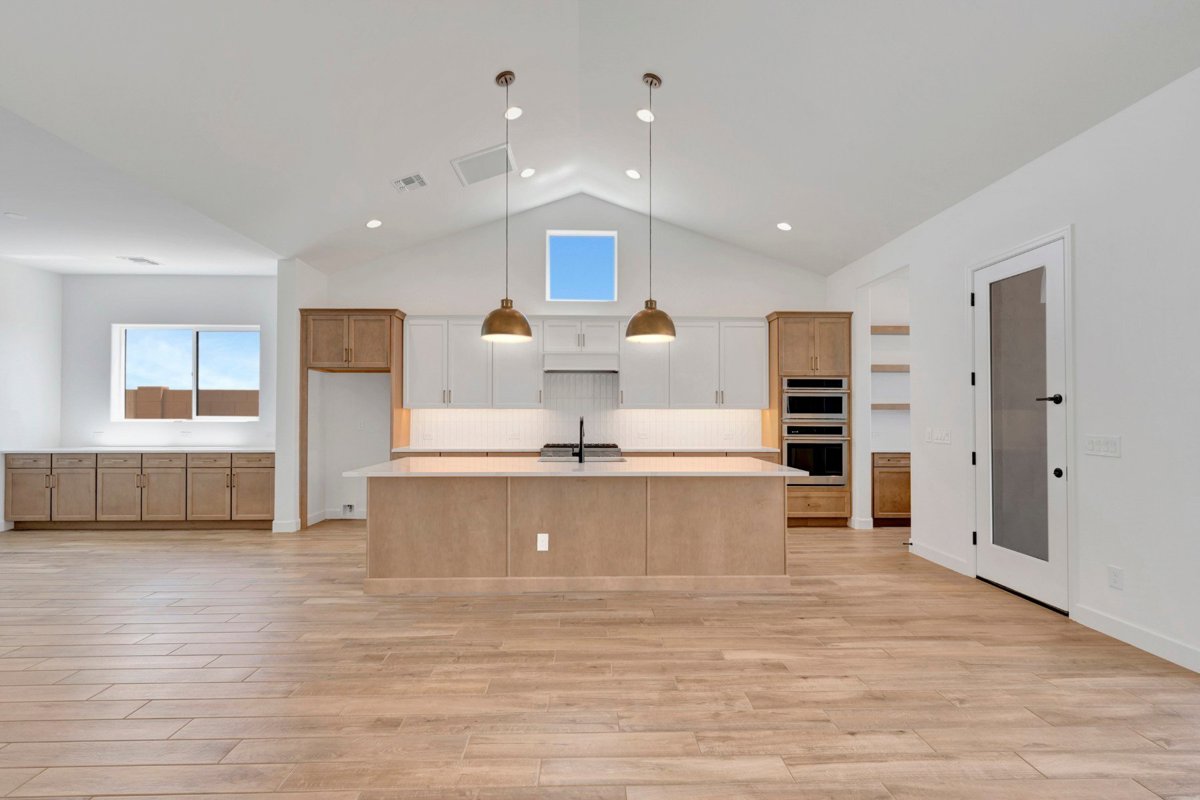
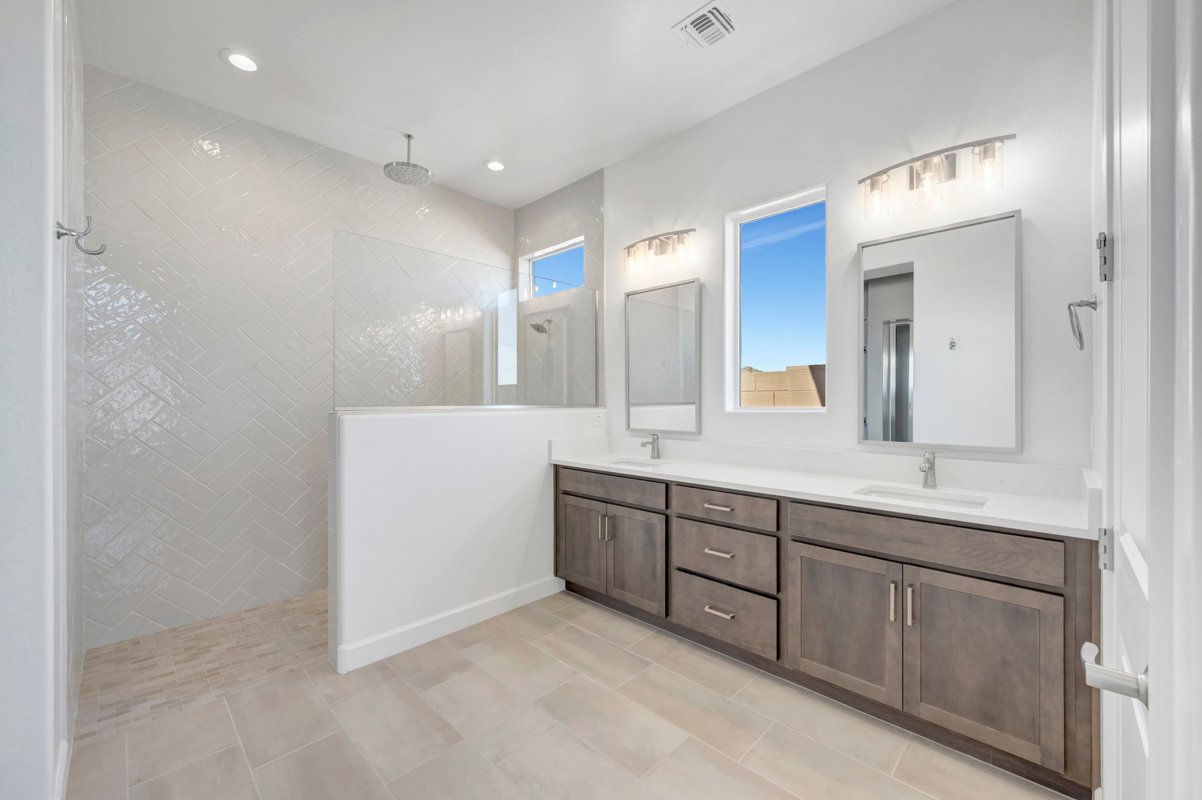
Inside the design center: kitchen and primary bath selections on a recent Phoenix Metro build.
Currently On The Table
An illustrative builder incentive summary
Every builder in the Valley runs a different playbook. This is representative of what a well-negotiated package can look like on a mid-range Phoenix Metro new build.
Figures reflect market activity current as of August 2026 across Phoenix Metro builders and vary by community, lot, and lender — incentive structures shift monthly, so treat this as directional rather than a quote. I'll walk you through exactly what's live at each community you're considering — or run your own numbers first with my mortgage and rent-vs-buy calculators.
For Investors
New construction rates are closing the investor gap
If you're buying as an investment rather than a primary residence, the math looks different — and in a lot of cases, better than expected. Investment property loans still carry a rate premium over owner-occupant financing, but builder-funded buydowns are increasingly applied before that spread is calculated, which changes the dollar impact substantially.
| System | Typical Lifespan | Resale, Unknown Age | New Construction |
|---|---|---|---|
| Roof | 20–25 years | Could need replacement any year — $9K–$15K+ | Full lifespan ahead, typically no cost for 20+ years |
| HVAC system | 12–18 years | Often mid-life or older — $6K–$12K+ to replace | Builder-warrantied, full life expectancy ahead |
| Water heater | 8–12 years | Frequently original — $1.5K–$3K to replace | New, typically not a year-1–8 expense |
| Structural & systems | 1–10 yr coverage | No builder warranty remaining | 1-yr workmanship, 2-yr systems, 10-yr structural |
General industry ranges for illustration, not a quote for any specific property — actual costs vary by market, finish level, and contractor.
A resale home carries a maintenance clock you can't see at inspection — you don't know how many years are left on the roof or the HVAC, only that the clock started running the day the home was built. New construction resets that clock to zero, right as an investor is trying to stabilize cash flow in year one and two. Combine that with builder-funded rate buydowns and 5%-down financing structures available on some new-build product, and the numbers on a rental property can look meaningfully different from the sticker price.
This isn't a universal fit — a significant share of new-construction HOAs restrict short-term rentals, so it depends heavily on your strategy. I break down the full picture, including 1031 exchange timing for investors moving capital from out of state, in my complete guide to new construction investor rates. For a broader look at building or repositioning a portfolio in the Valley, see my Arizona investment property resource and my notes on real estate tax strategy.
For Out-of-State Buyers
Relocating to Phoenix? New construction solves a specific problem
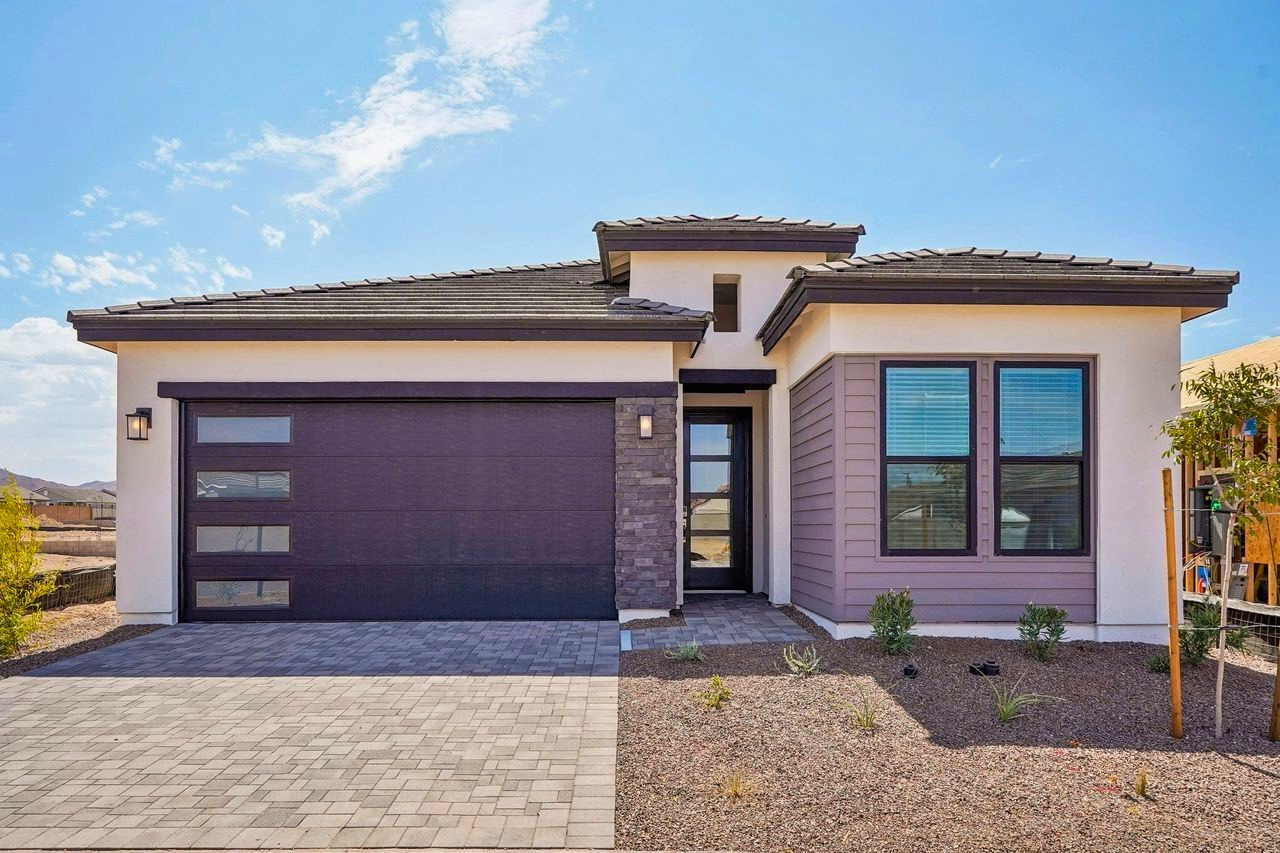
A meaningful share of my new-construction clients are moving from California, Washington, Illinois, Oregon, and beyond — often without ever setting foot in Arizona until closing day.
Buying sight-unseen, or nearly so, is a real concern for relocating buyers — and it's exactly where new construction has an advantage over resale. A builder's finishes, floor plan, and warranty are standardized and documented, which makes remote representation far more reliable than trying to evaluate an older resale home's condition over video. I handle virtual tours, remote contract review, and attend inspections and the final walk-through on my out-of-state clients' behalf when needed.
My out-of-state buyers guide to the Phoenix Metro covers the full picture — city-by-city breakdowns, school districts, commute realities, HOA laws, and new-vs-resale guidance specifically for relocating buyers. If you're still deciding whether the move itself makes sense, my Moving to Arizona guide and Phoenix relocation resource cover cost-of-living, taxes, and city comparisons in depth.

What's Not In The Brochure
The backyard reality
In most Phoenix Metro communities, the backyard comes as dirt. Front yard landscaping is typically included — the backyard is a blank slate you build out separately, unless the builder is offering otherwise.
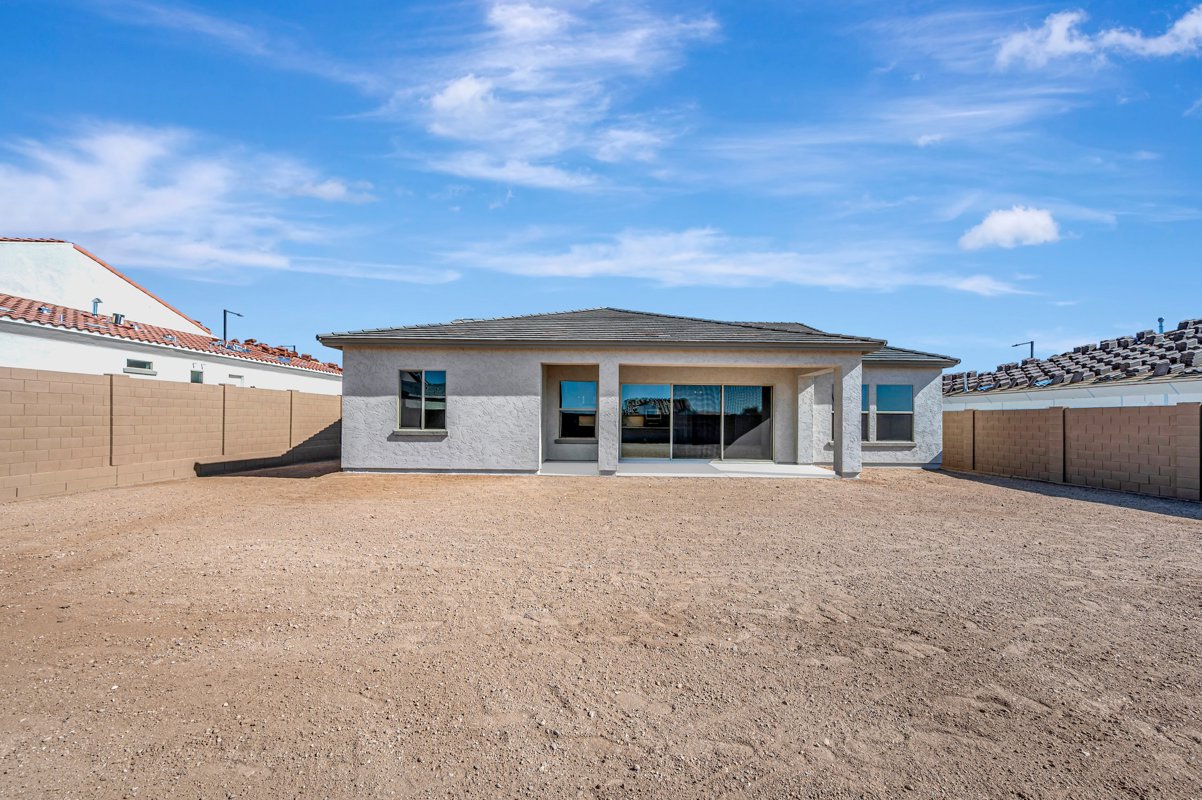
What you actually close on
A graded, compacted dirt yard. Landscaping, hardscape, and any pool are built afterward — typically $8,000 for basic gravel and patio up to $60,000+ for a full pool and outdoor living space.

Where some builders differ
A handful of builders and communities bundle pool or landscaping packages into the incentive structure, or discount steeply through preferred partners — worth tens of thousands if it's already in your plan. More on how these incentives shift by community and construction stage here.
Real Client Wins
Two families, two very different new-build strategies
The numbers above aren't theoretical — here's how they played out for two families who bought new construction this year. See the full library of client wins across the Phoenix Metro, or read client testimonials directly.
From a 1,000 Sq. Ft. California Condo to a 3,800 Sq. Ft. Arizona Legacy


A Southern California family sold their nearly 40-year-old condo contingent on finding the right Arizona home. We targeted a Soleo home by TriPointe Homes in San Tan Valley that had sat unsold for months at its original list price — leverage that turned into a 6% price reduction, a builder-covered contingent offer, closing costs paid in full, and a conventional rate buydown in the 4% range, all in the same contract.
New Build, 4.25% Rate, $0 Closing Costs & a Retirement Funded Right
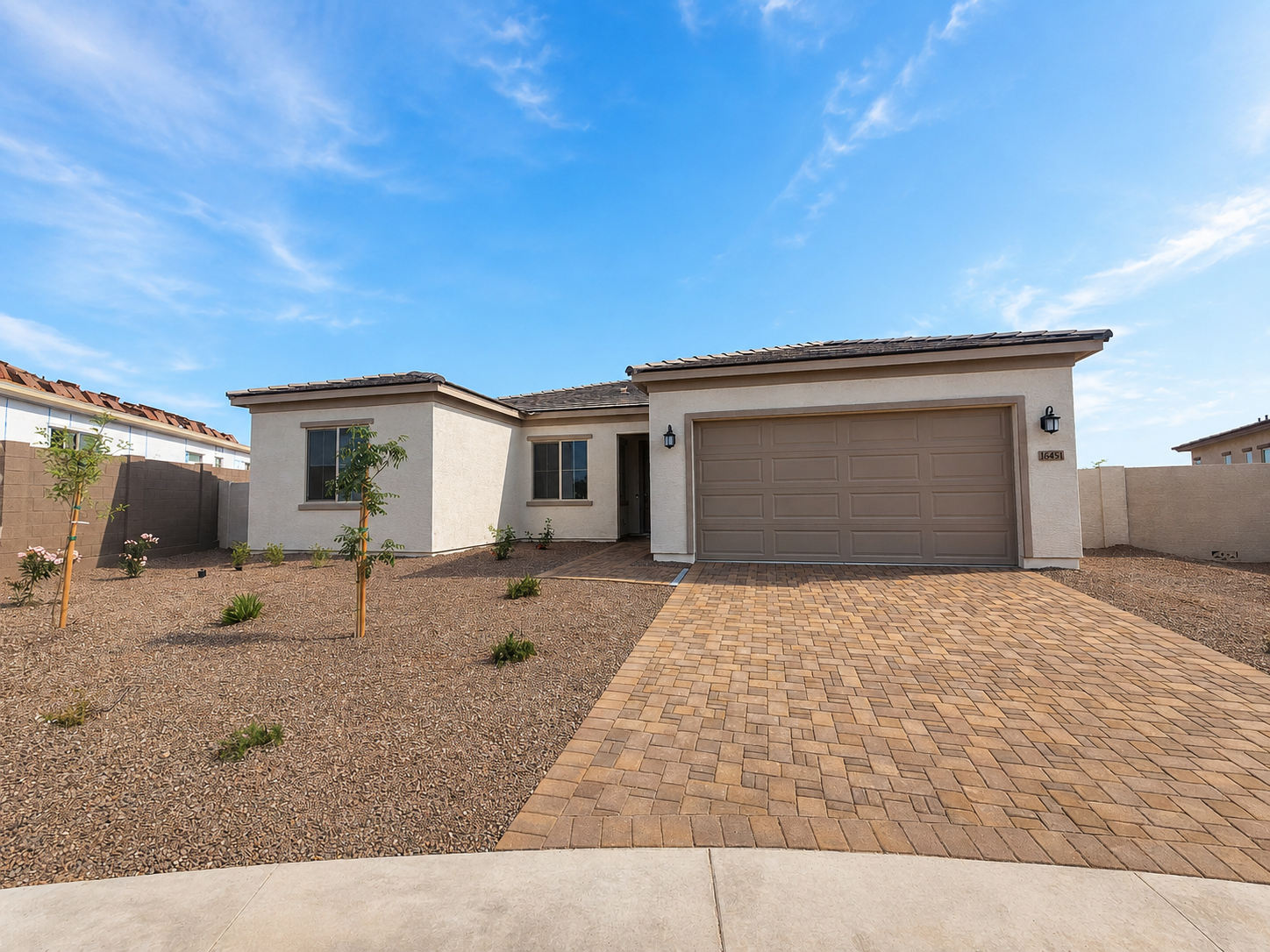
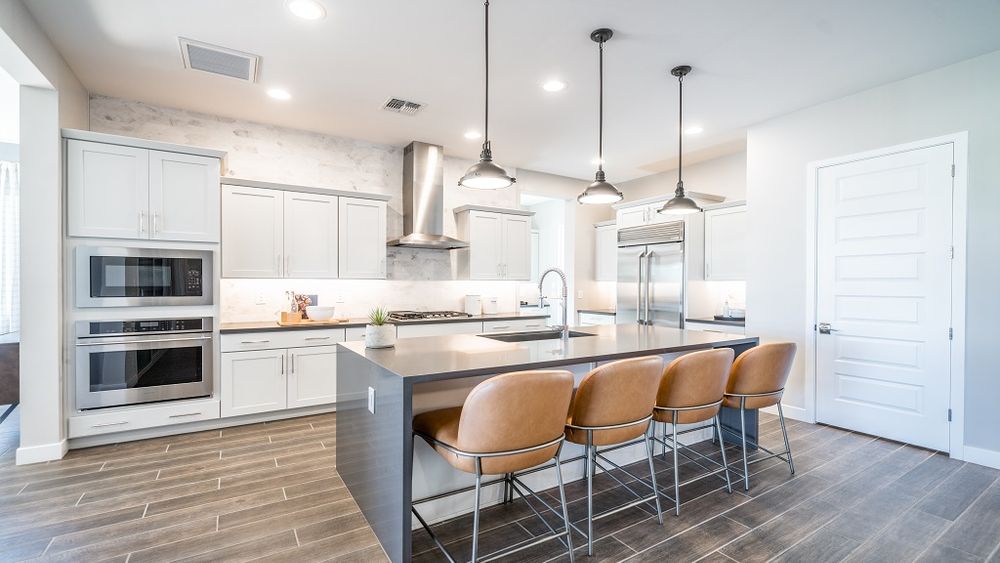
Bay Area clients relocating for retirement were set on the East Valley — until a full cost comparison showed CantaMia at Estrella in Goodyear delivered a new Taylor Morrison build, built from dirt on one of the community's largest lots, for a fraction of a comparable East Valley 55+ home. The difference in purchase price went straight into brokerage and retirement accounts, while a 4.25% builder rate and fully covered closing costs freed up roughly $750 a month in cash flow.
Representation
“The friendly person at the sales desk is not your agent.
They represent the builder — their job is the builder's best terms, not yours.
-
Negotiates incentives you didn't know existedIncentive structures shift monthly based on sales targets — an agent working multiple builders knows what's actually negotiable.
-
Reviews the contract before you signBuilder contracts are written by the builder's attorneys, for the builder — arbitration clauses, delay provisions, and deposit terms included.
-
Represents you at walkthrough and final inspectionFlags construction issues before you close, not after it's your problem to fix.
-
Evaluates upgrades against real resale valueSo you're not overpaying for lot premiums or options that won't return their cost.
-
Compares builders and communities objectivelyEvery sales office says theirs is the best value. An independent agent can actually show you the comparison — at no cost to you, since the builder pays the commission. More on my approach and background here.
The Advisor Behind This Guide
Real estate built on a wealth management foundation
I'm the founder of The Ravenscroft Group at Real Broker and a Top 1% REALTOR® across North America, recognized as a Platinum Producer (2022–2025) and President's Club recipient (2021–2025). I hold the CRS designation — the highest credential in residential real estate — alongside GRI, ABR, MRP, SRES®, and RSPS designations.
Before real estate, I served as a Director of Wealth Management, advising physicians, executives, and business owners on tax planning, investment strategy, and long-term wealth building. That career gave me a front-row seat to how most high-income earners systematically overpay — and how real estate, structured correctly, is one of the most powerful tools available for building durable wealth. It's the same lens I bring to every new construction transaction: the home matters, but so does the financing, the incentive structure, and how the purchase fits your longer-term picture.
I've closed more than $100 million in residential sales, helped clients create over $152 million in long-term wealth, and carry more than 150 five-star Google reviews. My insights on Phoenix real estate and investment strategy have been featured in The Wall Street Journal, Morningstar, MarketWatch, MSN Money, and The Residential Specialist. I'm also the host of the House of Ravenscroft Podcast. Read more about my background on my full bio page, or see how I apply this approach specifically to real estate financial planning.
Trusted By
Phoenix's preferred agent for leading financial institutions
Eric is a preferred real estate partner for USAA, Chase, SoFi, PennyMac, Citibank, Citizens, Huntington, Fifth Third, and other major institutions — reinforcing his standing among the industry's most trusted advisory professionals.








Go Deeper
More resources before you tour a model home
A few places to keep researching, whether you're buying, investing, or just running the numbers.
Categories
- All Blogs (324)
- Active Adult & 55 Plus Communities (17)
- Arizona Relocation Guides (31)
- Buyers (214)
- Financial Planning (61)
- General Real Estate (141)
- Income From Real Estate (60)
- Market Update (26)
- New Construction (29)
- News, Updates and Coming Soon (57)
- Real Estate Agent Financial Planning (22)
- Real Estate Investing (96)
- Sellers (107)
- Vacation and Short Term Rentals (45)
Recent Posts





About the Author
Eric Ravenscroft is a Top 1% REALTOR® across North America and one of Arizona’s most trusted real estate strategists. With 15 years of experience spanning real estate, wealth management, and investment planning, he helps clients make smarter, financially grounded decisions, from new construction and relocations to STR investments, 1031 exchanges, and long-term portfolio strategy.
Eric’s expertise has earned him industry recognition, Elite status with Real Broker, and features in major publications including the Wall Street Journal, MarketWatch, MSN, and Morningstar. Clients across the Greater Phoenix Metro rely on his clarity, strategic insight, and results-driven guidance.
Ready to make a confident real estate move? Call or text Eric today.