
Short-Term vs Mid-Term Rentals in Phoenix: Taxes, Risk & Investment Strategy (2026 Guide)
Phoenix Investment Strategy · Updated June 2026
Short-Term vs Mid-Term
Rentals in Phoenix:
Taxes, Risk & Strategy


Most Phoenix investors approach the STR vs. MTR decision by pulling up gross income projections and picking the bigger number. That's the wrong starting point — and it costs real money. The real difference comes down to three variables: income ceiling, tax efficiency, and operational fit.
After 15+ years working with investors across the Greater Phoenix Metro, the conversation I have repeatedly is this: the property is just the vehicle. The strategy behind it is what drives the return.
What We're Actually Comparing
The labels "short-term" and "mid-term" sound like they're just about lease length. They're not. They describe two fundamentally different businesses — different guests, different platforms, different property requirements, different operational demands, and different financial profiles. Understanding what each one actually looks like on the ground is where this decision starts.
Short-Term Rentals: Who's Staying and What They Expect
A short-term rental is any property rented for fewer than 30 consecutive days. In Phoenix, this means Airbnb and Vrbo are your primary distribution channels — and your guests are, almost by definition, people who are visiting, not people who are relocating.
Who Your STR Guests Are
The Phoenix and Scottsdale STR market draws a specific and well-defined guest mix. Understanding them helps you design, price, and position your property correctly:

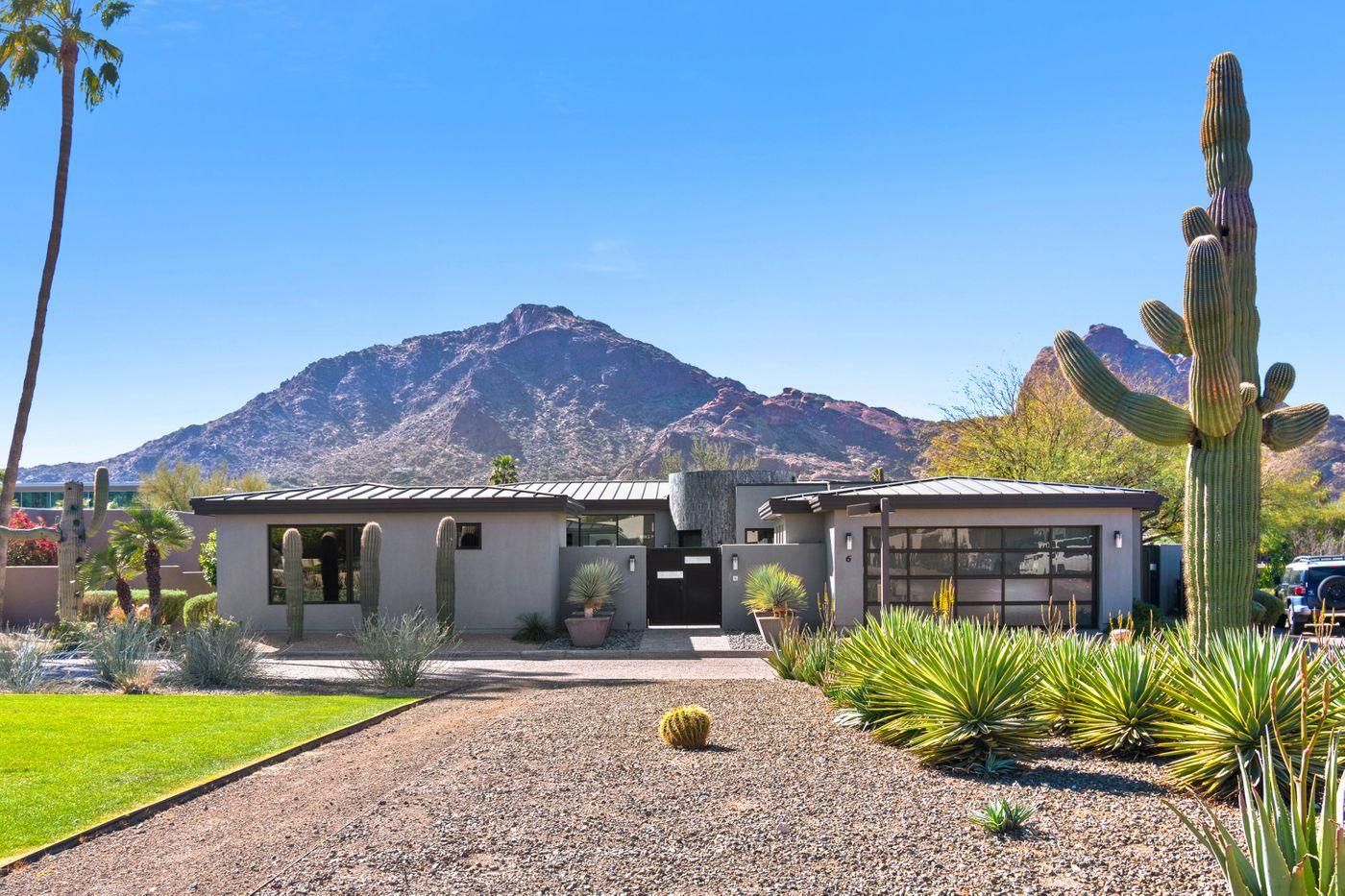
A well-amenitized Scottsdale STR — pool, outdoor living, and desert design — is the baseline for competitive nightly rates in today's market.
What an STR Property Needs to Compete
The Scottsdale STR market has matured. A property that simply exists on Airbnb no longer generates meaningful revenue. Properties that consistently outperform share a predictable set of characteristics:
- Pool and outdoor living space. Non-negotiable in Scottsdale. A pool alone can increase nightly rate by 30–50% and dramatically improves summer occupancy. Outdoor kitchens, fire pits, and covered patios move the property into a higher demand tier.
- 3–5 bedrooms. The sweet spot for group travel — golf groups, families, and event travelers all book in this range. 1–2 bedroom properties compete in a more commoditized, price-sensitive segment.
- Professional design and photography. Airbnb is a visual platform. Listings with professional staging and photography outperform identical properties with amateur photos by a measurable margin in both click-through rate and booking conversion.
- Fast, reliable Wi-Fi and a workspace. Increasingly expected, even for leisure guests. Remote workers blend travel and work — a dedicated desk or office area is a differentiator.
- Location within 20 minutes of Old Town, golf, or a major venue. Proximity is a search filter, not a preference. Properties outside the core demand radius need to compensate with amenities.
The platforms — Airbnb and Vrbo — operate on algorithm-driven ranking systems. Review velocity, response time, acceptance rate, and pricing competitiveness all affect where your listing appears in search results. This is the operational layer most investors underestimate before their first STR purchase.
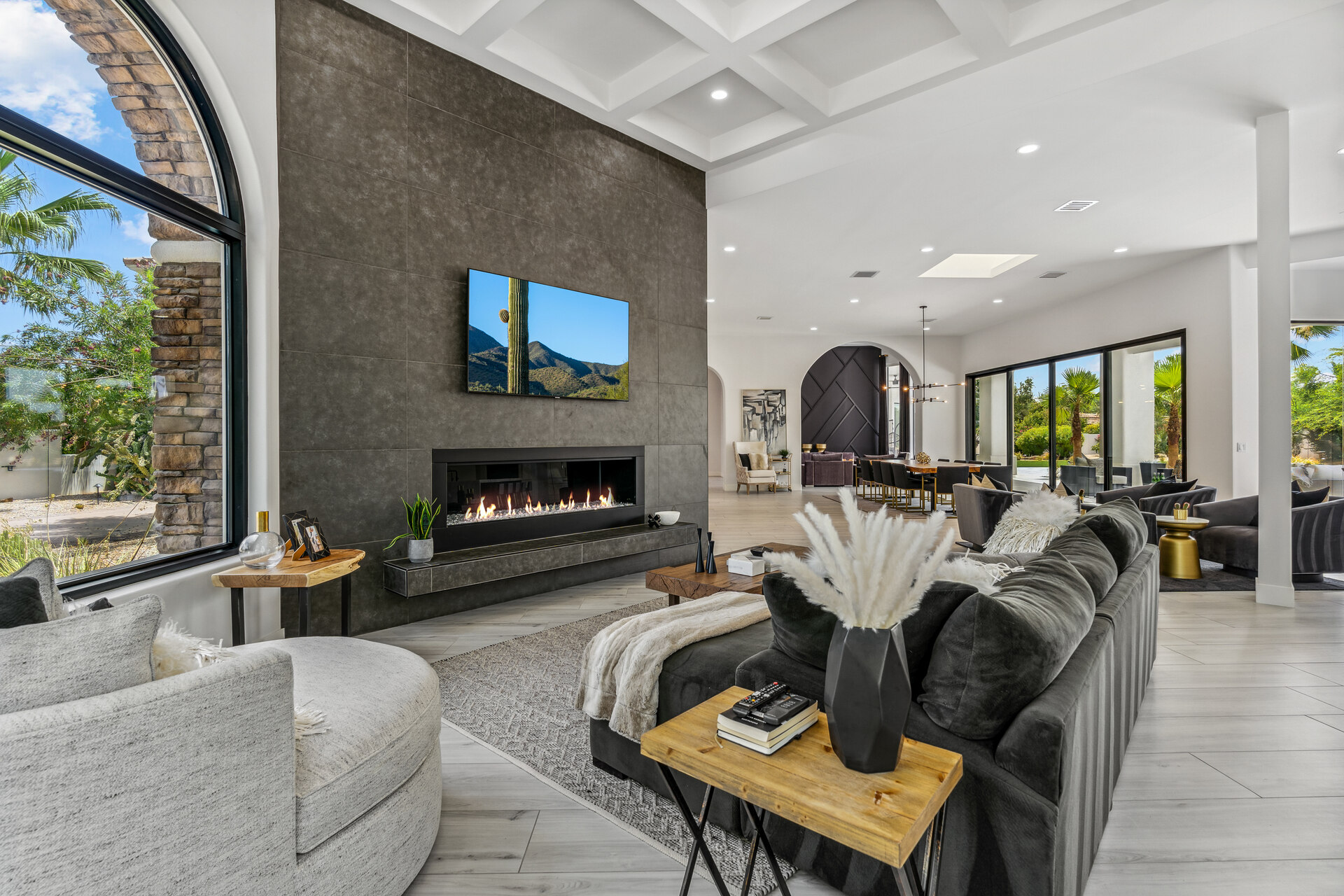
Mid-term rental properties succeed with clean, functional design — built for professionals living and working from home, not vacationers.
Mid-Term Rentals: Who's Staying and What They Need
A mid-term rental is a furnished property rented for 30 to 180 days. The guest becomes a tenant — legally, financially, and behaviorally. This distinction matters more than most investors realize.
MTR tenants are not vacationers. They're professionals who are temporarily displaced from their permanent home — by a work assignment, a hospital contract, a corporate relocation, or an insurance claim. They treat the property differently, communicate differently, and have different expectations. Understanding who they are is what makes MTR management dramatically less labor-intensive than STR.
Who Your MTR Tenants Are
What an MTR Property Needs to Compete
MTR tenants are professionals, not tourists. Their checklist is functional, not aspirational — and getting it right is simpler than STR staging, but less forgiving if you miss items that working professionals consider basic:
- Full furnishings to a professional standard. Every room functional: real bed frames, quality mattresses, full kitchen equipment (coffee maker, blender, full cookware set), dining table, desk or workspace, living room seating. IKEA-quality is the minimum; mid-market furniture performs better on reviews and justifies higher monthly rent.
- Fast, reliable internet — hardwired preferred. For traveling nurses and remote professionals, internet is a utility, not an amenity. 500+ Mbps with a hardwired ethernet option eliminates this objection entirely.
- Washer and dryer — in-unit. Non-negotiable for 30+ day tenants. Shared laundry facilities are an immediate pass for most MTR tenant profiles.
- A real workspace. A dedicated desk, ergonomic chair, and good lighting. This single feature meaningfully expands your addressable tenant pool to include remote professionals who could otherwise rent anywhere.
- Parking. Covered or garage parking is strongly preferred. Phoenix heat makes uncovered parking a genuine negative for long-stay tenants.
- Clean, neutral design. MTR tenants are living in the space — bold or theme-heavy design that works for a 3-night vacation stay becomes fatiguing over 90 days. Clean, neutral, and comfortable outperforms "Instagram-worthy" in the MTR market.
The primary MTR platforms are Furnished Finder (dominant for travel nurse housing), Airbnb monthly stays, corporate housing networks (Oakwood, CORT, National Corporate Housing), and direct insurance carrier programs. Unlike STR platforms, MTR distribution rewards relationship-building — a good landlord-tenant relationship on Furnished Finder leads to direct referrals and repeat bookings that bypass platform fees entirely.
The Phoenix Market in 2026: Real Numbers
STR Benchmarks
MTR Benchmarks
What drives MTR demand in Phoenix is structural, not cyclical. Banner Health and Mayo Clinic's Phoenix campuses generate continuous traveling nurse demand. Intel's Chandler campus and TSMC's North Phoenix facility create consistent corporate relocation flows. With 18+ million digital nomads in the U.S. workforce, furnished month-to-month housing has moved from niche to mainstream.
The STR picture is strong — but seasonally concentrated. Even with 56% supply growth year-over-year, 2025–2026 data shows revenue and nightly rates trending upward because demand is outpacing new inventory. A well-positioned Scottsdale home with pool and strong amenities can meaningfully exceed average benchmarks. But summer compression needs to be underwritten honestly.
The Tax Strategy That Changes Everything
This is where the conversation shifts from real estate to wealth management — and where working with an advisor who understands both becomes critical. The single biggest financial difference between STR and MTR in 2026 has nothing to do with rental income. It's the tax treatment.
"A $75K STR with $50K in year-one tax savings often outperforms a $90K MTR on true after-tax return — even though the MTR earns more on paper."
The Three-Part STR Tax Strategy
1. Non-Passive Classification. Under IRC Section 469, rental income is typically passive — losses only offset other passive income. Short-term rentals are different. The IRS recognizes that rental activities with average stays of seven days or less qualify as non-passive when the owner materially participates. STR losses can directly offset W-2 income and business income.
2. Cost Segregation Studies. A cost segregation study reclassifies property components — flooring, fixtures, landscaping, appliances, outdoor features — from 39-year depreciation into 5-, 7-, and 15-year categories. For STR properties with pools and outdoor features, 25–30% of the purchase price typically qualifies for immediate write-off.
3. 100% Bonus Depreciation (Restored 2025). The One Big Beautiful Bill, signed July 4, 2025, restored 100% bonus depreciation for qualifying properties placed in service after January 19, 2025. This is the accelerant that makes the entire strategy work.
The three-part STR tax strategy: non-passive classification, cost segregation, and 100% bonus depreciation working together to maximize year-one returns.
Mid-term rentals still offer meaningful tax benefits — depreciation, furnishing deductions, management expenses. But they typically do not meet the non-passive classification threshold, and the bonus depreciation advantage is significantly weaker without cost segregation generating large first-year write-offs.
Risk, Volatility & What Stability Actually Costs
STR risks that are real: Scottsdale peak-season monthly revenue can be 4× the summer low. Arizona municipalities are tightening licensing and noise ordinances. Platform algorithm changes create dependency risk. Scottsdale now requires STR registration; HOA restrictions vary by community.
STR risks that are often overstated: Phoenix tourism demand is structural — golf, spring training, and snowbird migration don't disappear in a downturn. Supply grew 56% YoY but rates and revenue still rose, because demand is outpacing inventory.
MTR risks that are understated: A two-week vacancy between 13-week tenants creates a disproportionate income impact. Furnished units require real investment and ongoing maintenance. Mid-term tenants carry less platform accountability than STR guests — screening discipline matters more.
MTRs give you stability and predictable cash flow. The cost is a lower income ceiling and the forfeiture of the most powerful tax optimization available to Phoenix investors. STRs offer higher upside and far better tax efficiency when structured correctly. The cost is operational intensity and seasonal income variation.
The Hybrid Strategy Smart Investors Are Using
The hybrid approach: peak-season STR bookings October through April, mid-term tenants May through September — maximizing both revenue and tax classification.
A growing number of sophisticated Phoenix investors aren't choosing between STR and MTR — they're running both strategically:
- Peak season (Oct–Apr): Short-term rental capturing premium nightly rates from golf groups, spring training visitors, and snowbirds
- Off-peak (May–Sept): Mid-term tenant on a 30–90 day furnished lease, maintaining income during summer STR compression
The result: maximized annual revenue, near-full occupancy, reduced summer volatility, and — with proper structuring — the ability to retain non-passive STR tax classification. This isn't a fallback. For the right property in the right Phoenix submarket, it deliberately outperforms either pure strategy.

The Greater Phoenix Metro spans six major STR and MTR submarkets — each with distinct demand drivers, tenant profiles, and investment characteristics.
Location: Where Strategy Meets Reality
Location often determines which strategy is viable before any other variable matters.
Scottsdale
Old Town, Kierland, McCormick Ranch, N. Scottsdale golf communities. Top 20% of all U.S. STR markets for occupancy. Premium ADR. STR registration required; verify HOA rules.
Central Phoenix & Arcadia
Proximity to Sky Harbor, Downtown, Scottsdale, and healthcare hubs. Viable for both strategies simultaneously. Best area for investors who want the ability to shift approaches.
Tempe
Driven by ASU, corporate campuses, and biotech. Deep, consistent tenant pipeline from traveling professionals and researchers. Overall market favors stability over peak-season volatility.
Chandler
Intel campus and TSMC supply chain. Predictable corporate housing demand from engineers and executives on 1–6 month assignments. Low seasonality exposure.
North Phoenix & Desert Ridge
TSMC employment corridor, resort adjacency, golf, and highway access. Genuine demand for both strategies. Ideal for the hybrid model.
West Valley
Peoria, Glendale, Goodyear. Lower entry prices, growing infrastructure, sports venues driving event-driven STR pockets. Currently leans MTR with longer-term appreciation upside.
A Framework for Your Decision
-
1What is your tax situation?High-income W-2 earner or business owner? The STR tax strategy may generate more value than the income difference between strategies. This is the first question to answer.
-
2How much operational involvement do you want?STRs require active management — or a quality property management relationship. MTRs require far less day-to-day involvement. Be honest about your bandwidth.
-
3What is your risk tolerance for income volatility?STR income is seasonal and variable. MTR income is predictable. If a slow summer month creates financial pressure, that's important data.
-
4Where is the property located?Not every Phoenix submarket supports both strategies equally. Location often determines which path is viable before any other variable matters.
-
5What are your broader investment goals?Cash flow, tax efficiency, appreciation — or all three? The right strategy depends entirely on how this property fits your overall financial picture.
Frequently Asked Questions
For high-income investors, the STR tax advantage is often more valuable than the income difference. A qualifying STR held with material participation can generate non-passive losses that offset W-2 income directly — something mid-term rentals typically cannot do. Combined with a cost segregation study and 100% bonus depreciation (restored January 19, 2025), a $500K–$800K Scottsdale STR can generate $100,000–$200,000 in first-year deductions. At a 37% bracket, that's $37,000–$74,000 in year-one tax savings. Mid-term rentals offer depreciation benefits, but the losses remain passive and the front-loading advantage is far weaker.
That said, this only applies if you meet IRS material participation requirements (typically 100+ hours annually, more than any other individual). Always verify your eligibility with a qualified CPA before purchasing for tax strategy purposes.
Current 2026 market data shows the Scottsdale STR market averaging $48,000–$55,000 in annual gross revenue across all listing types, with an average daily rate of $238–$441 depending on property size and data source. But those are averages — and averages include a lot of poorly positioned, under-managed properties.
Well-positioned homes — 3–4 bedrooms, pool, outdoor entertainment space, strong design, proximity to Old Town or golf — routinely outperform. Properties in the top quartile can reach $80,000–$120,000+ in annual gross revenue. March alone averages over $9,000 in monthly revenue for active listings. The flip side: June bottoms out around $2,200. Underwriting honestly means modeling both.
The so-called "STR loophole" is built directly into the U.S. tax code under IRC Section 469. It is not a gray area or aggressive tax position. The IRS specifically recognizes that rental activities with average stays of seven days or less are not classified as passive rental activities when the owner materially participates. This means losses can offset active income — W-2 wages, business income, consulting fees — rather than being trapped as passive losses.
When combined with a cost segregation study and 100% bonus depreciation (permanently restored under the One Big Beautiful Bill, signed July 4, 2025), the result is a large front-loaded deduction in year one. A correctly executed strategy is fully IRS-compliant. The risk comes from incorrectly claiming material participation or misapplying the average stay calculation — which is why working with a CPA who specializes in STR tax strategy is non-negotiable.
A mid-term rental is a furnished property rented for 30 to 180 days — longer than a vacation stay, shorter than a traditional annual lease. In Phoenix, the dominant tenant profiles are traveling nurses (typically on 13-week hospital contracts at Banner Health, Mayo Clinic, or Valleywise), corporate relocators from Intel, TSMC, Apple, and the broader tech corridor, remote professionals on monthly furnished leases, and insurance housing placements for residents displaced by home damage.
The platform landscape has matured significantly. Furnished Finder is the primary channel for travel nurse housing. Corporate housing networks, insurance carriers, and platforms like Homelike serve the corporate and relocation segments. The result is a professional, low-friction tenant pipeline with 2–4 turnovers per year versus 40–80 for a comparable STR.
Yes — with proper structuring and documentation. The STR non-passive classification is based on the property's average rental period across all bookings for the tax year. If the weighted average of all stays (both STR and MTR) remains at or below seven days, the property can retain STR classification.
In practice, this requires careful booking management during peak STR season and precise documentation of all stays. Some investors use a separate LLC for the MTR component. This is not a do-it-yourself strategy — it requires upfront planning with a CPA who has direct STR tax experience, not general real estate tax knowledge. Done correctly, the hybrid approach can maximize annual revenue while retaining the full tax benefit of STR classification.
Scottsdale remains the strongest pure-STR market in Arizona — top 20% nationally for occupancy, with premium ADRs driven by golf, spring training, events, and snowbird demand. Old Town, Kierland, McCormick Ranch, and North Scottsdale golf communities are the highest-performing pockets.
Central Phoenix and Arcadia offer strong hybrid performance — well-positioned for both STR and MTR depending on the property. Tempe, Chandler, and North Phoenix near the TSMC corridor are better MTR markets. The West Valley (Peoria, Glendale, Goodyear) offers emerging STR opportunity around State Farm Stadium and spring training but currently leans MTR. Location determines viability before any other variable.
Arizona state law protects the right to operate short-term rentals, but local municipalities have tightened enforcement significantly. In Scottsdale, operators must register their property with the city and comply with regulations covering noise limits, occupancy maximums, and nuisance prevention. A 24/7 local contact is required. Violations carry meaningful penalties.
HOA restrictions are equally important and often more limiting than municipal regulations. Many Scottsdale communities — particularly in gated or master-planned developments — have CC&Rs that prohibit or heavily restrict STR activity. Verifying HOA rules before purchase is non-negotiable. Properties in HOA-free areas or with STR-permissive covenants command a premium for good reason.
Start with your tax situation, not the income projection. If you are a high-income W-2 earner or business owner and you can meet material participation requirements, the STR tax strategy may generate more financial value than the income difference between strategies — sometimes dramatically so. This conversation belongs with your CPA before you start touring properties.
Then evaluate operational fit honestly. STRs require active management — either personal involvement or a quality property management relationship (typically 20–30% of gross revenue). MTRs require far less day-to-day involvement. Next, assess your risk tolerance for seasonal income variation. Finally, narrow to the right submarket — location determines which strategy is viable before amenities, price, or anything else. The goal is to evaluate all four variables together, not in isolation.
Eric Ravenscroft, CRS — Top 1% REALTOR® across North America, investment property specialist, and owner of The Ravenscroft Group.
The Bottom Line
The mistake most investors make isn't choosing the wrong strategy — it's choosing a strategy without fully understanding what they're optimizing for.
Short-term rentals in Phoenix can generate exceptional returns. But the most compelling part of the STR strategy in 2026 isn't the peak-season revenue — it's the tax efficiency. With 100% bonus depreciation restored and cost segregation available to front-load significant first-year deductions, a well-structured STR can reshape an investor's after-tax financial picture in ways that mid-term rentals simply cannot match.
Mid-term rentals offer something genuinely valuable: stability, simplicity, and consistent income from a tenant base that Phoenix's healthcare, technology, and corporate ecosystem continues to generate. For investors who want that predictability, MTRs are a strong, rational choice.
And for the right investor, in the right market, the hybrid strategy captures the best of both.
The property matters. The strategy matters more.














Ready to Build a Strategy Around Your Numbers?
A property analysis covers realistic revenue modeling, tax strategy review in coordination with your CPA, submarket evaluation, and risk and operational fit — specific to your situation, not a generic projection.
Schedule a ConsultationOr call Eric Ravenscroft, CRS directly to discuss your investment goals.
Categories
- All Blogs (324)
- Active Adult & 55 Plus Communities (17)
- Arizona Relocation Guides (31)
- Buyers (214)
- Financial Planning (61)
- General Real Estate (141)
- Income From Real Estate (60)
- Market Update (26)
- New Construction (29)
- News, Updates and Coming Soon (57)
- Real Estate Agent Financial Planning (22)
- Real Estate Investing (96)
- Sellers (107)
- Vacation and Short Term Rentals (45)
Recent Posts







About the Author
Eric Ravenscroft is a Top 1% REALTOR® across North America and one of Arizona’s most trusted real estate strategists. With 15 years of experience spanning real estate, wealth management, and investment planning, he helps clients make smarter, financially grounded decisions, from new construction and relocations to STR investments, 1031 exchanges, and long-term portfolio strategy.
Eric’s expertise has earned him industry recognition, Elite status with Real Broker, and features in major publications including the Wall Street Journal, MarketWatch, MSN, and Morningstar. Clients across the Greater Phoenix Metro rely on his clarity, strategic insight, and results-driven guidance.
Ready to make a confident real estate move? Call or text Eric today.